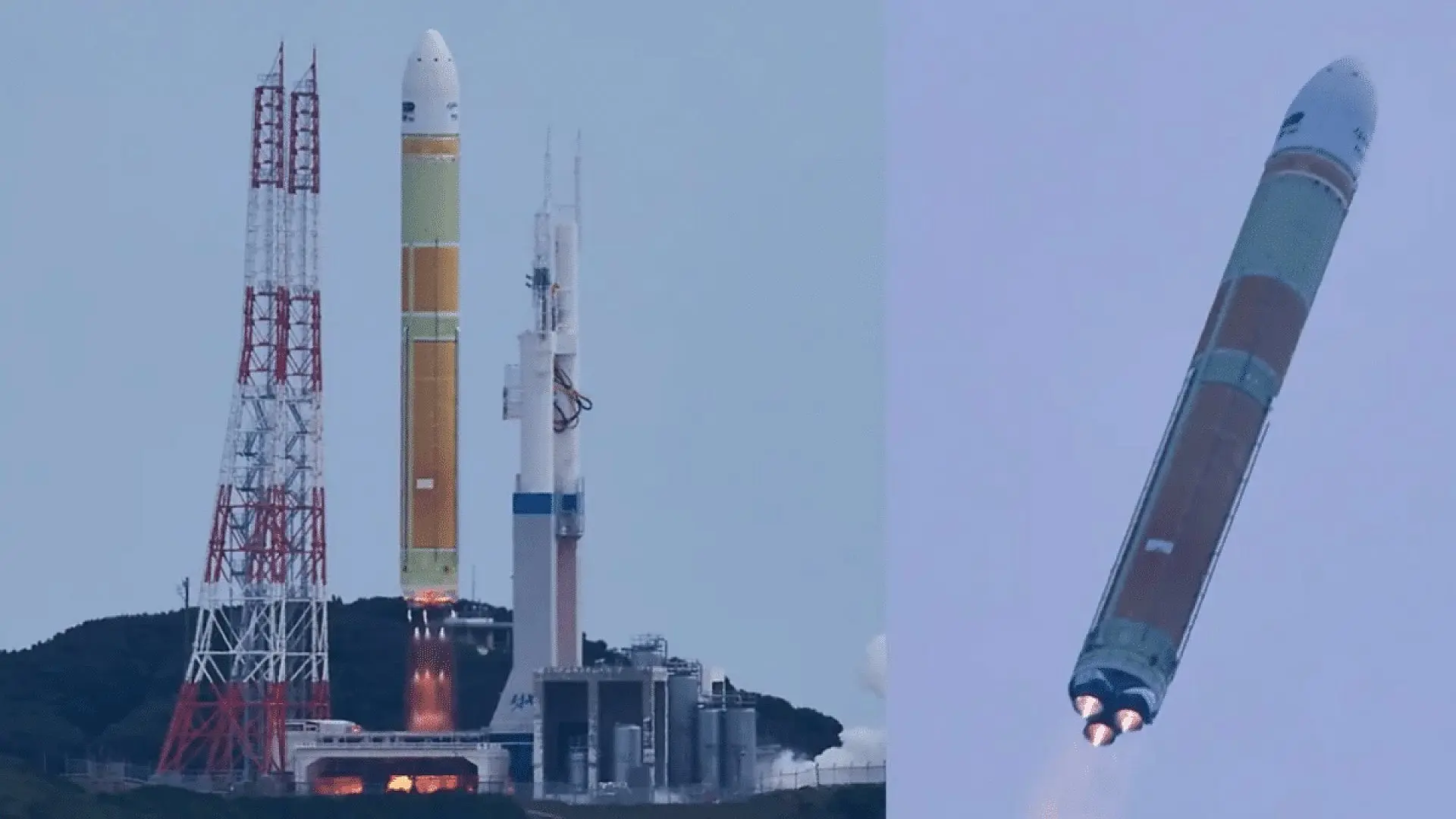
Japan’s next‑generation launch effort has taken a decisive step forward after a successful return‑to‑flight. The H3 launch vehicle, operated by JAXA, rose from the Tanegashima Space Center and placed six satellites into orbit, a clear sign that confidence in the nation’s premier rocket system is being restored amid a crowded global space market.
Japan’s H3 Rocket Marks a Crucial Return to Flight
The mission carried weight far beyond a routine deployment, serving as the first flight of the H3 after the loss of the Michibiki 5 navigation satellite in late 2024. That failure had cast doubt on the reliability of the new launcher at a time when Japan is seeking greater autonomy and competitiveness in space transport.
Lifting off just before midnight UTC from Tanegashima, the rocket showcased the three‑engine configuration for the first time, adding another layer of verification for the program. Success was essential not only to prove the fixes applied after the previous setback, but also to demonstrate that the vehicle can support a broader suite of missions in coming years.
Jointly built by JAXA and Mitsubishi Heavy Industries, the H3 is intended to replace the aging H‑2A, cut launch costs and increase mission flexibility. The launcher is slated to become the backbone of Japan’s orbital capabilities for governmental, scientific and commercial payloads, making every successful flight a strategically significant event.
The flight delivered exactly what the Japanese space sector hoped for: a clean ascent, proper stage separations and the deployment of all six payloads into their target orbits.
In the months after the failed mission, engineers conducted a deep dive into telemetry, hardware and mission data to pinpoint the fault. JAXA’s own investigation, published on its website, identified damage to the payload adapter as the primary cause of the second‑stage anomaly that prevented the satellite’s delivery.
Armed with that insight, the team introduced design modifications, revised operational procedures and performed extensive ground testing before granting launch clearance. The return‑to‑flight therefore served as a live validation of those corrective steps.
The flawless performance indicates that the remedial actions are effective, reinforcing confidence that the H3 program has regained momentum. For launch service providers, demonstrated reliability remains the single most decisive factor when securing future contracts.
The episode also highlighted the maturity of Japan’s broader aerospace sector. Overcoming a high‑profile failure demands technical expertise, organizational discipline and a willingness to scrutinise mistakes. By successfully flying again, the program proved it can translate lessons learned into operational success.
All Six Payloads Achieve Planned Orbits
The mission’s standout achievement was the orderly release of six satellites: PETREL, STARS‑X, BRO‑22, VERTECS, HORN‑L and HORN‑R. Coordinating multiple separations requires precise timing and flawless execution throughout the flight profile.
Mission controllers tracked the ascent, stage transitions and orbital insertion, confirming that each payload separated as scheduled. The successful sequence demonstrates the rocket’s capacity to handle complex missions involving several spacecraft, a capability increasingly valued by governments, research organisations and commercial operators seeking cost‑effective access to space.
“The rocket flew as planned, successfully placing the second stage into its designated orbit, and separating PETREL and STARS‑X approximately 16 minutes and 4 seconds after launch,” the JAXA release said, and also confirmed the nominal separation of the BRO‑22, VERTECS, HORN‑L and HORN‑R payloads.
Beyond delivering six satellites, the flight proved that Japan’s next‑generation launcher can meet demanding operational objectives under close scrutiny.
Implications for Japan’s Strategic Space Goals
The broader significance of the launch reaches well beyond a single successful flight. Japan has invested heavily in an independent launch capability, recognising that reliable access to space underpins national security, scientific research, communications infrastructure and economic competitiveness. A dependable H3 rocket sits at the centre of that strategy.
Global demand for launch services continues to rise as satellite constellations expand and governments increase spending on space‑based technologies. The H3 aims to capture a share of this market by offering greater flexibility and lower operating costs than previous Japanese launchers. Each successful mission adds credibility and strengthens the foundation for future commercial opportunities.
Public enthusiasm was evident in the aftermath of the launch. Tanegashima Space Center posted a note of gratitude on X, saying:
“Thank you for your support and cheers,” Tanegashima Space Center said in a post on X after the mission. “Please continue to cheer for the H3 Rocket going forward.”
That message reflects how the H3 has become more than a launch vehicle; it embodies years of engineering effort and national ambition. After overcoming earlier challenges, the rocket has now shown it can return to flight and fulfil its objectives.
With six satellites safely in orbit and confidence restored, Japan’s space programme moves forward with renewed momentum and a clearer path toward the next generation of missions.
Fact Checked
This article has been fact checked for accuracy, with information verified against reputable sources. Learn more about us and our editorial process.
Tariq, Zara. “Japan’s H3 Rocket Bounces Back, Sends Six Satellites to Orbit in First Successful Flight.” BioScience. BioScience ISSN 2521-5760, 13 June 2026. <https://www.bioscience.com.pk/en/subject/science/after-a-costly-setback-japans-h3-rocket-roars-back-with-a-flawless-launch>.
Tariq, Z. (2026, June 13). “Japan’s H3 Rocket Bounces Back, Sends Six Satellites to Orbit in First Successful Flight.” BioScience. ISSN 2521-5760. Retrieved June 13, 2026 from https://www.bioscience.com.pk/en/subject/science/after-a-costly-setback-japans-h3-rocket-roars-back-with-a-flawless-launch
Tariq, Zara. “Japan’s H3 Rocket Bounces Back, Sends Six Satellites to Orbit in First Successful Flight.” BioScience. ISSN 2521-5760. https://www.bioscience.com.pk/en/subject/science/after-a-costly-setback-japans-h3-rocket-roars-back-with-a-flawless-launch (accessed June 13, 2026).