Chinese Laser Mosquito Zapper Raises $2.7M On Indiegogo Can It Really Kill 30 Bugs Per Second
A laser mosquito killer that raised $2.7 M faces production delays and unverified claims, dimming the hype around the viral device.
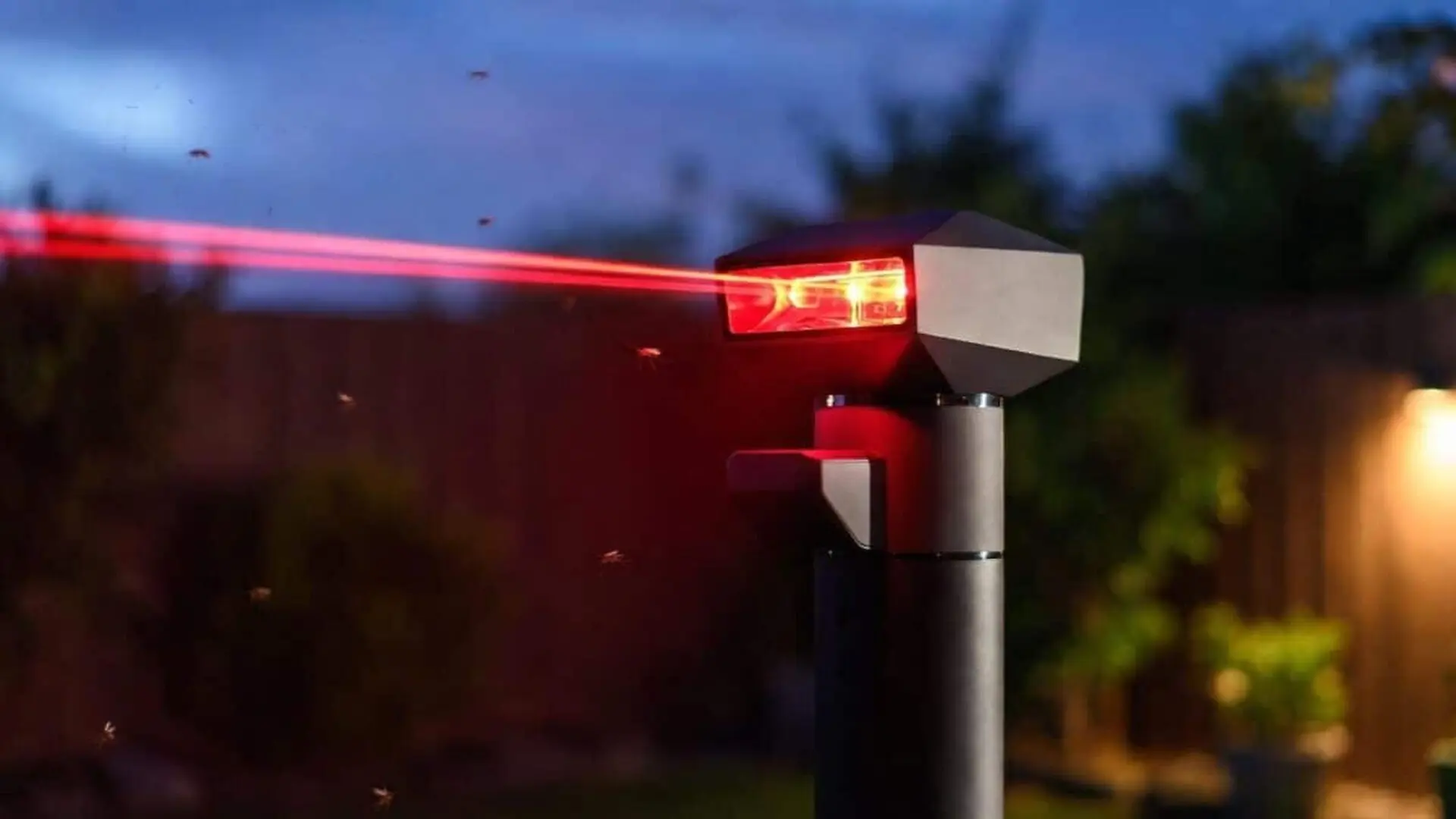
A compact laser unit marketed as the Photon Matrix has attracted more than 4,000 supporters across 50 nations, pulling in US$2.7 million on Indiegogo—far beyond its US$20,000 seed goal. Developed by the Changzhou‑based startup Photon Matrix Lab, the device promises to eliminate up to 30 mosquitoes per second using industrial‑grade laser components miniaturized for consumer use.
Backers typically paid around US$630 for the chance to receive a unit once mass production begins, according to the South China Morning Post. Sales director Lawrence Leng attributes the project’s cost‑effectiveness to China’s dense manufacturing ecosystem, which allowed the team to source high‑precision components locally.
Mosquitoes remain a global health threat, transmitting malaria, dengue, chikungunya and encephalitis and causing millions of infections and over a hundred thousand deaths each year, as reported by the World Health Organization. A non‑chemical, plug‑in solution that targets only the insects therefore holds strong market appeal.
Laser System Detects and Neutralizes Mosquitoes in Milliseconds
The Photon Matrix employs a LiDAR (light detection and ranging) sensor to map its surroundings, pinpointing the position and distance of objects within its field of view. Campaign details from Interesting Engineering indicate that the unit can identify a mosquito, calculate its angle and size, and trigger a second laser pulse within three milliseconds.
To protect people and pets, the device continuously scans for larger objects and refrains from firing if a human or animal lies in the laser’s trajectory. This safety algorithm ensures that the beam only activates when the path to the target insect is unobstructed.
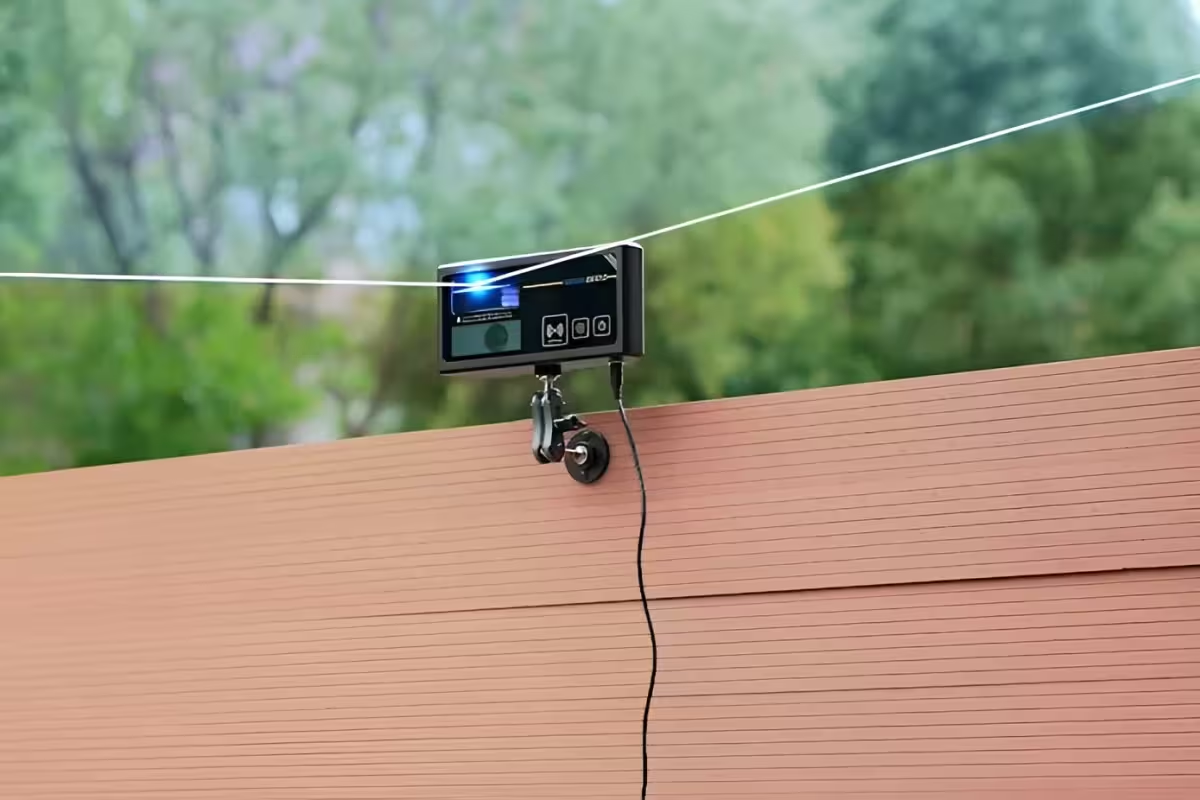
The system can follow flying targets moving up to three meters per second (approximately 3.3 feet), a speed that captures typical mosquito flight while leaving faster insects like house flies largely untouched. The entry‑level model offers a 3‑meter (9.84 feet) detection radius with a 90‑degree scan angle; the Pro version doubles the range to six meters (19.6 feet) while retaining the same angular coverage. Both versions are waterproof and can run off a portable power bank, making them suitable for backyard or indoor use without any consumable chemicals.
Early‑bird pricing on Indiegogo listed the basic unit at US$468 and the Pro at US$668, with the promise of straightforward installation and no need for specialized tools.
Local Supply Chains Accelerated Prototype Development
Leng explained to the South China Morning Post that the proximity of component manufacturers in Changzhou was decisive for rapid prototyping. “In Silicon Valley, finding a supplier capable of delivering a high‑precision fibre‑laser module within two weeks is difficult,” he said. “Here, the supply chain is literally downstairs.” This closeness allowed the team to iterate quickly on a product that blends several advanced technologies.
Photon Matrix integrates inexpensive LiDAR sensors, edge‑computing hardware and an AI‑driven vision module—technologies traditionally reserved for industrial or military use. The mature Chinese component ecosystem enables small teams to repurpose such hardware for consumer applications at price points that would be hard to achieve elsewhere.
Geographic concentration of suppliers also shortens development cycles. Calibration, sensor tuning, and iterative testing benefit from quick turnaround on custom parts, an advantage that becomes critical when synchronizing detection, targeting and safety subsystems.
The broader trend shows China’s extensive hardware startup scene repurposing industrial‑grade components for everyday problems, and Photon Matrix Lab is a clear example of this approach applied to pest control.
Crowdfunding Triumph Meets Production Reality
Despite the $2.7 million haul and viral interest, the project has encountered typical hardware‑crowdfunding hurdles. Initial promises of delivery in early summer have slipped, with mass production now slated for August. No independent performance data have been released to validate the device’s claims.
Scaling from prototype to full‑scale manufacturing introduces challenges such as sensor calibration consistency, quality control across batches, and the logistics of shipping laser‑based products internationally. The company has cited complex calibration procedures as a primary factor in the delayed timeline.
Regulatory compliance adds another layer of difficulty. Photon Matrix Lab is pursuing safety certifications for Western markets, including European CE marking and U.S. FDA clearance for consumer lasers, processes that can extend the rollout timeline and are not guaranteed.
The disparity between the fundraising success and the postponed delivery schedule is common for ambitious hardware campaigns. Over 4,000 backers in more than 50 countries await a device whose real‑world efficacy and safety have yet to be confirmed through field testing.
This article has been fact checked for accuracy, with information verified against reputable sources. Learn more about us and our editorial process.
Last reviewed on .
Article history
- Latest version
Reference(s)
- Xia, June. “China’s AI-powered laser mosquito zapper goes viral after crowdfunding success.”, June 27, 2026 South China Morning Post <https://www.scmp.com/economy/china-economy/article/3358508/chinas-ai-powered-laser-mosquito-zapper-goes-viral-after-crowdfunding-success>.
Cite this page:
- Posted by David Anderson