Tiny 300,000-Year-Old Cat Found in China Sheds Light on Prehistoric Felid Diversity
A 300,000‑year‑old fossil discovered with ancient human remains reveals a hidden Asian lineage of tiny prehistoric cats.
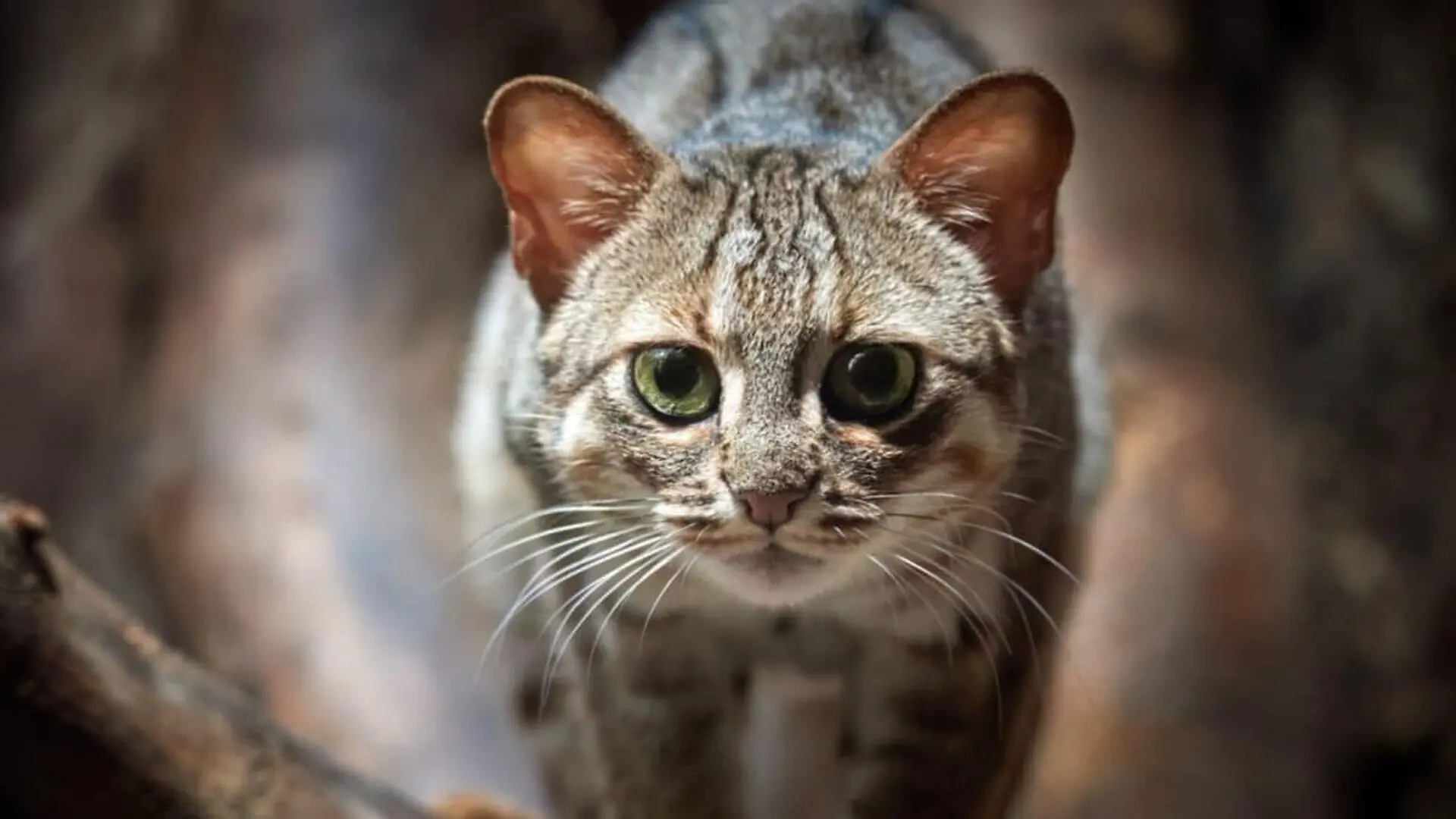
A fragment of a jawbone unearthed from a cavern in southern China’s Anhui Province has led researchers to describe a brand‑new wild‑cat species, representing the smallest felid ever recorded in the fossil record. The specimen originates from Hualongdong Cave, a locality already famed for its ancient human remains, and extends our picture of miniature carnivores that roamed prehistoric Asia.
The taxon, designated Prionailurus kurteni and formally published in Annales Zoologici Fennici, lived roughly 300,000 years ago during the late Middle Pleistocene. Uranium‑series dating of the surrounding hominin layers yields an age bracket of 275,000–331,000 years. The cat coexisted with an archaic human group at Hualongdong, alongside giant pandas, tigers, leopards, clouded leopards and brown bears, making the site one of the most carnivore‑rich Pleistocene assemblages in East Asia.
Discovery Based on a Tiny Mandible Piece
The entire specimen consists of a small mandibular fragment preserving two teeth—a fourth premolar and a first molar. Although diminutive, the fragment bears enough diagnostic traits for scientists from the Institute of Vertebrate Paleontology and Paleoanthropology of the Chinese Academy of Sciences, in collaboration with colleagues from the Swedish Museum of Natural History, to recognize it as a previously unknown species.
The first molar measures only 6.37 mm at its longest point, placing P. kurteni in the size bracket of the two tiniest extant felids: the rusty‑spotted cat (Prionailurus rubiginosus) of South Asia and the black‑footed cat (Felis nigripes) of southern Africa.
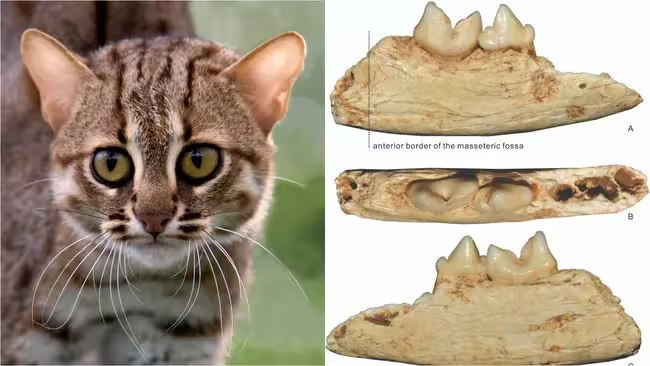
What distinguishes this fossil from its living cousins are several subtle morphological traits absent in any modern species. These include particularly weak accessory cusps on the premolar, an almost missing distal cingulid (the ridge behind the rear cusp), and an unusually deep jaw relative to its overall size. Moreover, the masseteric fossa—the depression that anchors a major chewing muscle—is positioned farther posteriorly than observed in any extant member of the genus.
Challenges in Recovering Tiny Felid Fossils
The paucity of small‑cat fossils from southern China and Southeast Asia has long hindered attempts to chart the group’s evolutionary history. Today’s dominant small felids across Asian forests belong to the subfamily Felini, yet the Pleistocene record for these animals in the region is virtually empty. The gap stems from both geological and taxonomic factors.
Bones of diminutive cats are fragile and seldom survive the depositional processes that generate cave assemblages, the primary source of fossils in this part of the world. When isolated teeth do appear, their identification is problematic because dental morphology converges among small Asian felids. Historically, paleontologists lumped most Asian cat remains into the catch‑all genus Felis, overlooking finer distinctions.

The authors stress that a thorough re‑examination of museum collections is still required, and that specimens previously assigned to Felis microtis or Felis sinensis might in fact belong to distinct taxa.
Implications for Pleistocene Felid Diversity
The genus Prionailurus today comprises four or five species confined to Asia, with molecular clocks tracing its diversification back to the Late Pliocene or Early Pleistocene (approximately 2–5 million years ago). Until now, no fossil species had been formally placed in the genus. The discovery of P. kurteni establishes the first paleontological record for the group and demonstrates that its diversity was already well established 300,000 years ago.
The study also notes that P. kurteni was not the sole cat represented at Hualongdong. A larger jaw fragment recovered from the same site, originally labeled Felis microtis, may actually belong to a member of the golden‑cat lineage (Catopuma) based on its dimensions and morphology.
A separate carnivore analysis of Hualongdong, published in 2025, identified six felid species cohabiting the cave, ranging from roughly one kilogram (the estimated mass of P. kurteni) to about 200 kilograms for the tiger. That paper honored Finnish paleontologist Björn Kurtén, whose work on Pleistocene carnivores inspired the lead author’s statistical approach to paleontological data.
This article has been fact checked for accuracy, with information verified against reputable sources. Learn more about us and our editorial process.
Last reviewed on .
Article history
- Latest version
Reference(s)
- Anderson, Natali. “Small Cat Species Lived alongside Early Humans in China.”, January 27, 2025 Sci.News <https://www.sci.news/paleontology/prionailurus-kurteni-13614.html>.
- “086.061.0120.”, doi: 10.5735/086.061.0120.short. <https://bioone.org/journals/annales-zoologici-fennici/volume-61/issue-1/086.061.0120/Prionailurus-kurteni-Felidae-Carnivora-a-new-species-of-small-felid/10.5735/086.061.0120.short>.
- “Image 13614e Prionailurus Rubiginosus.” <https://cdn.sci.news/images/enlarge12/image_13614e-Prionailurus-rubiginosus.jpg>.
Cite this page:
- Posted by David Anderson