Gigantic Great White Shark Feeds on 30‑Foot Whale Carcass Off Rhode Island in Rare Video
Researchers capture a rare view of a massive great white shark devouring a dead humpback whale off Rhode Island, revealing an elusive ocean feeding event.
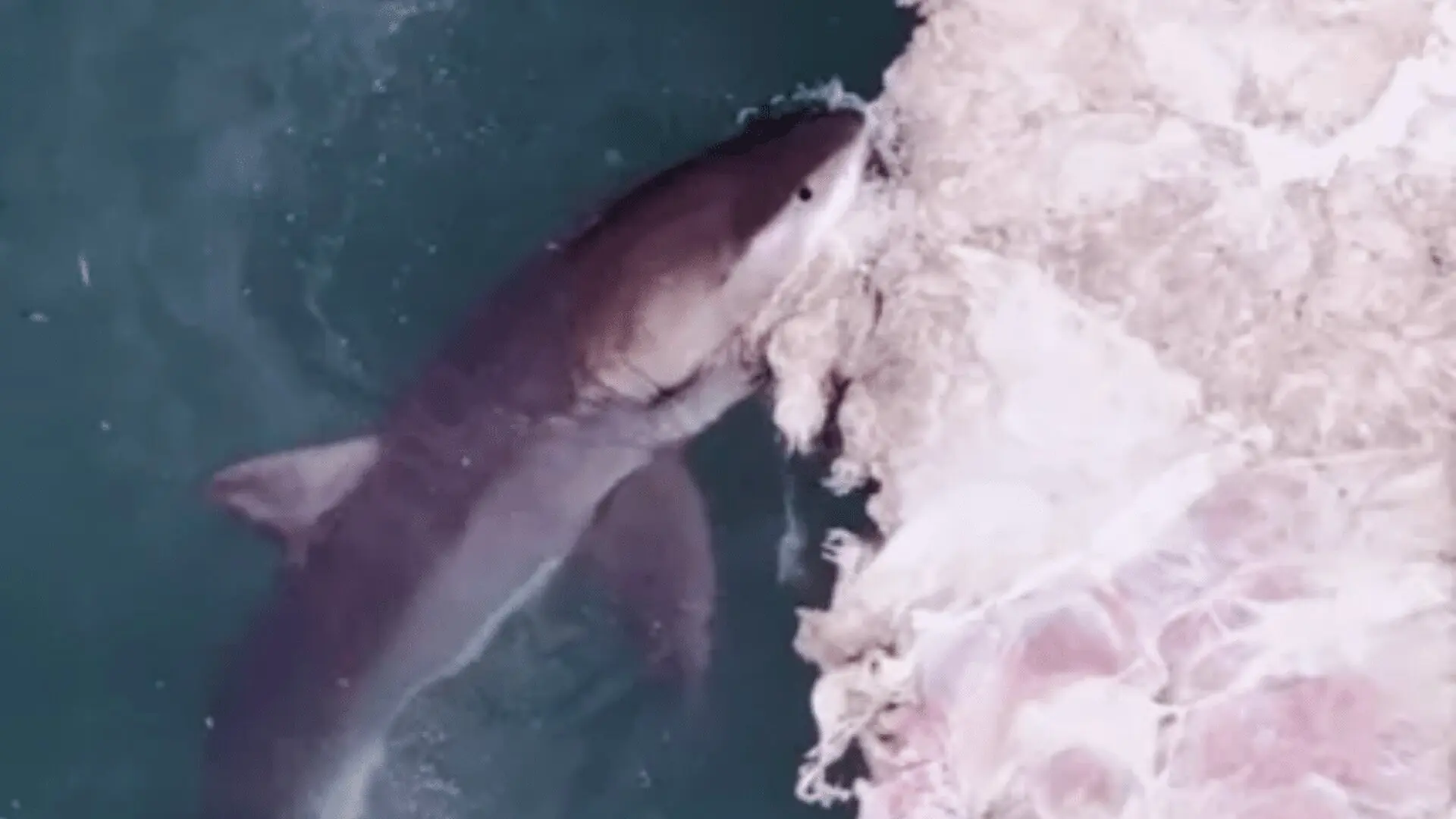
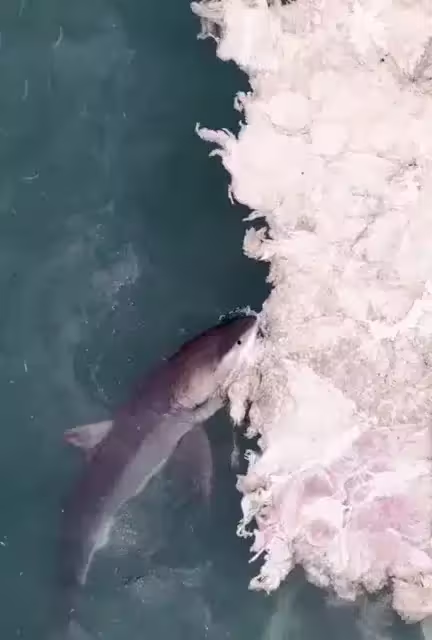
Researchers captured striking footage of a huge great white shark devouring a floating humpback whale off Rhode Island, giving scientists a rare glimpse of the predator’s natural scavenging behavior. The encounter occurred near Coxes Ledge, where the shark was seen ripping into the carcass of a whale estimated to be about 30 feet long.
Whale Carcass Sparks a Burst of Oceanic Activity
When a whale dies, its body becomes a temporary hotspot that draws a wide array of marine species. In this instance, video analysis suggests the great white measured roughly 14 feet, though its true size may be larger based on bite marks and the scale of the carcass. Multiple bite wounds from various organisms indicate that the floating corpse had already attracted several scavengers before the shark arrived. Direct observations of white sharks feeding on whale remains are exceptionally scarce because these predators often operate far from human eyes.
Jon Dodd, executive director of the Atlantic Shark Institute, highlighted the significance of the sighting.
“It’s interesting that these white sharks can be few and far between in Rhode Island waters and they are rarely seen. However, as soon as a whale dies, white sharks in particular seem to come out of nowhere to feed,” Dodd said. “It’s really a remarkable sight and something that is very rare to see.”
Tagging Attempt Stymied by Elusive Predator
The sighting of an untagged, massive white shark presented a valuable research chance for the Atlantic Shark Institute, which has successfully fitted satellite tags on dozens of individuals in recent years. Despite deploying vessels to approach the animal, the team could not get close enough to attach a tag. Instead, scientists relied on high‑resolution video and observations from nearby boats to estimate the shark’s dimensions.
According to the Boston Herald, the institute has already tagged 55 white sharks and hoped this giant would join the database. Even without a tracking device, the recorded behavior adds important data on how these apex predators feed and move through New England waters during the season.
Researchers Label the Find “Truly Epic”
Following the discovery, the Atlantic Shark Institute posted a statement describing the encounter as “truly epic.” The release noted that after a 50‑square‑mile search for the whale, the team not only located the carcass but also spotted another great white circling the floating food source.
“White shark sightings are few and far between until a whale dies and then they seem to appear out of nowhere as this one did,” the institute wrote, adding, “We went looking for the whale yesterday and after a 50 square mile search we found it… and another great white looking for a meal! Truly epic!”
The anecdote underscores the challenges of locating drifting whale falls and the unlikely convergence required to observe such predatory behavior up close. Finding the carcass after an extensive search and encountering a feeding white shark highlights how whale remains temporarily convert ocean sections into bustling feeding grounds for both scavengers and top predators.
Seasonal Surge in Shark Encounters Across New England
The Rhode Island event coincides with a broader uptick in shark activity reported around southern New England. Near Cape Cod, researchers have documented seals bearing fresh shark bite marks, while local fishermen have observed sharks stealing striped bass during active trips. These signs suggest that white sharks are re‑occupying traditional hunting areas as water temperatures rise seasonally.
The Atlantic White Shark Conservancy also resumed field work, though adverse conditions prevented the placement of tags during a recent expedition. Their field update noted, “While the sharks were too deep to put any tags on them, the season is certainly heating up.” Combined with the rare whale‑feeding episode off Rhode Island, the observations reinforce that some of the Atlantic’s largest predators are becoming more active along the New England coastline, even if they remain largely hidden beneath the surface.
This article has been fact checked for accuracy, with information verified against reputable sources. Learn more about us and our editorial process.
Last reviewed on .
Article history
- Latest version
Reference(s)
- Sobey, Rick. “Massive white shark spotted feasting on dead whale off New England: ‘Truly epic!’.”, June 28, 2026 Boston Herald <https://www.bostonherald.com/2026/06/28/massive-white-shark-spotted-feasting-on-dead-whale-off-new-england-truly-epic/>.
Cite this page:
- Posted by David Anderson