Inside a 5.5-Million-Year-Old Sealed Cave: Alien-Like Life Thrives Without Sunlight
Scientists explore a sealed Romanian cave untouched for millions of years, revealing a uniquely pristine underground environment.
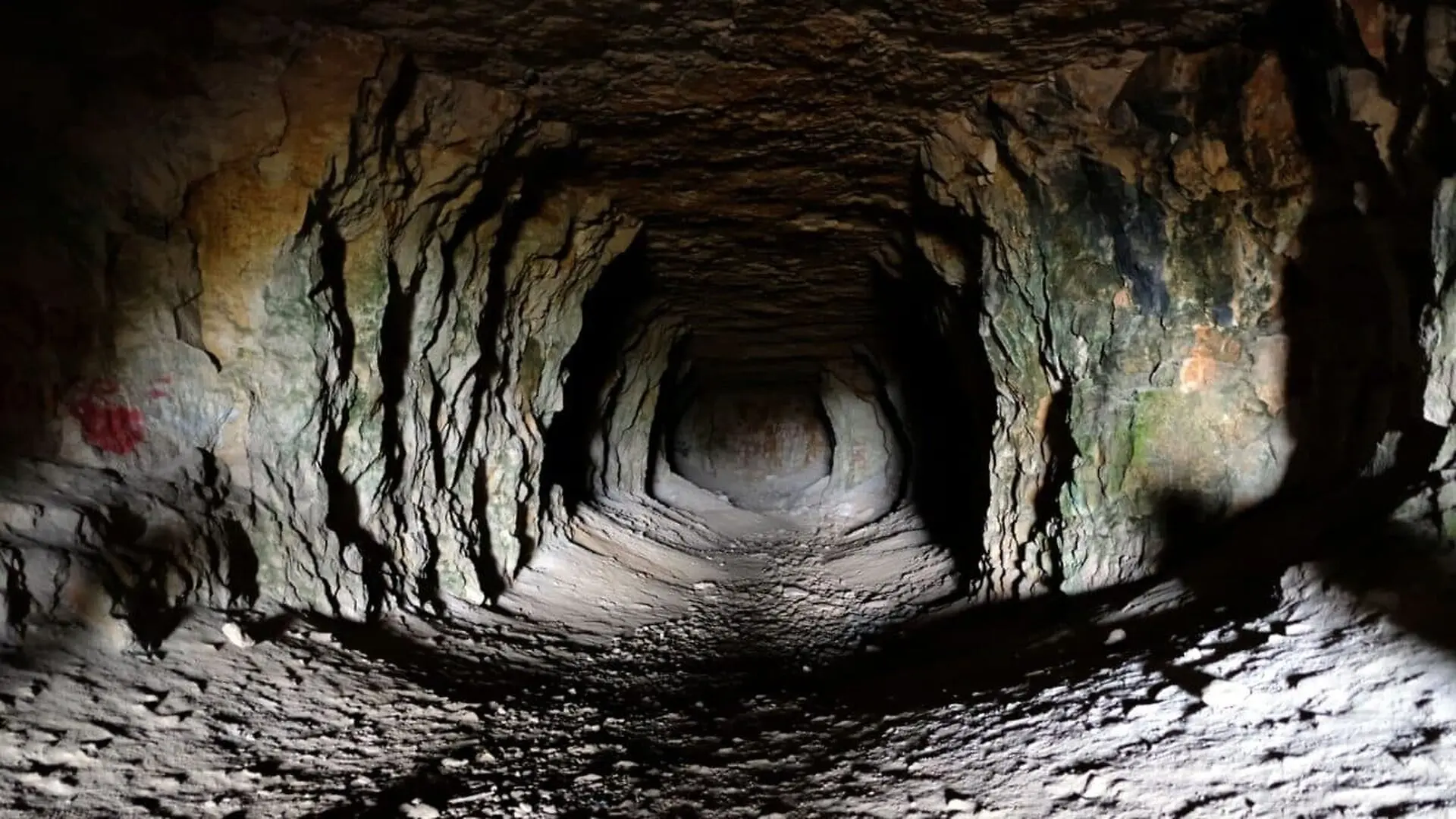
Deep beneath the Carpathians, a sealed cavern that has remained untouched for more than five million years is home to a self‑sustaining ecosystem that thrives without any sunlight. Researchers exploring Romania’s Movile Cave have catalogued dozens of species that rely entirely on chemical energy, offering a rare glimpse into how life might persist in similarly extreme environments elsewhere in the solar system.
Underground World Isolated for Millennia
The cavity was uncovered in 1986 when engineers began work on a planned power plant. Instead of a construction site, they stumbled upon a natural vault that had been cut off from the surface for roughly 5.5 million years. The passageways stretch for about 780 feet, and the air inside is saturated with moisture, contains elevated carbon dioxide, and holds only a third of the oxygen concentration found at sea level.
Chemical Energy Fuels a Unique Food Chain
At the base of the cave’s trophic network are chemosynthetic bacteria that harvest energy from compounds such as hydrogen sulfide, methane, and ammonium. These microbes form thick mats on rock walls, submerged surfaces, and the cave floor, providing the primary food source for a suite of higher‑order organisms.
Because the environment is completely dark, the usual photosynthetic pathways are absent. Instead, the microbial communities convert inorganic chemicals directly into organic matter, sustaining an entire community that includes fungi, invertebrates, and tiny crustaceans.
Biodiversity Flourishes in the Dark
Scientists have identified at least 123 previously unknown fungal species and 53 animal species, many of which are endemic to this subterranean habitat. The animal assemblage features gastropods, nematode worms, miniature crustaceans, beetles, water‑scorpions, leeches, spiders, and a strikingly pale centipede that measures roughly two inches in length.
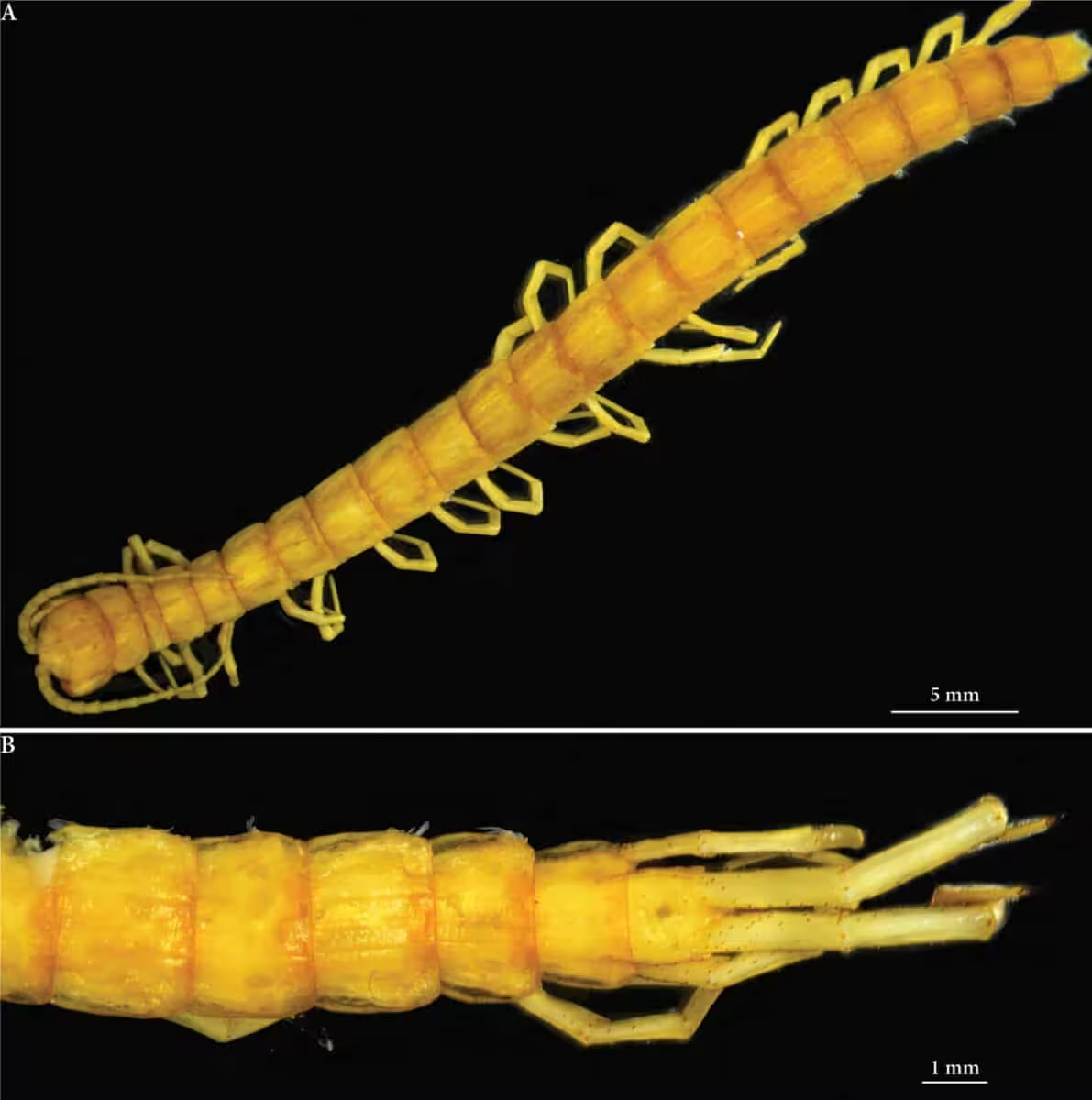
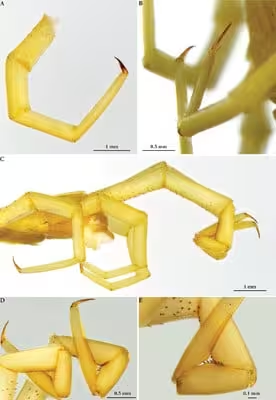
The cave’s most notorious inhabitant—a two‑inch carnivorous centipede often dubbed the “king of the cave”—preys on the other diminutive fauna, illustrating a clear predator‑prey dynamic that has evolved in total darkness.
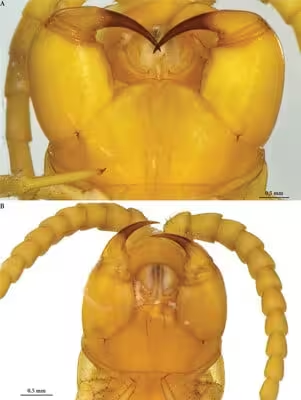
Many of the cave’s residents have lost functional eyes, relying instead on tactile and chemical cues to navigate the perpetual night. Over successive generations, the lack of light has also driven a loss of pigmentation, rendering numerous species nearly translucent.
Challenges of Studying an Isolated Ecosystem
Accessing the cavern requires researchers to don protective gear and negotiate narrow tunnels, a logistical hurdle that has limited the number of scientists able to conduct fieldwork. According to Popular Mechanics, the toxic atmosphere and constrained entry points have kept exploration efforts relatively scarce.
A 2020 study published in ZooKeys detailed the cave’s invertebrate assemblage, emphasizing the physiological and morphological adaptations that enable survival in an environment devoid of sunlight.
Implications for Life Beyond Earth
The existence of a thriving, chemotroph‑driven ecosystem on Earth bolsters the hypothesis that similar habitats could support life on icy moons such as Europa and Enceladus. Both bodies are believed to harbor subsurface oceans that may contain methane, carbon dioxide, and nitrogen—gases analogous to those fueling the microbial mats in Movile Cave. Discoveries there could point to environments where simple microbes survive without sunlight.
While Movile Cave does not constitute direct evidence of extraterrestrial organisms, it expands the known limits of habitability and underscores the potential for life to thrive in dark, chemically rich niches far beneath planetary surfaces.
This article has been fact checked for accuracy, with information verified against reputable sources. Learn more about us and our editorial process.
Last reviewed on .
Article history
- Latest version
Reference(s)
- Wagh, Manasee. “This Cave Has Been Sealed for Over 5 Million Years—And It’s Crawling with ‘Aliens,’ Scientists Say.”, October 17, 2025 Popular Mechanics <https://www.popularmechanics.com/science/a69061700/movile-cave-alien-world/>.
- Vahtera, Varpu. “Five million years in the darkness: A new troglomorphic species of Cryptops Leach, 1814 (Chilopoda, Scolopendromorpha) from Movile Cave, Romania.”, vol. 1004, December 16, 2020, pp. 1-26. Pensoft Publishers, doi: PropertyValue. <https://zookeys.pensoft.net/article/58537/>.
Cite this page:
- Posted by Hassan Raza