Why the Sun Is Low on Silver: Rare Stellar Explosions Shaped Our Galaxy’s Chemistry
Scientists uncover why the Sun contains less silver than expected, resolving a long‑standing astrophysical mystery.
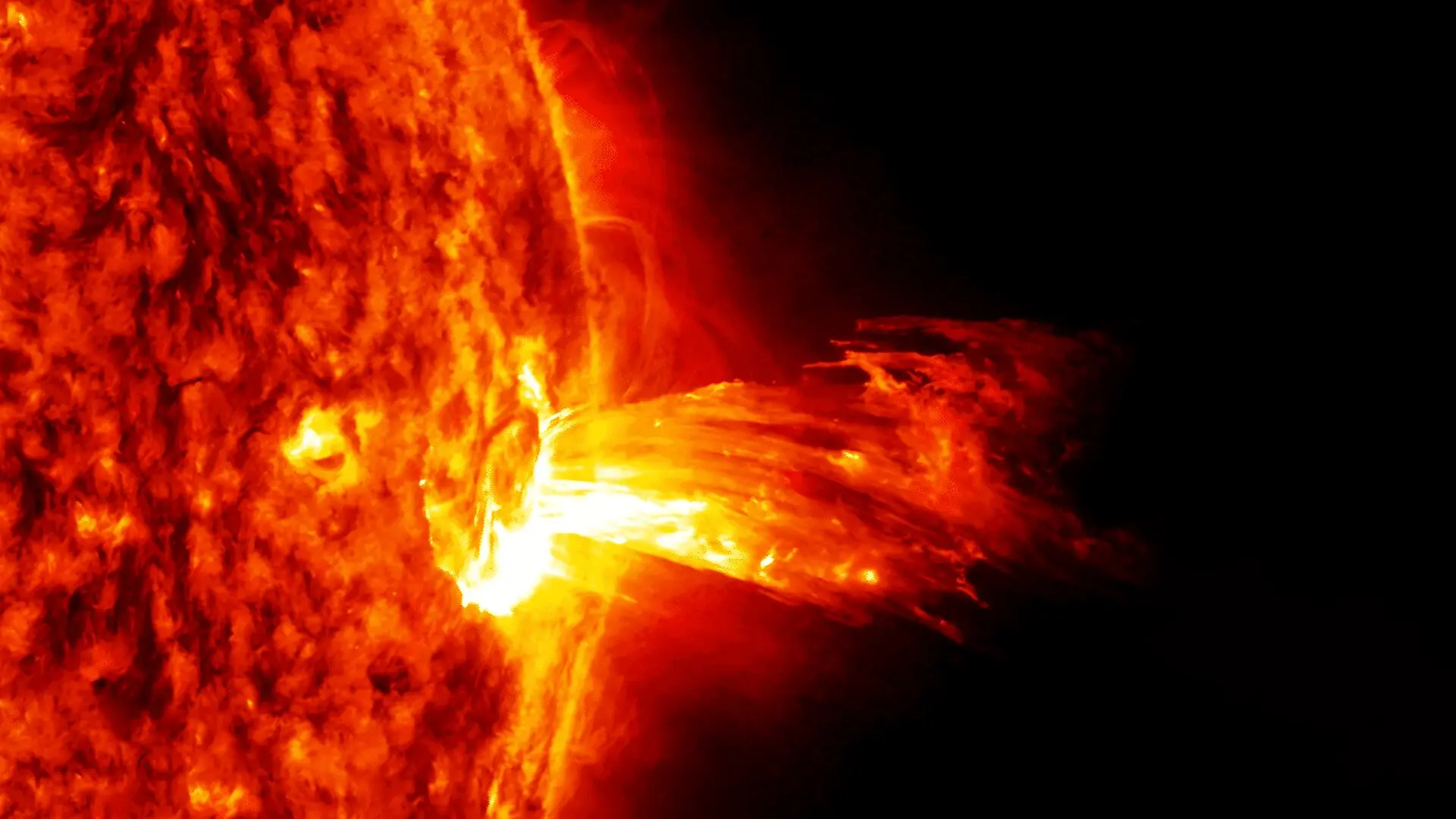
New analysis published in Astronomy & Astrophysics suggests a plausible explanation for the Sun’s surprisingly low silver content. By tracking how this scarce metal is forged and spread throughout the Milky Way, the authors provide fresh insight into the galaxy’s chemical evolution.
Why the Sun Lacks Expected Silver
Silver belongs to a group of heavy elements that cannot be produced by ordinary stellar fusion. Instead, it originates in extreme, neutron‑rich environments such as certain types of supernovae and mergers of compact stellar remnants.
Standard models of galactic chemical evolution have long predicted a higher silver abundance in the Sun, based on the cumulative output of earlier stellar generations. The observed shortfall has prompted questions about our understanding of silver’s birthplaces and its journey across interstellar space.
Reassessing Galactic Chemical Models
To probe the discrepancy, the research team examined stars spanning a wide range of ages and metallicities. Ancient stars preserve the elemental makeup of the early Milky Way, while younger stars reflect more recent chemical contributions. By contrasting these two cohorts, the scientists reconstructed the temporal evolution of silver over billions of years.
Uneven Silver Production in the Milky Way
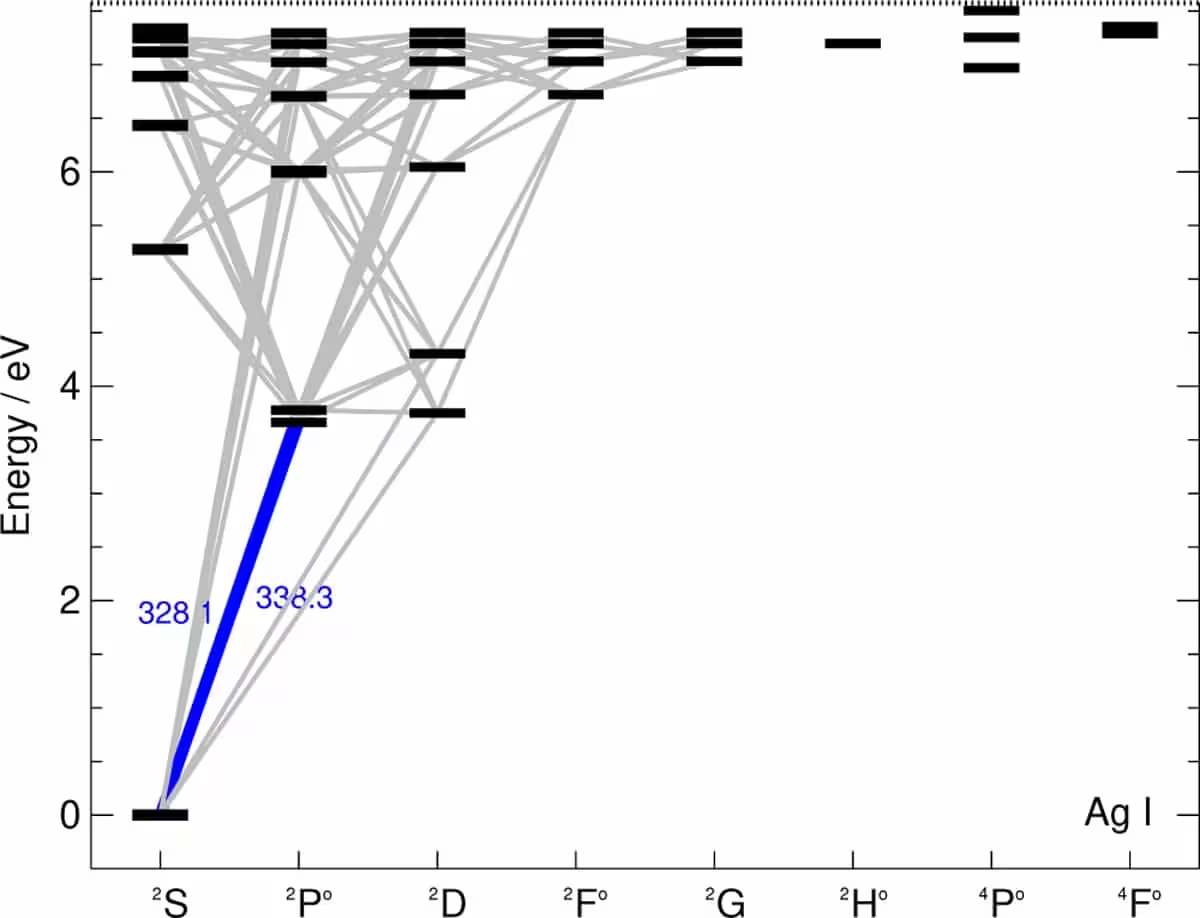
The analysis indicates that silver synthesis has not been a steady, galaxy‑wide process. Instead, rare, localized events appear to have injected silver into specific regions at distinct moments in the Milky Way’s history, creating a patchy distribution that could explain the Sun’s lower-than‑expected inventory.
“By studying the light of stars of different types and ages, we hope to understand where silver is formed in the universe, and how it has been distributed throughout the Milky Way over time,” says Sema Caliskan, the lead author of the research and now a postdoc at the University of Liège in Belgium, in a statement.
These findings underscore that the Sun’s elemental makeup records a broader narrative involving multiple generations of stars, violent astrophysical explosions, and the gradual mixing of interstellar material.
Implications for Galactic Evolution
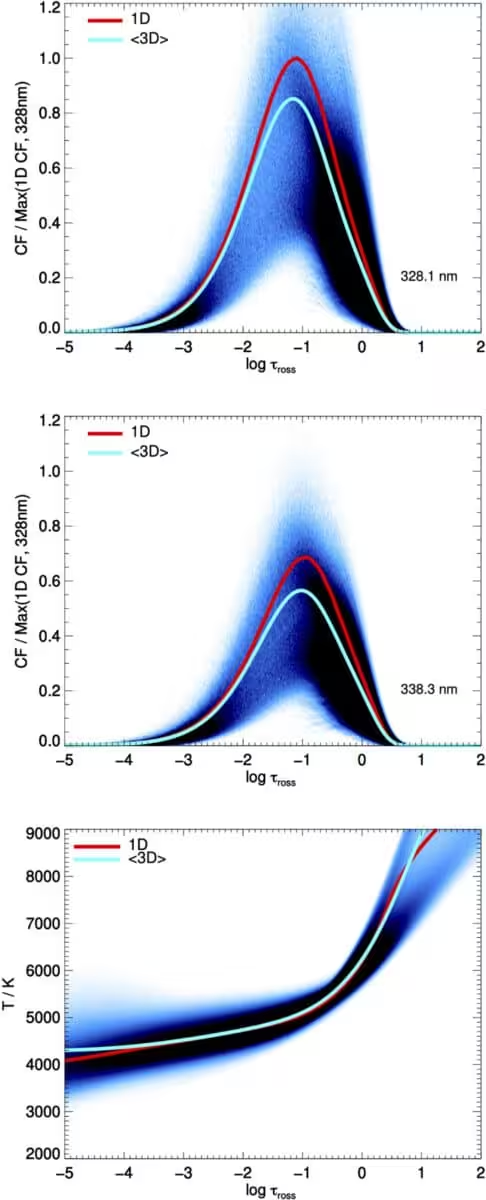
Published in Astronomy & Astrophysics, the study refines our picture of how elements heavier than iron are forged and redistributed. By linking silver’s origin to rare, high‑energy events, the work helps map the timeline of nucleosynthetic processes that predate the Sun’s birth.
The authors stress that a comprehensive view of galactic chemistry requires sampling stars across a broad spectrum of distances and ages. Such diversity supplies the multiple “chapters” needed to assemble a coherent model of elemental transport throughout the Milky Way.
Upcoming observations with next‑generation telescopes are expected to expand the stellar dataset, potentially revealing whether silver’s patchy pattern is a common galactic feature or confined to particular regions with unique evolutionary histories.
A Broader Quest for Cosmic Elemental Origins
The Sun’s silver shortfall is one piece of a larger puzzle concerning the provenance of the heavy elements that compose planets, stars, and even life itself. Each such element bears the imprint of ancient, high‑energy astrophysical events.
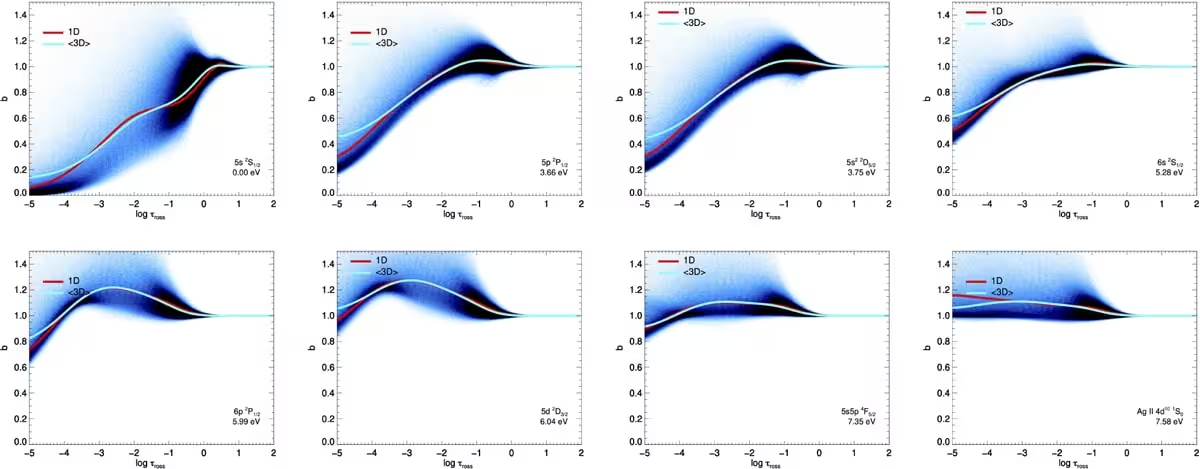
By tracing silver through successive stellar populations, astronomers are sharpening their understanding of the Milky Way’s formative processes and the mechanisms that delivered the chemical building blocks to our corner of the universe. The new findings open a pathway toward a more detailed reconstruction of the cosmic origins of the elements that surround us today.
This article has been fact checked for accuracy, with information verified against reputable sources. Learn more about us and our editorial process.
Last reviewed on .
Article history
- Latest version
Reference(s)
- Caliskan, S.. “Ag I model atom and the 3D non-LTE solar silver abundance.”, vol. 711, July 1, 2026, pp. A155, doi: 10.1051/0004-6361/202659578. <https://www.aanda.org/articles/aa/full_html/2026/07/aa59578-26/aa59578-26.html>.
Cite this page:
- Posted by David Anderson