Northern Lights Could Light Up 20 U.S. States Tonight: Here’s Where to Watch!
Northern lights to dazzle 20 U.S. states this week due to a G3-class solar storm
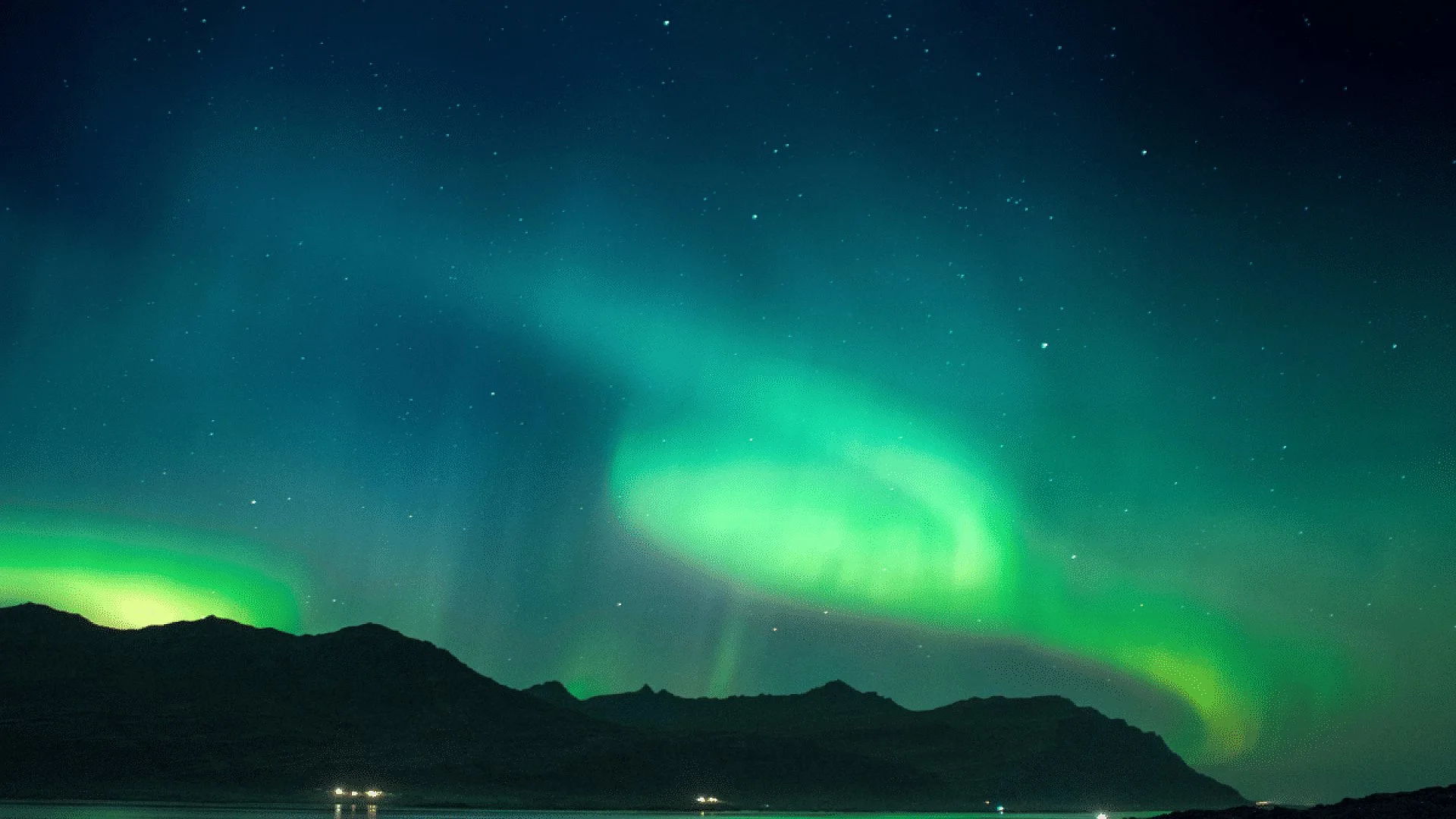
A strong solar eruption is expected to brighten the night sky for millions of people across the northern United States, with the aurora potentially visible in as many as twenty states this week. Space‑weather specialists at NOAA say a G3‑level geomagnetic storm, sparked by a coronal mass ejection on June 6, could produce vivid auroral curtains along the northern horizon from Monday, June 8, through Tuesday, June 9.
How Solar Explosions Generate Northern Lights
The aurora borealis appears when charged particles from the Sun slam into Earth’s magnetic field. A coronal mass ejection releases a massive cloud of magnetized plasma that can travel as fast as 1,900 miles per second. When these particles encounter oxygen and nitrogen high in the atmosphere, they energize the gases, causing them to emit bright green and red light. In a G3‑class storm, those shimmering bands can extend well beyond the usual polar zones, reaching mid‑latitude locations in the northern U.S.
Key space‑weather indicators such as the Kp Index and the Bz component of the interplanetary magnetic field influence auroral intensity. A sustained southward Bz makes it easier for solar particles to breach the magnetosphere, boosting the chance of strong displays. NOAA notes that periods of Kp 7 are forecast, giving many northern‑state residents a realistic opportunity to witness the phenomenon according to its 30‑minute aurora forecast.
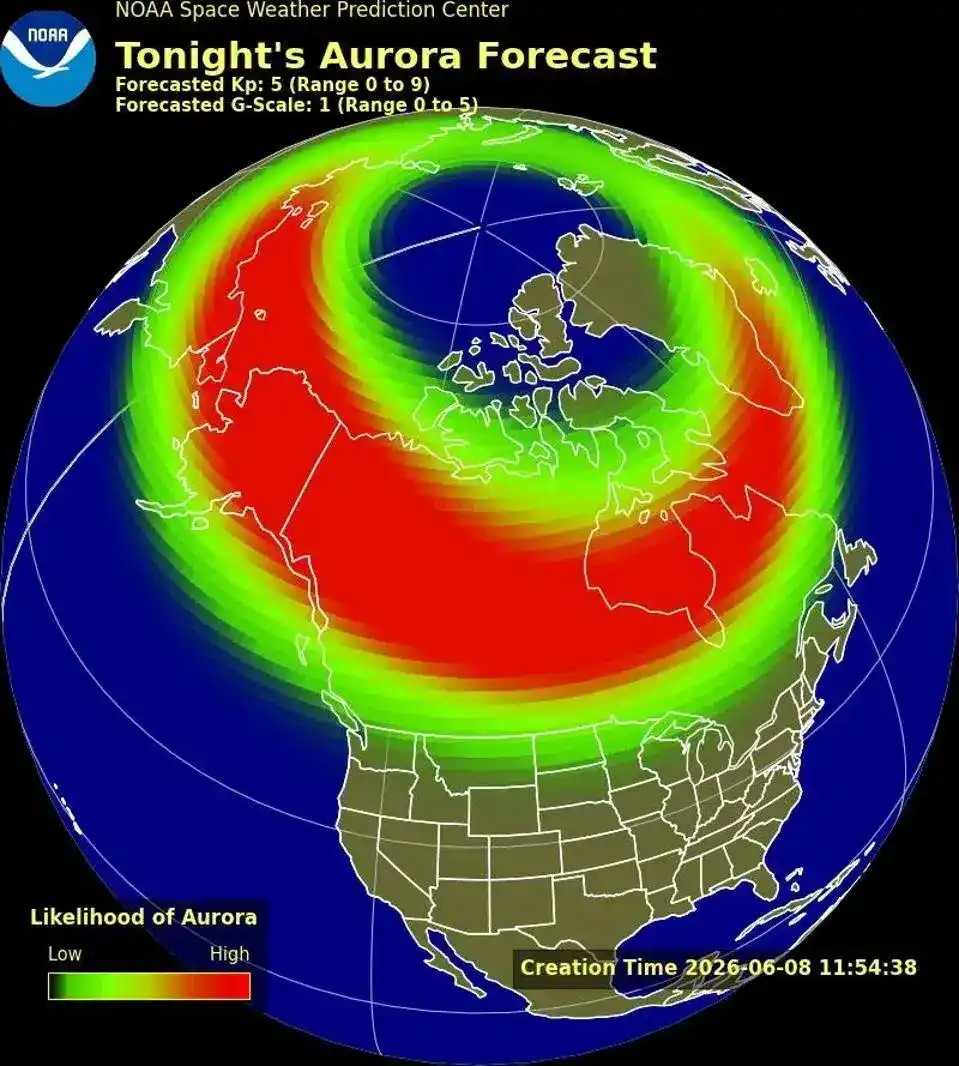
Credit: NOAA
Top Locations for Aurora Spotting
Residents of Washington, Idaho, Montana, North Dakota, South Dakota, Minnesota, Wisconsin, Michigan and Maine are likely to enjoy the clearest views. More southerly states—including Oregon, Wyoming, Nebraska, Iowa, Illinois, Indiana, Ohio, Pennsylvania, New York, Vermont and New Hampshire—may also catch glimpses if the sky stays dark enough.
Even states such as Kansas, Missouri, Kentucky, West Virginia, Virginia and Maryland could see rare auroral flashes, provided light pollution is low and skies are clear. Enthusiasts are urged to consult Dark Sky Place Finder maps and aurora‑forecasting apps to pinpoint optimal spots and monitor solar‑wind data in real time.
When to Look and What to Expect
The storm arrives during a season when nights are brief, as the June solstice brings lingering twilight that shortens darkness. A waning crescent moon will rise just before dawn on Tuesday, creating a short window of darker skies that can improve visibility. Viewers should be prepared for intermittent activity that often appears near the northern horizon.
Staying updated with real‑time forecasts is essential because space‑weather conditions can shift rapidly. In addition to NOAA, platforms such as SpaceWeatherLive.com, Aurora Now and My Aurora Forecast offer live information on solar wind speed, Kp predictions and storm intensity, helping observers decide whether to step outside for a fleeting glow or wait for a more pronounced display.
Implications of a Strong Geomagnetic Storm
Geomagnetic storms arise when solar‑wind particles interact with Earth’s magnetic field, generating energy disturbances that ripple through the atmosphere. These events are graded from G1 to G5, with G3 classified as “strong.” While the visual spectacle of auroras draws most attention, powerful storms can also disrupt satellites, radio communications and power‑grid operations. Understanding CME dynamics aids scientists in forecasting auroras and safeguarding technological infrastructure.
For residents and travelers across the northern United States, the upcoming solar event presents a rare chance to experience a cosmic light show without leaving the continent.
This article has been fact checked for accuracy, with information verified against reputable sources. Learn more about us and our editorial process.
Last reviewed on .
Article history
- Latest version
Reference(s)
- “Aurora - 30 Minute Forecast | NOAA / NWS Space Weather Prediction Center.” <https://www.swpc.noaa.gov/products/aurora-30-minute-forecast>.
Cite this page:
- Posted by Zara Tariq