Mercury May Have Gotten Its Polar Ice From a Single Giant Impact That Changed the Entire Planet in Hours
Mercury’s frigid poles hide unexpected surprises despite its extreme heat
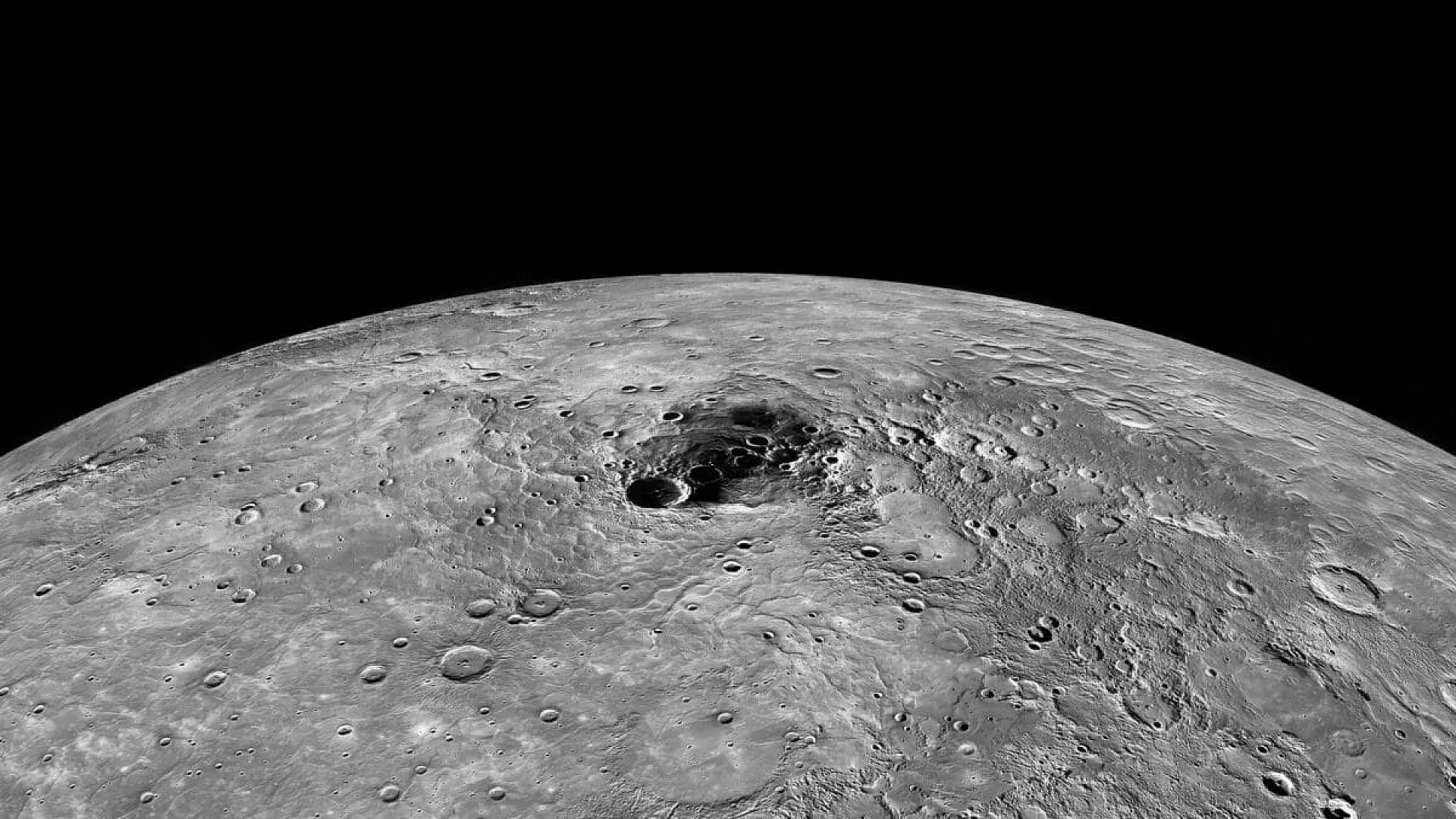
New modeling indicates that Mercury’s polar ice could have been generated within a single Mercurian rotation after a massive comet or asteroid impact, according to research published in the Journal of Geophysical Research: Planets. The authors propose that the collision produced a short‑lived, water‑rich atmosphere that spread vapor worldwide before a portion condensed in the permanently shadowed regions.
The existence of ice on the innermost planet has long confounded researchers. Surface temperatures routinely surpass 430 °C and the planet’s exosphere is exceedingly tenuous, conditions that appear hostile to any stable water.
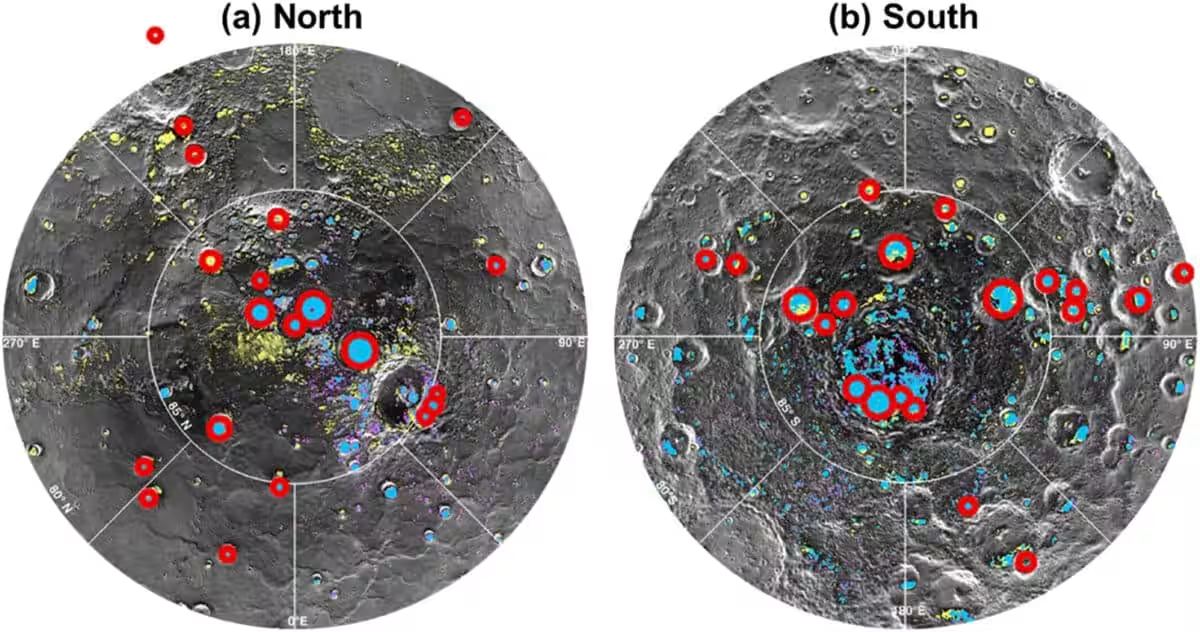
Nevertheless, radar surveys and spacecraft data have repeatedly identified bright, reflective spots near Mercury’s poles. The latest analysis argues that the impact responsible for the 97‑km Hokusai crater may also have delivered the water that now resides in the permanently shaded craters, where temperatures stay low enough for ice to survive over geological timescales.
A Vapor‑Rich Afterglow Could Explain Mercury’s Ice
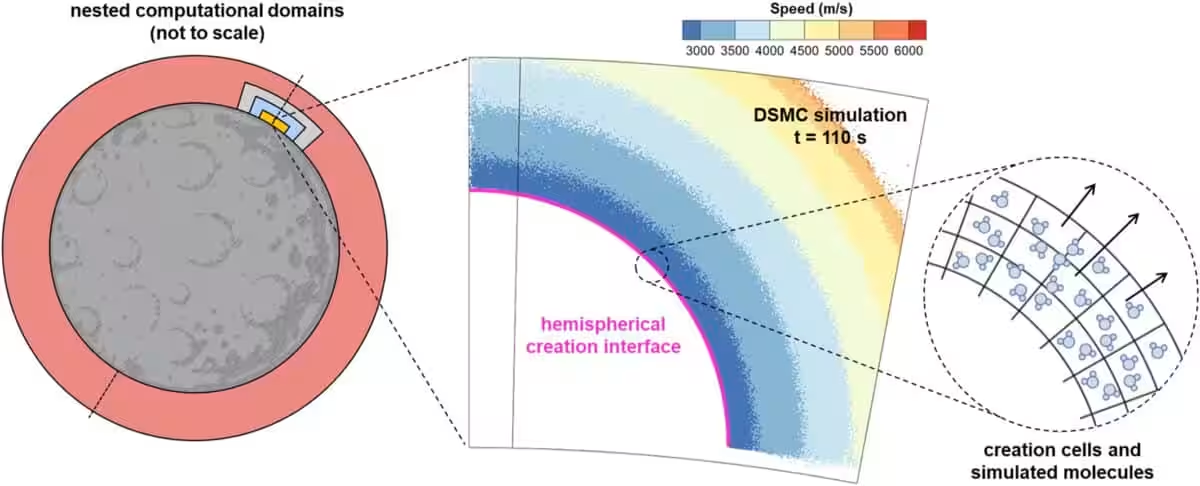
To explore this hypothesis, the team modeled the consequences of a strike by a roughly 17‑km comet or asteroid travelling at about 30 km s⁻¹. The simulations incorporated the most recent maps of Mercury’s permanently shadowed zones and updated surface temperature profiles.
Two alternatives were examined. In the first, water liberated by the impact escaped directly into Mercury’s sparse exosphere. In the second, the blast generated a dense, transient atmosphere dominated by water vapor. The latter scenario yielded dramatically different outcomes.
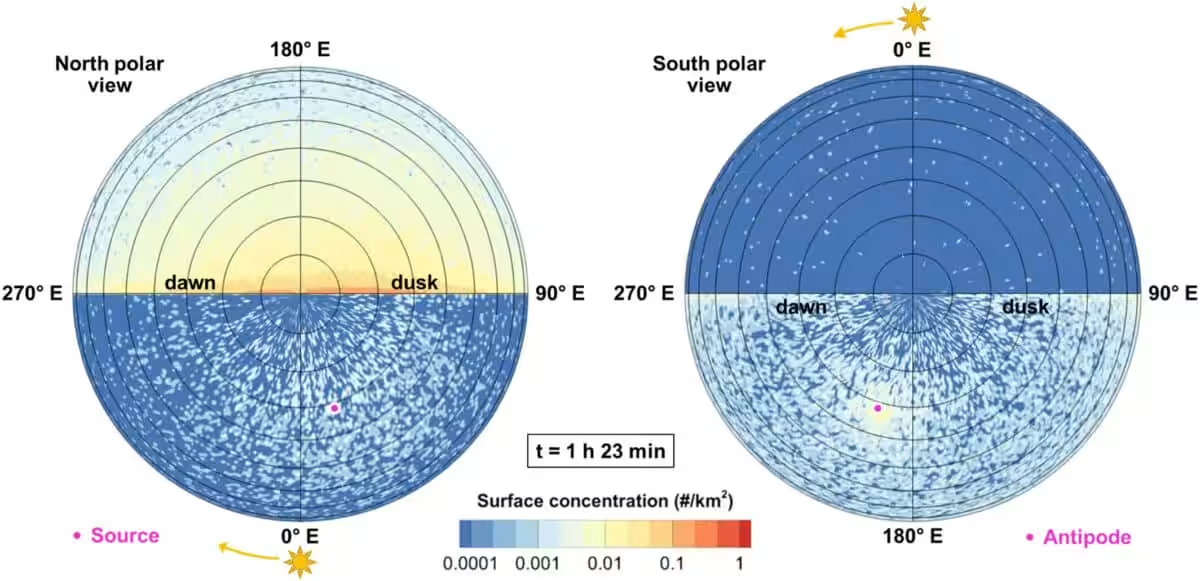
The paper reports that, less than an hour after the collision, the vapor envelope had enveloped the entire planet, forming a water‑laden atmosphere. Solar radiation quickly broke down part of the water through photolysis, yet a sizable fraction survived and eventually migrated toward the frigid polar traps.
The authors also identified a mechanism they call atmospheric self‑shielding, whereby a thick vapor layer absorbs incoming sunlight, thereby protecting a portion of the water molecules from photodissociation. The study notes:
“The large amount of water released in a Hokusai-scale impact means that this self-shielding effect has a strong influence; by the end of one solar day, ∼96% of the water vapor released in the collisionless, optically thin simulation was photodestroyed, compared to ∼46% in the impact-generated atmosphere simulation.”
Impact Simulations Yield Massive Ice Volumes
Model runs suggest that an impact of Hokusai’s scale could deposit roughly 2.3 × 10¹³ kg of water ice into Mercury’s polar basins—an amount that aligns with the lower bound of current ice inventory estimates.
The results also show a more even split of ice between the planet’s north and south poles. Because the vapor persisted longer in the dense‑atmosphere case, material released in the northern hemisphere was still able to travel to the southern cold traps.
Self‑shielding markedly boosted the fraction of water retained after the impact. In the thin‑atmosphere baseline, only 3.4 % of non‑escaping vapor became trapped in cold regions, whereas the dense‑atmosphere scenario raised that figure to 22.4 %.
These findings support a view that Mercury’s ice may have been delivered during a brief, violent episode rather than via slow accumulation over billions of years. Most of the process unfolded within a single Mercurian solar day—approximately 176 Earth days.
Simulated Ice Layers Remain Shallower Than Observations Suggest
Although the simulations generated substantial ice masses, the resulting deposits were thinner than the layers inferred from radar data. The model’s maximum ice thickness reached about 37 cm, whereas remote sensing hints at deposits that may be several meters thick.
To reconcile this discrepancy, the researchers propose that the actual impactor could have been larger and slower‑moving than the one represented in their runs. A slower projectile would likely preserve more water before solar radiation could break it apart.
The study acknowledges several simplifications: the simulations tracked only water, omitting other volatiles released by the impact, and they excluded long‑term processes such as space weathering and impact gardening.
This article has been fact checked for accuracy, with information verified against reputable sources. Learn more about us and our editorial process.
Last reviewed on .
Article history
- Latest version
Reference(s)
- Prem, Parvathy., et al. “Modeling the Delivery of Mercury's Polar Ice by a Volatile‐Rich Impact.” Journal of Geophysical Research: Planets, vol. 131, no. 5, May 12, 2026 American Geophysical Union (AGU), doi: 10.1029/2025JE009399. <https://agupubs.onlinelibrary.wiley.com/doi/10.1029/2025JE009399>.
Cite this page:
- Posted by Zara Tariq