Scientists Spot Warning Signs Hours Before Sun’s Most Powerful Flare
Critical solar flare warning signals detected hours before eruption revolutionize space weather forecasting hopes
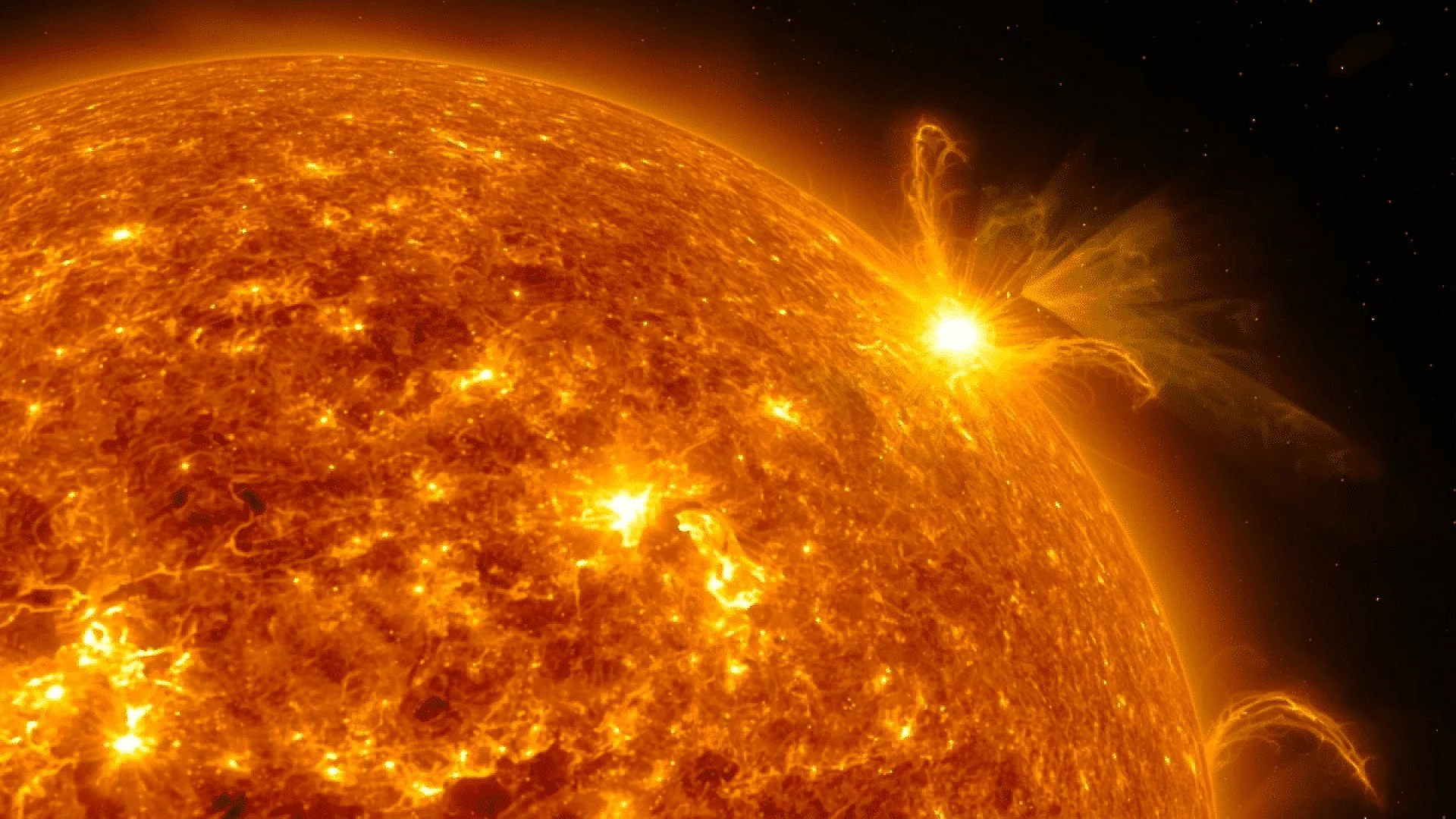
Scientists at the New Jersey Institute of Technology have captured, for the first time, a detailed sequence of events leading up to an exceptionally powerful solar flare. Their arXiv‑posted study shows that an X9‑class eruption was signaled hours before it ignited, offering unprecedented insight into the mechanisms that drive these massive solar outbursts.
Early Signals Detected in a Highly Active Region
On 3 October 2024, a volatile patch of the Sun produced an X9.0‑class flare—among the strongest on record. Because several spacecraft had already been tracking the same area following a previous intense flare, researchers were able to monitor the Sun’s behavior in the crucial hours preceding the event.
The investigators examined three key attributes of solar plasma emission—turbulence, flow speed and luminosity. By applying wavelet analysis, a technique that isolates recurring patterns, they reconstructed a comprehensive timeline of the flare’s buildup. The resulting dataset stands as one of the most thorough pre‑eruption records to date, shedding light on dynamics that were previously hidden.
Dual Oscillation Patterns Reveal Complex Motions
Their analysis uncovered two separate rhythmic cycles: a short‑period oscillation repeating every 7–10 minutes and a longer one lasting about 18–21 minutes. Both signals were strongest along the interface where magnetic fields of opposite polarity meet, indicating that multiple plasma processes were interacting.
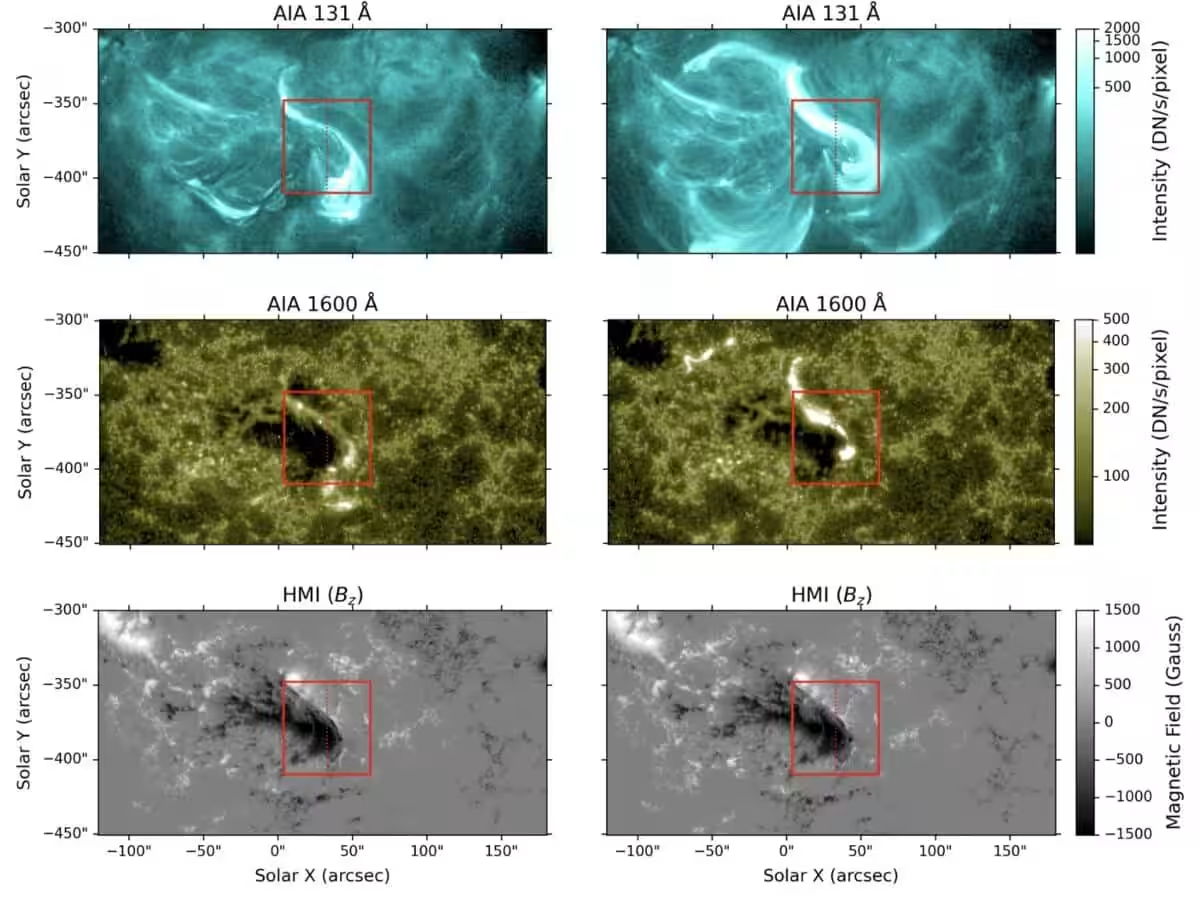
Credit: Louis Seyfritz et al.
The faster oscillations likely reflect localized turbulence and energy transfer within the plasma, while the slower rhythm may signal larger‑scale magnetic reconfiguration. Capturing both patterns simultaneously provides fresh clues about how the Sun’s magnetic field destabilizes ahead of a major flare.
From Slow Build‑Up to Rapid Explosion
In addition to the oscillations, the team recorded a steady rise in turbulence, flow speed and brightness beginning roughly three hours before the flare, suggesting a gradual accumulation of magnetic energy—most likely driven by the twisting of a magnetic flux rope.
Around 15–20 minutes prior to the eruption, these trends accelerated sharply. Outward‑moving plasma signaled the onset of magnetic reconnection, the process that releases the vast energy powering solar flares. This transition marks a narrow window in which early warnings could be identified, opening possibilities for more accurate space‑weather forecasting.
Implications for Future Solar‑Weather Alerts
Although the findings derive from a single event, they outline a potential template for spotting pre‑flare indicators elsewhere on the Sun. Replicating these signatures in future eruptions could enable scientists to forecast powerful flares, helping to safeguard satellites, electrical grids and astronauts from harmful radiation.
The full paper, available on arXiv, marks a significant advance in decoding the complex prelude to solar explosions. By linking plasma fluctuations to magnetic destabilization, Seyfritz and his colleagues lay groundwork for both deeper scientific inquiry and practical forecasting tools.
This article has been fact checked for accuracy, with information verified against reputable sources. Learn more about us and our editorial process.
Last reviewed on .
Article history
- Latest version
Reference(s)
- Seyfritz, Louis. “Investigating Pre-flare Signatures in Spectroscopic Observations of an X9-class Solar Flare.” arXiv.org, doi: 10.48550/arxiv.2605.07889. <https://dx.doi.org/10.48550/arxiv.2605.07889>.
Cite this page:
- Posted by Zara Tariq