Scientists Use Balloons, Aircraft and Ground Sensors in 2‑Minute 2026 Eclipse
Scientists gear up for the August 12 total solar eclipse, a rare chance to capture data unattainable by spacecraft probing the Sun’s outer atmosphere.
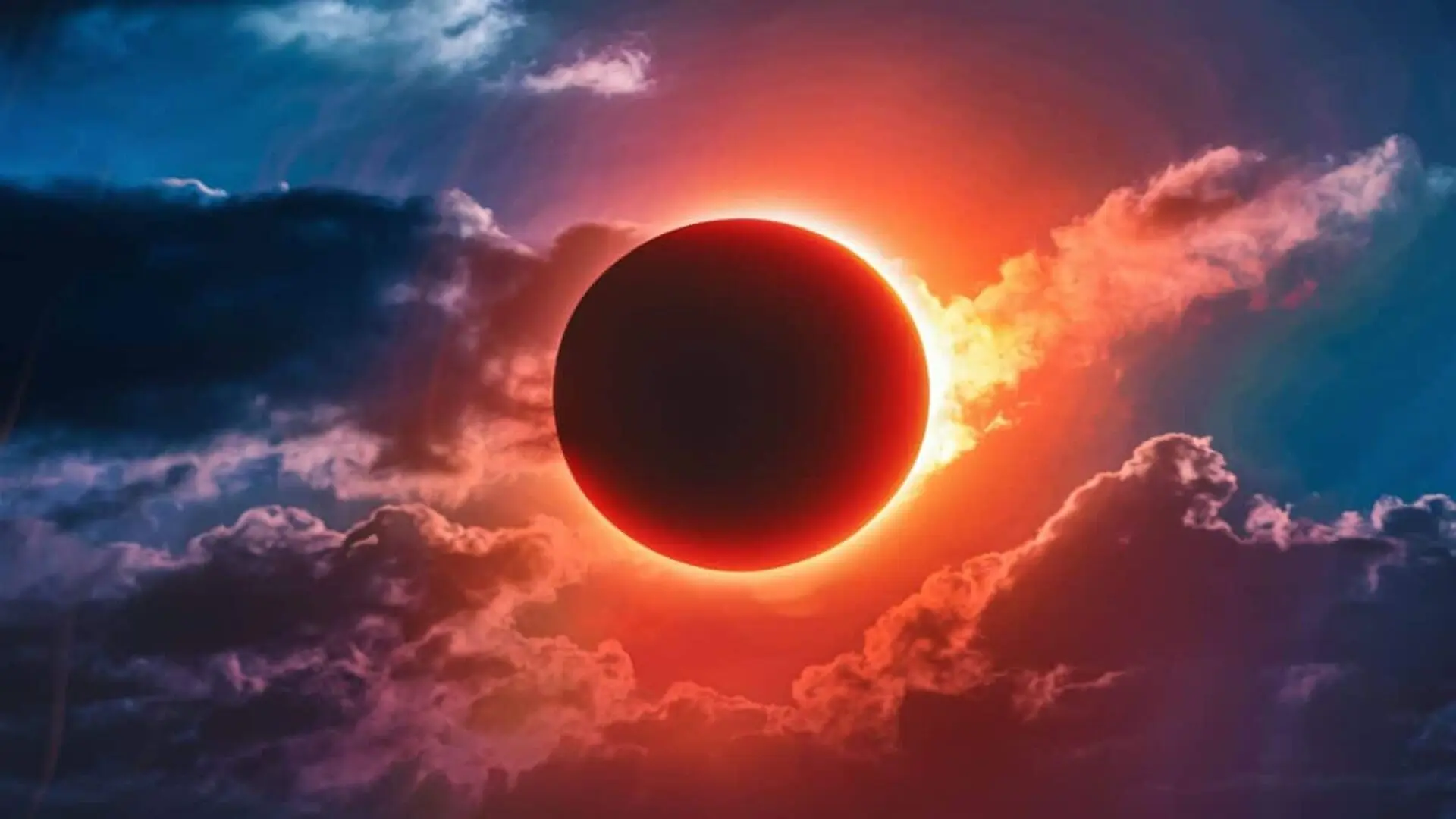
A total solar eclipse on 12 August will sweep across eastern Greenland, western Iceland and northern Spain, delivering Western Europe its first total eclipse since 1999. At the point of greatest obscuration the Moon will block the Sun for just over two minutes, unveiling the faint corona that is usually drowned out by the Sun’s brilliance.
While orbiting observatories such as NASA’s Parker Solar Probe, ESA’s Solar Orbiter and the Solar and Heliospheric Observatory monitor the Sun continuously, scientists argue that a natural eclipse still offers research angles that spacecraft cannot replicate. Artificial eclipses generated by ESA’s Proba‑3 mission add to the toolbox, yet the brief darkness of a true eclipse remains a unique laboratory for both solar and atmospheric studies.
Coordinated Balloon, Aircraft and Ground Campaigns to Probe Eclipse Impacts
A consortium of U.S. universities, under the banner of the Nationwide Eclipse Ballooning Project, will launch high‑altitude balloons from Spain and Iceland. Spanish payloads are slated to ascend to 27–37 km, equipped with omnidirectional cameras, ozone‑monitoring sensors and radio‑frequency experiment kits. Parallel launches in Iceland will deploy radiosondes that record pressure, temperature, humidity and related atmospheric variables.
These measurements aim to capture how the Moon’s shadow perturbs the planetary boundary layer—the lowest atmospheric tier directly heated by the surface—and to trace atmospheric gravity waves generated by the moving eclipse shadow. Project lead Angela Des Jardins notes that data from the 2024 eclipse already revealed signatures of high‑altitude gravity waves, and the 2026 campaign will extend that analysis.
NASA will complement the balloon effort with three WB‑57 research aircraft flying above Iceland at roughly 50 000 ft. At that altitude the aircraft can observe visible, near‑infrared and mid‑infrared wavelengths with minimal water‑vapor interference, providing a clearer view of the corona. Solar physicist Amir Caspi emphasizes that the eclipse offers a rare chance to study the Sun’s outer atmosphere, which is ordinarily outshone by the bright photosphere.
Corona Imaging, Spectroscopy and Classic Tests of Relativity
Building on the Citizen CATE project that stitched together a one‑hour corona time‑lapse during the 2024 eclipse, researchers plan to repeat the experiment in 2026 and expand it for the longer totality expected in August 2027. Rather than relying solely on photographs, many teams will collect spectroscopic data to extract plasma speed, temperature and density from the corona’s emitted light.
Spectroscopy also underpins efforts to refine the Sun’s apparent radius. The Besselian Elements Team will record flash spectra at the edge of totality, feeding more precise eclipse maps into calculations of the solar limb.
In Iceland, NASA scientist Liz MacDonald will operate all‑sky cameras to hunt for faint auroral glows that might become visible against the darkened sky. Even a null result could clarify whether the eclipse‑induced darkness enhances auroral detection.
A separate team at the University of Iceland, led by doctoral candidate Matthias Harksen, intends to replicate Arthur Eddington’s historic 1919 observation of starlight deflection. Using modern instrumentation, the project seeks to demonstrate that the classic test of general relativity remains reproducible, rather than to challenge the theory itself.
Solar physicist Ryan French of the Laboratory for Atmospheric and Space Physics highlights that eclipse‑based experiments provide a low‑cost platform for testing new concepts, bypassing the lengthy funding cycles required for major NASA or ESA missions. The convergence of balloons, aircraft, ground sensors and spectroscopic tools promises a multifaceted glimpse into both the Sun’s hidden corona and the Earth’s atmospheric response during the brief moment of totality.
This article has been fact checked for accuracy, with information verified against reputable sources. Learn more about us and our editorial process.
Last reviewed on .
Article history
- Latest version
Reference(s)
- “Department of Physics | Montana State University.” <https://physics.montana.edu/directory/faculty/1583536/angela-desjardins>.
- <https://www.researchgate.net/profile/Amir-Caspi-2>.
- “ELIZABETH A MACDONALD - Sciences and Exploration Directorate.” NASA Goddard Sciences and Exploration Directorate <https://science.gsfc.nasa.gov/sci/bio/elizabeth.a.macdonald>.
- “Matthias Baldursson Harksen.” University of Iceland <https://iris.hi.is/en/persons/matthias-baldursson-harksen/>.
- “Ryan French | Solar Physicist.” Ryan French <https://www.ryanjfrench.com/>.
Cite this page:
- Posted by Farah Siddiqui