World’s Oldest Pyramid Claim Points to a 25,000-Year Mystery Scientists Say Was Not Man-Made
Gunung Padang: Controversial claims of a 20,000-year-old Ice Age pyramid in Indonesia spark debate.
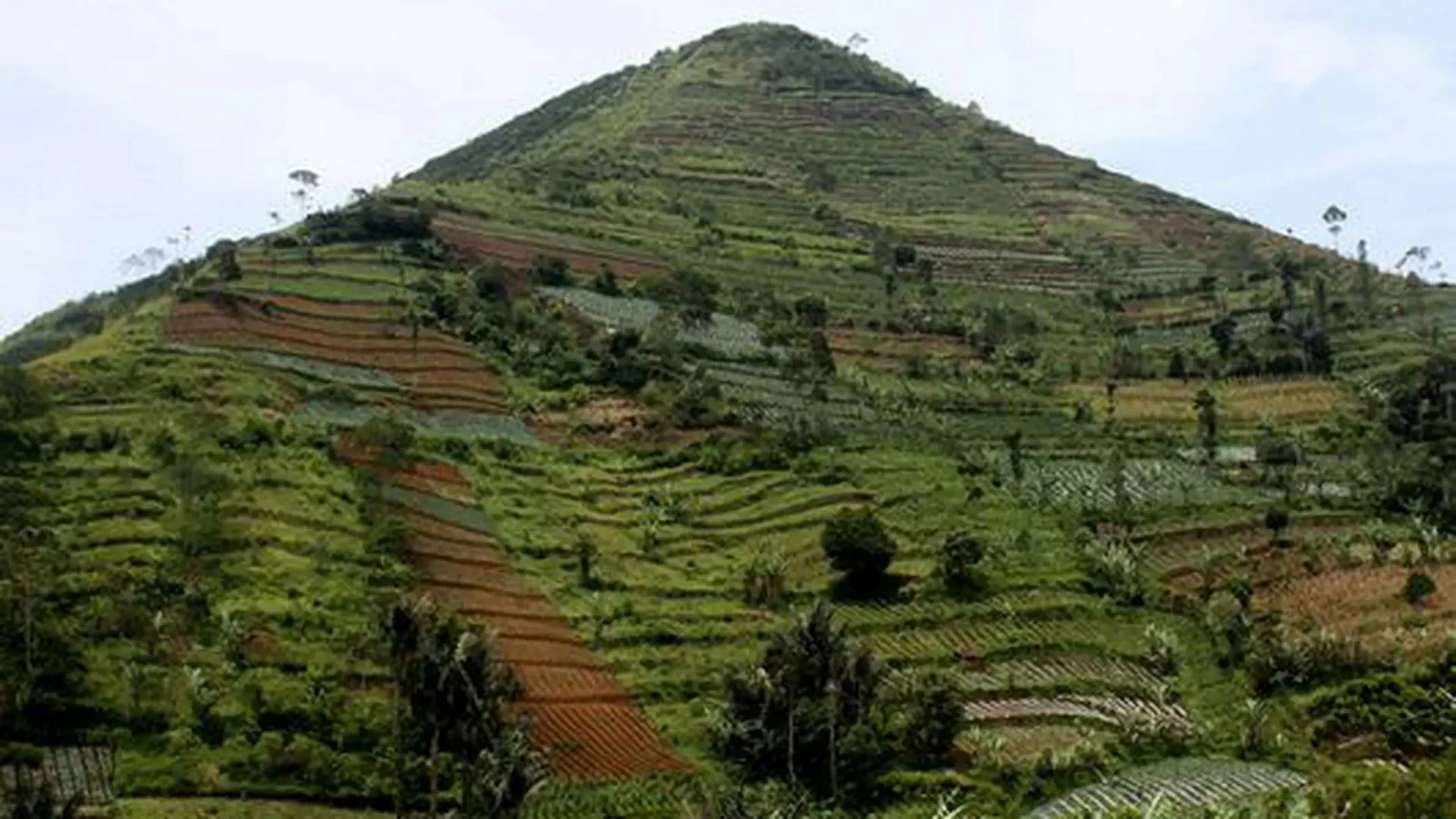
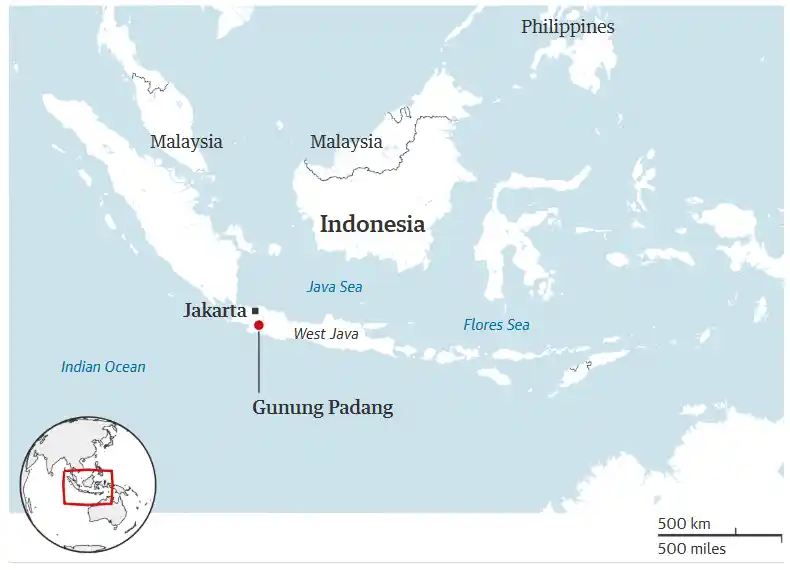
Rising roughly 3,000 feet above the sea in West Java, the volcanic mound of Gunung Padang is covered with moss‑laden stone terraces that overlook neighboring volcanoes. For generations the hill has been revered as a sacred place, its five visible steps forming a striking landscape feature.
A recent study, however, thrust the site into international debate by proposing that beneath those terraces lies a pyramid‑like complex that could predate Egypt’s famous monuments by tens of thousands of years. The authors suggested that some construction phases might date back as far as 25,000 years, a period that predates the advent of agriculture and settled societies.
A Subterranean Structure Proposed Under the Terraces
Geologist Danny Hilman Natawidjaja, affiliated with Indonesia’s national research and innovation agency, led a team that employed ground‑penetrating radar, seismic tomography, core drilling, trench excavations, and radiocarbon dating of organic soil samples to probe the hill’s interior. Their analysis portrayed the site as a multi‑layered formation, with a massive core of andesite lava that they argued may have begun as a natural volcanic hill before being reshaped and encased by later construction phases, possibly extending into the last glacial period.
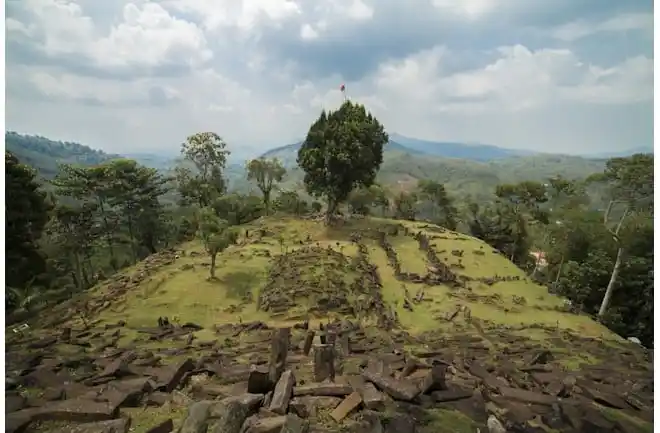
If the hypothesis were correct, it would push the timeline for large‑scale stone construction deep into the Paleolithic era, implying sophisticated masonry skills existed well before the emergence of farming, a claim that quickly captured the imagination of those fascinated by lost‑civilization narratives.
Archaeologists Raise Doubts About the Findings
Critics point out that the central issue is not the significance of the hill itself, but whether the buried layers truly represent human handiwork. Radiocarbon dates on soil can indicate the age of organic material, yet they do not automatically reveal when a structure was erected. In this case, reviewers noted that the dated samples lacked clear markers of human activity such as charcoal, bone fragments, tools, or other artifacts.
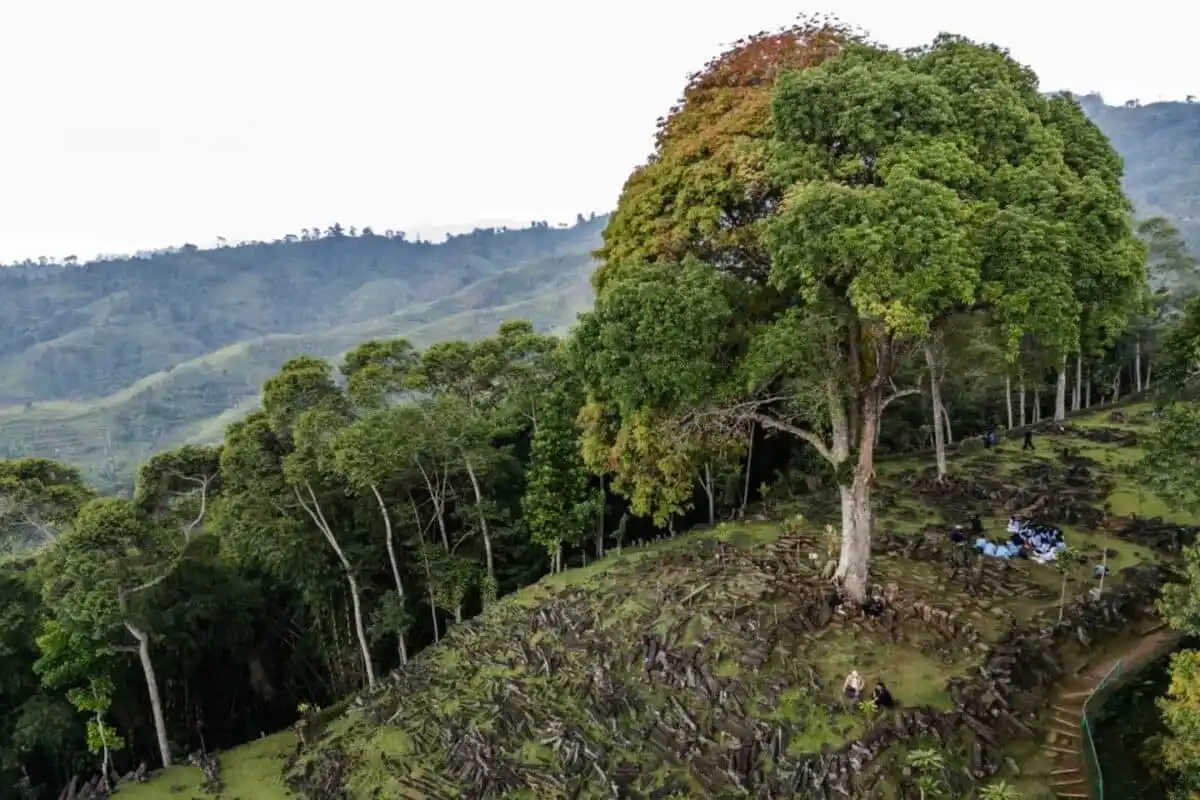
Flint Dibble of Cardiff University told The Guardian that the data did not substantiate the headline claim and warned that natural processes in volcanic terrains can produce regular patterns that might be mistaken for intentional architecture. Bill Farley of Southern Connecticut State University echoed this sentiment, emphasizing that without unequivocal evidence of construction or occupation, the argument remains speculative.
Journal Retracts the Controversial Paper
The dispute escalated when the journal that published the study withdrew the article in February 2024, citing methodological shortcomings and insufficient proof that the subterranean layers were anthropogenic. Despite the retraction, Natawidjaja continues to advocate for further research and has invited scholars worldwide to examine the site, framing Gunung Padang as an open‑ended investigative project rather than a closed case.
The episode also attracted attention because Graham Hancock, a British writer known for alternative theories about an Ice Age civilization, was listed as a proofreader on the original manuscript. Although he was not a co‑author, his involvement heightened concerns among mainstream archaeologists already skeptical of the paper’s conclusions.
Where Does the Title of Oldest Pyramid Still Belong?
The claim matters because it challenges sites that are widely accepted as the world’s earliest monumental constructions. Göbekli Tepe in Turkey, for example, is celebrated as a pre‑agricultural stone complex dating to the Neolithic. If Gunung Padang were truly 25,000 years old, it would predate Göbekli Tepe by a substantial margin.
Current records for the oldest pyramidal structures still point to the Step Pyramid of Djoser in Egypt and the Caral pyramids in Peru, with dates around 2700‑2600 BCE. Guinness World Records notes that Gunung Padang remains a disputed candidate and that broader scholarly consensus would be required before it could be recognized as the earliest example.
The Step Pyramid of Djoser continues to be regarded as the first major stone edifice in Egypt, attributed to the architect Imhotep for Pharaoh Djoser during the 26th century BCE, featuring six ascending tiers above the Saqqara necropolis.
Regardless of the ongoing debate, Gunung Padang holds genuine archaeological and cultural importance. Indonesia’s cultural heritage framework protects the visible terraces as part of West Java’s ancient landscape. What remains unproven, however, is the sweeping assertion that the hill conceals the world’s oldest pyramid dating back 25,000 years.
This article has been fact checked for accuracy, with information verified against reputable sources. Learn more about us and our editorial process.
Last reviewed on .
Article history
- Latest version
Reference(s)
- McKie, Robin. “‘Really, really weak’: experts attack claim that Indonesia site is ‘world’s oldest building’.”, December 16, 2023 The Guardian <https://www.theguardian.com/science/2023/dec/16/really-really-weak-experts-attack-claim-that-indonesia-site-is-worlds-oldest-building>.
- <https://www.nationalgeographic.com/history/article/gobekli-tepe-oldest-temple>.
- “Oldest pyramid.” Guinness World Records <https://www.guinnessworldrecords.com/world-records/oldest-pyramid>.
- Cavendish, Richard. “Step Pyramid of Djoser |Description, Theories, & Facts.”, June 9, 2023 Encyclopedia Britannica <https://www.britannica.com/topic/Step-Pyramid-of-Djoser>.
- <https://cagarbudaya.kemdikbud.go.id/>.
Cite this page:
- Posted by Zara Tariq