Why Olive Oil Takes Nine Minutes to Drain While Milk Leaves In 30 Seconds
Scientists uncover why milk, oil, syrup and water stick to surfaces for varying durations, shedding light on surface adhesion mechanisms.
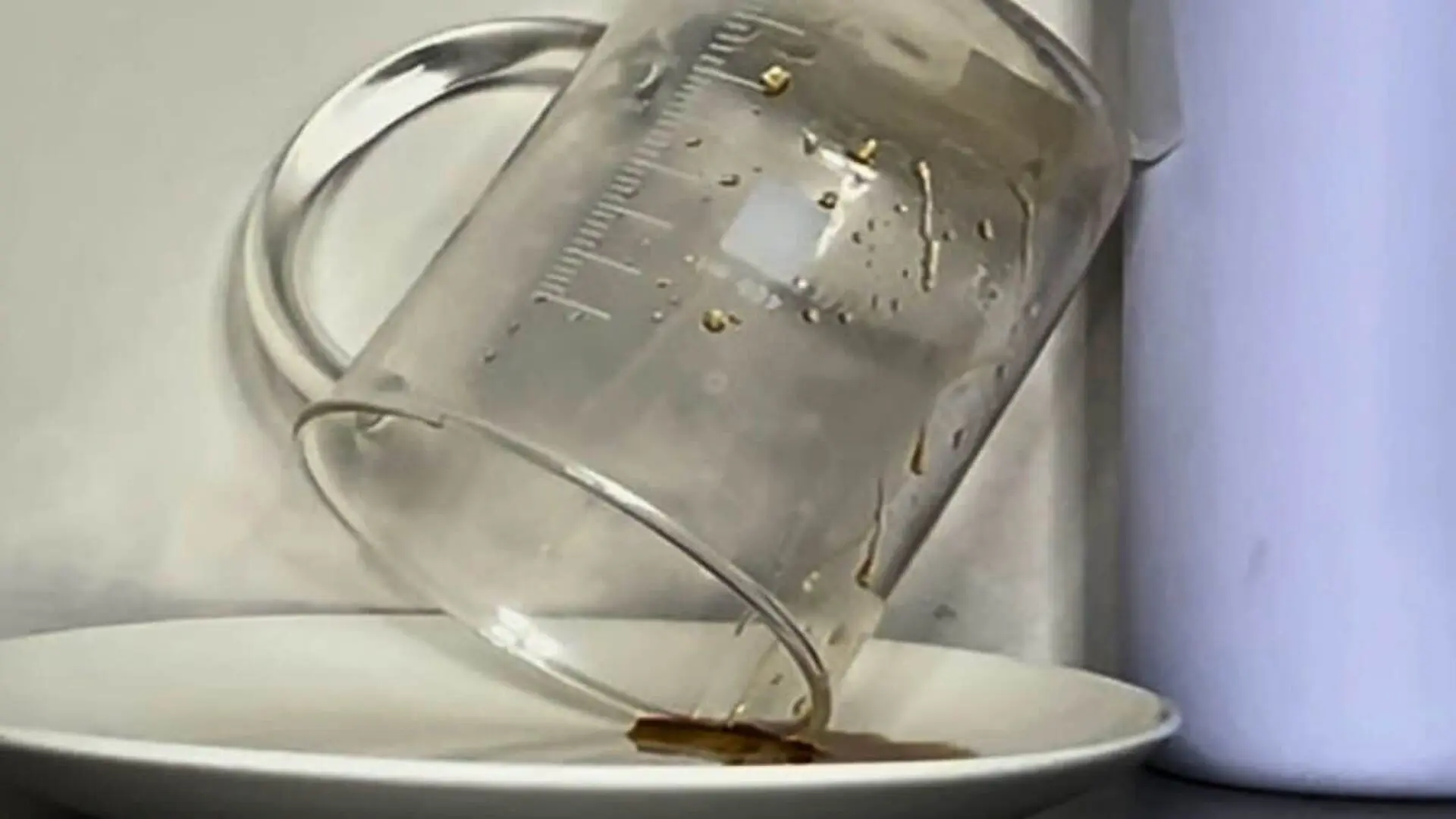
When a milk container is tipped at a 45-degree angle, it takes about 30 seconds for 90 % of the remaining thin film to drain. By contrast, olive oil requires more than nine minutes to reach the same level of drainage.
These observations stem from a study by Brown University physicists Thomas Dutta and Jay Tang, published in Physics of Fluids. The researchers investigated how minute amounts of liquid spread across a tilted surface after the bulk of the contents have been poured out.
Viscosity Dominates the Speed of Residual Film Drainage
The experiments showed that a liquid’s viscosity—its internal resistance to flow—largely determines how quickly the lingering film empties. Water, with low viscosity, drains rapidly, whereas thicker fluids such as oil or syrup can cling to surfaces for minutes or even hours.
Gravity Drives Thin Films, Internal Friction Slows Them
After a bottle, carton, or bowl is tipped, a residual layer of liquid remains on the interior surface. Physicists refer to these layers as thin liquid films because their thickness is much smaller than the area they cover.
Gravity pulls the film downward, while friction within the liquid opposes that motion. Low‑viscosity fluids experience little internal resistance, allowing their layers to slide past one another with ease. Higher‑viscosity liquids resist movement, resulting in slower drainage.
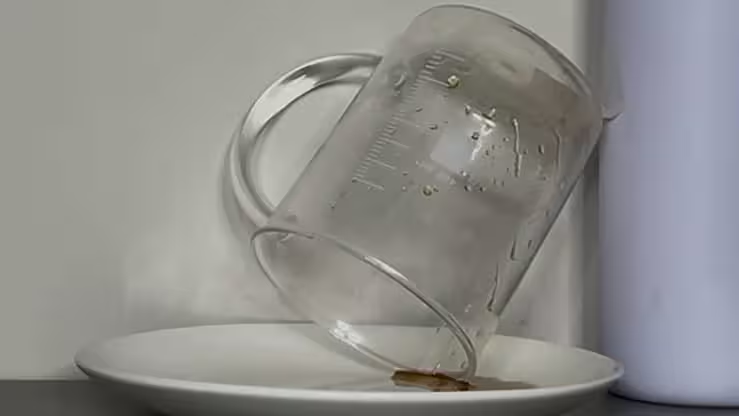
“In both cases, the relevant physics involves the flow of thin layers of fluid on a surface,” Dutta explained, citing everyday examples such as draining containers and rinsing a wok. “This physics appears throughout our research, so we chose it as a practical training problem.”
To model the flow, Dutta employed the viscous form of the Navier‑Stokes equations, focusing on regimes where internal friction dominates the motion.
Laboratory Tests Confirm Drainage Rates
The team validated their calculations by letting liquids slide down a plate set at a 45‑degree angle, weighing the runoff to determine how much remained at each moment.
Using a 90 % drainage benchmark, water achieved the target within a few seconds, milk required roughly half a minute, and olive oil exceeded nine minutes because of its higher viscosity.
The model also predicted that cold maple syrup could need several hours to reach 90 % drainage, illustrating the strong temperature dependence of viscosity.
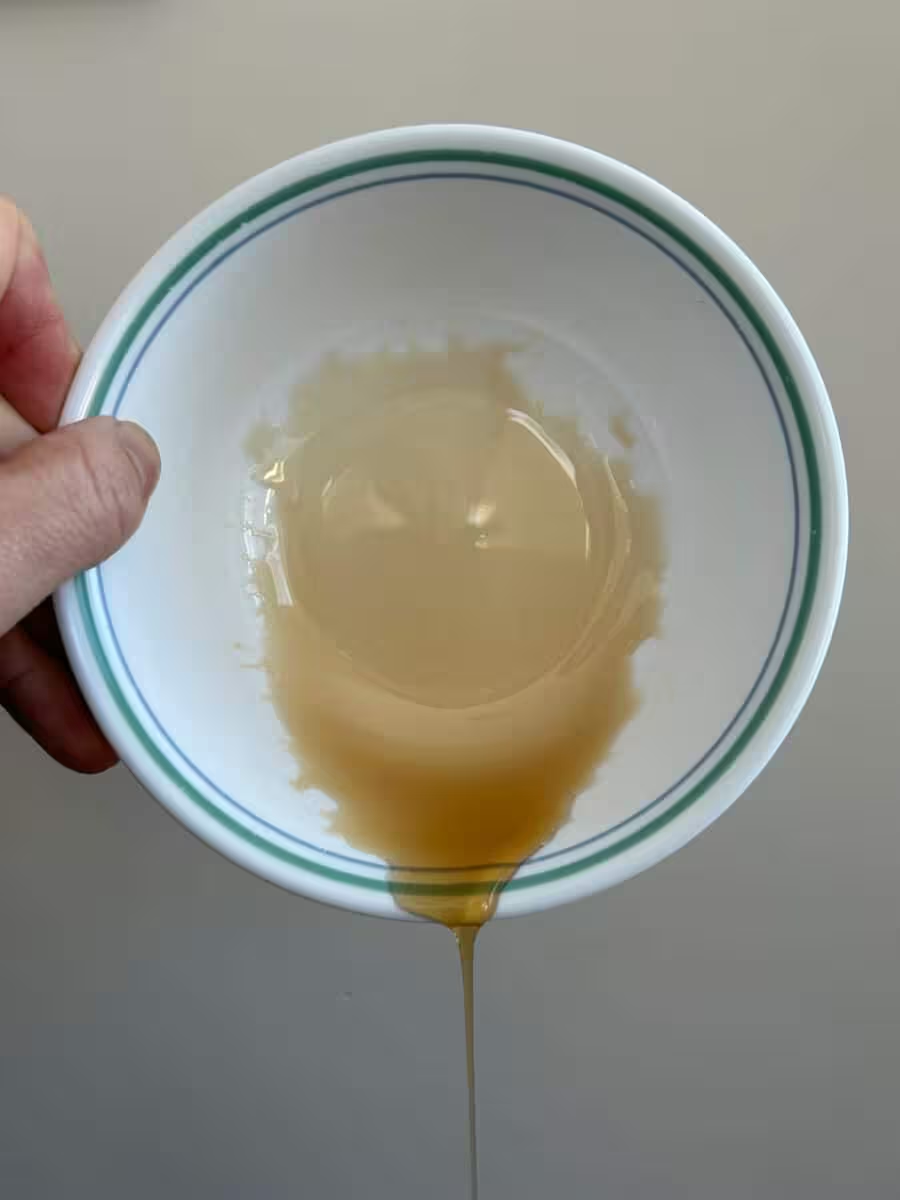
The experimental results aligned closely with the theoretical predictions, clarifying why briefly inverting a milk carton recovers most of the remaining liquid, whereas the same maneuver with an oil bottle leaves a noticeable film on the walls.
Applying the Findings to Wok Maintenance
His routine consists of pouring out the wash water, allowing the remaining film to pool at the bottom, and then draining it a second time. “After I dump out the water from washing, there’s always a film of residual water,” Tang said. “So I usually wait a few minutes to let that film collect in the bottom, then just dump it again.”
A computer simulation suggested that the optimal waiting period before the second pour is about 15 minutes, whereas Tang typically waited only one or two minutes.
“I was surprised and actually a little disappointed,” Tang admitted. “I usually wait only about one or two minutes, but it turns out that I need to be a lot more patient.”
The project also ties into Tang’s broader work on the biophysics of bacteria, where thin fluid layers influence how individual cells move and how colonies spread across moist surfaces. Those biological systems obey the same fundamental equations tested in the kitchen experiments.
This article has been fact checked for accuracy, with information verified against reputable sources. Learn more about us and our editorial process.
Last reviewed on .
Article history
- Latest version
Cite this page:
- Posted by Farah Siddiqui