Two New Galileo Satellites Join Constellation, Strengthening Global Navigation Accuracy
EU’s Galileo network adds two new operational satellites, strengthening its global navigation capabilities.
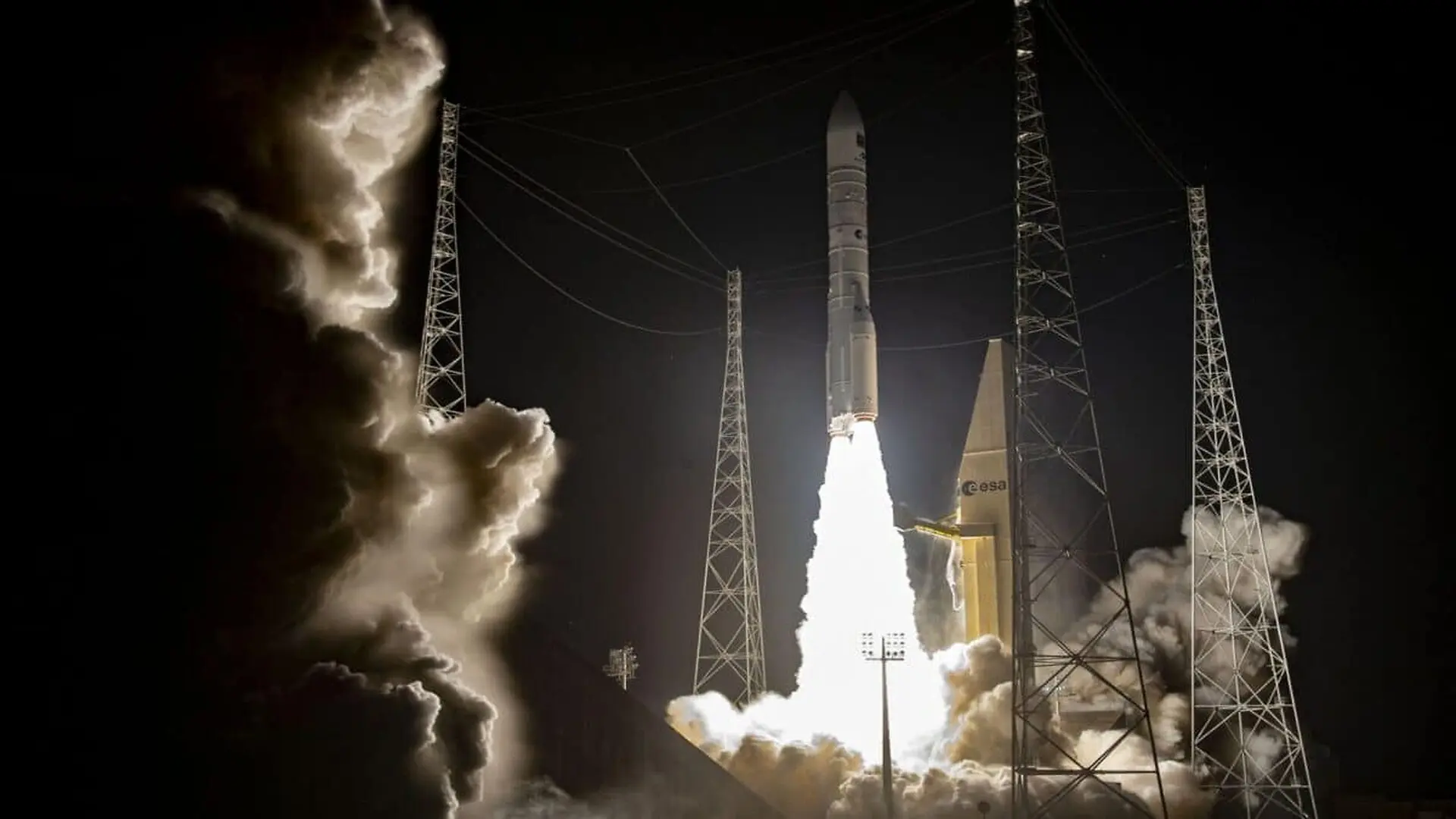
Europe’s Galileo navigation system has welcomed two fresh assets, SAT 33 and SAT 34, into its operational roster, boosting the constellation’s redundancy and signal availability, according to the European Space Agency (ESA). The addition reinforces the network that underpins billions of devices worldwide and supports a growing spectrum of commercial and critical services.
New Galileo Satellites SAT 33 and SAT 34 Begin Operations
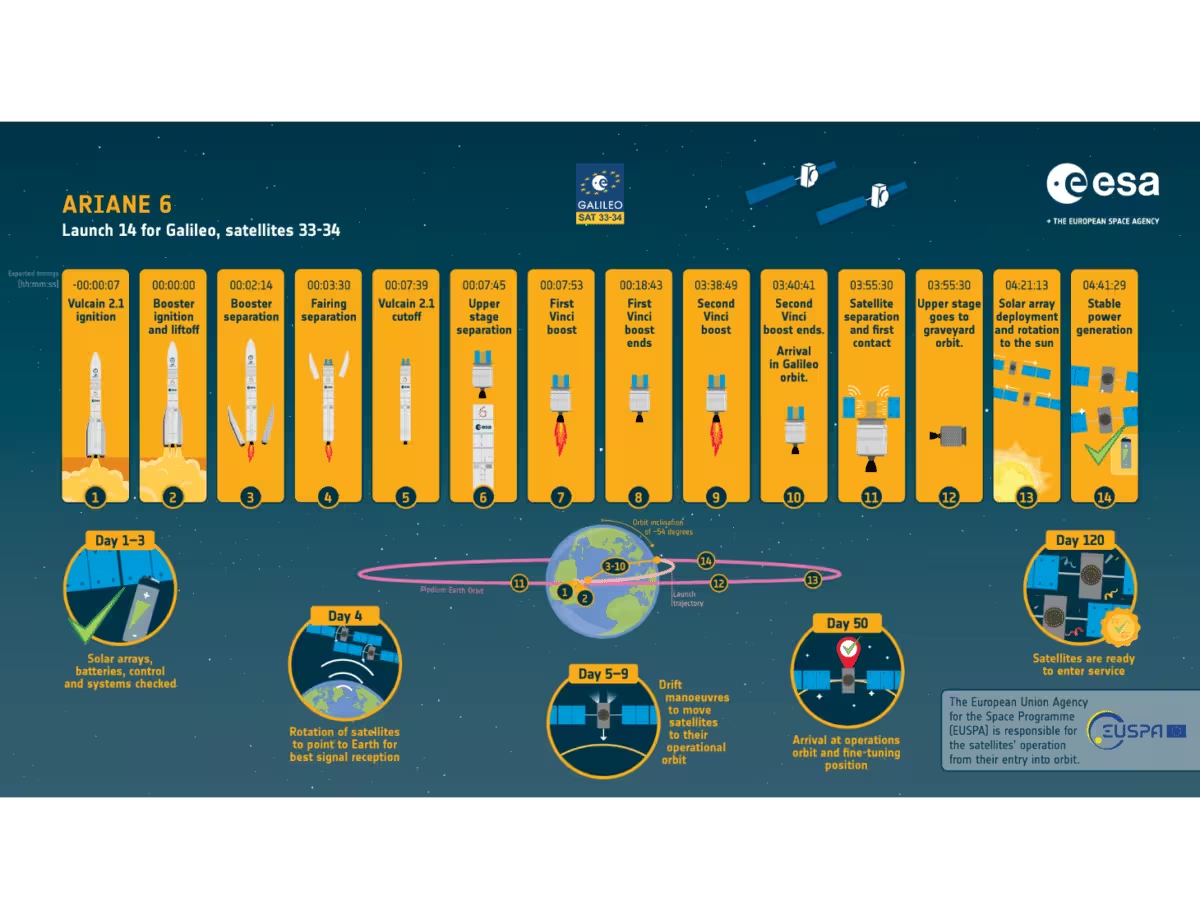
Both spacecraft belong to the First‑Generation segment of Galileo and were dispatched aboard the Galileo 14 flight on 17 December. After a flawless launch, the vehicles entered a multi‑stage commissioning sequence that culminated in their placement at roughly 23 222 km altitude, where they now contribute to the global navigation mesh.
Following separation, the satellites activated their solar arrays, secured initial signal lock and commenced early orbital maneuvers. Engineers at the Galileo Control Centre in Germany (GCC‑D) guided the craft into their designated orbital slots, ensuring seamless integration with the existing fleet.
Commissioning Process Managed by ESA
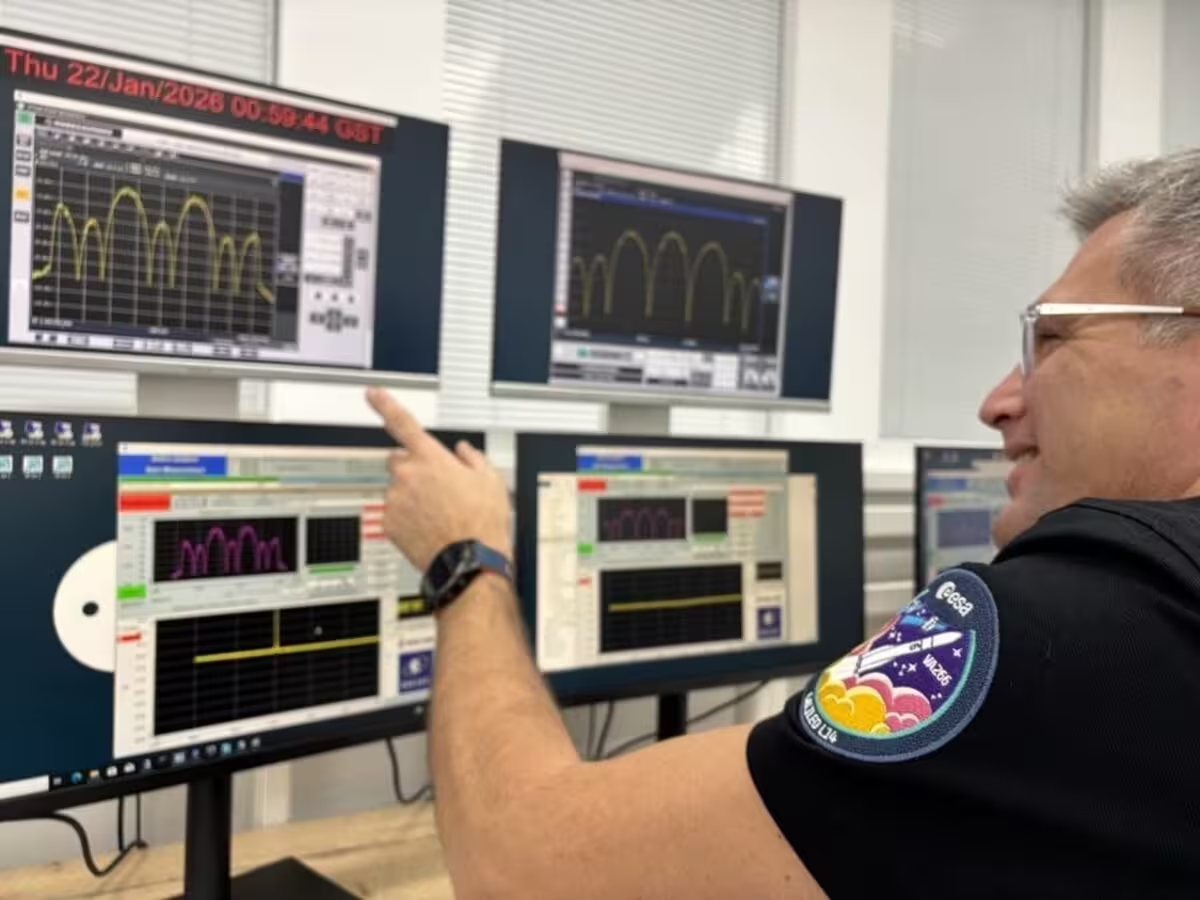
ESA oversaw the design, qualification and on‑ground validation of the satellites’ navigation payloads, atomic clocks, transponders and security subsystems. After launch, ESA teams executed a series of tests that confirmed the spacecraft could emit reliable signal‑in‑space data, a prerequisite for full integration into the Galileo network.
The first significant test was the transmission of the initial navigation signal, which allowed engineers to assess clock performance and payload integrity from the control centre. The European Union Agency for the Space Programme (EUSPA) coordinated service‑level checks to verify that the new assets met the operational expectations of Galileo’s user community.
Collaboration between ESA, EUSPA and other European stakeholders accelerated the commissioning timeline, enabling SAT 33 and SAT 34 to enter routine service ahead of schedule.
Ariane 6 Achieves High‑Precision Insertion for Galileo Launch
The mission marked another milestone for the Ariane 6 launch vehicle, which placed the two Galileo satellites into their precise orbital corridor with minimal corrective maneuvers. This success adds Ariane 6 to the roster of launchers—alongside Soyuz, Ariane 5 and Falcon 9—that have historically supported the Galileo programme.
Accurate orbital insertion reduces fuel consumption for post‑launch adjustments and shortens the interval between launch and commissioning, allowing ground teams to focus on fine‑tuning the navigation payloads.
Galileo’s Growing Role in Global Navigation
Since the rollout of its Open Service in 2016, Galileo has become a cornerstone of worldwide positioning infrastructure, supporting more than five billion smartphone users and a diverse range of sectors, from transport and agriculture to maritime safety, emergency response and financial timing.
All smartphones sold within the European Single Market are now required to be compatible with Galileo, elevating the visibility of Europe’s navigation technology in everyday devices. Professional applications also rely on the system’s precise timing and positioning capabilities.
Future Expansion of Europe’s Independent GNSS
The integration of SAT 33 and SAT 34 strengthens the constellation’s resilience and paves the way for the remaining four First‑Generation satellites slated for launch later this year. Managed and funded by the European Commission, the Galileo programme continues to evolve, with next‑generation satellites under development to further enhance accuracy and robustness.
This article has been fact checked for accuracy, with information verified against reputable sources. Learn more about us and our editorial process.
Last reviewed on .
Article history
- Latest version
Cite this page:
- Posted by Karan Das