Venus Rift Valleys May Still Be Growing, New 3D Models Show Active Tectonics
New evidence suggests Venus is far more geologically active than thought, offering fresh clues to its mysterious evolution.
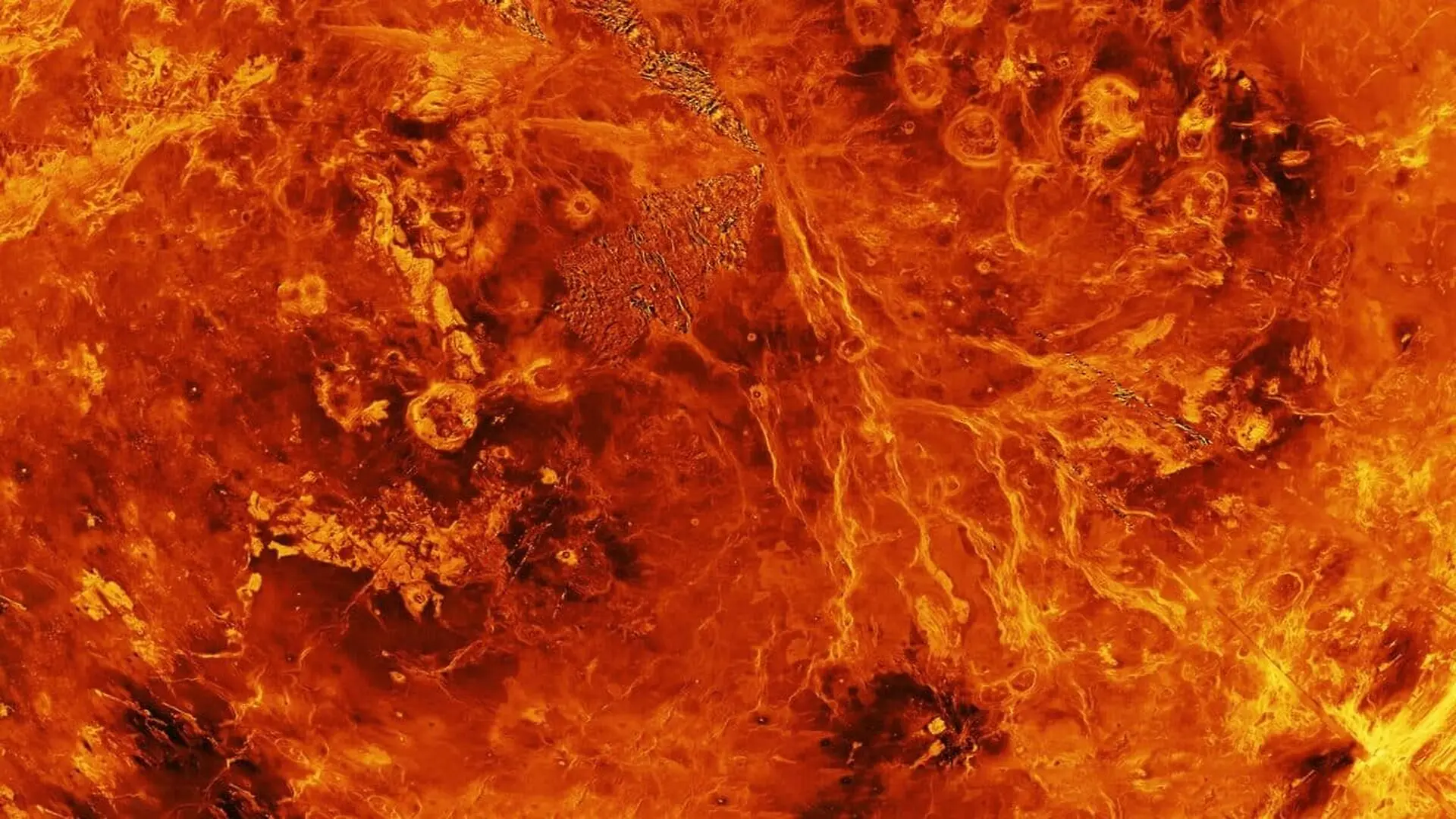
Venus may be far from the static world once imagined, as fresh three‑dimensional simulations suggest that its extensive rift valleys could still be experiencing tectonic reshaping.
Researchers at ETH Zurich have built the inaugural high‑resolution 3D reconstructions of the planet’s rift systems, providing evidence that some of these massive structures might be the product of recent or even ongoing interior motions.
The valleys stretch for thousands of kilometres, with the longest reaching roughly 10,000 km, a scale that rivals Earth’s major rift zones such as the African Rift Valley.
For years, many planetary geologists argued that these features formed more than 100 million years ago and now exist as inert scars on Venus’s surface.
Fresh Rifts Show Tall, Narrow Flanks
The new models concentrate on the elevated margins that line the rift valleys, known as rift flanks. When a rift is youthful or still tectonically active, these flanks appear broad and steep; as time passes they become flatter and wider.
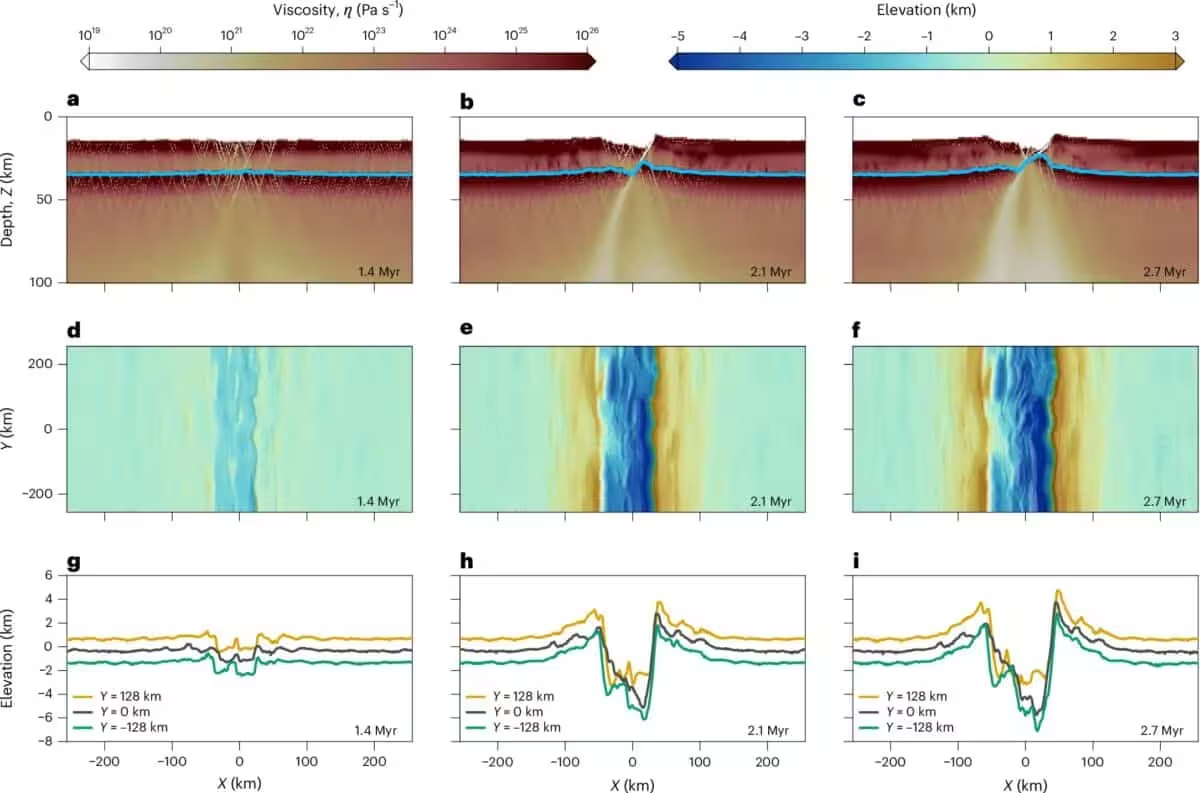
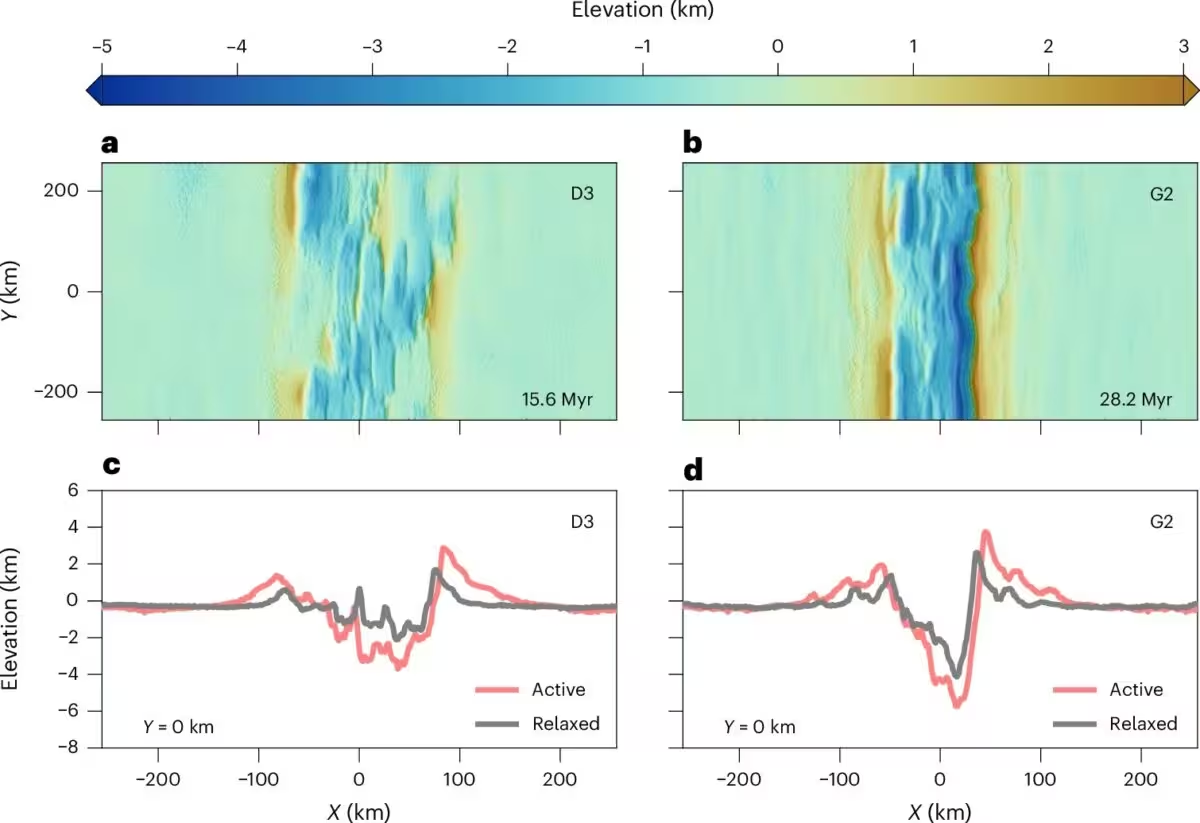
The simulations reveal that younger rifts preserve their sharp, elevated edges, while older structures gradually lose this definition, becoming more subdued.
This morphological contrast offers a practical metric: a tall, narrow flank signals a relatively fresh rift, whereas a low, broad flank points to an older, more relaxed formation.
Venusian Surface Evolution Differs From Earth
On Earth, water, wind and other surface processes steadily wear down topography. By contrast, the researchers found that Venus’s rift flanks primarily evolve through crustal relaxation, a slow sinking of the uplifted edges after tectonic activity ceases.
These findings align with radar images captured by NASA’s Magellan spacecraft, which charted more than 98 % of the planet in the 1990s. The study notes that Magellan’s radar maps display the same broad, elevated flanks predicted by the computer models.
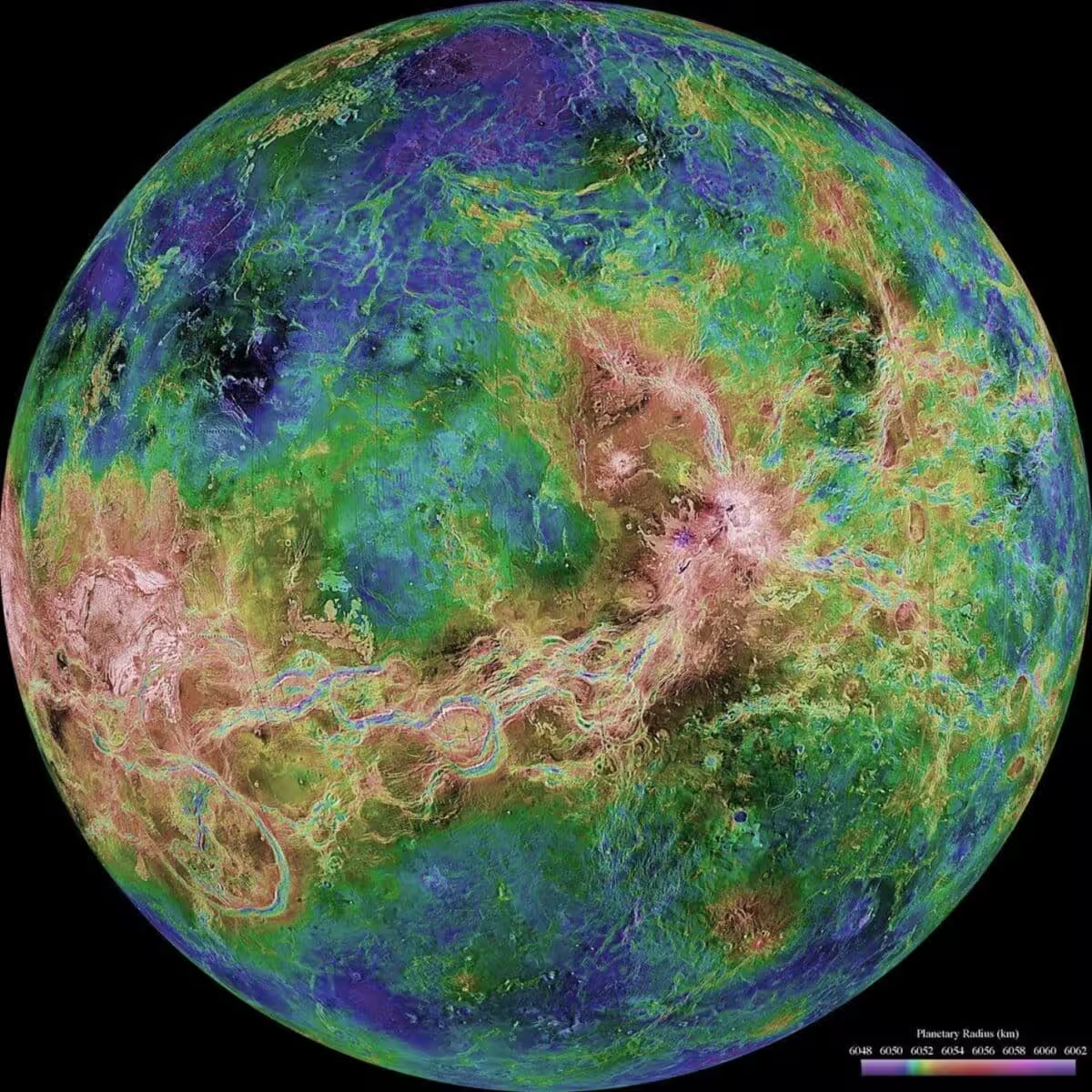
Magellan’s radar survey, conducted between 1990 and 1994, remains the most detailed view of Venus’s terrain because the planet’s dense atmosphere blocks conventional optical imaging.
Implications for Future Exploration
The work implies that Venus’s interior is more lively than previously believed, and that mapping the rift systems could help identify regions where tectonic processes are still shaping the surface, informing the design of upcoming missions.
“The results help us to better assess the tectonic activity on Venus,” Professor Gerya said. “They also could help pinpoint active regions worthy of detailed investigation for the future missions to Venus.”
Also ReadScientists Confirm a Newly Discovered Asteroid Will Make One of the Closest Earth Flybys of the Year
This article has been fact checked for accuracy, with information verified against reputable sources. Learn more about us and our editorial process.
Last reviewed on .
Article history
- Latest version
Reference(s)
- Cermak, Alicia. “Magellan - NASA Science.”, December 8, 2017 NASA <https://science.nasa.gov/mission/magellan/>.
- Yang, Xi. “Recent active rifting on Venus revealed by wide rift flank uplifts - Nature Geoscience.”, July 24, 2026, pp. 1-7. Nature, doi: 10.1038/s41561-026-02044-8. <https://www.nature.com/articles/s41561-026-02044-8>.
Cite this page:
- Posted by Karan Das