Six Titanium Rocket Tanks Wash Ashore in Queensland, Revealing Secrets of Space Debris
Six mysterious metal spheres washed up on an Australian beach spark expert investigation into their unknown origins.
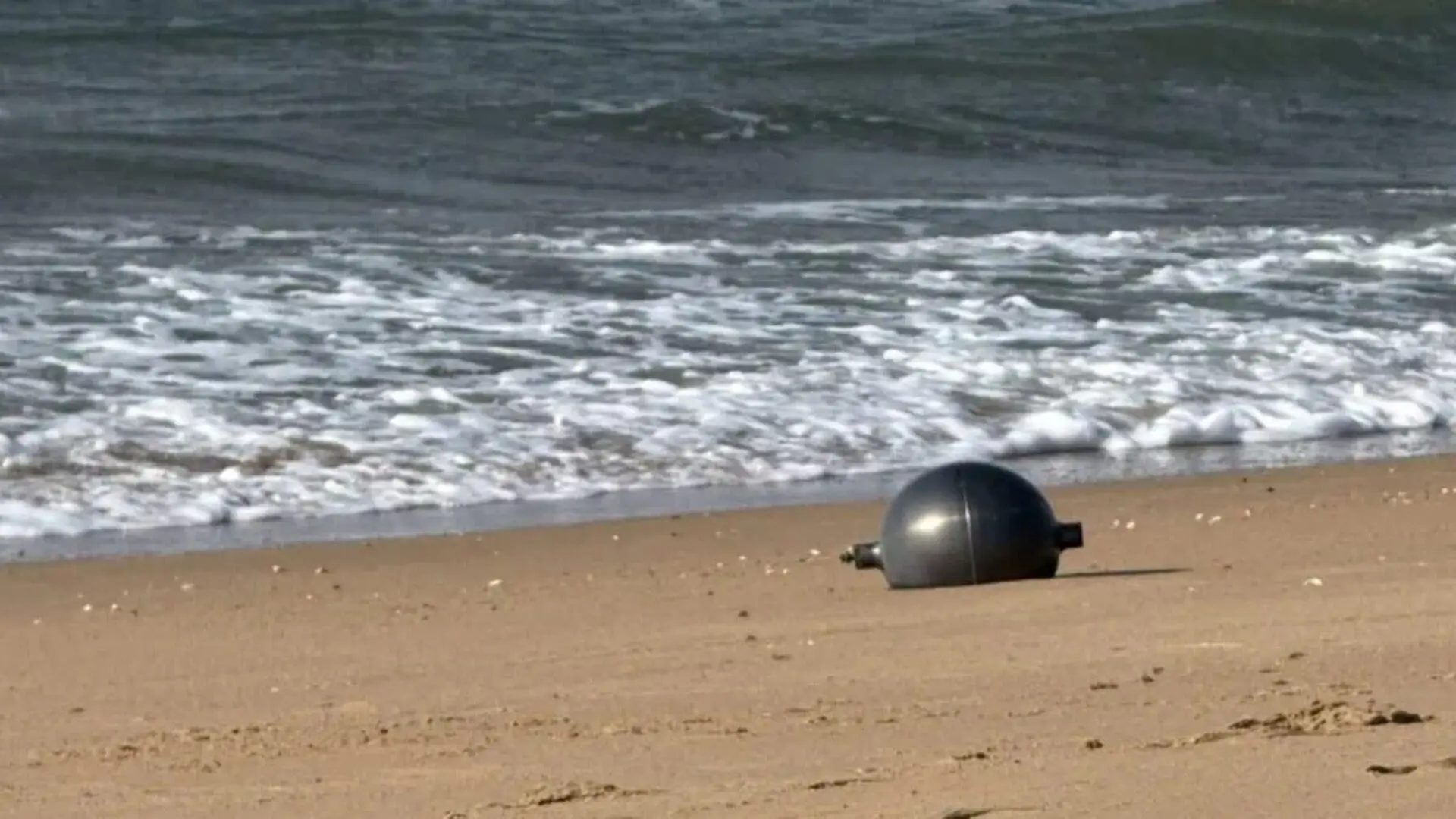
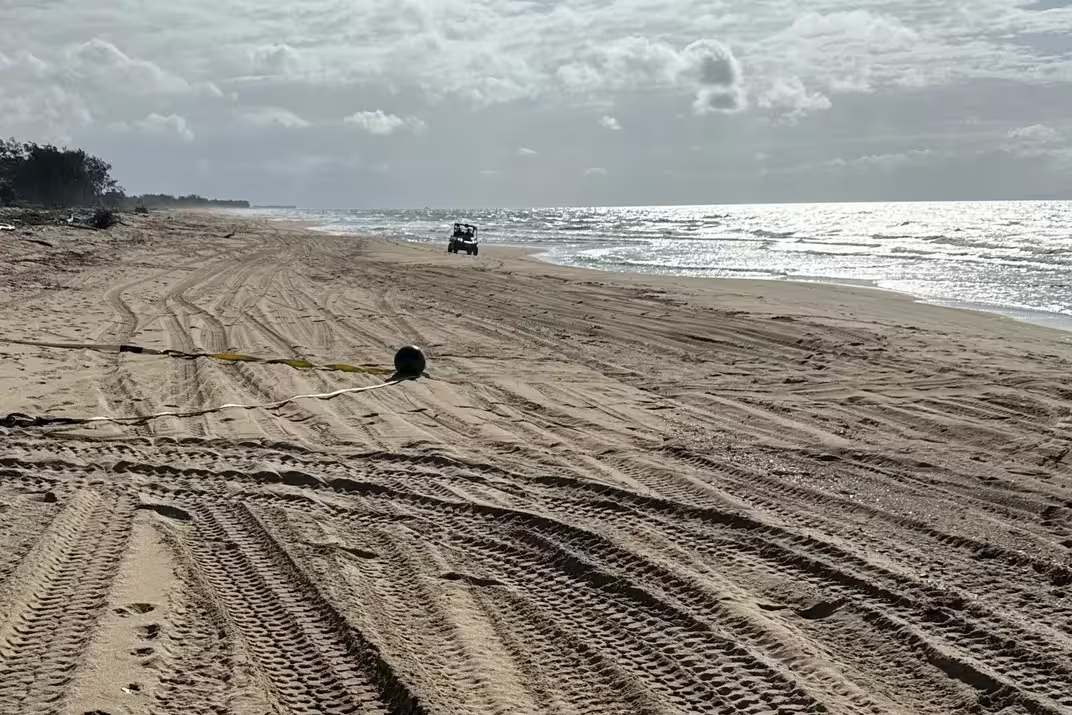
In early July 2026, beach‑goers near Forrest Beach, Queensland, uncovered six metallic spheres that officials suspect belong to a rocket’s launch system. The Australian Space Agency identified the objects as likely pressure vessels and, together with emergency crews, established a 165‑foot (50‑meter) safety perimeter while specialists examined the find.
The recovery adds to a growing catalogue of space‑related debris that has landed on Australian soil. Past incidents include fragments from NASA’s Skylab in 1979, a section of a SpaceX Dragon cargo capsule discovered in New South Wales in 2022, and a pressure tank linked to an Indian launch vehicle recovered near Perth in 2023.
For researchers tracking orbital junk, each recovered piece offers a tangible snapshot of the chaotic final moments of uncontrolled re‑entry, helping to fill gaps in models of how spacecraft disintegrate in the atmosphere.
Pressure Vessels: Built to Endure the Heat of Re‑Entry
The Queensland spheres are thought to be pressure containers, components designed to hold gases under high pressure within rockets and spacecraft. Their robust construction makes them among the few elements capable of withstanding the intense thermal and mechanical stresses of atmospheric breakup.
“Very often they will be made of something like titanium which is really good at surviving.”
According to Marlon Sorge, executive director of the Center for Orbital Reentry Debris Studies (CORDS) at Aerospace Corporation, the material properties of these vessels allow them to retain structural integrity even as temperatures soar.
“Even if they heat up, they don’t care,” Sorge said, describing the durability of titanium components.
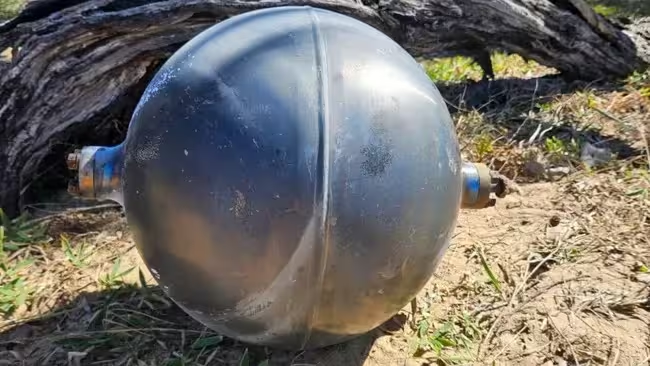
Sorge also highlighted Composite Overwrapped Pressure Vessels (COPVs) as another class of hardware that can survive re‑entry, owing to their design for extreme pressure environments.
Analyzing recovered fragments enables scientists to directly assess the combined effects of heat, pressure and aerodynamic forces on real hardware, rather than relying solely on theoretical models.
Australia’s Track Record with Returning Space Hardware
The Queensland find follows a series of notable landings across the continent. In 1979, debris from the American Skylab space station scattered over Western Australia. More recently, a segment of a SpaceX Dragon capsule was located in New South Wales, and a pressure vessel from an Indian launch vehicle was recovered near Perth.
The Australian Space Agency advises anyone who encounters suspected space debris to avoid direct contact and to report the find to local authorities, allowing qualified teams to evaluate the material safely.
Pinpointing the origin of such objects often requires extensive analysis. Michelle Hanlon, executive director of the Center for Air and Space Law at the University of Mississippi School of Law, noted that finding similar fragments on opposite sides of the globe is precisely what scientists anticipate given orbital dynamics.
“It may seem surprising that pieces of the same rocket can show up in Australia, Canada or on a farm in Africa, but that’s actually what we’d expect.”
Why Forecasting the Landing Zones of Space Junk Remains Elusive
Objects orbiting in low Earth orbit travel over vast swaths of the planet, and when a component begins an uncontrolled descent, atmospheric drag ultimately dictates where it will touch down. The exact impact point, however, is notoriously hard to predict.
“They’re built to withstand enormous pressures, so they are also among the pieces most likely to survive reentry. That’s why they seem to turn up so often,” she stated.
Because oceans cover most of Earth’s surface, the majority of falling debris ends up at sea. Nonetheless, sturdy components such as pressure vessels can survive the fiery plunge and later be found on shorelines or inland locations.
Experts argue that improved tracking during the final phases of re‑entry would greatly aid in linking recovered fragments to their launch origins. Sorge emphasized that knowing the precise time and location of an impact would provide critical insight into the breakup process.
This article has been fact checked for accuracy, with information verified against reputable sources. Learn more about us and our editorial process.
Last reviewed on .
Article history
- Latest version
Reference(s)
- <https://aerospace.org/person/marlon-sorge>.
- “20110008406.” <https://ntrs.nasa.gov/api/citations/20110008406/downloads/20110008406.pdf>.
- “Michelle Hanlon | Ole Miss.” <https://olemiss.edu/profiles/mlhanlon.php>.
Cite this page:
- Posted by Karan Das