Martian Clouds Reveal Secrets to Safer Landings for Future Missions
Cientistas portugueses analisam nuvens de Marte para aprimorar previsões de pouso e apoiar futuras missões ao Planeta Vermelho.
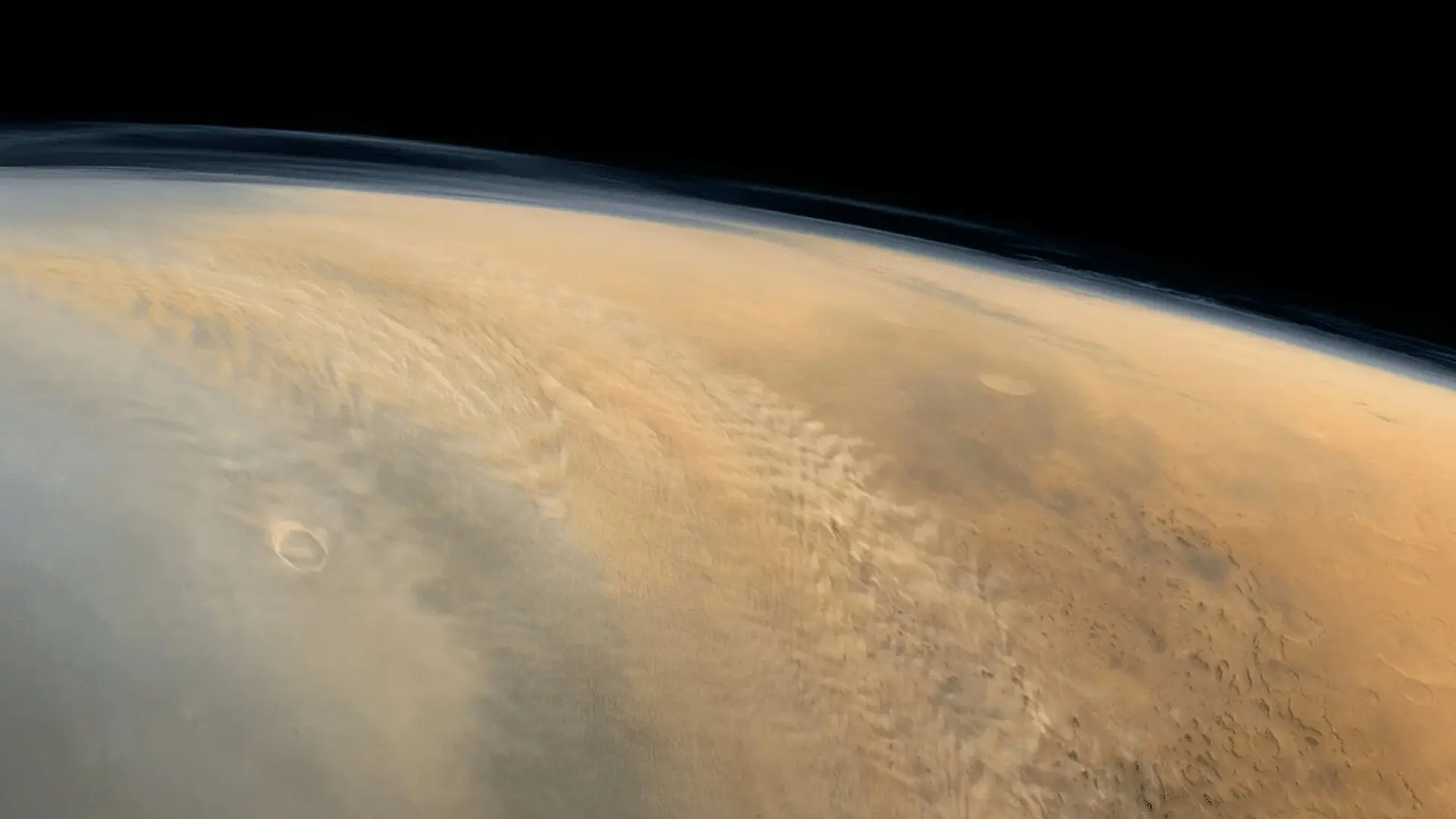
A research group from Portugal has shown that detailed analysis of Mars’ cloud systems can feed directly into the design of safer descent profiles for upcoming missions, according to a paper in Journal of Geophysical Research: Planets. By linking cloud dynamics to atmospheric density and temperature fluctuations, the team provides new tools for engineers planning both robotic and crewed landings.
Turning Cloud Observations into Landing Blueprints
Touching down on Mars remains one of the toughest tasks in interplanetary exploration. The planet’s tenuous atmosphere forces spacecraft to decelerate quickly with limited aerodynamic lift, demanding precise timing for parachute deployment and thruster firing. Portuguese scientists are now quantifying how Martian cloud layers reflect underlying atmospheric processes, offering a predictive edge for future entry, descent, and landing (EDL) phases.
The study maps the formation, motion, and vertical structure of cloud decks, extracting information on temperature gradients, wind shear, and regional circulation patterns. Integrating these data into atmospheric models reduces the uncertainty that typically surrounds the final minutes before touchdown.
Lead investigators emphasize that refined cloud‑based forecasts could help mission planners pinpoint optimal landing windows and fine‑tune descent algorithms, ultimately lowering the risk of aborts caused by unexpected atmospheric shifts.
“Sending rovers to the Martian surface has always been a high‑stakes endeavour,” said researcher Francisco Brasil. “Even modest variations in atmospheric density can tip the balance between a successful landing and a mission‑ending crash.”
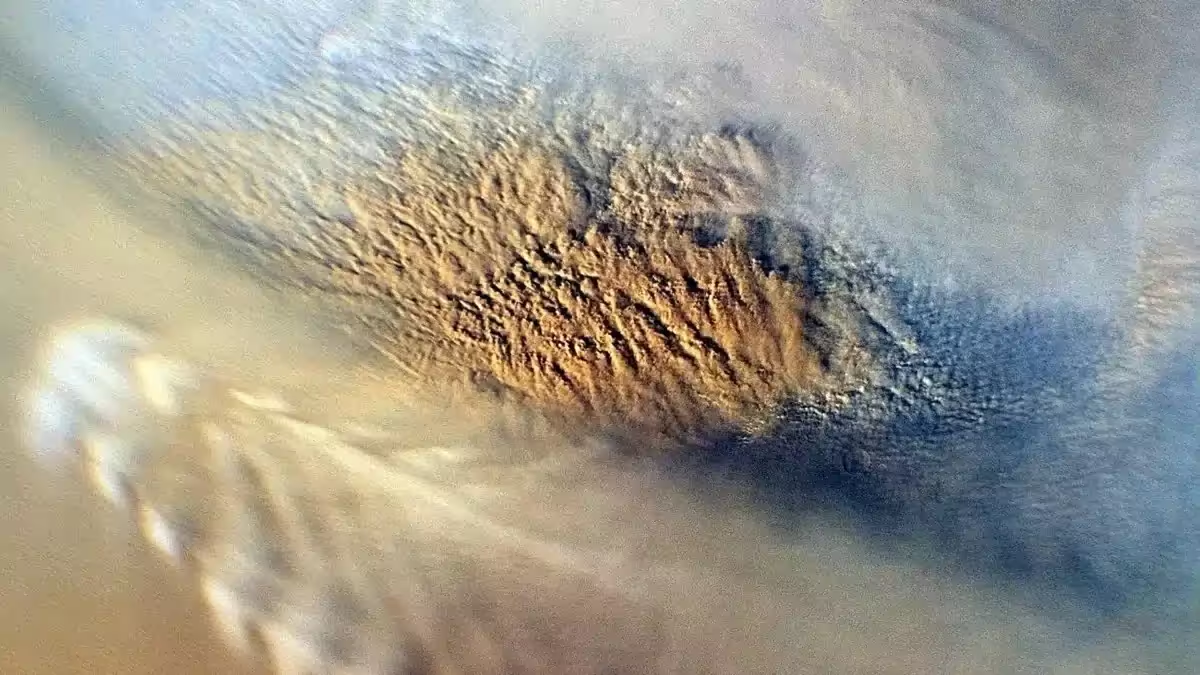
How Martian Clouds Influence Descent Dynamics
Published in Journal of Geophysical Research: Planets, the work demonstrates that even the thin cloud layers of Mars can modulate energy transport, altering local air density and wind speeds. These variations matter because they directly affect the aerodynamic forces acting on a descending vehicle.
By tracking cloud activity, the researchers identified patterns that correlate with shifts in temperature profiles and pressure gradients. Such correlations are essential for calibrating entry‑phase simulations, which currently rely on limited atmospheric snapshots.
For missions carrying rovers, scientific payloads, or future crewed capsules, having a reliable forecast of atmospheric conditions before arrival can dramatically improve the accuracy of EDL software, reducing the need for on‑the‑fly adjustments.
The team combined long‑term orbital observations with high‑resolution climate models, creating a layered picture of Martian weather that can be updated as new data become available.

Why Precise Atmospheric Forecasts Are Critical for Future Landings
A successful Martian touchdown hinges on a tightly choreographed sequence: entry angle, heat‑shield performance, parachute deployment, and final powered descent. Small deviations in atmospheric density or wind speed can cascade into mission‑critical errors.
Integrating cloud‑derived metrics adds an extra layer of situational awareness, enabling engineers to refine simulation inputs and anticipate rapid weather changes that occur high above the surface.
As space agencies plan larger, more capable robotic explorers and contemplate human crews, the demand for high‑fidelity atmospheric models will only increase. Human missions, in particular, require near‑certain predictions to safeguard astronaut safety during the most hazardous phase of flight.
The Portuguese effort contributes to a global collaboration aimed at treating Mars as a dynamic system rather than a static target, illustrating how seemingly minor atmospheric features can yield actionable intelligence for the next wave of exploration.
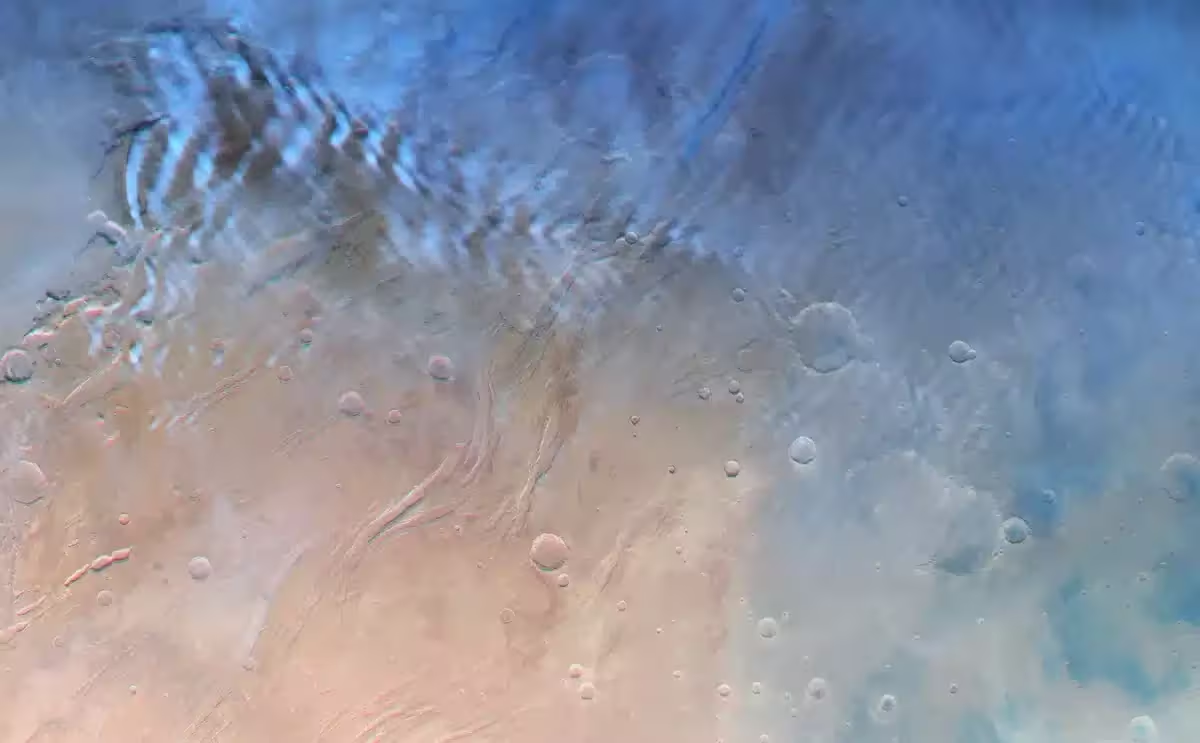
A Broader View of Martian Exploration
The investigation into Mars’ clouds underscores a shift toward leveraging atmospheric science to solve engineering challenges. Features that might appear negligible from orbit can, in fact, signal critical changes in the environment that a descending spacecraft must navigate.
As agencies refine mission concepts, incorporating cloud and weather data will become standard practice, improving navigation accuracy, landing safety, and subsequent surface operations.
Portugal’s contribution adds a valuable piece to the collective effort of mastering the Red Planet’s climate, moving humanity closer to achieving precise, repeatable landings and sustained exploration.
This article has been fact checked for accuracy, with information verified against reputable sources. Learn more about us and our editorial process.
Last reviewed on .
Article history
- Latest version
Reference(s)
- Brasil, F.., et al. “Morphological and Dynamical Analysis of Atmospheric Gravity Waves on Mars Using Mars Express HRSC Observations.” Journal of Geophysical Research: Planets, vol. 131, no. 7, July 10, 2026 American Geophysical Union (AGU), doi: 10.1029/2025JE009621. <https://agupubs.onlinelibrary.wiley.com/doi/10.1029/2025JE009621>.
Cite this page:
- Posted by Karan Das