Astronaut Captures Rare Hopper Crystal Grown in Microgravity on the ISS
NASA astronaut shows rare crystal formed on ISS, revealing how microgravity reshapes materials.
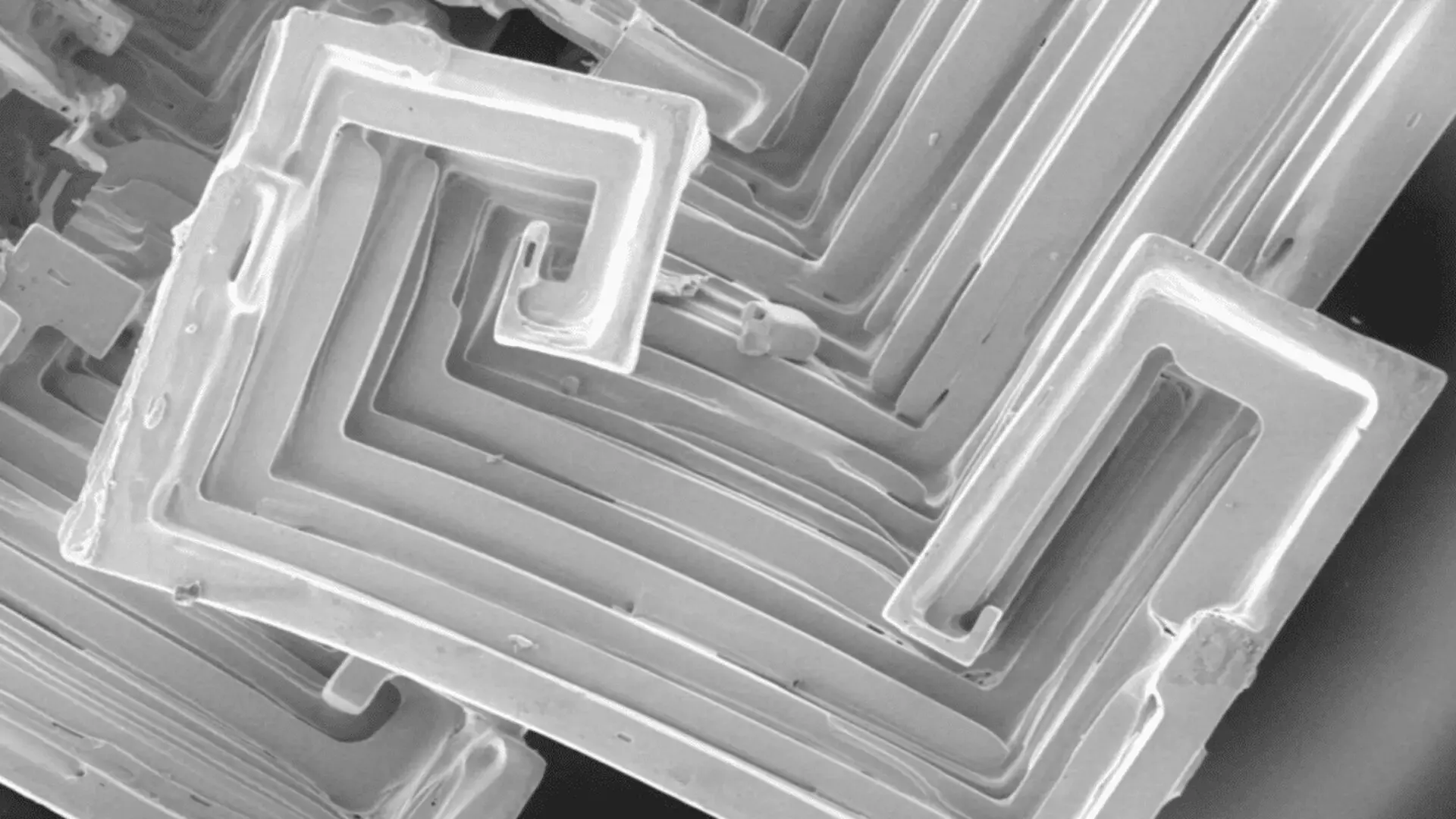
NASA astronaut Don Pettit posted a striking image taken aboard the International Space Station that captures a hopper‑shaped potassium chloride crystal formed in microgravity, providing researchers a fresh perspective on crystal growth without Earth’s gravity.
Hopper‑Shaped Crystal Emerges in Zero‑Gravity Laboratory
The photographed specimen is a potassium chloride crystal that grew during an ISS experiment investigating material behavior in orbit. In terrestrial conditions, gravity drives fluid flow and molecular distribution, but the near‑weightless environment aboard the station allows alternative physical processes to dominate.
The crystal exhibits a geometry that differs markedly from typical ground‑grown forms, resembling a deliberately engineered shape rather than a natural mineral pattern. Researchers examine such structures to learn how atoms and molecules organize when the dominant gravitational pull is absent, and to inform the design of space‑based manufacturing processes.
According to LiveScience, the image demonstrates how even commonplace chemicals can produce surprising morphologies when the surrounding physical conditions are altered, underscoring the impact of microgravity on ordinary chemistry.
Scanning electron microscope look at the hopper crystals I grew on ISS. These are potassium chloride crystals exhibiting a relatively rare “scroll” morphology with step-like structures under weightless conditions. https://t.co/1yVkiH63UCpic.twitter.com/P01hPKBkSR
— Don Pettit (@astro_Pettit) July 18, 2026
How Weightlessness Alters Crystal Growth Dynamics
Crystal growth relies on particle motion, temperature gradients, fluid dynamics, and applied forces. On Earth, gravity induces convection currents that guide dissolved species toward a growing crystal. In orbit, the suppression of these currents reveals subtler interactions, allowing scientists to isolate forces that are normally masked by gravity, as materials scientist Marla Geha Wilson explains: “Other forces start to become far more pronounced than gravity forces.”
This environment lets investigators study surface formation and particle arrangement over time, insights that could support future space manufacturing where controlled conditions enable the production of advanced materials. Ongoing ISS experiments continue to probe how metals, proteins, and crystals respond to microgravity, with the potassium chloride specimen serving as a vivid reminder that familiar substances can behave unexpectedly beyond Earth.
Common Salt, Uncommon Crystal
The experiment employed potassium chloride, a widely used compound in scientific and industrial settings, illustrating how simple chemicals can be leveraged to explore complex physical phenomena in space.
The significance lies in the contrast between the compound’s ordinary nature and the striking hopper morphology it adopts in orbit, echoing the curiosity that drives many researchers working on orbital science.
Wilson expressed enthusiasm for observing everyday materials in the space environment, noting that “I love seeing videos of how things behave in space,” and adding, “Who would think that something as simple as potassium chloride could still be super cool?”
“I love seeing videos of how things behave in space,” she said.
She added, “Who would think that something as simple as potassium chloride could still be super cool?”
Such findings help convey how space research intersects with fundamental scientific questions, showing that a tiny crystal growing aboard a spacecraft can reveal forces shaping matter throughout the cosmos, and reaffirming the ISS as a vital platform for experiments unattainable on Earth.
Implications for Future Space Endeavors
The hopper crystal forms part of a broader initiative to map material behavior beyond Earth, knowledge that will be essential as missions venture farther and endure longer durations. Microgravity studies support advancements in medicine, manufacturing, and spacecraft technology, with the International Space Station offering a unique venue to isolate variables difficult to replicate on the ground.
These observations illustrate that space science extends beyond planetary exploration and astronomical events; even modest experiments can uncover fundamental insights into matter. The potassium chloride crystal, while simple in composition, reflects years of progress in mastering controlled environments, and future orbital studies are likely to reveal more unexpected structures.
This article has been fact checked for accuracy, with information verified against reputable sources. Learn more about us and our editorial process.
Last reviewed on .
Article history
- Latest version
Reference(s)
- Maule, Olivia. “NASA astronaut shares image of impossible-looking 'hopper' crystal growing on the space station. What is happening?.”, July 22, 2026 Live Science <https://www.livescience.com/chemistry/nasa-astronaut-shares-image-of-impossible-looking-hopper-crystal-growing-on-the-space-station-what-is-happening>.
- “https://twitter.com/astro_Pettit/status/2063063048932245847.” <https://t.co/1yVkiH63UC>.
- “https://twitter.com/astro_Pettit/status/2078553330683437238/photo/1.” <https://t.co/P01hPKBkSR>.
Cite this page:
- Posted by Karan Das