Euclid Captures 60 Million Stars in Galactic Bulge, Paving Way for Future Exoplanet Finds
European telescope captures ultra‑detailed 26‑hour image of Milky Way’s core; data will fuel research for years.
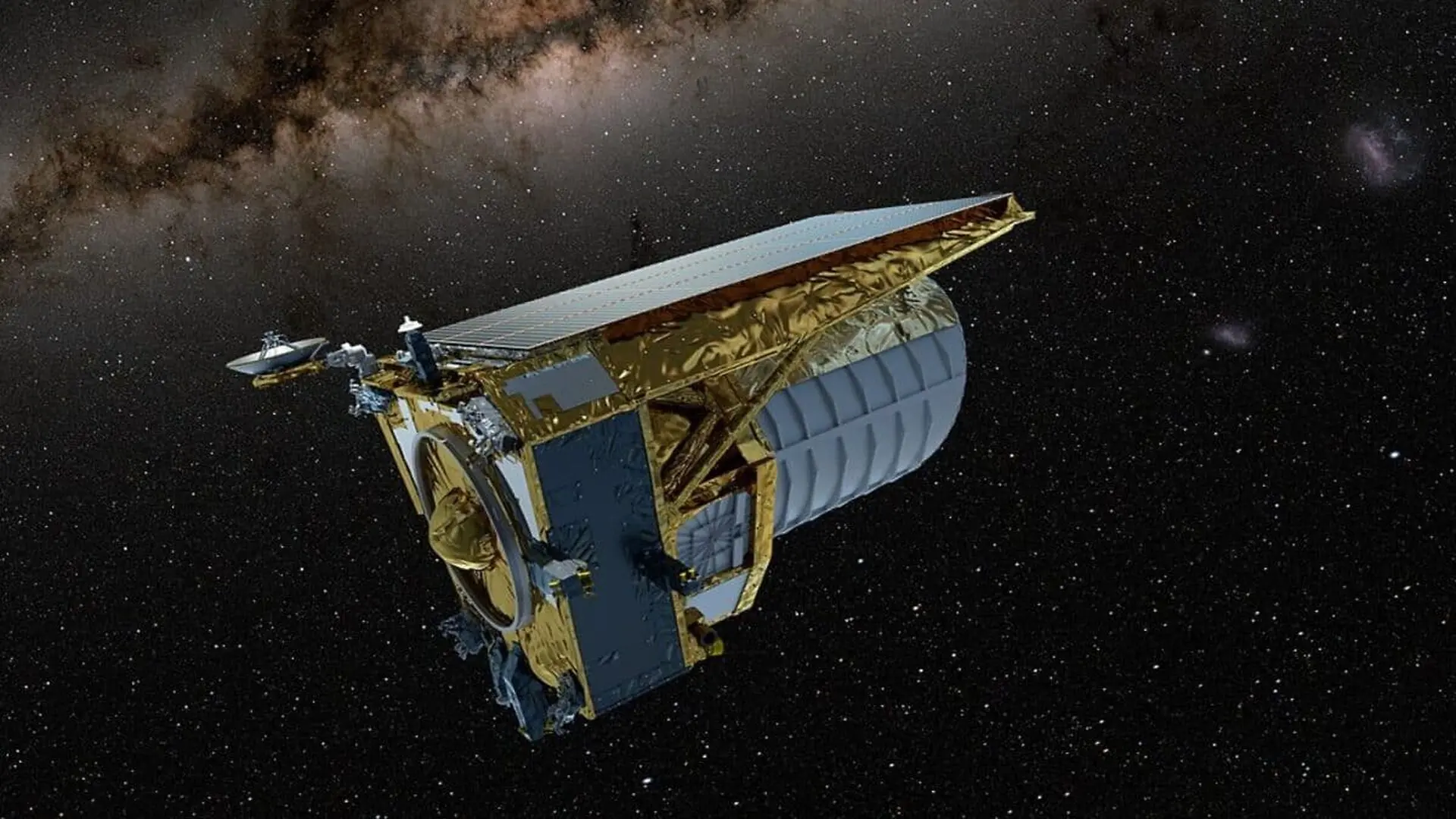
The European Space Agency’s Euclid telescope has produced the most detailed close‑up view yet of the Milky Way’s central bulge. By stitching together 26 hours of observations, the resulting mosaic captures more than 60 million stars and promises to become a cornerstone for exoplanet investigations.
Originally launched to map the large‑scale structure of the cosmos and probe dark matter and dark energy, Euclid’s latest accomplishment turns its gaze toward our own galaxy. Targeting the densely populated galactic bulge, the mission has generated one of the most comprehensive surveys of the Milky Way’s heart.
The galactic bulge presents an extreme crowding problem, with countless stars overlapping from Earth’s perspective. The new composite image demonstrates Euclid’s ability to disentangle this stellar jumble, delivering a clear portrait of a region that remains a priority for astronomers.
A Mosaic Featuring Over 60 Million Stars
The picture was assembled from a series of observations taken in March 2025. Across a total of 26 hours, Euclid’s visible‑light camera scanned the bulge nine times, each pointing covering an area larger than the full Moon.
According to the European Space Agency (ESA), the final composite contains more than 60 million distinct stars. This performance is striking because Euclid was designed primarily for observing distant galaxies, not the densely packed stellar environment at the Milky Way’s core.
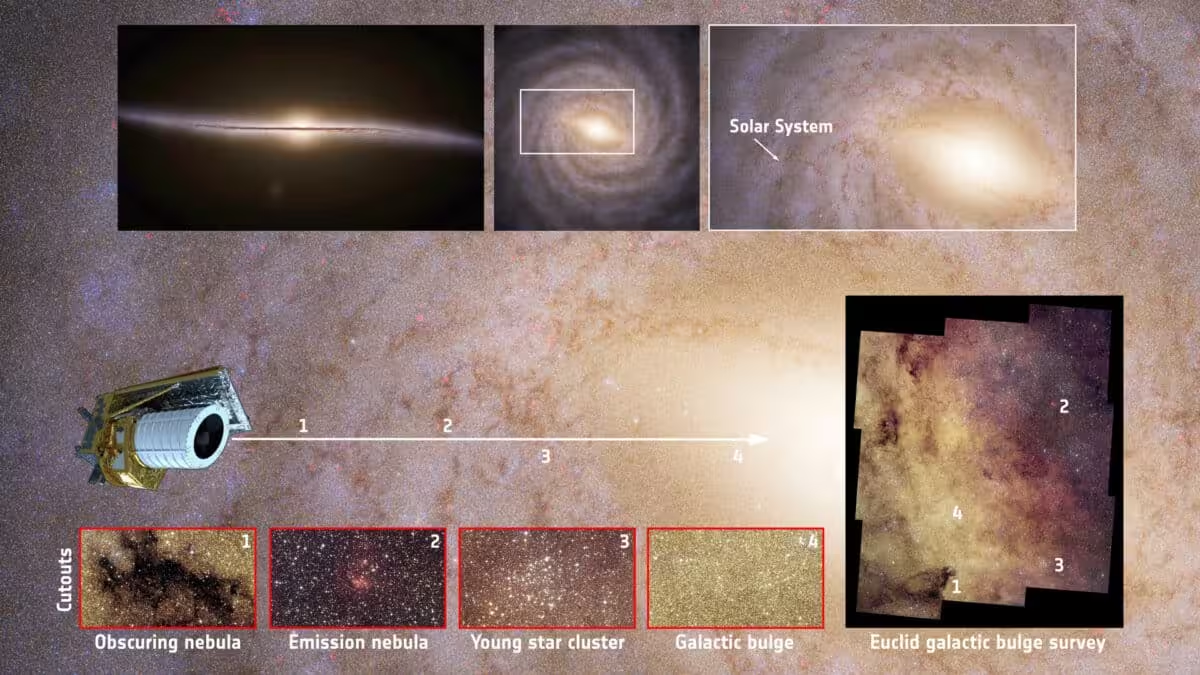
ESA highlighted that Euclid’s detectors are sensitive enough to isolate individual stars throughout the field while preserving the precision required for rigorous scientific analysis.
Boosting Exoplanet Studies with Microlensing
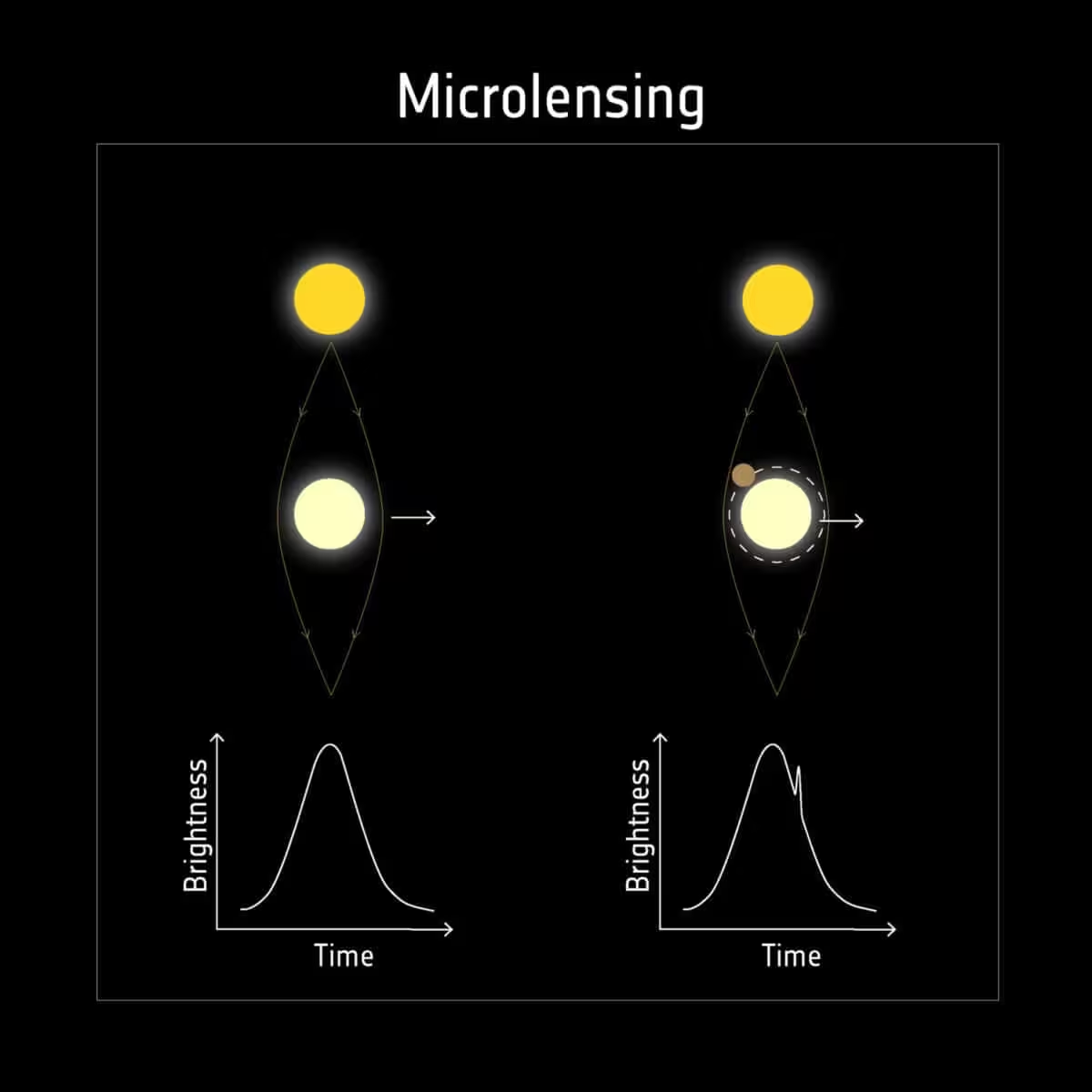
The dataset is expected to advance exoplanet research, particularly for planets discovered via gravitational microlensing. This technique depends on a precise alignment of two stars along the observer’s line of sight; the foreground star’s gravity bends and amplifies the light from the background star.
When an orbiting planet adds its own subtle signature to the magnified light curve, astronomers can infer the planet’s presence. Over the past two decades, almost 300 exoplanets have been identified through microlensing using ground‑based telescopes that point toward the Milky Way’s centre.
“During the last twenty years, almost 300 exoplanets have been discovered using this technique, all with ground‑based telescopes and all towards the centre of our galaxy. This image from Euclid includes 51 known planetary systems – and it will assist in studying many more that will be found,” explained Jean‑Philippe Beaulieu, who initiated the Euclid Galactic Bulge Survey and co‑led the Euclid Consortium’s exoplanet working group.
Although Euclid’s observing window was too brief to capture a full microlensing event, the mission still gathered valuable measurements of known stars and planetary systems within the surveyed sector.
Laying Foundations for Upcoming Exoplanet Missions
The catalog will be especially useful when NASA’s Nancy Grace Roman Space Telescope begins its own microlensing survey. Roman, slated for launch no earlier than 30 August aboard a SpaceX Falcon Heavy from Kennedy Space Center, will target many of the same stellar fields.
Having a detailed baseline of stellar positions from Euclid means future microlensing detections can be cross‑referenced with a pre‑existing map, improving the accuracy of planet mass estimates and orbital characterizations.
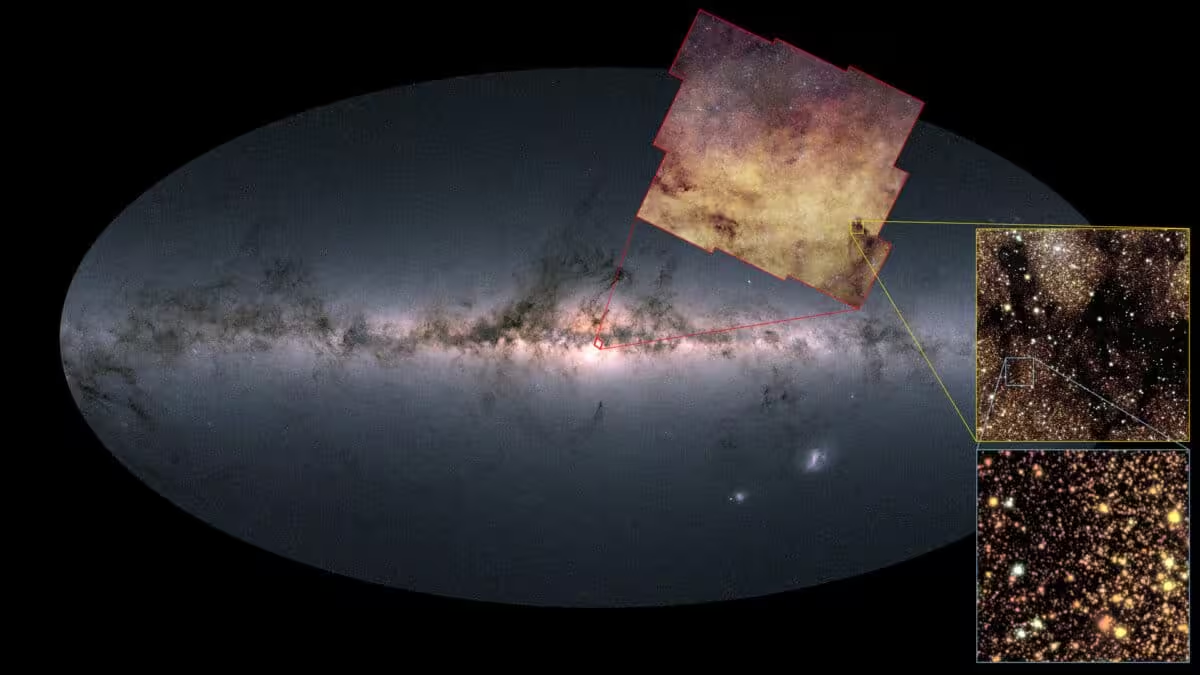
As Natalia Rektsini of the Paris Institute of Astrophysics, who oversaw the release of the bulge data, notes, future observations can be compared against Euclid’s images to monitor stellar motions over time.
“Since Euclid can clearly separate individual stars, one can then measure how fast they move over time, and use that information to confirm the existence of a planet and determine its mass. This would not be possible with data from one point in time,” she said.
In sum, the newly released mosaic offers both a high‑resolution portrait of the Milky Way’s core and a lasting reference that astronomers can revisit as new exoplanet discoveries emerge from this crowded region of our galaxy.
This article has been fact checked for accuracy, with information verified against reputable sources. Learn more about us and our editorial process.
Last reviewed on .
Article history
- Latest version
Reference(s)
- “ESA’s Euclid captures the Milky Way’s crowded heart.” <https://www.esa.int/Science_Exploration/Space_Science/Euclid/ESA_s_Euclid_captures_the_Milky_Way_s_crowded_heart>.
- “Jean-Philippe Beaulieu.” <http://www.iap.fr/useriap/beaulieu/Pages/cv_jp.htm>.
- “Euclid Galactic Bulge Survey - Euclid - Cosmos.” Euclid <https://www.cosmos.esa.int/web/euclid/egbs>.
- Cermak, Alicia. “Nancy Grace Roman Space Telescope - NASA Science.”, June 15, 2023 NASA <https://science.nasa.gov/mission/roman-space-telescope/>.
- <https://www.researchgate.net/profile/Natalia-Rektsini>.
Cite this page:
- Posted by Karan Das