After 241 Days and 102 Million Miles, NASA Astronaut Chris Williams Heads Home on Soyuz
NASA astronaut Chris Williams and his crew gear up for Earth return after a record‑breaking 241‑day ISS mission.
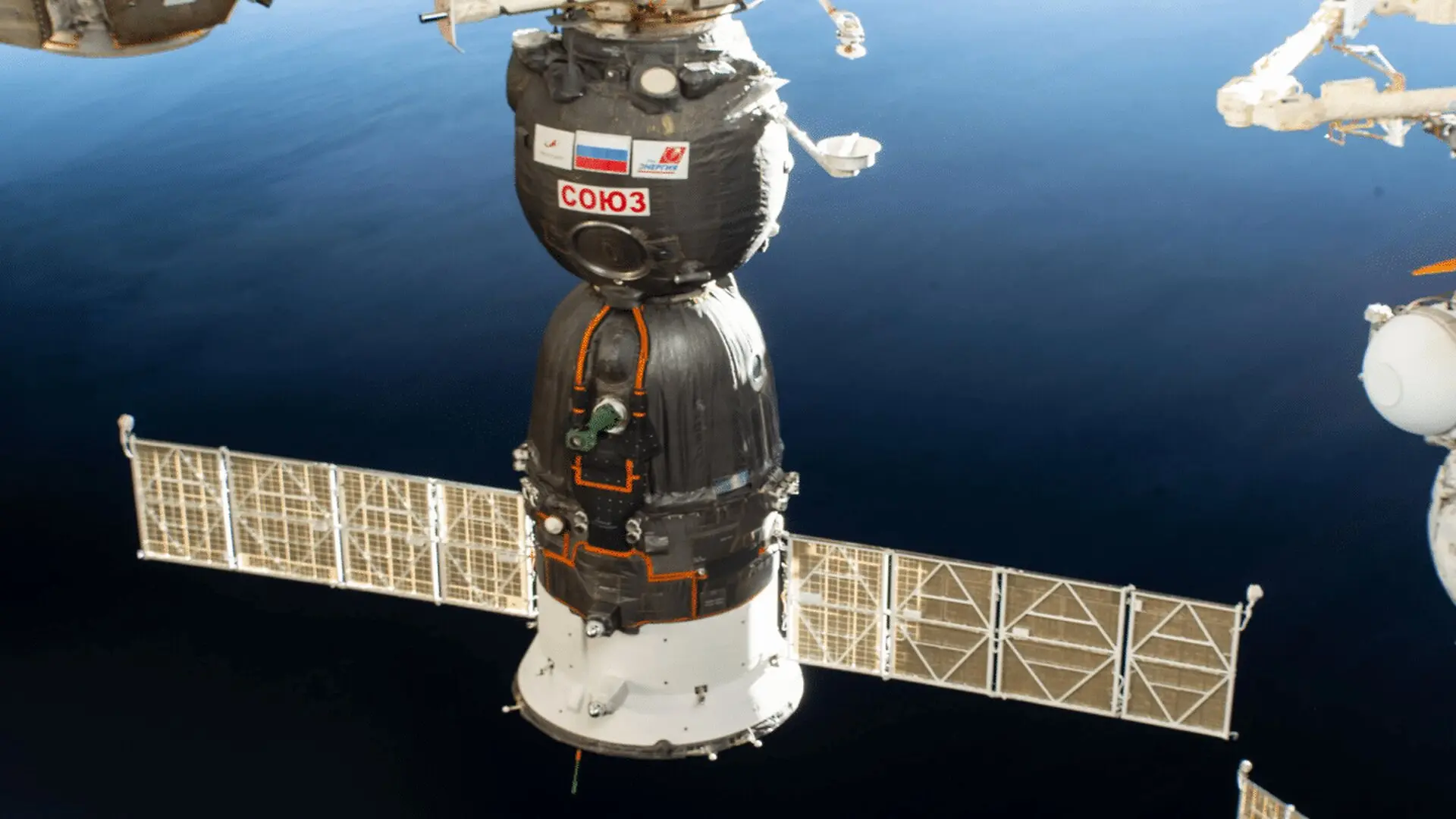
NASA astronaut Chris Williams and his two crewmates are set to depart the International Space Station after a 241‑day stay, according to NASA. The trio will board the Soyuz MS-28 spacecraft for the final leg back to Earth.
Soyuz MS-28 Begins Descent Toward Kazakhstan
The Soyuz will detach from the station’s Rassvet module at 3:02 a.m. EDT on Sunday, July 26, and commence a parachute‑aided re‑entry that should bring the capsule to the steppe southeast of Dzhezkazgan, Kazakhstan at 6:26 a.m. EDT (3:26 p.m. local time). The sequence includes orbital separation, atmospheric braking and a controlled landing.
NASA will stream each milestone—from hatch closure to the deorbit burn—through its official channels, offering real‑time updates for a global audience.
After spending 241 days aboard the @Space_Station, @Astro_ChrisW is returning to Earth on July 26. Here’s where to watch as Williams concludes his first‑ever space mission: https://t.co/Xv2TTppIzLpic.twitter.com/wrqDaF8GTo
— NASA (@NASA) July 22, 2026
A 241‑Day Expedition That Covered Over 102 Million Miles
During their stay, Chris Williams, Sergey Kud‑Sverchkov and Sergei Mikaev will complete 3,856 orbits, traveling more than 102 million miles. The flight marks the inaugural spaceflight for Williams and Mikaev, while Kud‑Sverchkov returns for a second long‑duration mission.
Extended exposure to microgravity challenges crew health and operational efficiency, yielding data that informs future spacecraft design, life‑support systems and medical protocols for deeper‑space voyages.
ISS Remains a Crucial Testbed for Future Exploration
The station continues to host experiments impossible on Earth, advancing knowledge in biology, materials science, technology development and human health. Insights gained support NASA’s Artemis lunar program and upcoming missions to Mars, as well as the broader international agenda for long‑duration exploration.
Each crew rotation refines the procedures and hardware needed for missions beyond low Earth orbit, reinforcing the ISS’s role as a stepping stone for humanity’s next steps into deep space.
Live Coverage Highlights the Crew’s Final Hours
NASA’s broadcast schedule will kick off on Saturday, July 25, with the Expedition 74/75 change‑of‑command ceremony at 9:40 a.m. EDT, where cosmonaut Kud‑Sverchkov hands over leadership to astronaut Jessica Meir. Farewell activities and hatch closure will follow later that night, beginning at 11:10 p.m. and concluding at 11:30 p.m.
Early Sunday morning, the undocking will be shown at 2:30 a.m., followed by the deorbit sequence at 5:15 a.m. and the critical deorbit burn at 5:32 a.m., culminating in the anticipated landing at 6:26 a.m.
After touchdown, recovery teams will escort the crew to a helicopter that will fly them to Karaganda, Kazakhstan. Williams will return to NASA’s Johnson Space Center in Houston, while Kud‑Sverchkov and Mikaev will head back to their respective training centers in Star City, Russia.
This article has been fact checked for accuracy, with information verified against reputable sources. Learn more about us and our editorial process.
Last reviewed on .
Article history
- Latest version
Reference(s)
- “NASA Sets Coverage for Astronaut Chris Williams, Crewmates Return - NASA.” NASA <https://www.nasa.gov/news-release/nasa-sets-coverage-for-astronaut-chris-williams-crewmates-return/>.
- “https://go.nasa.gov/45e0Wb4.” <https://t.co/Xv2TTppIzL>.
- “https://twitter.com/NASA/status/2079997610786496661/photo/1.” <https://t.co/wrqDaF8GTo>.
Cite this page:
- Posted by Karan Das