Amazonian Dragonflies Reveal Surprising Color Shifts in Degraded Streams
Researchers discover that canopy loss and habitat damage alter color purity, brightness, and protective wax coatings in tropical insect communities.
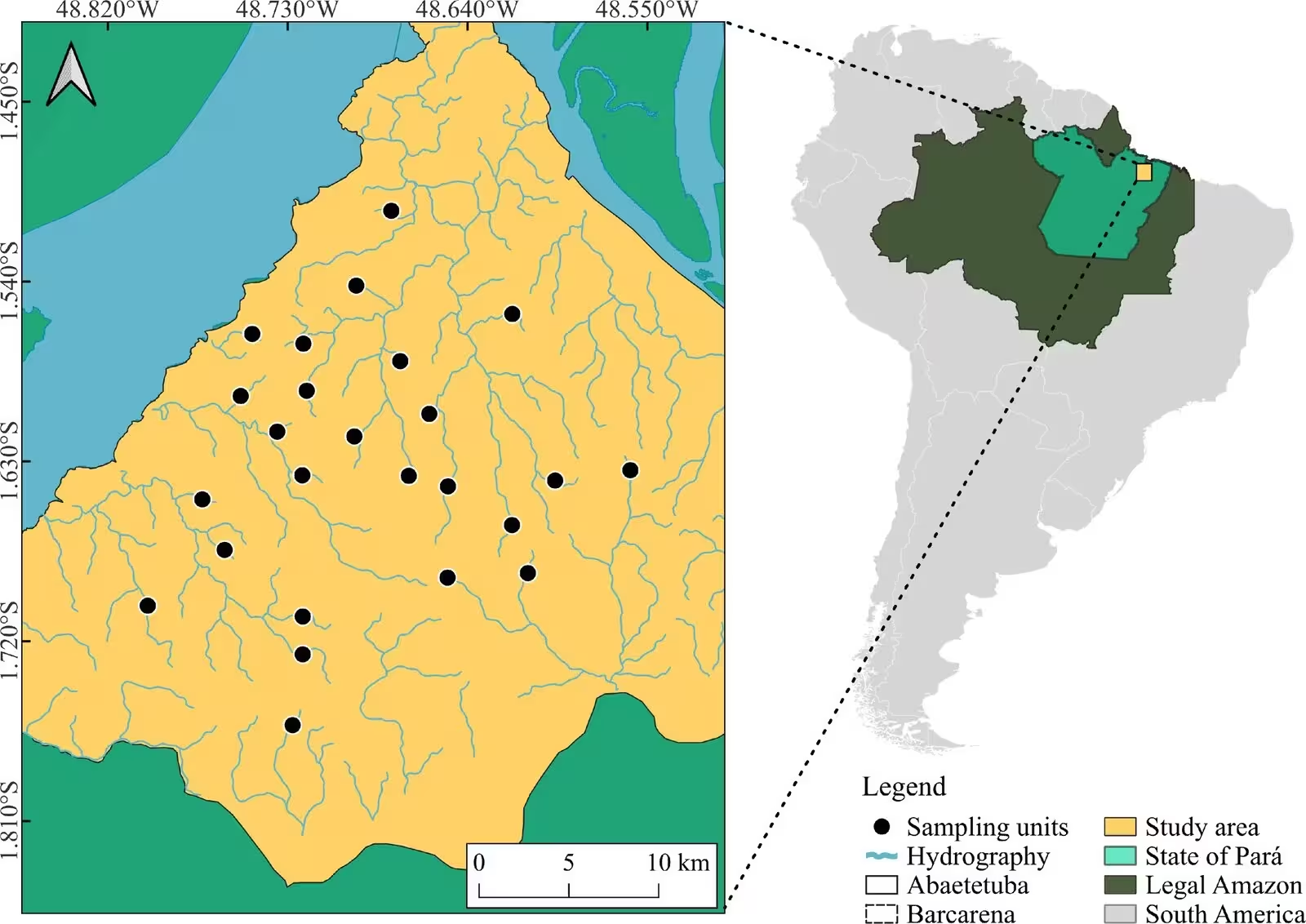
Amazonian dragonflies and damselflies living near deforested or degraded streams show surprising shifts in body coloration compared to those in pristine forest habitats, according to a recent study. Researchers analyzed 213 adult insects from 32 distinct species across 25 shallow forest streams, known locally as igarapés, in the Brazilian state of Pará. The work, published in Oecologia, demonstrates that local habitat integrity and canopy cover act as environmental filters, shaping the visual traits of entire insect communities.
How Deforestation Alters Stream Microclimates
Small tropical streams depend heavily on surrounding tree cover to regulate water temperatures and solar exposure. When riparian forests are cleared for agriculture, cattle ranching, or urbanization, sunlight floods the stream channels. This loss of canopy increases ambient temperatures and alters water conditions, creating a vastly different microclimate for aquatic and semiaquatic wildlife.
Dragonflies and damselflies, belonging to the insect order Odonata, spend their larval stages underwater but live out their adult lives patrolling, foraging, and mating near the water surface. Because they rely heavily on behavioral and physical traits to manage body heat and water loss, scientists wanted to see if human-induced habitat changes select for specific color patterns in these insects.
Decoding Insect Coloration in the Laboratory
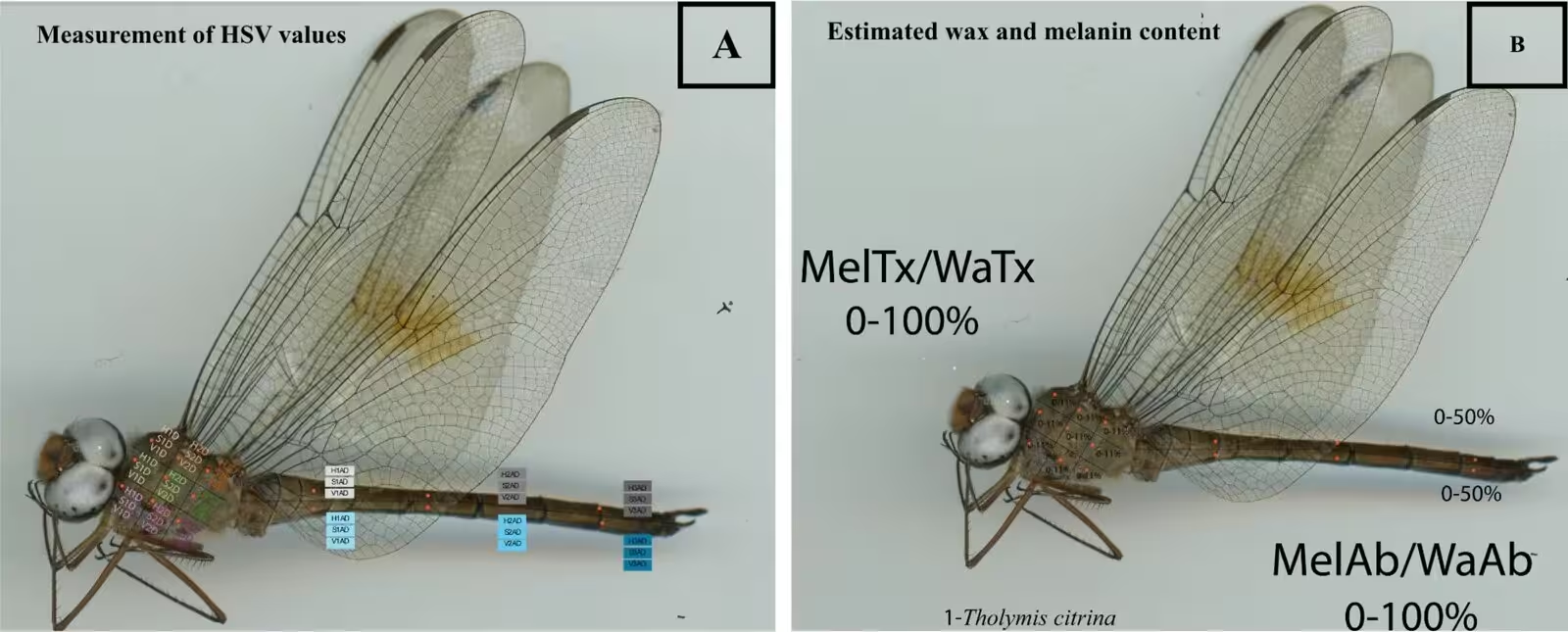
To investigate these patterns, the research team captured adult Odonata during the low-precipitation months of September and October 2024. Within hours of collection, they photographed each specimen under strictly standardized lighting conditions using a specialized digital camera and color calibration charts. They evaluated body coloration using the HSV colour space, which measures hue representing chromatic category, saturation representing color purity, and value representing relative lightness.
The team also visually estimated the surface coverage of dark melanin pigmentation and wax-derived pruinescence, a powdery bluish-white coating found on many adult dragonflies. By calculating community-weighted means for each stream, the authors tracked how these physical traits scaled up to entire insect assemblages across a gradient of human disturbance.
Surprising Shifts in Brightness and Wax Coverage
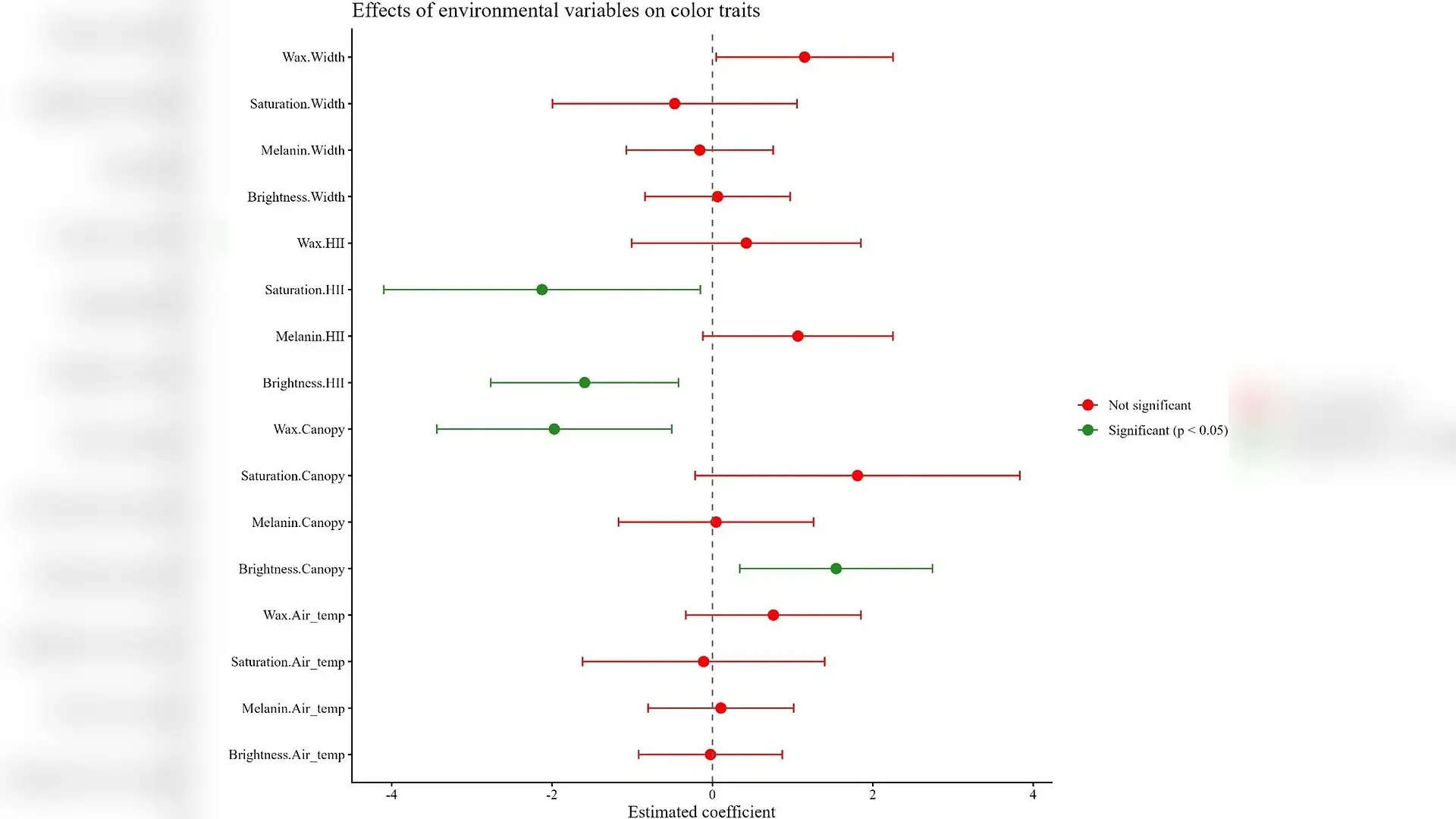
The statistical models revealed clear links between environmental degradation and specific coloration traits. Contrary to traditional predictions that darker insects should dominate cooler, shaded environments to absorb more heat, shaded streams actually supported assemblages with higher relative lightness, or value. Meanwhile, streams with lower habitat integrity harbored insects with higher saturation values.
Furthermore, wax-derived pruinescence coverage decreased as canopy cover increased. Insects in more open, sunlit environments displayed greater pruinescence, which likely serves as a protective adaptation against ultraviolet radiation and facilitates visual signaling rather than functioning purely as a thermal mechanism. Interestingly, melanin coverage showed no statistically significant association with canopy cover or habitat integrity, indicating that dark pigmentation may serve multiple biological roles simultaneously, including immune defense and mechanical protection.
What These Findings Mean for Conservation Monitoring
The compositional turnover of species was stark. Specialized damselflies such as Acanthallagma luteum and Chalcopteryx rutilans appeared exclusively in streams with high environmental integrity, whereas disturbance-tolerant species like Perithemis cornelia were restricted to degraded sites. These shifts highlight how human activities restructure local biological communities.
While the observational nature of the work means researchers cannot yet prove direct physiological causation, the results suggest that coloration traits could eventually complement traditional species counts in bioassessment protocols. Protecting and restoring riparian forests in Amazonian watersheds remains essential to preserving both overall biodiversity and the complex ecological traits tied to these resilient insects.
The research was published in Oecologia on October 25, 2026.
This article has been fact checked for accuracy, with information verified against reputable sources. Learn more about us and our editorial process.
Last reviewed on .
Article history
- Latest version
Reference(s)
- Barbosa-Santos, Francisco Maciel., et al. “Habitat integrity and canopy cover shape small-scale variation in coloration among odonate assemblages in Neotropical streams.” Oecologia, vol. 208, no. 11, October 25, 2026 Springer Science and Business Media LLC, doi: 10.1007/s00442-026-06003-3. <https://doi.org/10.1007/s00442-026-06003-3>.
Cite this page:
- Posted by Omar Mirza