Salt Stress Shocks Widespread Grass But Leaves Nutrient Recycling Frozen in Time
A massive common garden experiment reveals that wetland grass populations rely on genetic evolutionary history rather than short-term flexibility when facing high salinity.
Salt stress alters a wetland grass in unexpected ways, forcing severe physiological trauma without shifting how the plant recycles vital nutrients. The findings challenge long-held assumptions about how flora cope with environmental shocks.
Researchers investigating the common reed (Phragmites australis) discovered that while saline conditions trigger massive internal stress, the plant’s nutrient conservation strategy remains rigidly fixed by its evolutionary history rather than adapting on the fly. The study, published in eLife, provides fresh insight into how widespread wetland species manage resources under global environmental change.
How Severe Was the Salt Stress Imposed on the Grass?
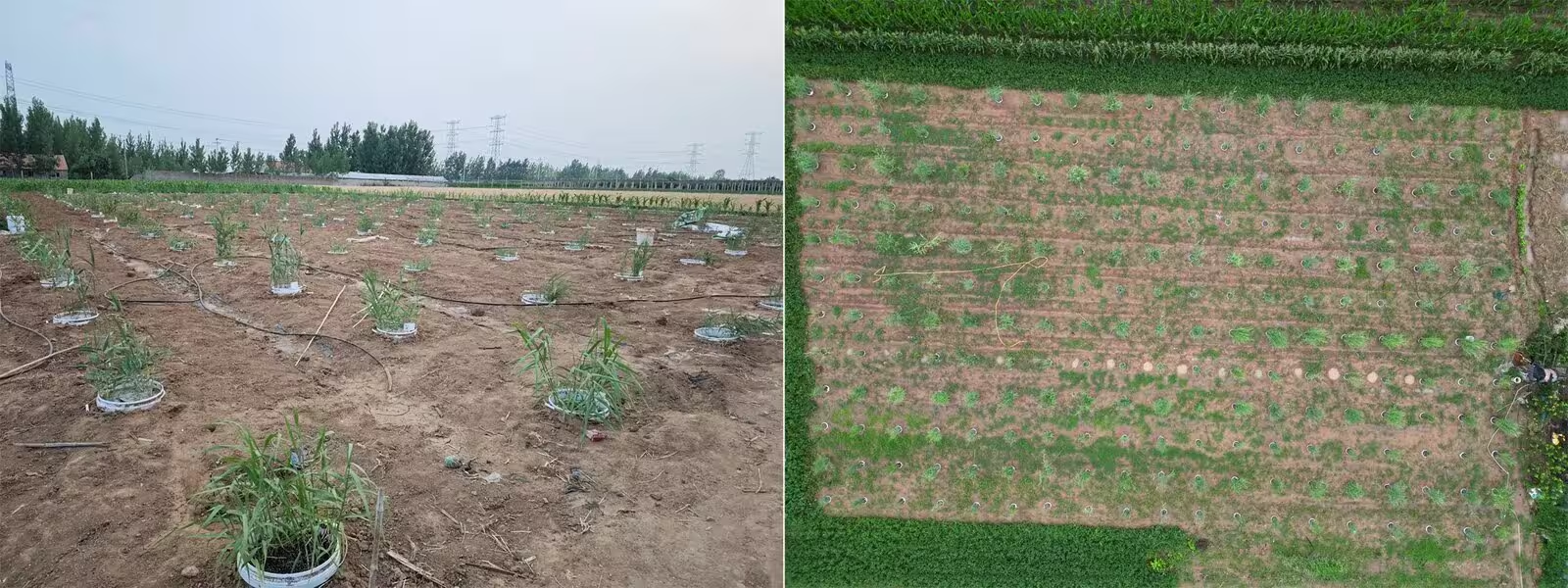
To test how plants respond to salinization, the research team conducted a large-scale common garden experiment utilizing 110 distinct genotypes of Phragmites australis gathered from various geographic origins. Half of the plants received a controlled salinity treatment consisting of a 1% sodium chloride solution, representing moderate wetland salinity, while the other half served as control groups.
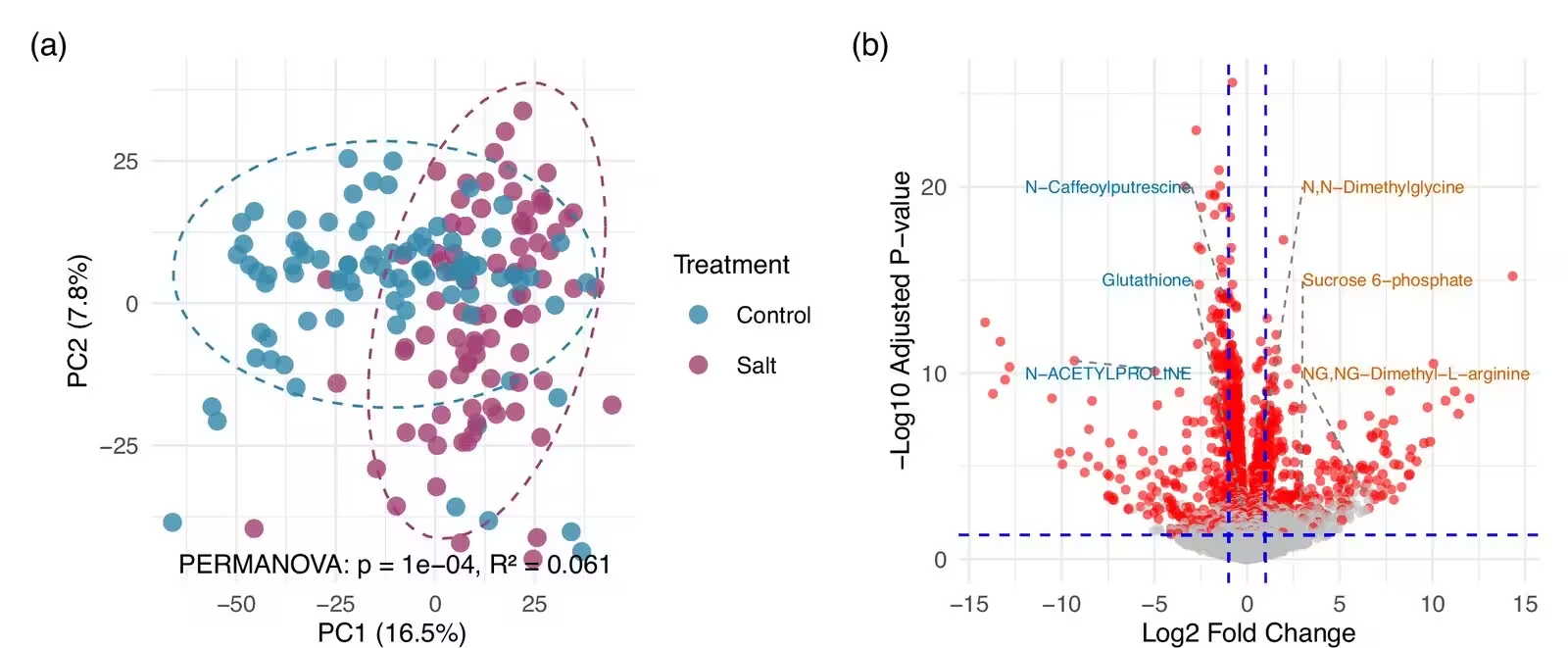
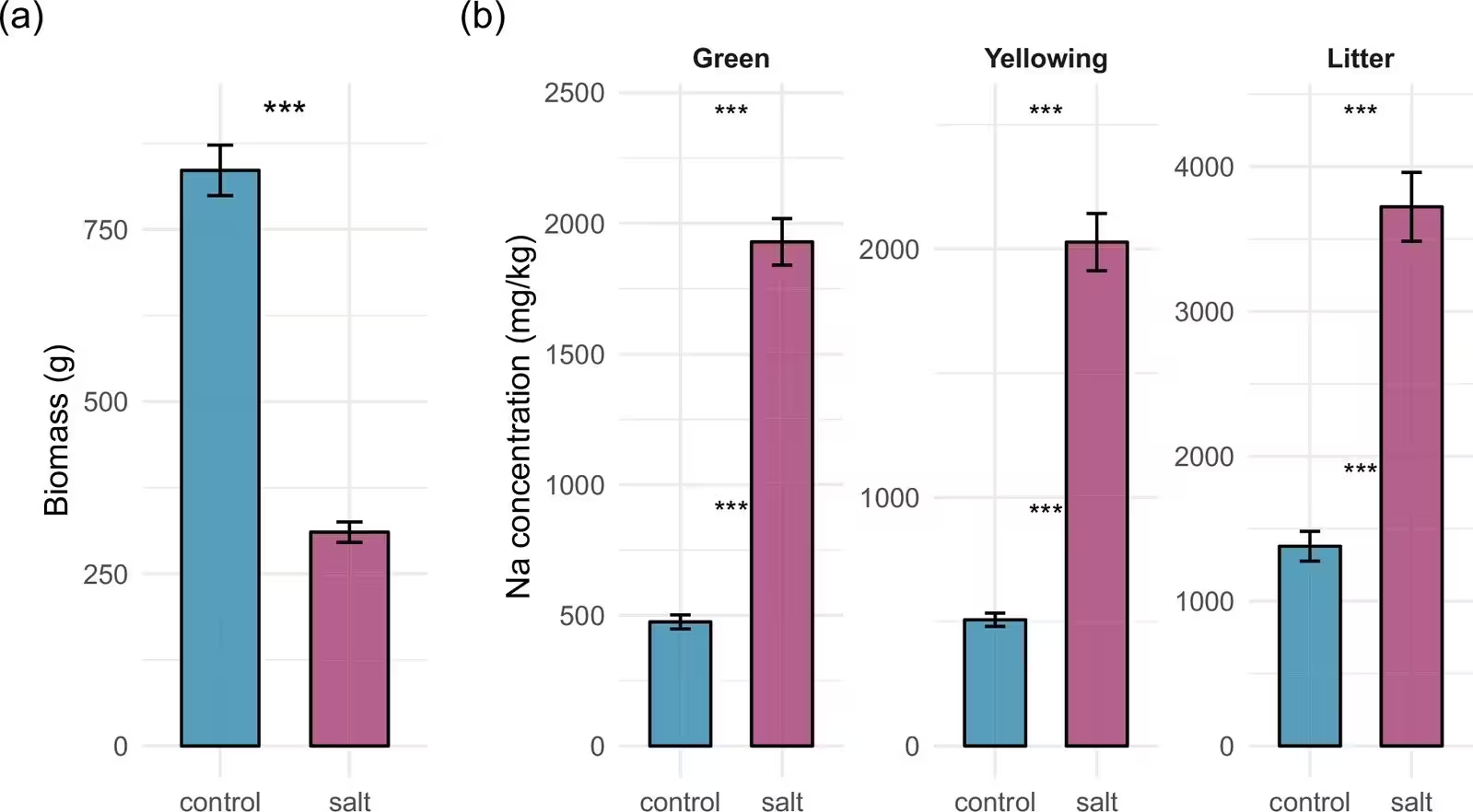
The salinity treatment inflicted profound physiological damage on the plants across multiple biological levels. Above-ground biomass plummeted by more than 60 percent, dropping from an average of 835 grams in control plants down to 310 grams in salt-treated specimens. At the same time, sodium concentrations spiked three- to fivefold across all leaf developmental stages, and metabolomic profiling revealed significant shifts in 484 different metabolites, including classic chemical markers of osmotic and oxidative stress.
Why Did Nutrient Recycling Refuse to Budge?
Despite the overwhelming physiological toll, nutrient resorption efficiency, which is the percentage of essential elements like nitrogen, phosphorus, and potassium that a plant extracts from dying leaves before they drop, remained entirely unaffected by the salt treatment. Ecologists often assume that plants will increase nutrient resorption as a compensatory mechanism to counter nutrient uptake inhibition caused by salt. However, the data revealed no such short-term plastic acclimation.
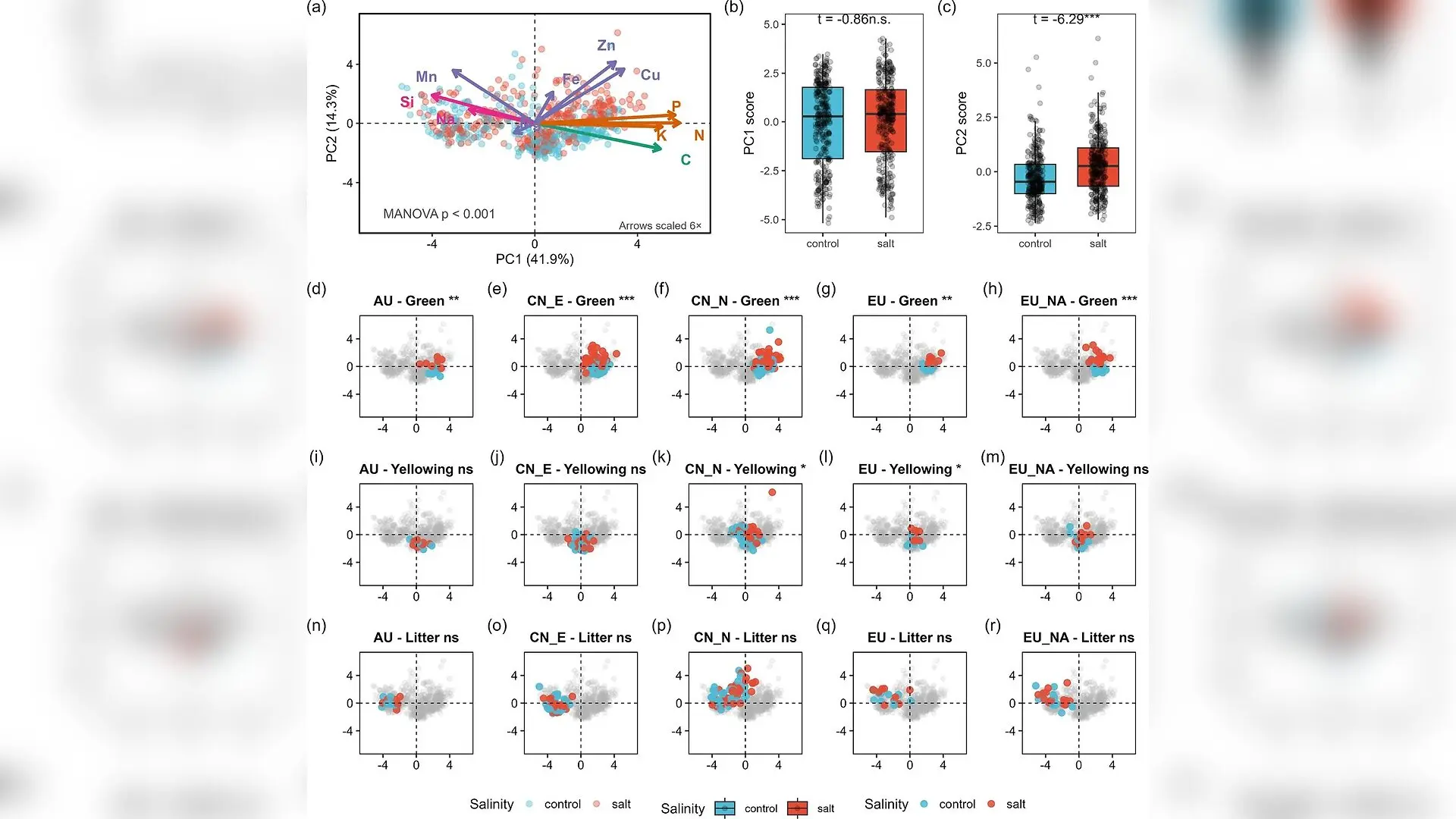
Instead of adjusting to the immediate environment, nutrient resorption efficiency was strongly predicted by the plant’s phylogeographic lineage, local habitat ecotype, and latitude of origin. Populations originating from higher latitudes displayed greater resorption efficiencies across all measured nutrients, reflecting deep evolutionary adaptations to shorter growing seasons and colder climates rather than immediate survival flexibility.
What Controls Element-Specific Resorption Strategies?
The researchers also uncovered distinct regulatory patterns governing individual nutrients. Phosphorus resorption followed strict concentration-dependent control under both normal and saline conditions, meaning the efficiency dropped as green leaf nutrient concentrations rose. Nitrogen resorption followed a similar concentration rule under control conditions, but that relationship completely broke down when salt was introduced.
Potassium resorption showed no concentration-dependent patterns at all. The authors suggest this unusual weakness may stem from sodium partially substituting for potassium to handle osmotic adjustments inside the plant cells. Furthermore, nitrogen and potassium resorption maintained tight stoichiometric coordination, indicating that internal balance acts as a deeply conserved trait governed by long-term evolution rather than rapid environmental tweaking.
What Are the Implications for Wetland Ecosystems?
These insights reshape how scientists must forecast ecosystem responses to rising global salinization driven by sea-level rise and agricultural runoff. Because nutrient resorption is genetically canalized rather than plastic, the resilience of wetland plant communities depends heavily on pre-existing genetic diversity and standing variation within populations.
Conservation managers utilizing Phragmites australis for wetland restoration must carefully evaluate the genetic and geographic origins of source populations. Introducing genotypes with mismatched traits could unintentionally alter local nutrient cycling dynamics, highlighting the necessity of integrating evolutionary history into ecological forecasts.
The research was published in eLife on October 26, 2026.
This article has been fact checked for accuracy, with information verified against reputable sources. Learn more about us and our editorial process.
Last reviewed on .
Article history
- Latest version
Reference(s)
- Liu, Lele., et al. “Genetic canalization of nutrient resorption in the widespread grass Phragmites australis under salt stress.” eLife, vol. 15, October 26, 2026 eLife Sciences Publications, Ltd, doi: 10.7554/eLife.111792. <https://doi.org/10.7554/eLife.111792>.
Cite this page:
- Posted by Omar Mirza