Whole Genome Sequencing Exposes Hidden Genetic Diversity of Tuberculosis Pathogen in Senegal
Genomic profiling of 51 clinical isolates reveals unexpected sub-lineages and complex antibiotic resistance patterns across eight regions.
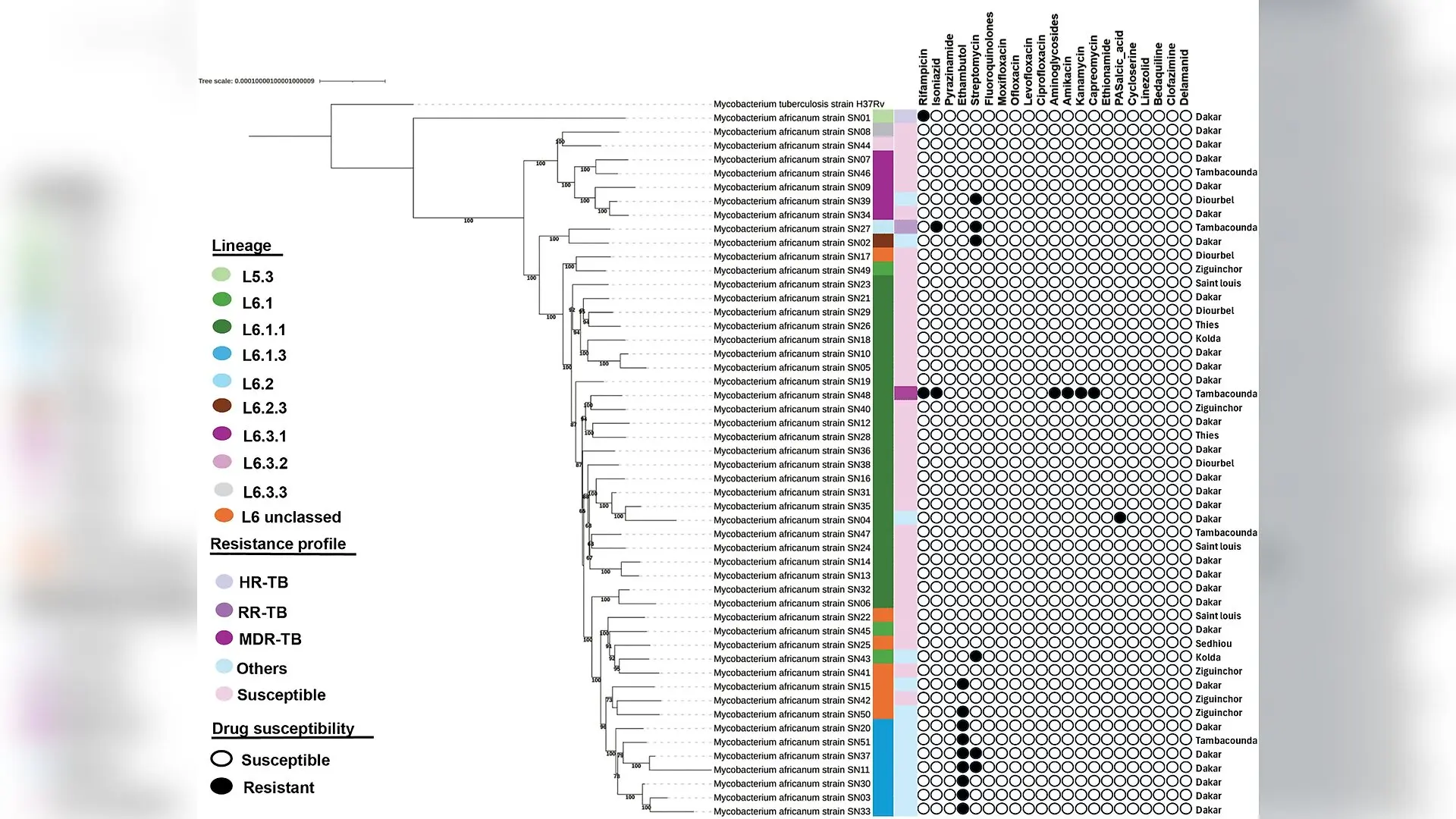
Whole genome sequencing of 51 clinical isolates collected between 2010 and 2015 from tuberculosis patients across eight regions of Sénégal reveals unexpected genetic microdiversity within Mycobacterium africanum, a pathogen responsible for up to half of all human tuberculosis cases in West Africa. The research, published in PLOS Neglected Tropical Diseases, highlights how genomic profiling uncovers hidden sub-lineages and complex antibiotic resistance patterns in the country where the bacterium was first described in the 1960s.
What Genomic Sequencing Reveals About Strain Lineages
Led by A. Ba Diallo and colleagues, the research team analyzed 549 sputum samples routinely collected from pulmonary tuberculosis patients. Using high-throughput sequencing technologies, the investigators successfully mapped 51 confirmed Mycobacterium africanum genomes. They identified a single isolate belonging to lineage 5 and 50 isolates belonging to lineage 6, demonstrating a striking dominance of lineage 6 across the sampled territory.
Further phylogenetic analysis sorted these lineage 6 specimens into nine distinct sub-lineages. Sub-lineage L6.1.1 emerged as the most prevalent, accounting for 43.7% of the isolates and spreading across seven of the eight studied regions. The capital region of Dakar exhibited the highest concentration of genetic variety, housing nearly every identified sub-lineage except for L6.2.
How Genetic Distance Varies Across Geographic Regions
Single nucleotide polymorphism analysis, which tracks spelling variations in the genetic code, showed an average of 561.45 genetic differences per genome among lineage 6 strains. The median difference stood at 465 single nucleotide variations, indicating a notable level of genomic divergence across the country. Regional comparisons highlighted distinct ecological patterns in bacterial populations.
For instance, the Tambacounda region displayed the highest median genetic distance at 783, pointing toward substantial strain divergence. Researchers note that Tambacounda serves as a historical demographic crossroads with varied ecosystems ranging from tropical forests to semi-arid landscapes. In contrast, the Ziguinchor region showed much lower genetic diversity and high strain relatedness, suggesting different local transmission dynamics.
Why Drug Resistance Predictions Require Caution
The research team also evaluated antimicrobial resistance by screening genetic profiles against World Health Organization mutation databases and comparing them with laboratory drug susceptibility testing on 19 available isolates. Whole genome sequencing flagged predicted resistance to at least one antibiotic in 16 out of the 51 strains. These included monoresistances to rifampicin, isoniazid, streptomycin, ethambutol, and ethionamide, alongside one multidrug-resistant strain.
However, investigators discovered that half of the detected genetic variants were synonymous mutations that did not alter protein function or confer actual clinical resistance. This mismatch indicates that automated resistance predictions can sometimes misinterpret harmless genetic spelling changes as dangerous drug defenses. The authors emphasize that laboratory verification remains crucial before altering patient treatment regimens.
What Next Steps Face Tuberculosis Surveillance
The systematic collection of these samples allowed scientists to estimate that Mycobacterium africanum accounts for roughly 9% of all tuberculosis cases involving the broader Mycobacterium tuberculosis complex in Sénégal. This figure represents a notable decline compared to historical estimates from decades prior, echoing similar downward trends observed in neighboring Mali.
Researchers suggest that future investigations should adopt an integrated One Health framework. Exploring potential animal reservoirs, environmental factors, and human gut microbiota interactions will help clarify why certain lineages thrive in specific river-bordering ecosystems while others recede.
The research was published in PLOS Neglected Tropical Diseases on October 26, 2026.
This article has been fact checked for accuracy, with information verified against reputable sources. Learn more about us and our editorial process.
Last reviewed on .
Article history
- Latest version
Reference(s)
- Ba Diallo, A.., et al. “Genomic microdiversity of Mycobacterium africanum in Sénégal.” PLOS Neglected Tropical Diseases, vol. 20, no. 10, October 26, 2026, pp. e0014770 Public Library of Science (PLoS), doi: 10.1371/journal.pntd.0014770. <https://doi.org/10.1371/journal.pntd.0014770>.
Cite this page:
- Posted by Omar Mirza