French Biodiversity Mapping Exposes Major Data Gaps Across 84,000 Square Kilometers
Analysis of 2.4 million wildlife records reveals that human accessibility and historical regional boundaries shape ecological databases more than actual wildlife richness.
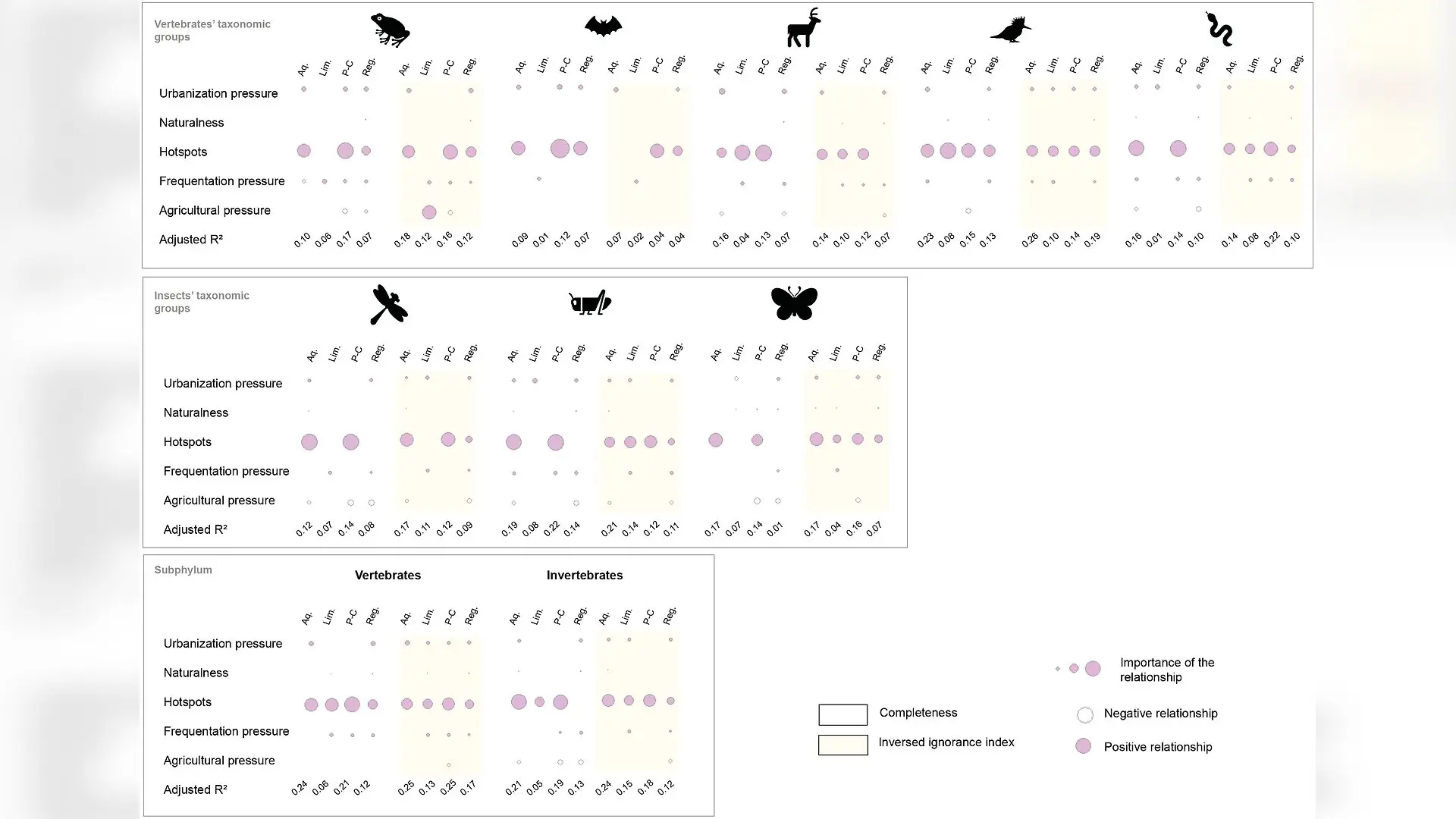
Open-access biodiversity records covering eight major animal groups across France reveal that human accessibility and historical regional boundaries shape wildlife data far more than actual ecological richness. The massive study examined over 2.4 million occurrence records gathered between 2010 and 2025 across Nouvelle-Aquitaine, the largest administrative region in France covering 84,000 square kilometers. Researchers found that wildlife monitoring is heavily skewed toward populated areas and roads, leaving vast rural sectors severely under-prospected.
How Administrative History Dictates Wildlife Knowledge Gaps
The research team set out to investigate why certain geographic cells and taxonomic groups suffer from severe shortages of field data. They analyzed records for five vertebrate groups, which include amphibians, bats, terrestrial birds, terrestrial mammals, and reptiles, alongside three insect groups, namely diurnal butterflies, odonates (dragonflies and damselflies), and orthopterans (grasshoppers, locusts, and crickets). Using two distinct analytical methods known as completeness scores and ignorance indexes, the findings were published in PLOS One by authors Anaïs Guery and Didier Alard.
The analysis shows that knowledge gaps are not distributed randomly across the landscape. Instead, they reflect the historical administrative divisions that existed before three smaller territories merged in 2015 to form the modern region of Nouvelle-Aquitaine. The former territory of Poitou-Charentes consistently displays lower completeness and knowledge scores across almost all taxonomic groups, particularly for insects, when compared to the historically diverse landscapes of Aquitaine. These discrepancies stem from differences in how regional naturalist networks historically structured their databases, managed observer communities, and transferred records before regional unification took place.
Why Insects and Vertebrates Tell Different Ecological Stories
When comparing different animal classes, the study highlights a profound divide between vertebrates and insects. Insects face much larger knowledge gaps overall, driven by the specialized equipment and taxonomic expertise required to identify them correctly in the field. Birds, by contrast, benefit from long-running participatory monitoring programs such as STOC that guarantee continuous, widespread spatial coverage. Bats also stood out as a distinct outlier because they are surveyed primarily by specialists using acoustic detection in specific roosting sites like caves and old buildings.
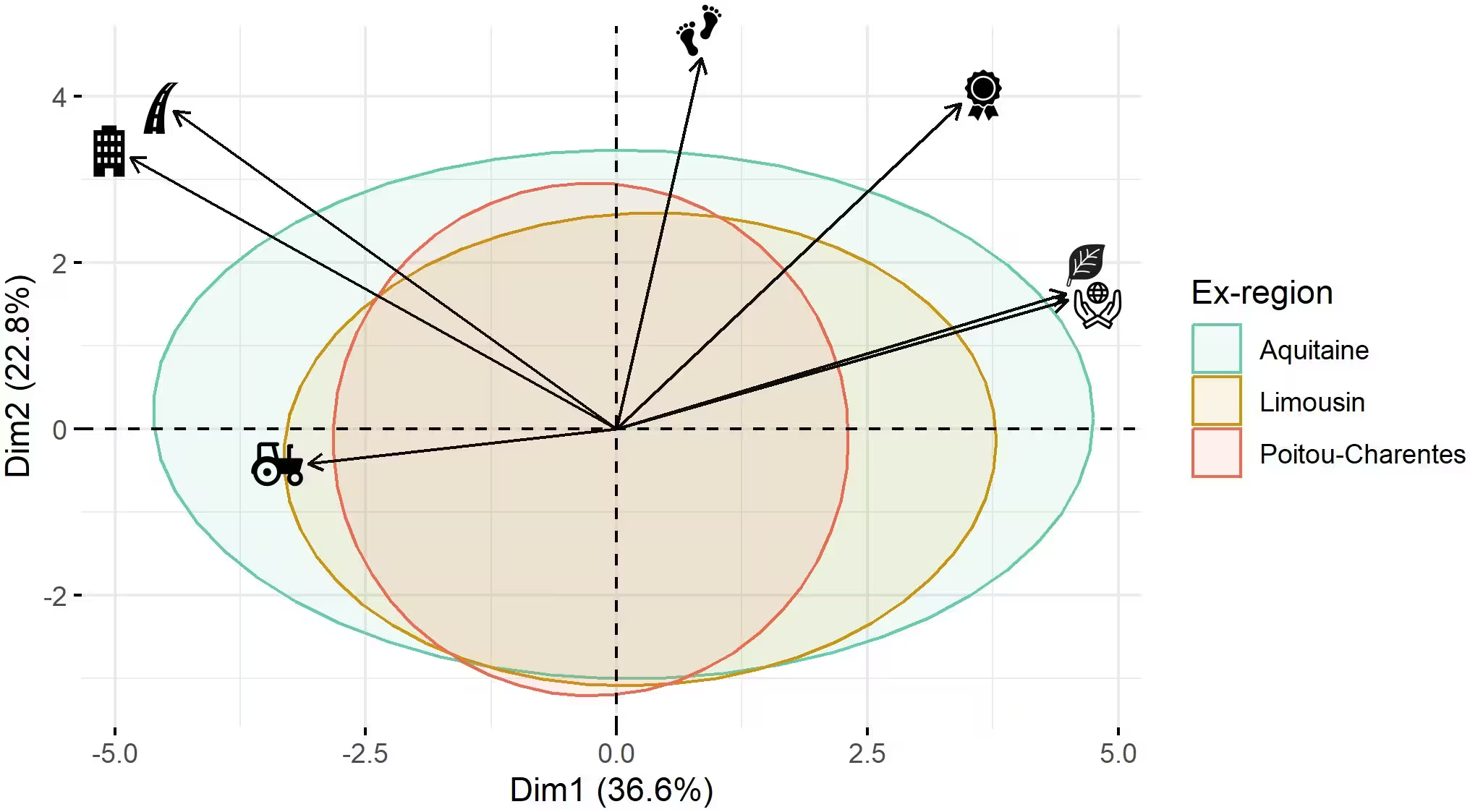
Geographic sampling biases were found to correlate strongly with site accessibility rather than pure ecological appeal. Grid cells close to cities, featuring denser road networks and higher human populations, consistently showed better prospecting rates. Agricultural intensity also plays a major role for insects, where chemical treatments and intensive farming practices create complex pressures on open-habitat species like butterflies and dragonflies, altering where field naturalists choose to spend their time.
What These Regional Biases Mean for Future Conservation Policies
Conservation managers rely heavily on open-access databases to track population trends and allocate public funds for threatened species. However, the heavy concentration of records in accessible areas means that biodiversity hotspots can be easily over- or underestimated. If public policies and funding allocations continue to rely on raw occurrence data without accounting for spatial sampling bias, environmental decisions may be skewed toward areas that are simply easier for observers to visit.
The authors conclude that improving the reliability of open-access repositories requires explicitly factoring in socio-administrative drivers and observer behavior. Future conservation frameworks must address funding disparities between charismatic vertebrates and overlooked invertebrates, while also implementing corrections for spatial knowledge gaps to ensure that environmental policies protect the ecosystems that need them most.
The research was published in PLOS One on October 27, 2026.
This article has been fact checked for accuracy, with information verified against reputable sources. Learn more about us and our editorial process.
Last reviewed on .
Article history
- Latest version
Reference(s)
- Guery, Anaïs., et al. “Identifying knowledge gaps in a biodiversity database and their spatial determinants.” PLOS One, vol. 21, no. 10, October 27, 2026, pp. e0360523 Public Library of Science (PLoS), doi: 10.1371/journal.pone.0360523. <https://doi.org/10.1371/journal.pone.0360523>.
Cite this page:
- Posted by Omar Mirza