Scientists Discover a 399-Year-Old Shark Born in 1627, and Its Age Reveals a Disturbing Truth About Life in the Deep Ocean
Greenland shark, born before nations existed, redefines aging and deep-sea survival biology
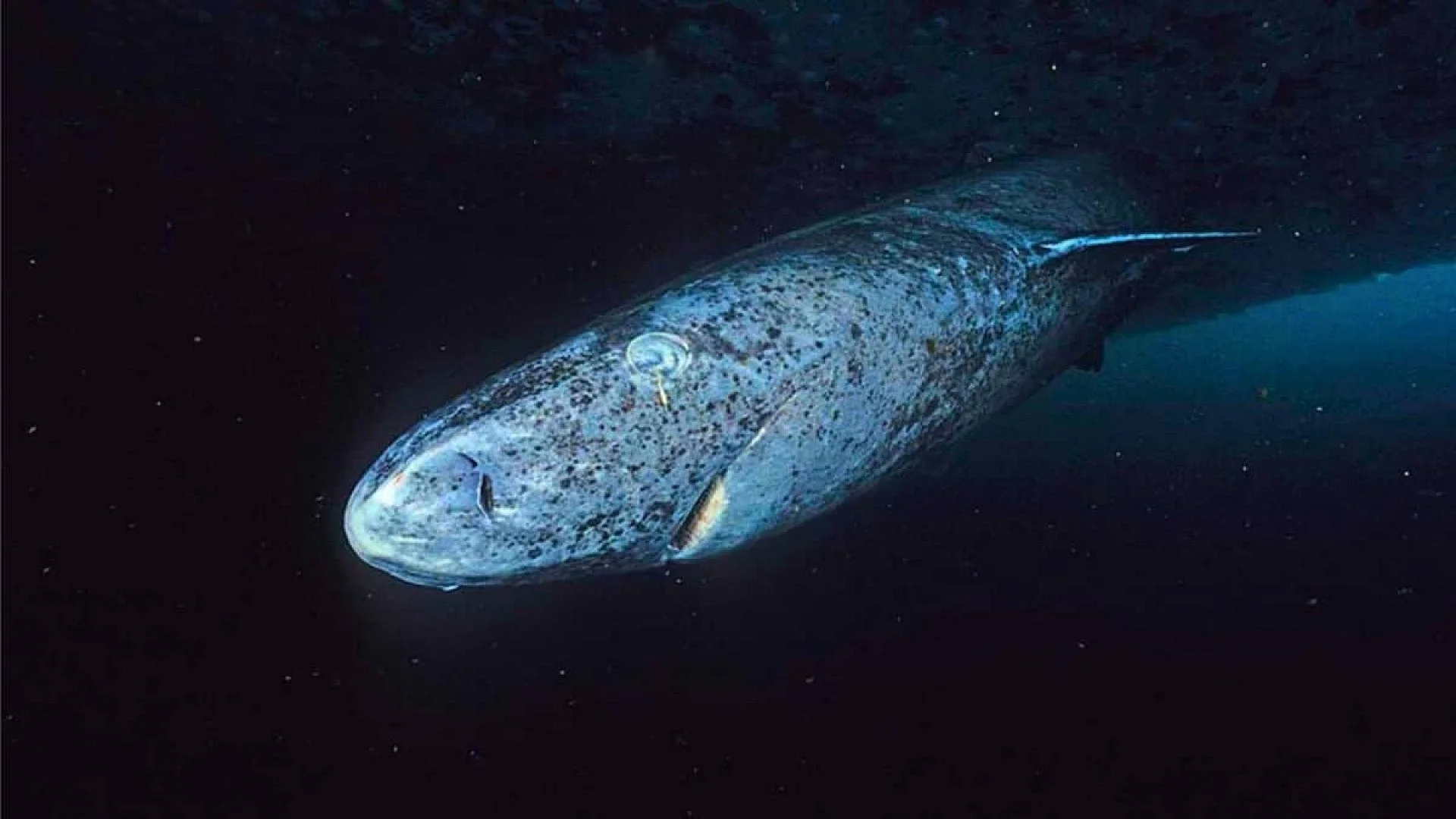
A single crystalline protein, laid down before the shark’s birth and never renewed, has become the key to one of marine science’s most astonishing age determinations. By measuring radiocarbon levels in this protein from a Greenland shark’s eye lens, researchers calculated an approximate lifespan of 392 years, establishing the creature as the longest‑lived vertebrate known to science.
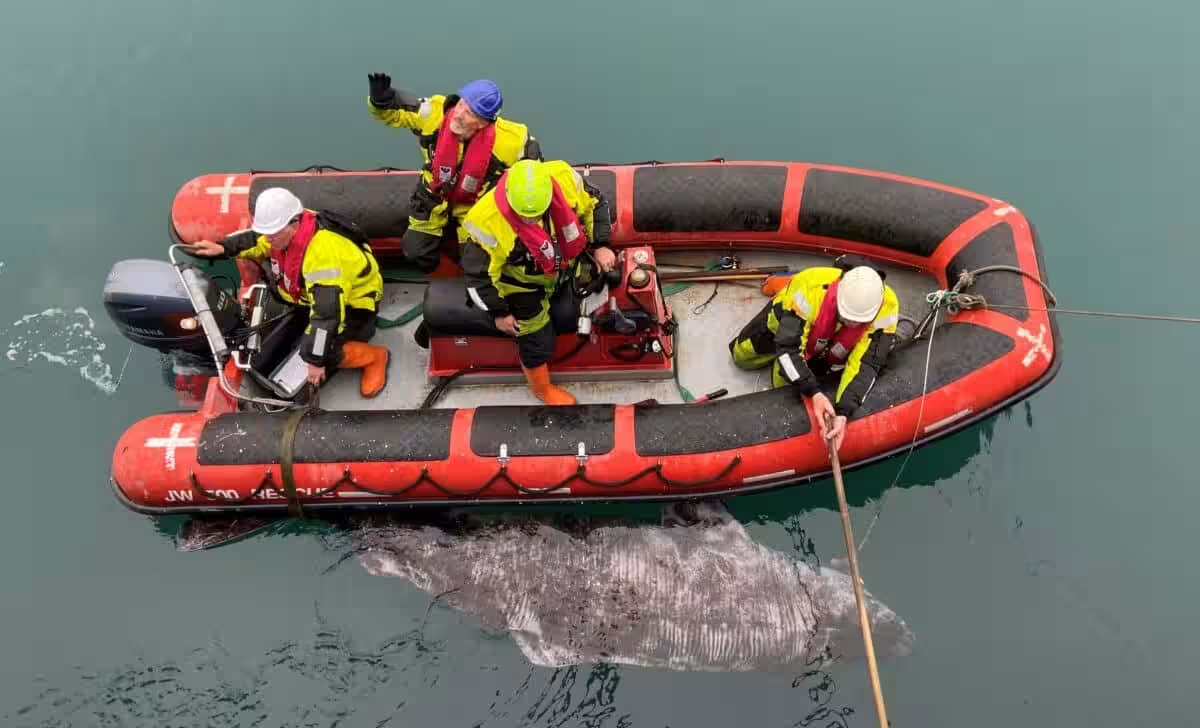
The specimen was not captured for a study; it was one of 28 female Greenland sharks unintentionally hauled in as by‑catch in the North Atlantic. Scientists seized the opportunity to trial a dating technique never before applied on a broad scale to this species, and the findings pushed vertebrate longevity records far beyond previous estimates.
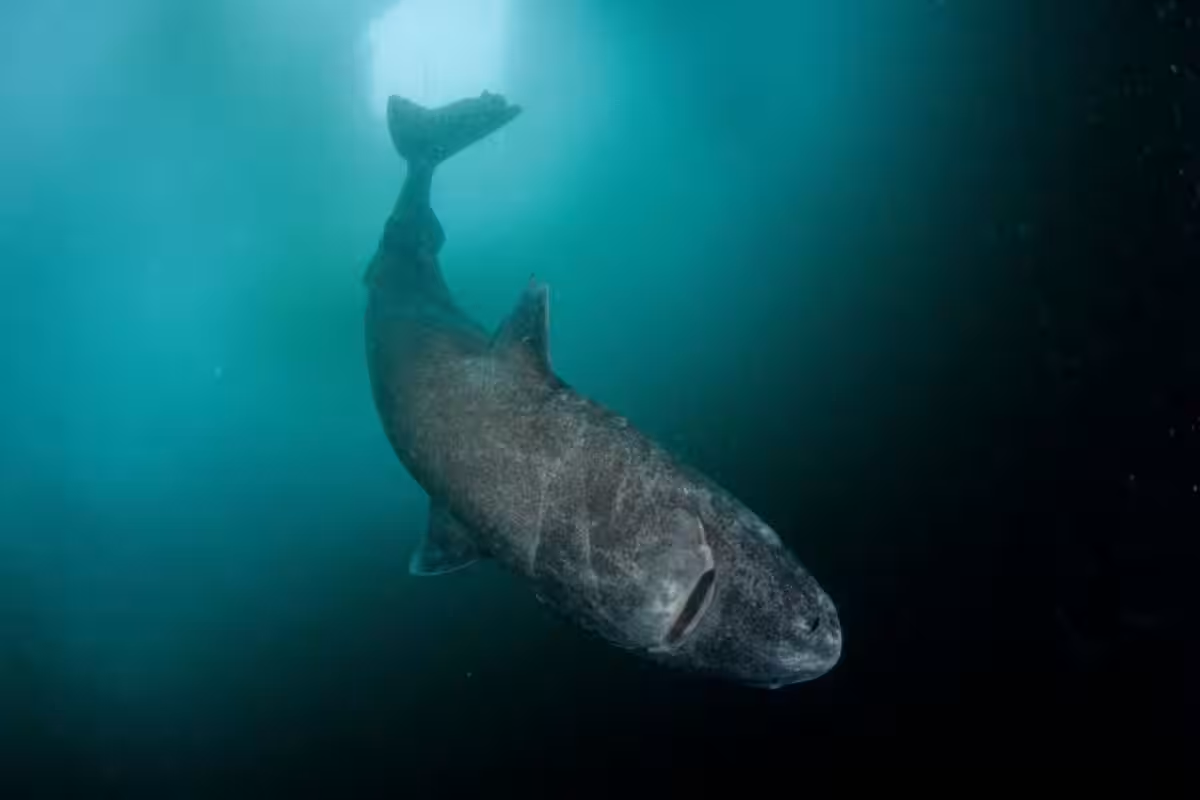
If the shark’s birth occurred in the early 1600s—well before the Industrial Revolution and even before the United States existed—it serves as a living chronicle of deep‑time oceanic conditions.
Lens Proteins Provide a Natural Time Capsule
Estimating the age of Greenland sharks (Somniosus microcephalus) has long stymied researchers. The species lacks fin spines, and its vertebrae are too pliable to yield reliable growth rings. Prior to this work, scientists could only infer lifespan from the shark’s modest growth rate—under one centimetre per year—and its impressive maximum length of six metres or more.
The breakthrough came from the eye lens, where proteins are synthesized during embryonic development and remain unchanged for the animal’s entire life. Those proteins trap carbon from the surrounding environment at the moment of formation; because atmospheric carbon‑14 concentrations have varied in a well‑documented pattern, they act as a chronological marker.

According to NOAA Fisheries, scientists isolate the innermost lens layer, extract the original proteins, and submit them for radiocarbon testing. This deepest material provides the earliest biological timestamp available from any shark tissue.
The study’s largest specimen, about five metres long, yielded an age range of 272 to 512 years, with a central estimate near 392 years. The results, published in Science, emphasize that radiocarbon dating delivers confidence intervals rather than exact dates. Even the lower bound—272 years—exceeds the age of any other vertebrate verified by scientific methods.
Centuries to Reach Reproductive Maturity
A striking implication of the research concerns conservation. Greenland sharks are believed to become sexually mature only after a century of growth, a timeline inferred from their slow annual growth and the size at which reproduction is thought to begin.
Removing an adult from the population therefore represents a loss that cannot be compensated quickly. A shark that dies at 80 years old, for example, would not yet have contributed offspring to the next generation.
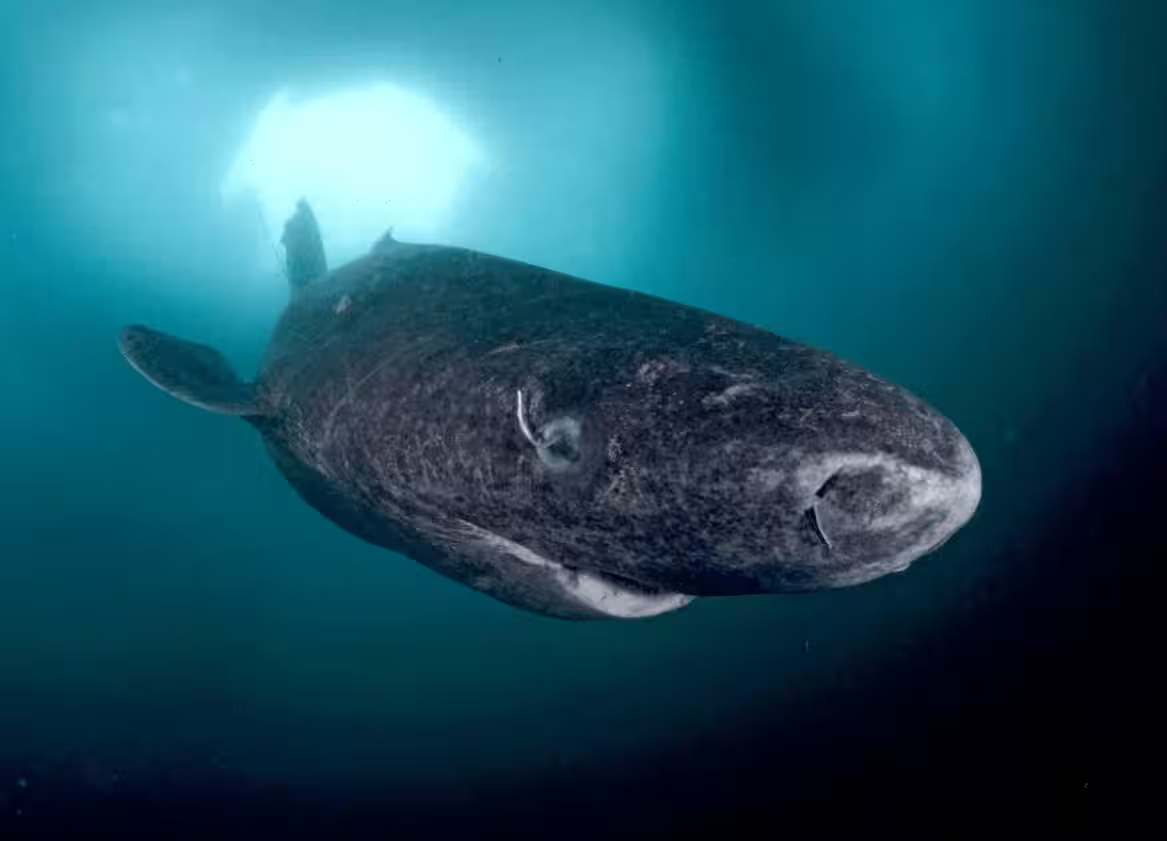
While historical fisheries harvested Greenland shark liver oil, the National Oceanic and Atmospheric Administration notes that most captures today are accidental by‑catch, making the reduction of unintended catches a priority for the species’ survival.
These sharks occupy some of the planet’s coldest, deepest waters—recorded depths exceed 2,200 metres—and are the only shark known to remain in Arctic Ocean year‑round. Their extremely sluggish metabolism, an adaptation to low‑temperature, low‑oxygen habitats, is thought to underpin both their leisurely swimming and their protracted biological aging, reducing cellular wear compared with faster‑living organisms.
A Massive Genome May Hold Longevity Clues
In September 2024, an international consortium released the first complete genome of the Greenland shark. The University of Copenhagen announced the accomplishment in a detailed press release, highlighting contributions from the Fritz Lipmann Institute on Aging (Jena), Ruhr University Bochum, the Scuola Normale Superiore (Pisa), and other partners.
Spanning roughly 6.5 billion base pairs, the genome is twice the size of the human reference and represents the largest shark genome assembled to date. Its sheer scale required bespoke computational pipelines, placing it among only a handful of animal genomes of comparable magnitude.
Early analyses point to robust DNA‑repair pathways as a possible driver of the shark’s extraordinary lifespan. The research team reported that the genetic toolkit responsible for fixing genomic damage appears unusually potent compared with shorter‑lived vertebrates. Computational biologist Steve Hoffmann described the genome as a foundational resource for unraveling the molecular mechanisms of aging, and the data have been deposited in public repositories for ongoing investigation.
Active Predation in a Slow‑Moving Species
Contrary to the stereotype of a lethargic scavenger, Greenland sharks exhibit dynamic feeding behaviour. A study in Frontiers in Marine Science analysed stomach contents and stable isotopes from individuals ranging from 81 cm to 474 cm. Smaller sharks primarily consumed squid and other low‑trophic prey, while larger specimens shifted toward seals, sizable benthic fish, and fast‑swimming species.
Isotopic signatures confirmed a clear increase in trophic level with size, indicating that mature sharks can actively hunt fast‑moving seals and large fish. The findings, referenced in the University of Copenhagen’s eye‑lens project page, underscore that the genome and the lens‑based age data remain publicly accessible, with further analyses underway.
This article has been fact checked for accuracy, with information verified against reputable sources. Learn more about us and our editorial process.
Last reviewed on .
Article history
- Latest version
Reference(s)
- “Determining Shark Ages With Eye Lenses.” NOAA <https://www.fisheries.noaa.gov/feature-story/determining-shark-ages-eye-lenses>.
- Nielsen, Julius., et al. “Eye lens radiocarbon reveals centuries of longevity in the Greenland shark ( Somniosus microcephalus ).” Science, vol. 353, no. 6300, August 12, 2016, pp. 702-704. American Association for the Advancement of Science (AAAS), doi: 10.1126/science.aaf1703. <https://www.science.org/doi/10.1126/science.aaf1703>.
- “How long do Greenland sharks live?.” <https://oceanservice.noaa.gov/facts/greenland-shark.html>.
- Team, Communication. “The longest-living vertebrate genome.”, October 4, 2024 <https://science.ku.dk/english/press/news/2024/the-longest-living-vertebrate-genome/>.
- Nielsen, Julius. “Greenland Shark (Somniosus microcephalus) Stomach Contents and Stable Isotope Values Reveal an Ontogenetic Dietary Shift.” Frontiers in Marine Science, vol. 6, April 4, 2019, pp. 427541 Frontiers, doi: 10.3389/fmars.2019.00125/full. <https://www.frontiersin.org/journals/marine-science/articles/10.3389/fmars.2019.00125/full>.
- Nielsen, Julius. “Eye lens radiocarbon reveals centuries of longevity in the Greenland shark (Somniosus microcephalus).”, vol. 353, no. 6300, August 12, 2016, pp. 702-4. University of Copenhagen Research Portal, doi: 10.1126/science.aaf1703. <https://researchprofiles.ku.dk/en/publications/eye-lens-radiocarbon-reveals-centuries-of-longevity-in-the-greenl/>.
Cite this page:
- Posted by Linda Wilson