Strange Green Rocks Found in a Remote Spanish Cave Near the Sky Point to 4,000 Years of Prehistoric Copper Work
Over 170 fragments of vivid emerald rock, transported along a grueling mountain path and intentionally incinerated, expose an unexpected ancient craft no one anticipated discovering beyond 2,000 meters elevation.
The ascent to Cova 338 is a formidable challenge. Starting at the Monastery of Núria in the eastern Pyrenees, already elevated, hikers then tackle a steep slope for 45 minutes. At 2,235 meters, the temperature plummets and the wind bites hard. Yet for over 4,000 years, prehistoric people continued to return to this remote site. Archaeologists now believe they have uncovered the reason behind their persistence: copper.
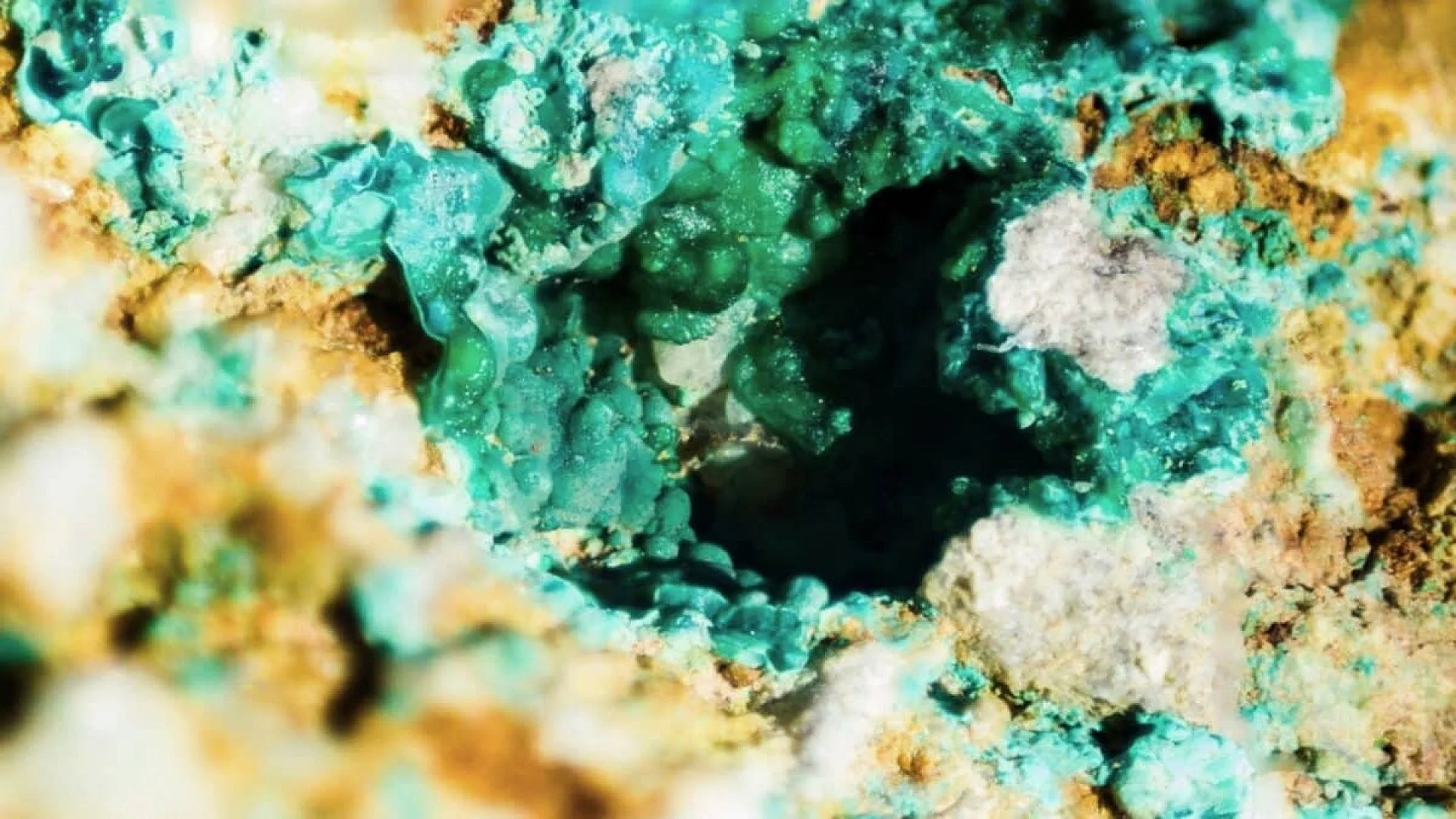
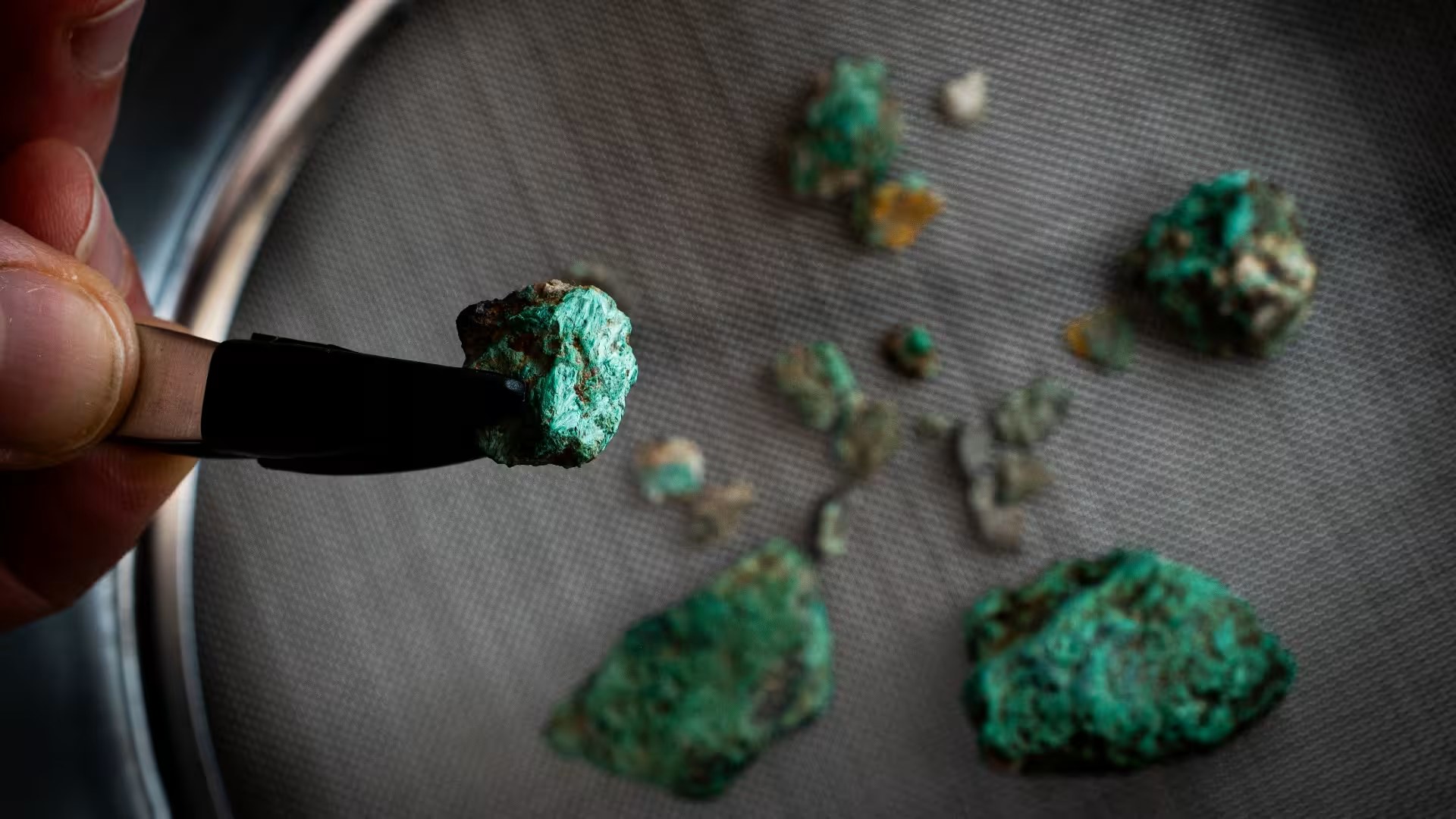
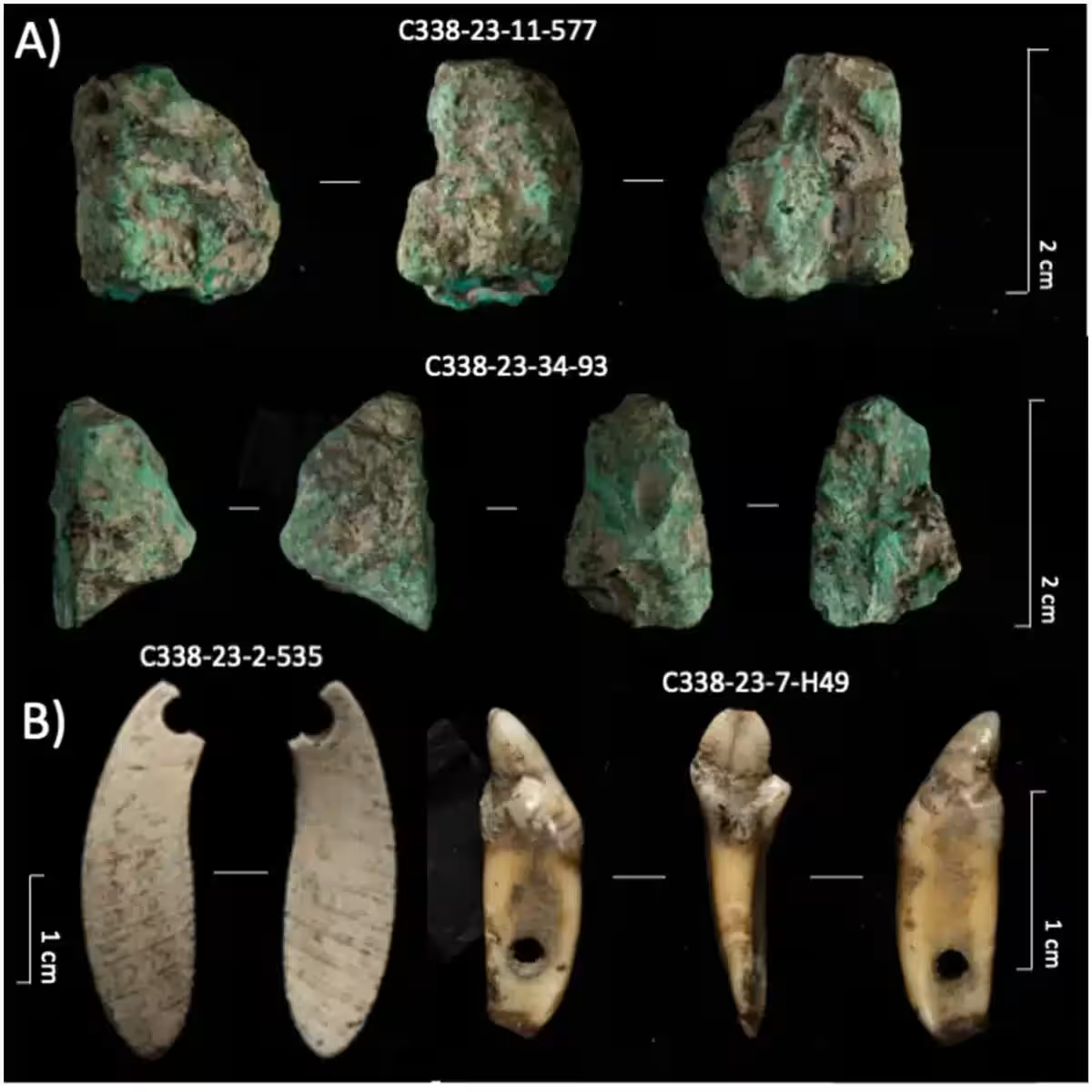
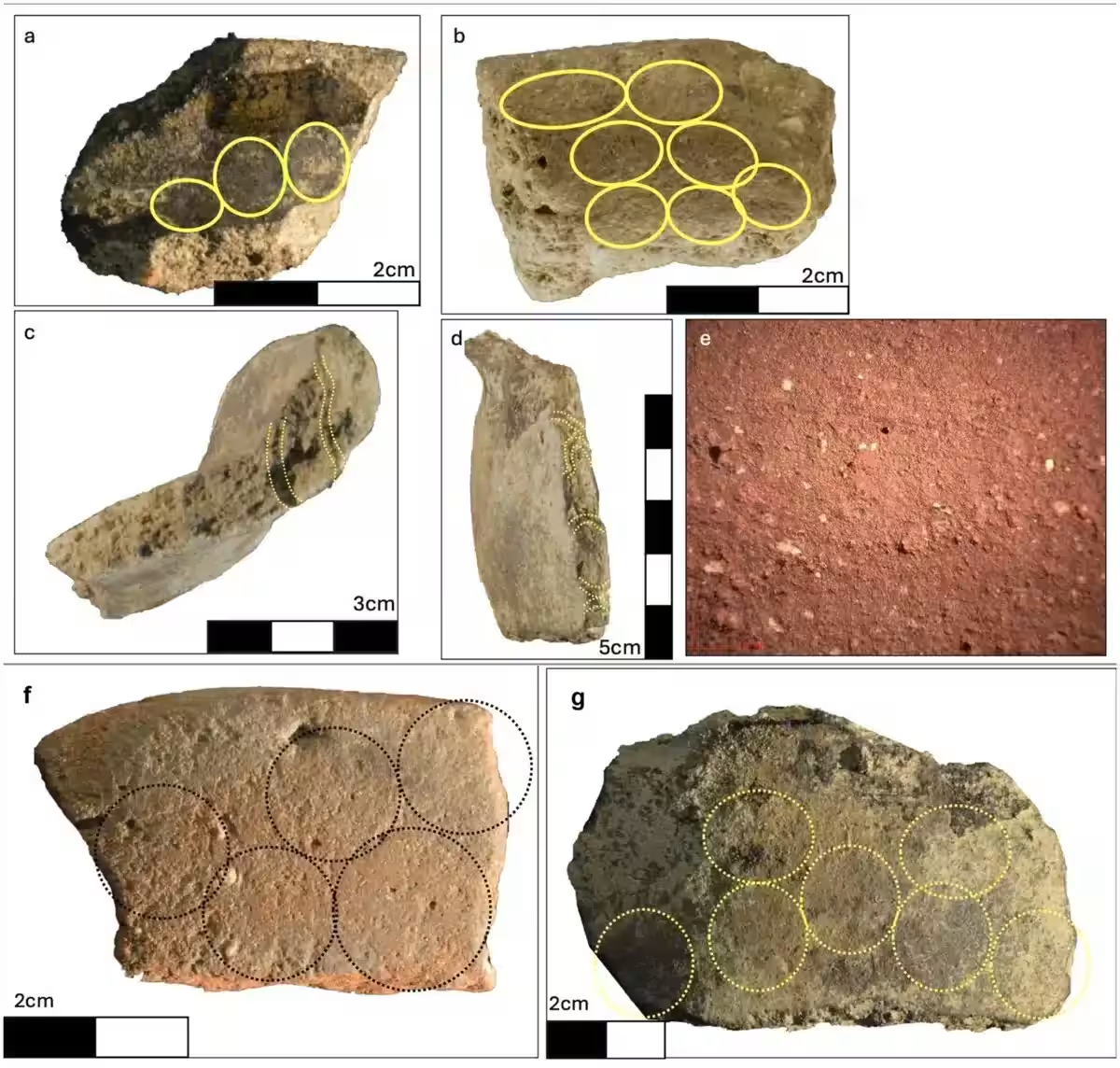
Inside the cave, researchers discovered more than 170 fragments of vibrant green rock identified as probable malachite, a copper-rich mineral not naturally found in the area. The cache represents some of the earliest known evidence of copper mineral exploitation in Western Europe, according to a study published in Frontiers in Environmental Archaeology.
“For the first time in the Pyrenees, high-mountain prehistoric occupations of significant intensity have been documented, characterized by repeated activities and the direct exploitation of mineral resources within the cave,” said Carlos Tornero, professor in the Department of Prehistory at the Universitat Autònoma de Barcelona and lead author of the study.
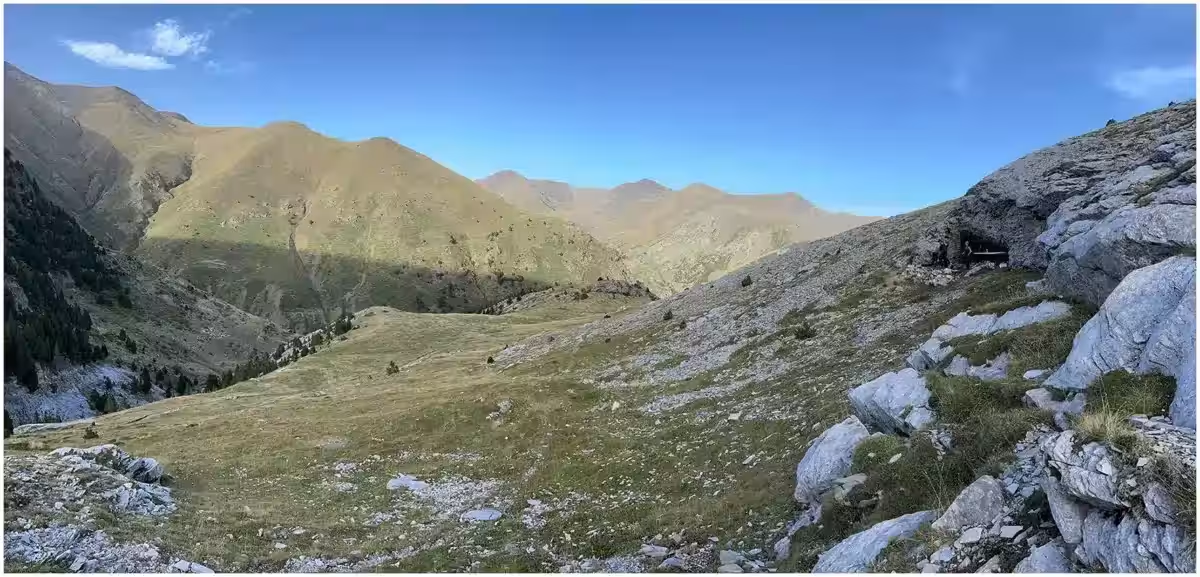
An international team led by UAB and the Catalan Institute of Human Palaeoecology and Social Evolution (IPHES-CERCA) excavated the site between 2021 and 2023. Their work overturns a decades-old view that terrain above 2,000 meters was marginal ground, visited only sporadically by prehistoric communities.
A High-Altitude Worksite, Not a Shelter of Chance
Cova 338 preserved its history with remarkable fidelity. The cavity measures just over 100 square meters, with two small chambers. Excavators managed to dig only the first six square meters near the entrance during the three field seasons. Even that narrow window produced an extraordinary archaeological sequence.
The team uncovered 23 fire pits, some cutting into earlier ones, alongside 333 ceramic fragments and abundant butchered animal bones. The combustion structures alone tell a story of return. People did not stumble on the cave repeatedly by accident. They arrived, built fires atop the ashes of previous visits, and left again, generation after generation, from the early 5th millennium BC to the late 1st millennium BC.
“We can’t say exactly how long people stayed each time, but the repeated use of the space and the density of remains suggest occupations that were short to medium in duration, but happening again and again over long periods of time,” Tornero told ZME Science.
The team interprets Cova 338 as a logistical station, a high-altitude mineral processing camp integrated into structured seasonal mobility systems. As Live Science reported, knowledge of the site and its resources was transmitted across generations.
“The mountain was not a barrier, but an active place within the economic and territorial organization of prehistoric communities,” said Eudald Carbonell, IPHES-CERCA researcher and co-author of the study.
Green Stone and Deliberate Fire
The most striking finds are the malachite fragments. According to the Wisconsin Geological and Natural History Survey, malachite forms in the oxidized upper zones of copper deposits and has been used as a copper ore for millennia. The green chunks in Cova 338 were carried up from somewhere outside the cave, then heated inside it.
Malachite yields copper through a straightforward two-step process. Heating the green mineral releases carbon dioxide and transforms it into black copper oxide. Exposing that residue to charcoal strips away more carbon dioxide, leaving a small copper nugget behind. At Cova 338, many of the mineral fragments show clear signs of thermal alteration while other materials in the same layers do not, ruling out accidental burning.
“Many of these fragments are thermally altered, while other materials in the cave are not, which clearly suggests that fire played an important role in their processing and that there was a deliberate intention behind it,” said Julia Montes-Landa, an archaeologist at the University of Granada and study co-author. “In other words, they weren’t burned by accident.”
The most intensive use of the cave fell between 3600 and 2400 BC, squarely within the Copper Age, when communities across Europe were learning to extract and shape metal. The broader region holds copper-bearing geology, though archaeologists have not yet identified the specific extraction site that supplied Cova 338.
Ornaments, Remains, and Lingering Questions
Two personal ornaments recovered during the dig add texture to the picture. One pendant was cut from a marine shell of the genus Glycymeris, a type known from other Catalan sites. The second, far rarer, was shaped from a brown bear tooth, a choice that may carry specific symbolic weight.
Human remains were also found, including a baby tooth and a finger bone. The sample is too limited for firm conclusions, but the authors note the cave may have held a funerary role alongside its industrial one.
Much remains unresolved. The animal bones include sheep or goat, pig, canids, hare, and brown bear, but it is not yet clear whether people hunted game or brought meat with them. They ate, processed hides, and likely milked herds above 2,000 meters.
Excavating Where Machines Cannot Go
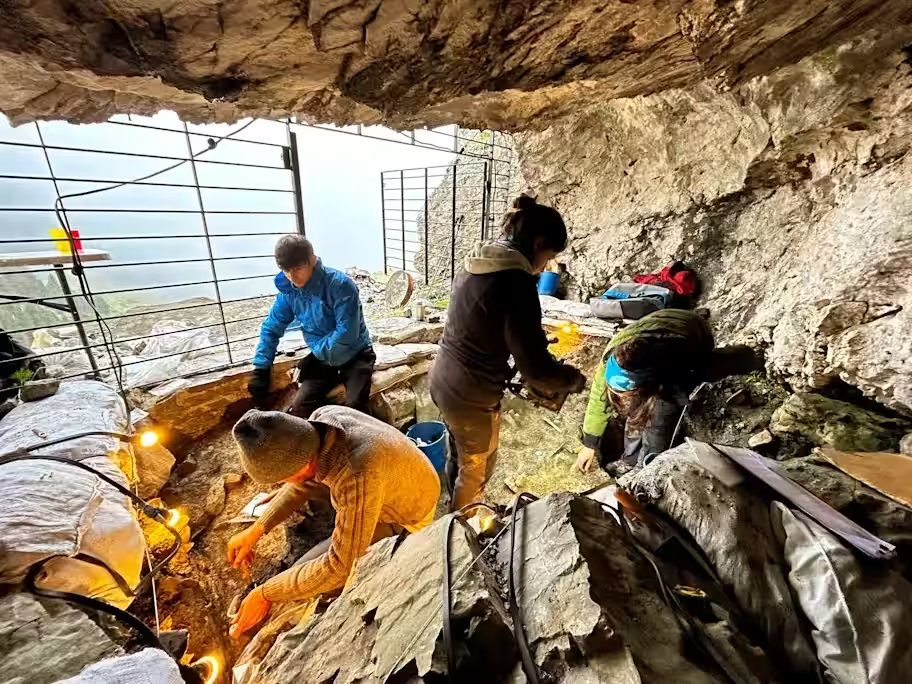
Reaching Cova 338 demands a long hike. The cave sits in the Núria Valley in the municipality of Queralbs, and motorized access is forbidden across the protected landscape. For three field seasons, the team carried every piece of equipment, every sample, and all excavated sediment down the mountain by hand.
The work employed high-resolution recording: 3D documentation of recovered materials, systematic sediment sampling, and flotation techniques to recover the smallest remains. The site has since been closed to the public to protect the deposits and enable continued research.
The team expects to expand the excavation, analyze pollen and plant remains, and locate the source of the copper minerals. Cova 338 has already established itself as a key site for understanding how prehistoric communities exploited high-mountain resources. The next field seasons may reveal exactly what those ancient climbers were chasing.
This article has been fact checked for accuracy, with information verified against reputable sources. Learn more about us and our editorial process.
Last reviewed on .
Article history
- Latest version
Reference(s)
- Tornero, Carlos., et al. “Beyond 2,000 meters, first evidence of intense prehistoric occupation in the Pyrenees.” Frontiers in Environmental Archaeology, vol. 5, May 5, 2026 Frontiers Media SA, doi: 10.3389/fearc.2026.1811493. <http://doi.org/10.3389/fearc.2026.1811493>.
- “Lecturer Carlos Tornero appointed new member of the Young Academy of Spain.” UAB Barcelona <https://www.uab.cat/web/newsroom/news-detail/lecturer-carlos-tornero-appointed-new-member-of-the-young-academy-of-spain-1345830290613.html?detid=1345919761081>.
- Barcelona, Universitat. “Above 2,000 meters: Cova 338 redefines Pyrenean prehistory.”, May 5, 2026 Universitat Autònoma de Barcelona <https://www.uab.cat/en/prehistory/news/20260505/cova-338-en>.
- Andrei, Mihai. “For Centuries, People Gathered at This Cave High in the Spanish Mountains. Green Rocks Could Show Us Why.”, May 6, 2026 ZME Science <https://www.zmescience.com/science/news-science/prehistoric-copper-cave-pyrenees/>.
- Killgrove, Kristina. “Mysterious green rocks in Pyrenees cave hint that prehistoric people were working copper there for 4,000 years.”, May 5, 2026 Live Science <https://www.livescience.com/archaeology/mysterious-green-rocks-in-pyrenees-cave-hint-that-prehistoric-people-were-working-copper-there-for-4-000-years>.
- “Malachite.”, May 5, 2021 WGNHS <https://home.wgnhs.wisc.edu/minerals/malachite/>.
Cite this page:
- Posted by Linda Wilson