Miniature Eye Telescope Proves Cost-Effective for Advanced Macular Degeneration
Implanting a tiny telescope directly into the eye not only enhances visual clarity for patients with late-stage AMD but also cuts overall societal spending.
Late-stage age-related macular degeneration represents a devastating turning point for older adults, stripping away central vision and leaving individuals struggling to recognize faces, read, or perform basic daily tasks. When standard pharmaceutical interventions cease to be effective, patients are typically left with conventional supportive care, relying on bulky external hand magnifiers and coping strategies while facing eventual progression to legal blindness. A new economic evaluation highlights an alternative path, showing that surgically implanting a miniature telescope into the eye provides substantial quality-of-life gains while generating significant societal cost savings.
The device examined, the smaller-incision new-generation implantable miniature telescope (SING IMT), represents an evolution in optical prosthetic technology. Preloaded into an injector system designed for smaller corneal incisions, the micro-optical cylinder provides up to 2.7 times magnification of central visual input. By enlarging the image and projecting it onto intact areas of the peripheral retina, the implant allows the treated eye to handle detailed central vision while the fellow eye maintains vital peripheral awareness. In research published in Ophthalmology Science, health economists and clinical ophthalmologists simulated the lifetime outcomes of 1,000 patients with bilateral end-stage macular degeneration to evaluate the device against conventional standard care.
Balancing Surgical Innovation Against Healthcare Spending
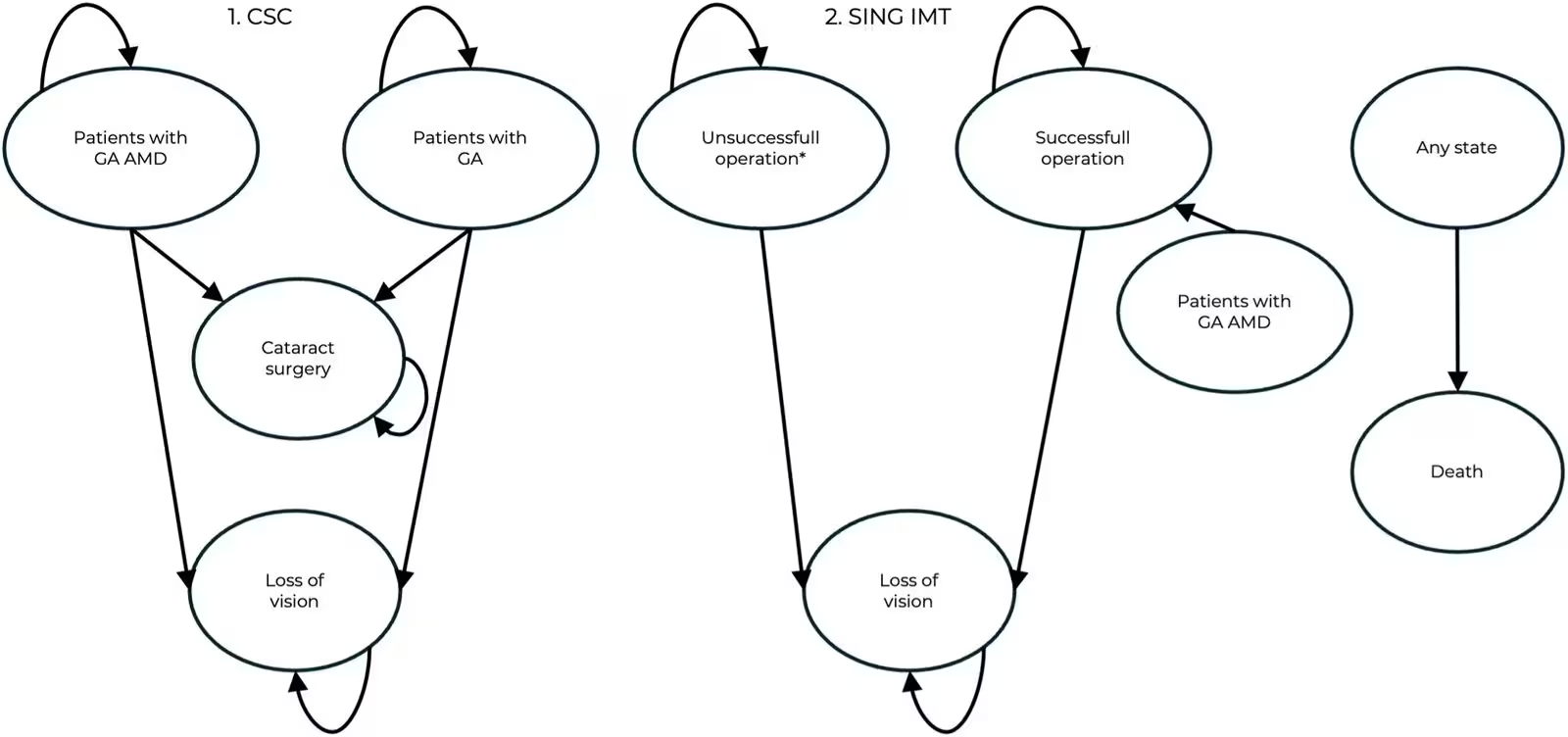
To determine the economic feasibility, the researchers built a quarterly Markov cohort model tracking patient survival, visual acuity transitions, adverse surgical events, and the costs associated with post-operative visual rehabilitation. The modeled cohort entered with an average age of 76 years and severe vision impairment, with nearly 80 percent experiencing advanced geographic atrophy. The standard care arm received routine ophthalmological follow-up, cataract surgery where appropriate, and conventional low-vision aids, whereas the intervention arm received monocular telescope implantation alongside six months of structured sensory integration rehabilitation.
Over a lifetime horizon, recipients of the telescope gained an average of 1.59 additional life years and 1.27 quality-adjusted life years (QALYs) compared to those managed under standard protocols. From the direct perspective of the Italian National Health Service, the total per-patient expenditure was higher for the implant group, reaching €23,297.95 compared to €1,537.36 for standard care. This difference was driven overwhelmingly by initial hardware and surgical acquisition costs, which averaged €20,909.72.
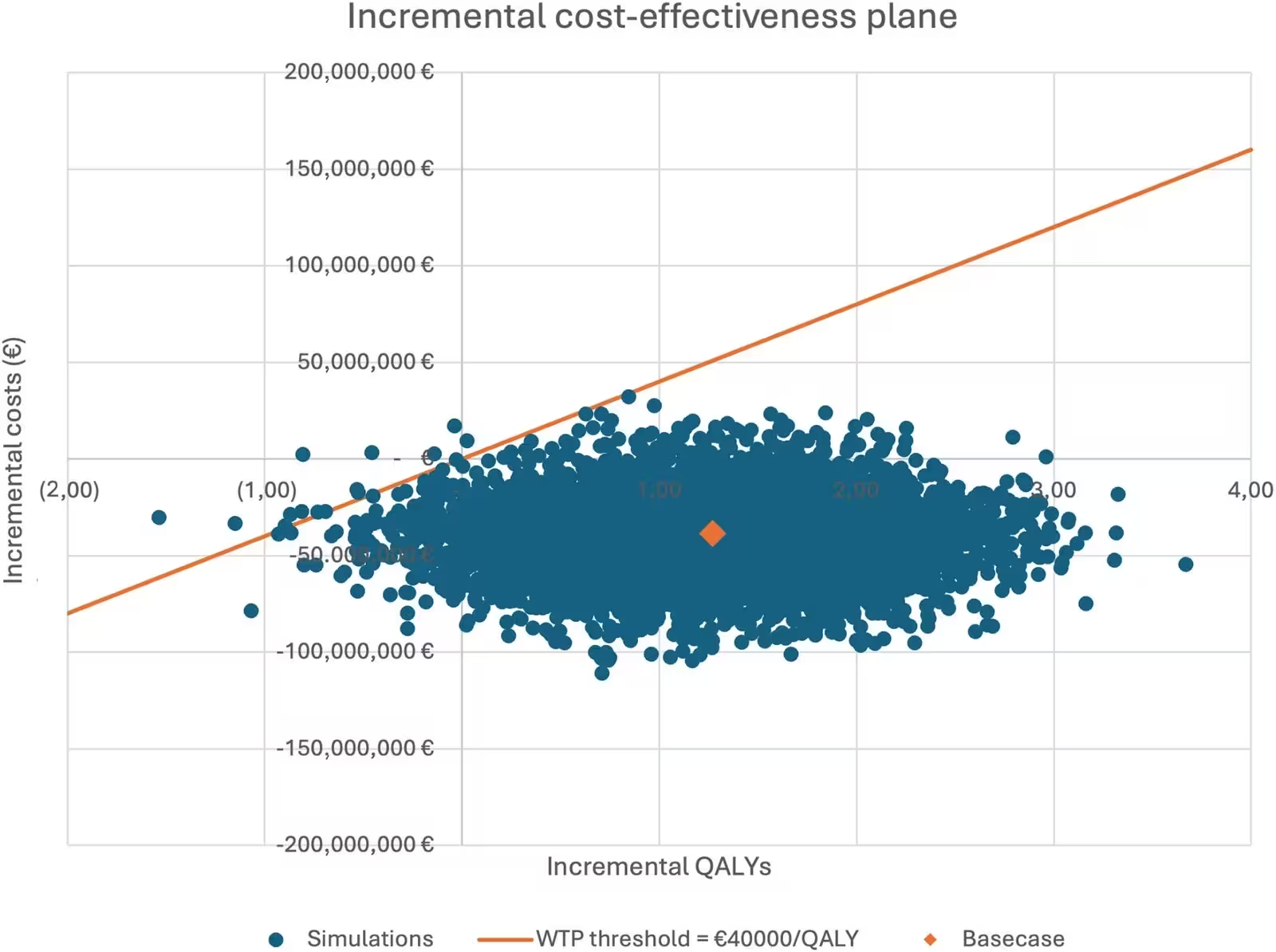
Despite this upfront expenditure, the incremental cost-effectiveness ratio stood at €17,137.15 per quality-adjusted life year gained. This figure falls well beneath the standard willingness-to-pay threshold of €40,000 per QALY, demonstrating that the device provides strong value for money within public health budgets.
How Delaying Blindness Erases Lifetime Societal Costs
The economic findings changed dramatically when the research team factored in the wider societal costs of irreversible sight loss. In Italy, individuals registered as legally blind receive an annual disability allowance amounting to more than €16,280. When these social security payments were integrated into the analysis, the lifetime economic impact flipped entirely.
Standard care generated lifetime societal and medical costs averaging €74,035.45 per patient, overwhelmingly driven by more than €72,000 in blindness-related disability transfers. In contrast, by slowing the transition to profound blindness and preserving functional autonomy, the telescope cohort accumulated only €35,446.33 in combined lifetime costs. This yielded an average net saving of €38,589.12 per patient. In health economics terminology, the telescope strategy became dominant, producing superior health and vision outcomes while spending less public money overall.
Sensitivity Checks and Clinical Nuance
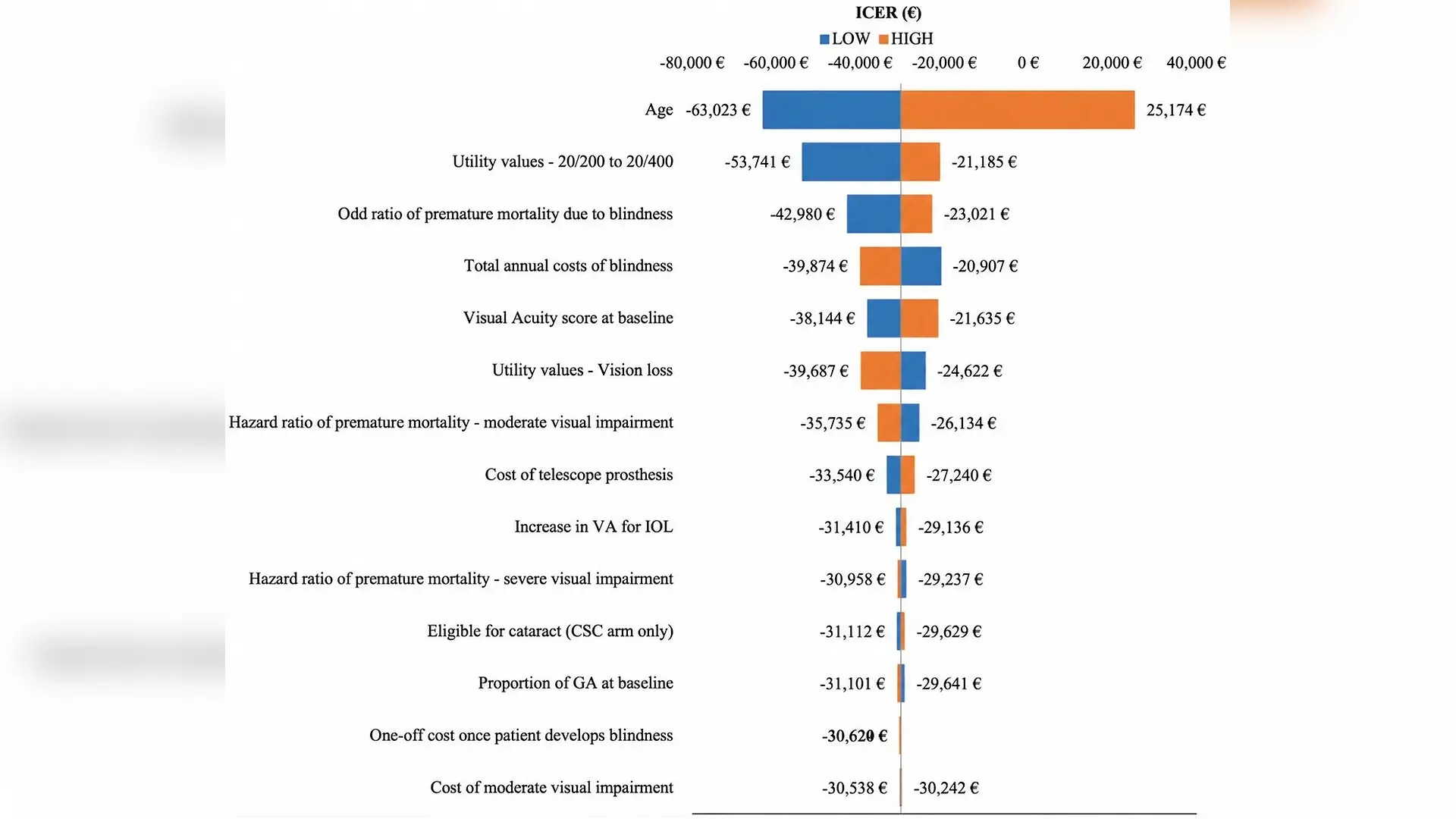
Deterministic and probabilistic sensitivity analyses confirmed the robustness of the model across thousands of iterations. Patient age at implantation emerged as the primary variable influencing overall value. Younger individuals within the eligible spectrum experienced longer life expectancies, allowing them to benefit from preserved sight over more years and magnifying downstream savings. By contrast, operating room duration, specific visit frequencies, and minor adverse events had negligible effects on cost-effectiveness.
The investigators emphasized that successful visual restoration requires careful patient selection, appropriate anatomical clearance, and active dedication to post-surgical occupational therapy. Because the model drew on long-term data from the first-generation telescope device and primarily represented individuals with geographic atrophy, additional real-world trials will help confirm long-term durability across diverse populations. Nonetheless, the results indicate that for selected patients facing severe visual loss, investing in advanced surgical implants can preserve functional independence while easing the long-term economic strain on public support infrastructure.
The research was published in Ophthalmology science on October 1, 2026.
This article has been fact checked for accuracy, with information verified against reputable sources. Learn more about us and our editorial process.
Last reviewed on .
Article history
- Latest version
Reference(s)
- Basile, Michele., et al. “Cost-Effectiveness of the Smaller-Incision New Generation Implantable Miniature Telescope for Late-Stage Age-Related Macular Degeneration.” Ophthalmology Science, vol. 6, no. 10, October 1, 2026, pp. 101357 Elsevier BV, doi: 10.1016/j.xops.2026.101357. <https://doi.org/10.1016/j.xops.2026.101357>.
- Posted by Aisha Ahmed