Did Venus Once Have A Moon That Eventually Crashed Into The Planet
Did Venus once have a moon? New tidal models suggest an ancient satellite may have spiraled inward and been destroyed by the planet’s gravitational forces.
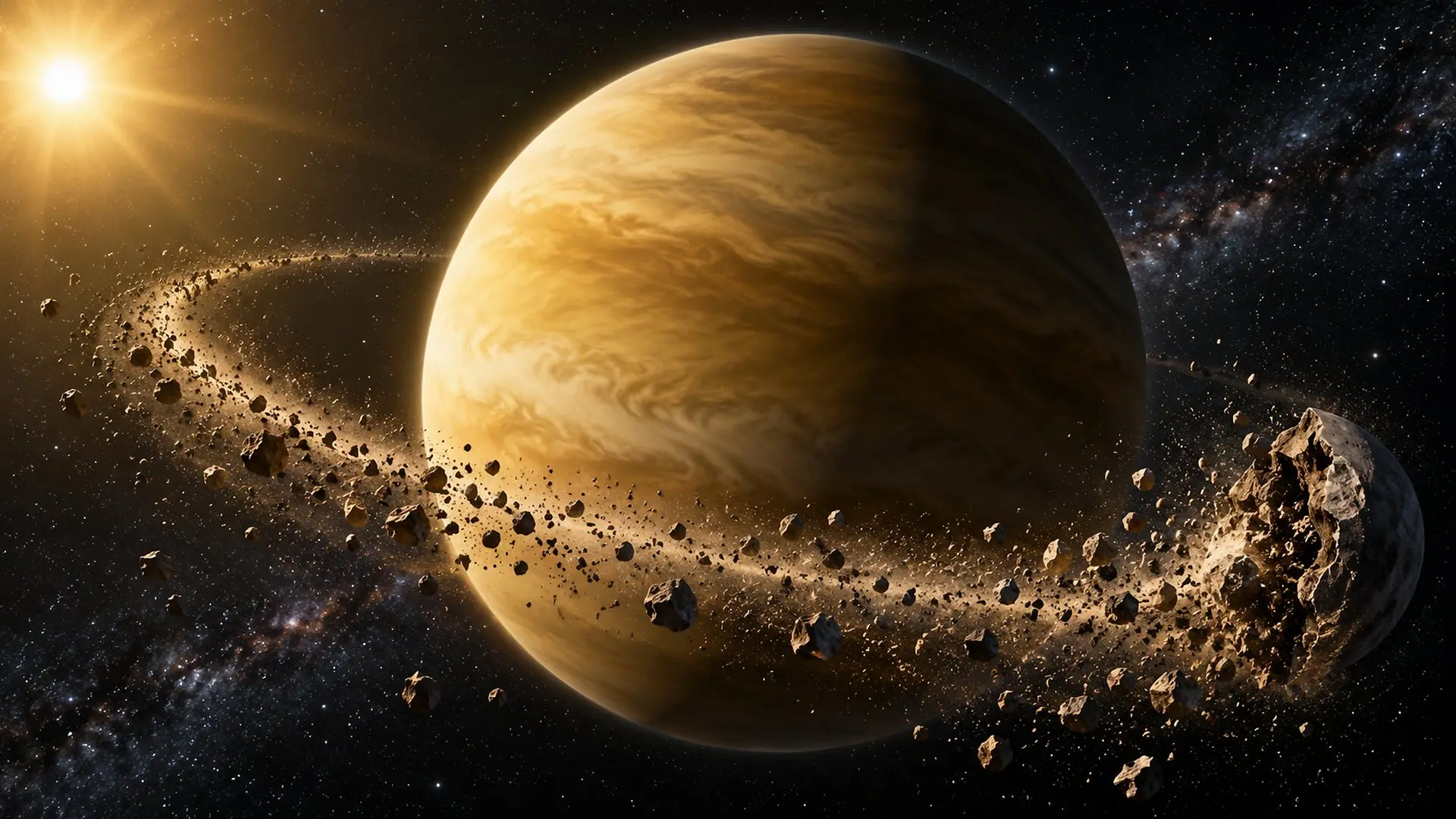
Venus is currently a desolate world without a moon, but new research suggests that this barren state may not be the planet’s original condition. A fresh theoretical investigation proposes that Venus could have once hosted a substantial satellite, born from a violent collision during the chaotic early history of the solar system, only for that moon to be slowly dismantled by the very gravitational forces that governed its orbit.
The study, led by astronomer Stephen Kane of the University of California, Riverside, alongside colleagues Franck Selsis, Jeremy Leconte, and Sean Raymond, explores how a moon might survive or succumb to the complex tidal interplay between a satellite and its host planet. Their findings have been accepted for publication on arXiv.
Did Venus Experience a Cataclysmic Impact?
The formation of Earth’s Moon is widely attributed to a massive impact event that ejected debris into orbit, which later coalesced into a permanent satellite. Given the frequent collisions that characterized the early solar system, it is plausible that Venus underwent a similar event. A 2025 study published in Astronomy & Astrophysics demonstrated that collisions involving bodies up to one-tenth the mass of Earth could result in debris disks orbiting Venus. While many of these scenarios result in debris falling back to the surface, the possibility remains that a stable moon could have formed and persisted for millions or even billions of years.
The Tidal Tug-of-War
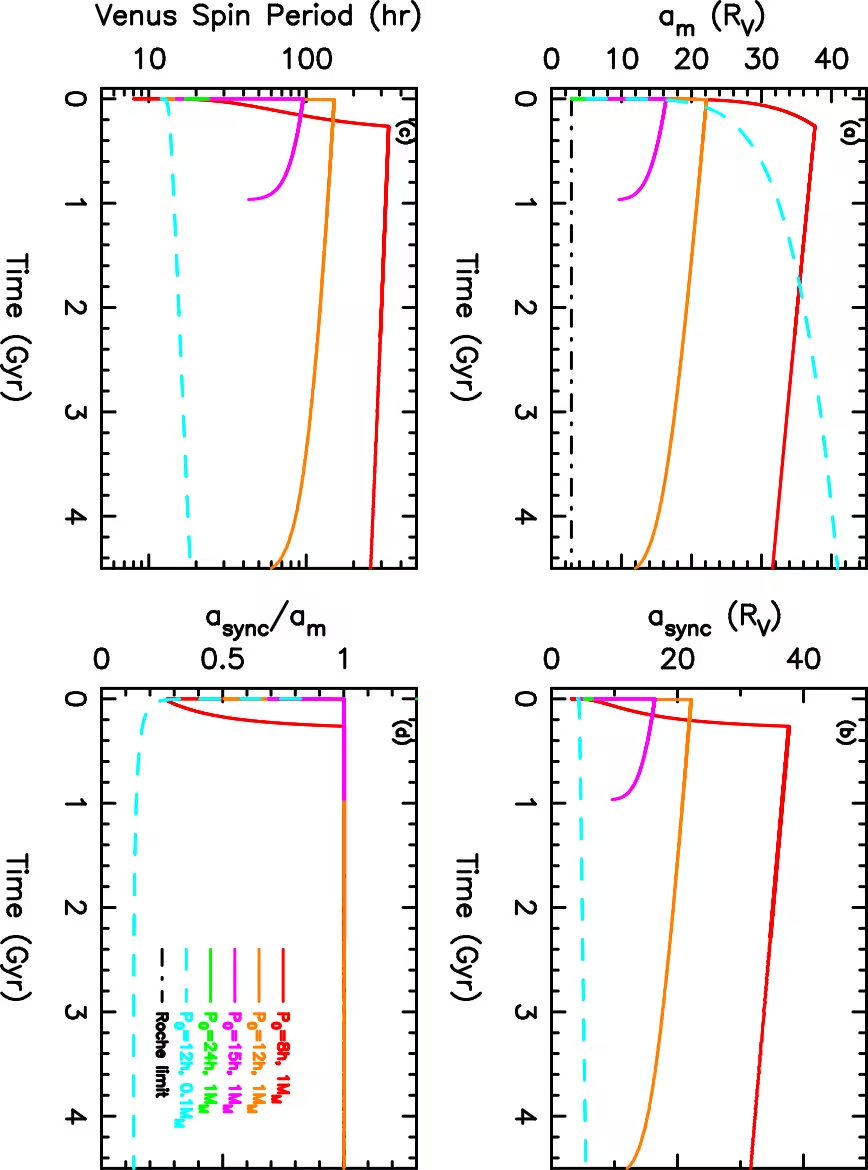
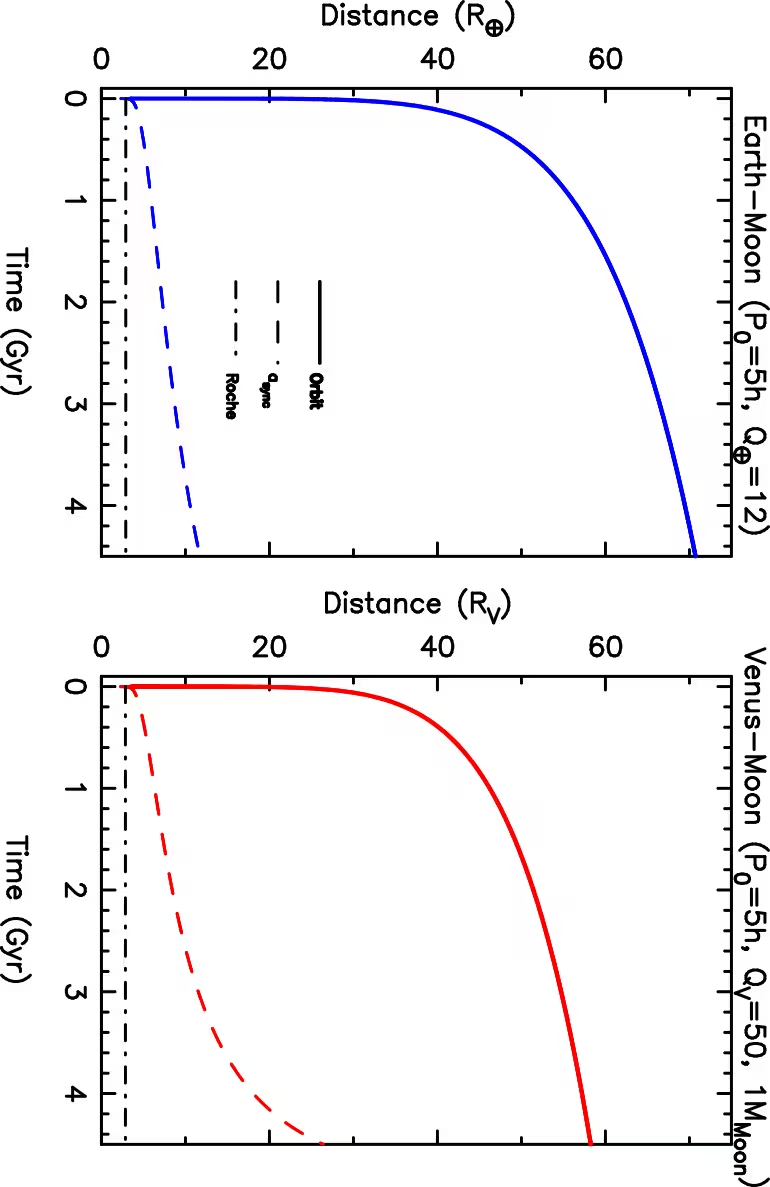
Planetary tides act as a mechanism for transferring angular momentum. On Earth, the Moon’s gravity creates a tidal bulge that pulls on the planet, gradually slowing Earth’s rotation while pushing the Moon further away. Under the right initial conditions, a Venusian moon would have behaved similarly, beginning its life by migrating outward.
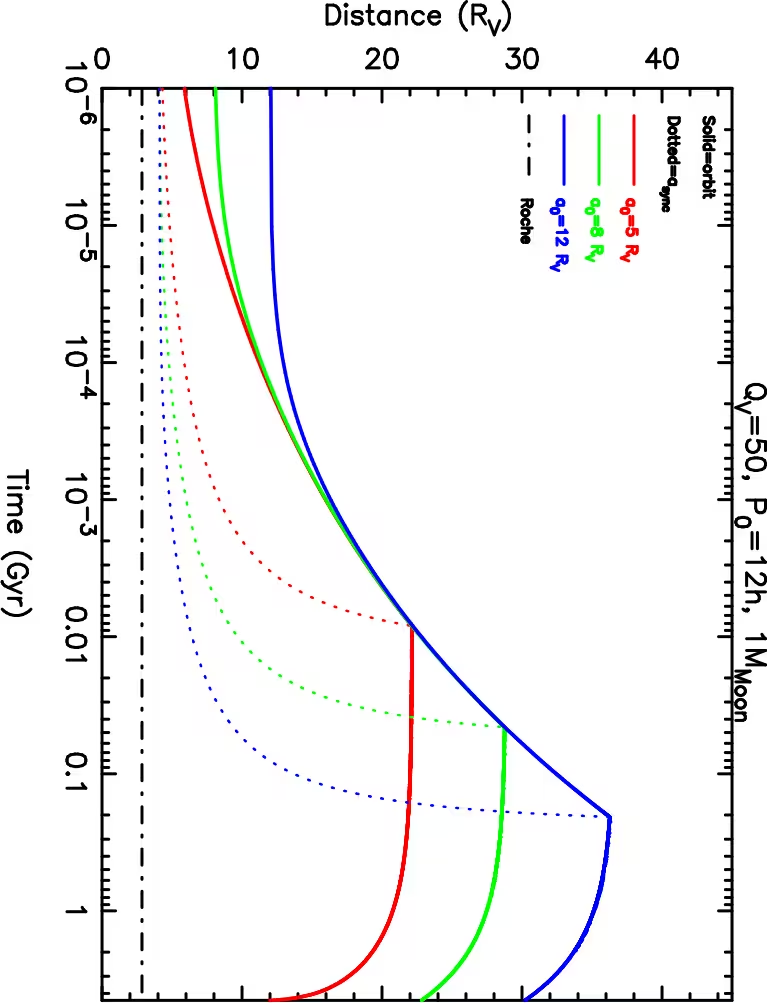
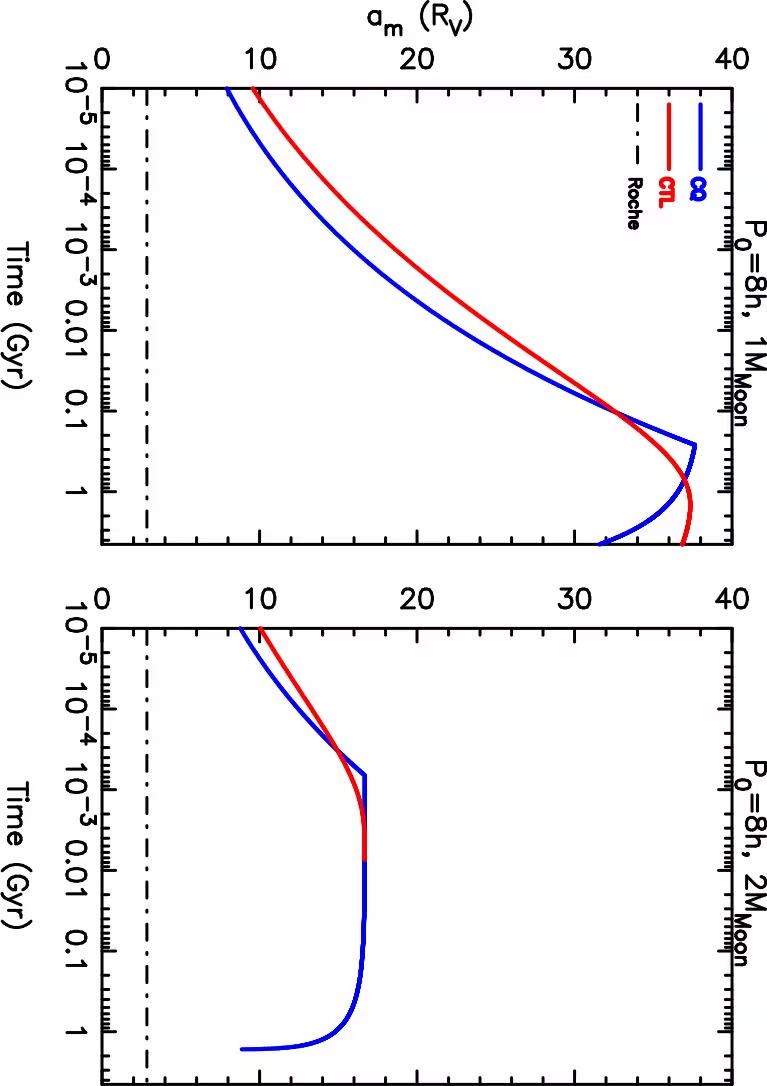
However, the research team discovered that this migration is inherently unstable over long periods. As the moon exerts a drag on Venus, the planet’s rotation slows down, shifting the synchronous orbit boundary—the distance at which the planet’s rotation matches the moon’s orbital period. If this boundary moves outward and overtakes the satellite, the tidal effect reverses. Instead of gaining energy, the moon begins to bleed orbital energy, forcing it into a decaying spiral back toward the planet.
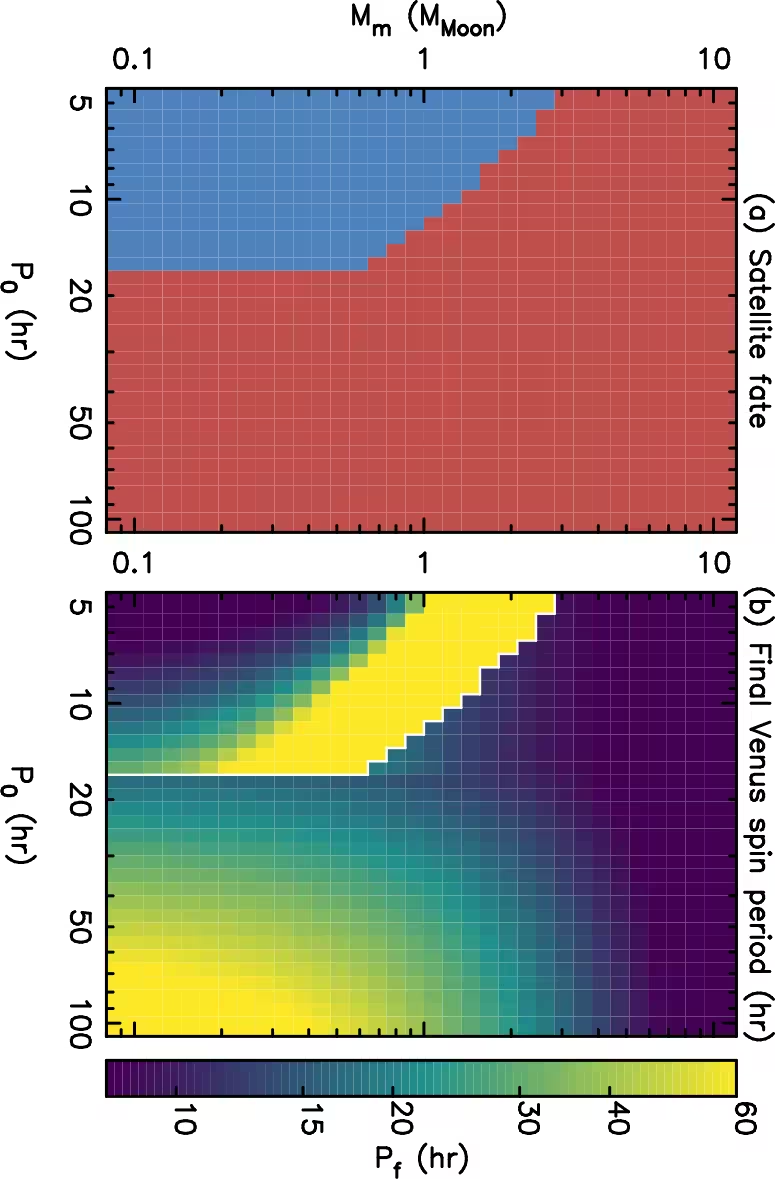
The size of the moon plays a critical role in its ultimate fate. Heavier satellites accelerate this process, as they exert a stronger torque on the planet. According to the team’s models, a moon twice as massive as our own could be destroyed in as little as 33 million years if Venus started with a 12-hour rotation period, though other scenarios could allow for a survival duration exceeding a billion years.
The Final Descent
Once a doomed satellite crosses the Roche limit—approximately 17,000 kilometers from the planet’s center—tidal forces would likely shred it into a temporary ring system. Eventually, this material would have rained down onto the Venusian surface. Such an event would have been a significant geological and atmospheric occurrence, potentially altering the planet’s early climate.
While this theory remains speculative, it offers a compelling solution to why the inner planets lack moons. As pointed out by Joseph Burns in a seminal 1973 analysis, the absence of a satellite today does not serve as proof that one never existed, as tidal evolution provides a natural mechanism for their eventual removal.
Searching for Clues in the Clouds
Understanding whether Venus ever had a moon is tied to the broader mystery of its habitability. Some models suggest that ancient Venus could have been temperate, and a moon might have played a role in stabilizing its axial tilt and driving oceanic tides. Future exploration, particularly by NASA’s DAVINCI mission, may provide chemical clues by analyzing atmospheric isotopes. While widespread volcanic activity has likely erased surface evidence of an ancient satellite, the isotopic fingerprints in the atmosphere might one day reveal if a moon once graced the Venusian sky.
For those interested in the underlying science of these planetary dynamics, additional context can be found in foundational studies regarding the possibility of giant impacts, the historical absence of satellites on inner planets, and the potential habitability of early Venus.
This article has been fact checked for accuracy, with information verified against reputable sources. Learn more about us and our editorial process.
Last reviewed on .
Article history
- Latest version
Reference(s)
- “Tidal Demise: The Evolution and Fate of a Hypothetical Venus Moon.” <https://arxiv.org/html/2608.25036v2>.
- Bussmann, M.., et al. “The possibility of a giant impact on Venus.” Astronomy & Astrophysics, vol. 702, October 13, 2025, pp. A106 EDP Sciences, doi: 10.1051/0004-6361/202555802. <https://doi.org/10.1051/0004-6361/202555802>.
- Cermak, Alicia. “NASA's DAVINCI Mission.”, June 15, 2023 NASA <https://science.nasa.gov/mission/davinci/>.
- BURNS, JOSEPH. “Where are the Satellites of the Inner Planets? - Nature Physical Science.”, vol. 242, no. 115, pp. 23-25. Nature, doi: 10.1038/physci242023a0. <https://www.nature.com/articles/physci242023a0>.
- Way, M. J.., et al. “Was Venus the first habitable world of our solar system?.” Geophysical Research Letters, vol. 43, no. 16, August 29, 2016, pp. 8376-8383. American Geophysical Union (AGU), doi: 10.1002/2016GL069790. <https://agupubs.onlinelibrary.wiley.com/doi/10.1002/2016GL069790>.
Cite this page:
- Posted by Aisha Ahmed