Astronomers Just Detected Light Bending From Behind a Supermassive Black Hole
Astronomers have observed X-ray echoes from behind a supermassive black hole, providing direct confirmation of Einstein’s theory of general relativity.
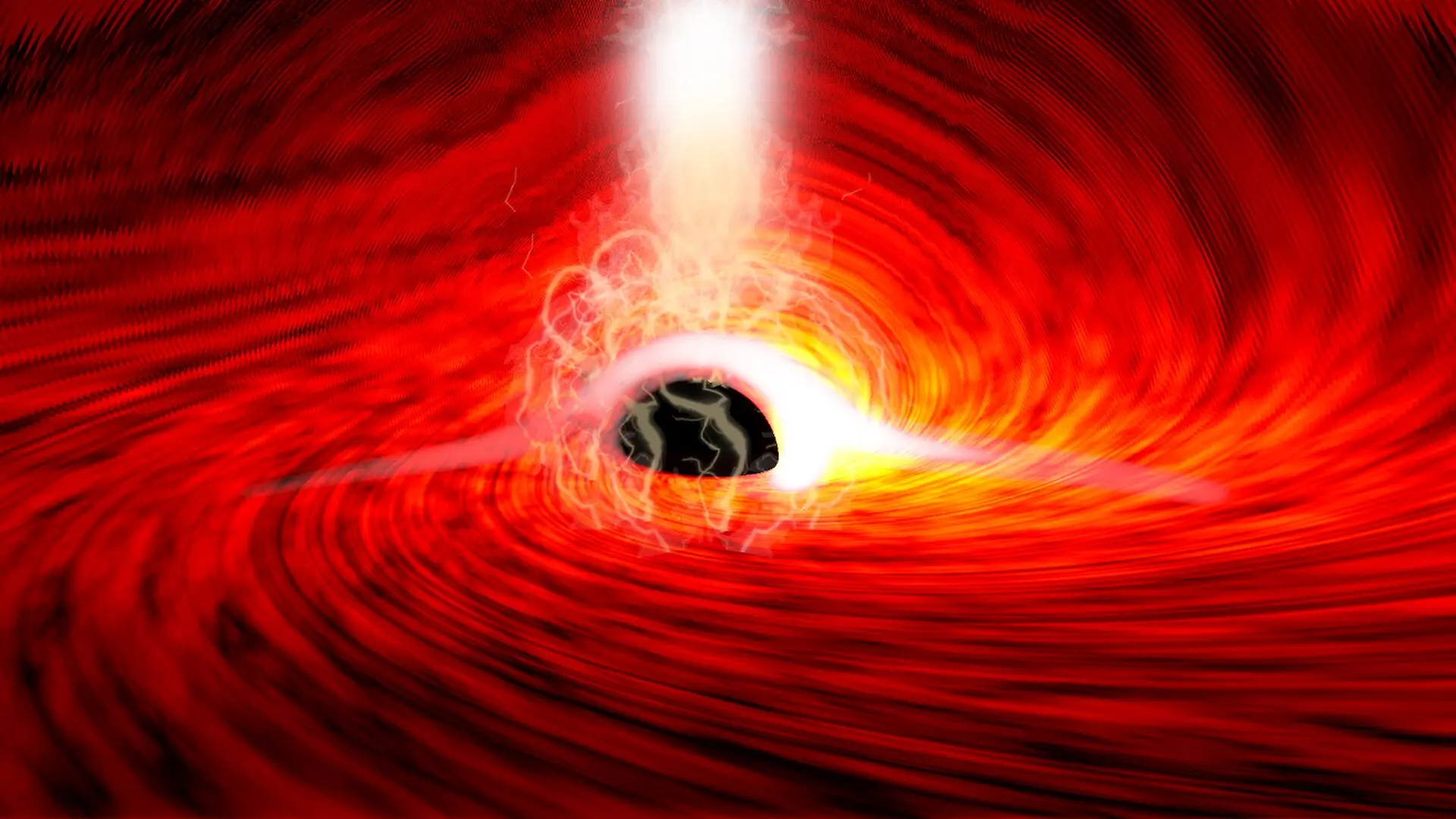
Astronomers have captured an extraordinary glimpse of light originating from behind a supermassive black hole, a phenomenon that has long been theorized but never before directly observed. By analyzing X-ray emissions from the galaxy I Zwicky 1, located 800 million light-years away, researchers detected a series of delayed, smaller flashes that indicate light being warped around the black hole by its intense gravitational pull.
The findings, detailed in the journal Nature, provide definitive observational proof of general relativity’s prediction that a black hole’s extreme mass can bend spacetime enough to redirect photons from the far side of its accretion disk into the field of view of a distant observer.
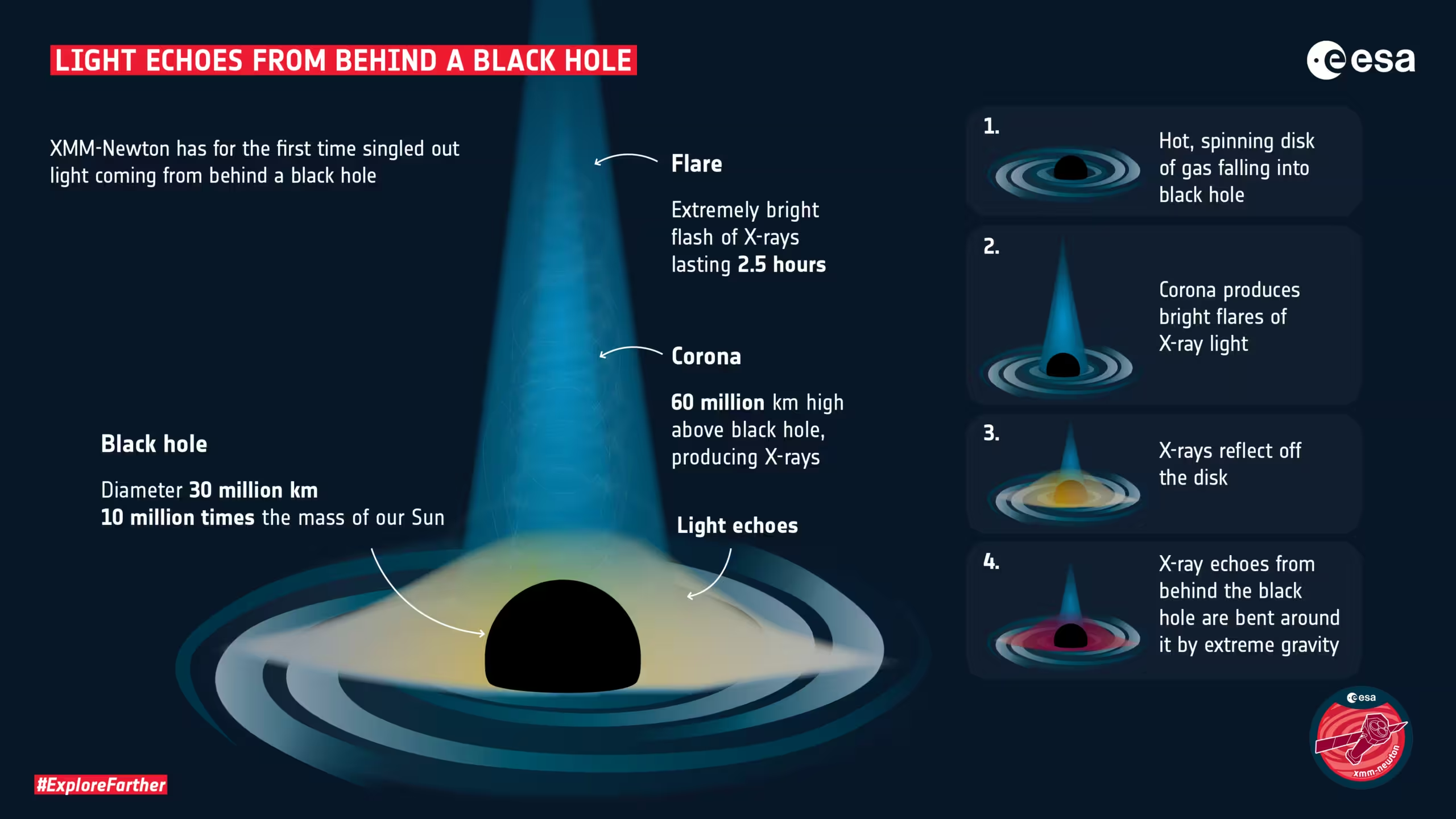
Led by scientists from Stanford University and the SLAC National Accelerator Laboratory, the research team utilized data from NASA’s NuSTAR and the ESA’s XMM-Newton space observatories. Stanford astrophysicist Dan Wilkins, who spearheaded the study, noted that while the event horizon of a black hole prevents any light within it from escaping, the light detected in this study originated outside that boundary.
Gravity as a Cosmic Lens
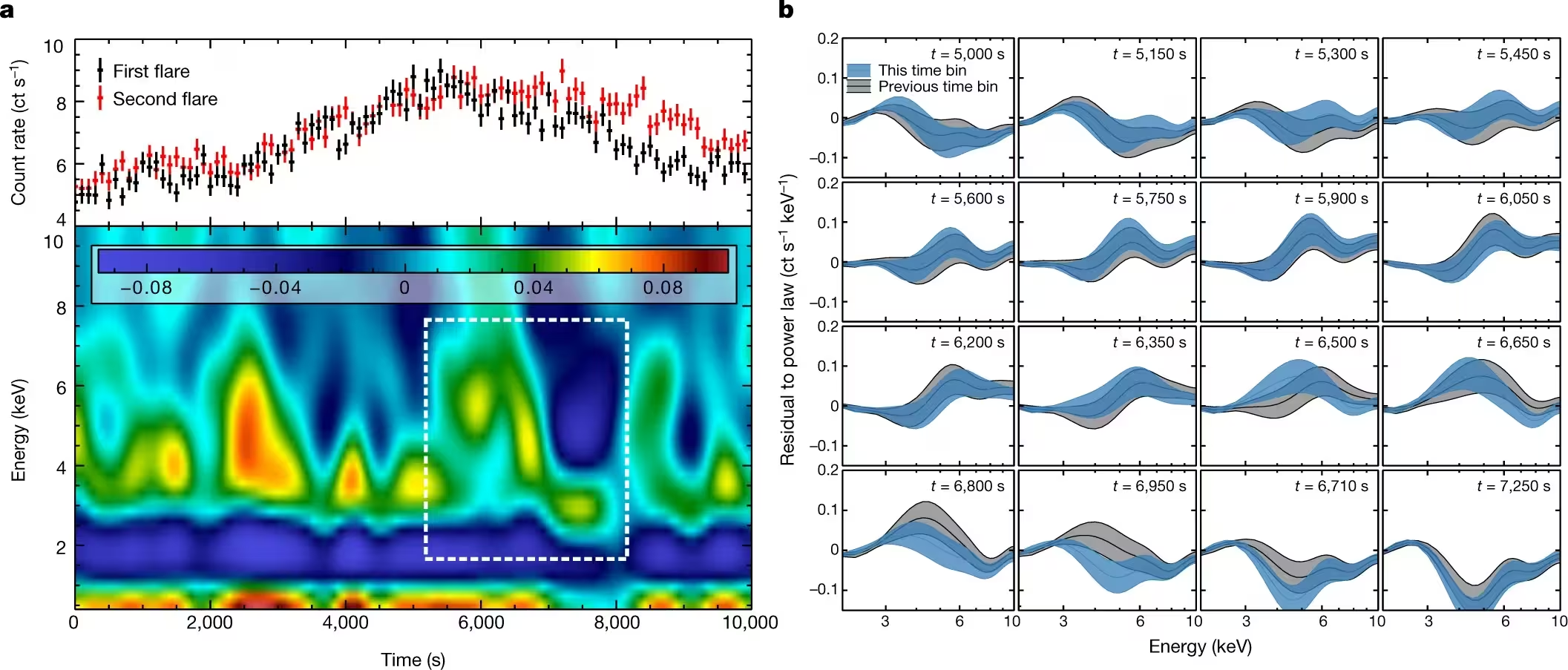
The observation centers on the behavior of X-rays in the presence of extreme gravity. According to Albert Einstein’s general theory of relativity, massive objects like black holes curve the fabric of space. This curvature forces light to follow a non-linear path. As the team monitored the supermassive black hole at the center of I Zwicky 1, they observed a series of powerful X-ray flares. Crucially, each primary flare was followed by smaller, delayed “echoes.”
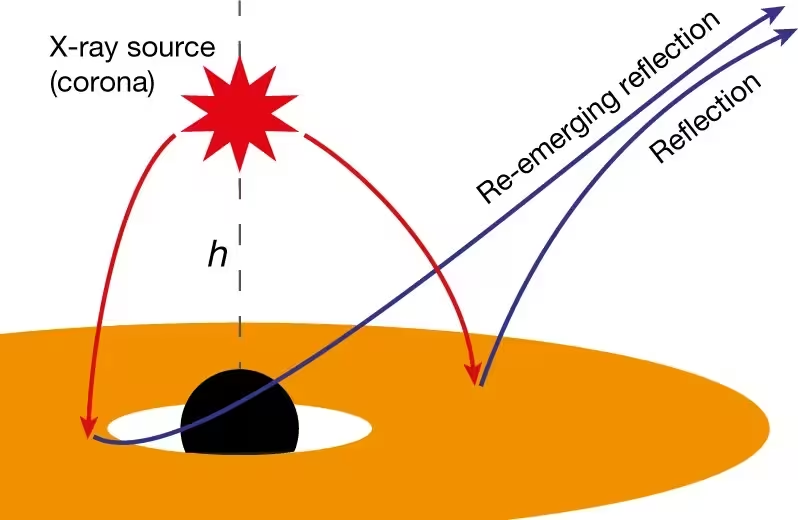
These secondary signals were captured at different energy levels and timings, matching mathematical models of light reflecting off the far side of the accretion disk and subsequently being bent around the black hole. This gravitational lensing effect allows light that would otherwise be blocked from our vantage point to travel along a curved trajectory and reach Earth.
Decoding the Corona
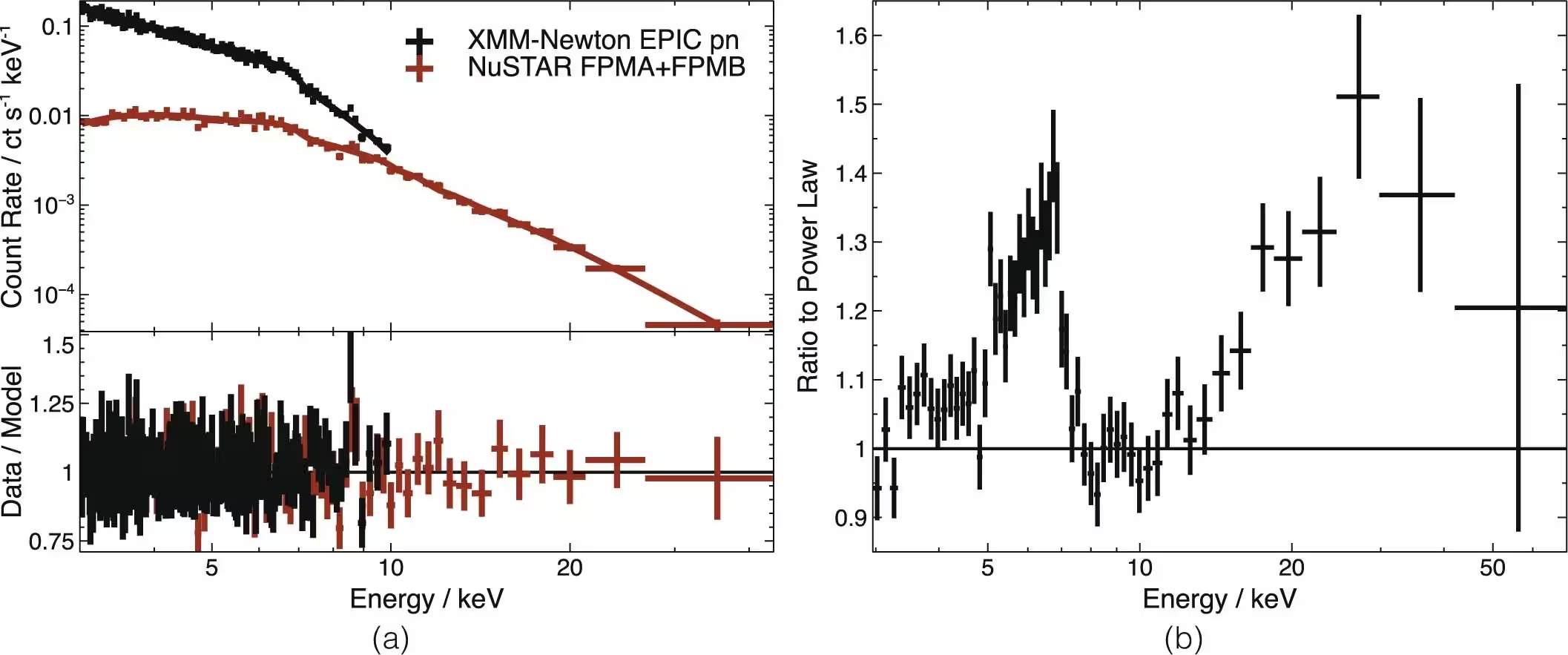
The study also shed light on the mysterious corona, a region of highly energetic particles situated near the black hole. By observing the timing of the X-ray echoes, the team was able to map the environment within only a few gravitational radii of the event horizon. The data confirmed that the corona is likely a compact, vertically extended structure that interacts dynamically with the surrounding accretion disk.
As the iron-line photons from the disk were shifted in energy—a process known as redshifting and blueshifting due to the extreme speed of the orbiting material and the gravitational environment—researchers could effectively time-stamp different regions of the disk. The statistical analysis of these shifts effectively eliminated random noise as an explanation, leaving the relativistic interpretation as the only viable model.
Probing the Physics of Spacetime
The success of this observation validates decades of theoretical physics. Co-author Roger Blandford reflected on the significance of the achievement, noting that modern technology has finally caught up to the complex questions posed by astrophysicists half a century ago. By witnessing these light echoes, researchers have secured a powerful new diagnostic tool to investigate the inner workings of active galactic nuclei.
This study demonstrates that even the darkest objects in the universe cannot completely shroud themselves from detection. Through the lens of general relativity, the very light that seems destined to be lost behind a black hole can instead provide scientists with a clearer map of the chaotic, high-energy environment at the heart of a galaxy.
Further Reading
- X-ray reverberation around accreting black holes: A review of how time delays map the regions surrounding black holes. (The Astronomy and Astrophysics Review, 2014)
- X-Ray Iron Line Reverberation from Black Hole Accretion Disks: Foundational theoretical work on iron-line echoes. (The Astrophysical Journal, 1999)
- Revealing structure and evolution within the corona of the Seyfert galaxy I Zw 1: Earlier studies defining the coronal components of I Zw 1. (Monthly Notices of the Royal Astronomical Society, 2017)
This article has been fact checked for accuracy, with information verified against reputable sources. Learn more about us and our editorial process.
Last reviewed on .
Article history
- Latest version
Reference(s)
- Wilkins, D.. “Light bending and X-ray echoes from behind a supermassive black hole - Nature.”, vol. 595, no. 7869, pp. 657-660. Nature, doi: 10.1038/s41586-021-03667-0. <https://www.nature.com/articles/s41586-021-03667-0>.
- “Stanford University.”, September 2, 2026 Stanford University <https://www.stanford.edu/>.
- “SLAC National Accelerator Laboratory | Bold people. Visionary science. Real impact..” SLAC National Accelerator Laboratory <https://www6.slac.stanford.edu/>.
- Uttley, P.., et al. “X-ray reverberation around accreting black holes.” The Astronomy and Astrophysics Review, vol. 22, no. 1, August 8, 2014 Springer Science and Business Media LLC, doi: 10.1007/s00159-014-0072-0. <https://doi.org/10.1007/s00159-014-0072-0>.
- Reynolds, Christopher S.., et al. “X‐Ray Iron Line Reverberation from Black Hole Accretion Disks.” The Astrophysical Journal, vol. 514, no. 1, March 20, 1999, pp. 164-179. American Astronomical Society, doi: 10.1086/306913. <https://doi.org/10.1086/306913>.
- Wilkins, D. R.., et al. “Revealing structure and evolution within the corona of the Seyfert galaxy I Zw 1.” Monthly Notices of the Royal Astronomical Society, vol. 471, no. 4, July 19, 2017, pp. 4436-4451. Oxford University Press (OUP), doi: 10.1093/mnras/stx1814. <https://doi.org/10.1093/mnras/stx1814>.
Cite this page:
- Posted by Aisha Ahmed