A Bright Space Station Is Crossing The US This Week And It Is Not The ISS
Spot China’s Tiangong space station in the evening sky this week as it makes several bright passes over parts of the United States.
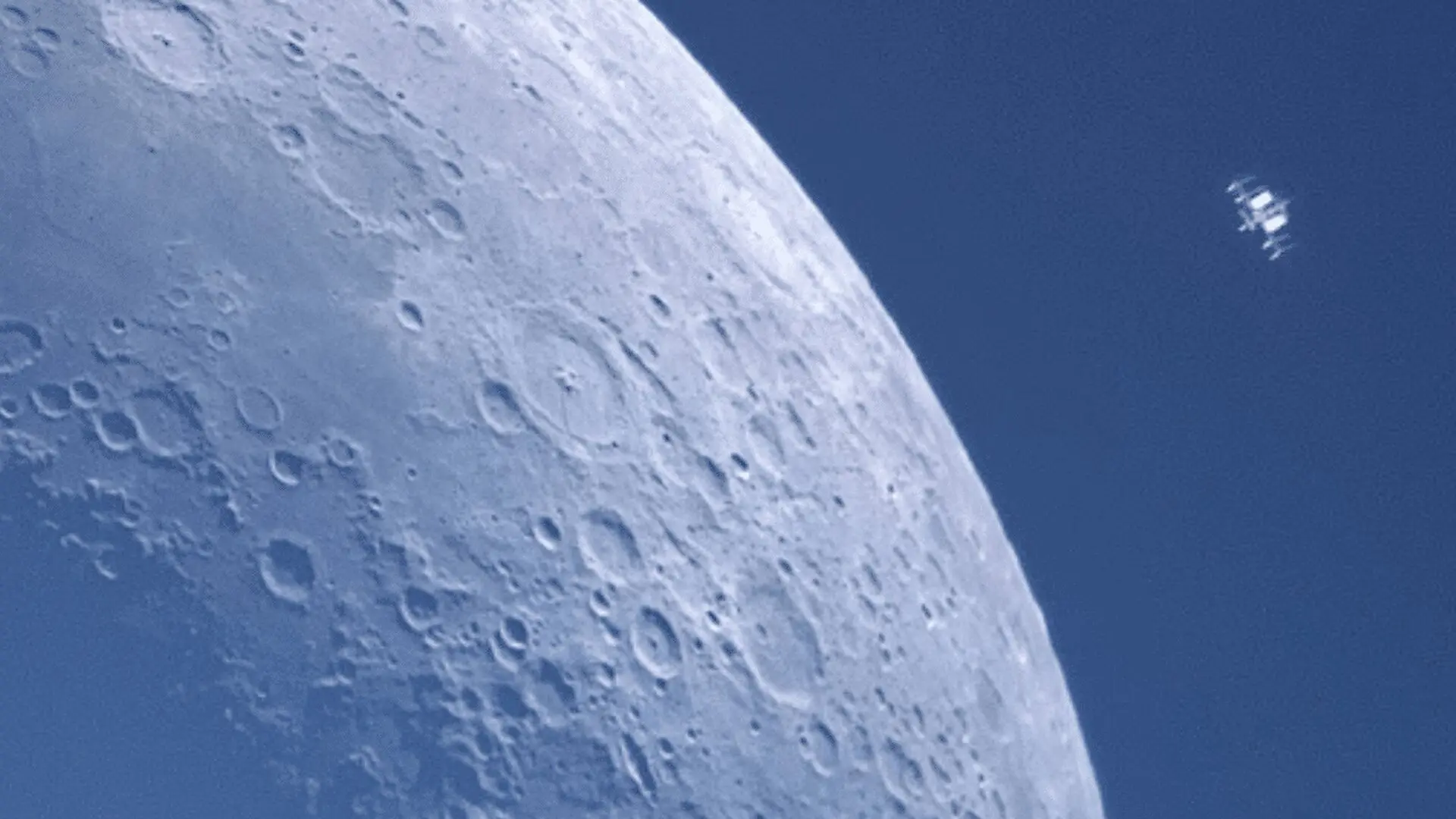
Stargazers across the United States have a unique opportunity this week to witness a rare celestial sight: the Tiangong space station. While the International Space Station is a familiar visitor to the night sky, China’s orbital outpost is currently making a series of bright, highly visible passes that require no more than the naked eye to spot.
According to reports from Space.com, the station’s current trajectory brings it into view shortly after sunset. During these favorable windows, the spacecraft reflects enough sunlight to reach a brilliance comparable to Jupiter, appearing as a steady, bright point of light moving with purpose across the dark backdrop of space.
Observing the Heavenly Palace from Earth
Identifying the station is relatively straightforward for those who know what to look for. Unlike airplanes, which display flashing navigation lights, Tiangong appears as a constant, unblinking beacon. It traverses the sky with a smooth, linear motion, typically remaining visible for several minutes at a time.
For observers in high-latitude regions, such as New York City, the viewing conditions are particularly promising. Because the station orbits at a 41.5-degree inclination, it often crests at high angles above the horizon in these areas, maximizing its brightness. Key transit times for New York City residents include:
- Friday, Sept. 4: 7:48–7:54 p.m. EDT (Magnitude –2.1, 77-degree peak altitude)
- Saturday, Sept. 5: 8:26–8:31 p.m. EDT (Magnitude –2.0, 75-degree peak altitude)
- Sunday, Sept. 6: 9:05–9:08 p.m. EDT (Magnitude –2.0, 74-degree peak altitude)
Visibility windows will continue through Sept. 9, though specific timing and clarity will vary based on local geography and weather patterns. Because the station is essentially a moving mirror, it often seems to fade into nothingness; this occurs when the outpost passes into Earth’s shadow, abruptly ending the sunlight reflection.
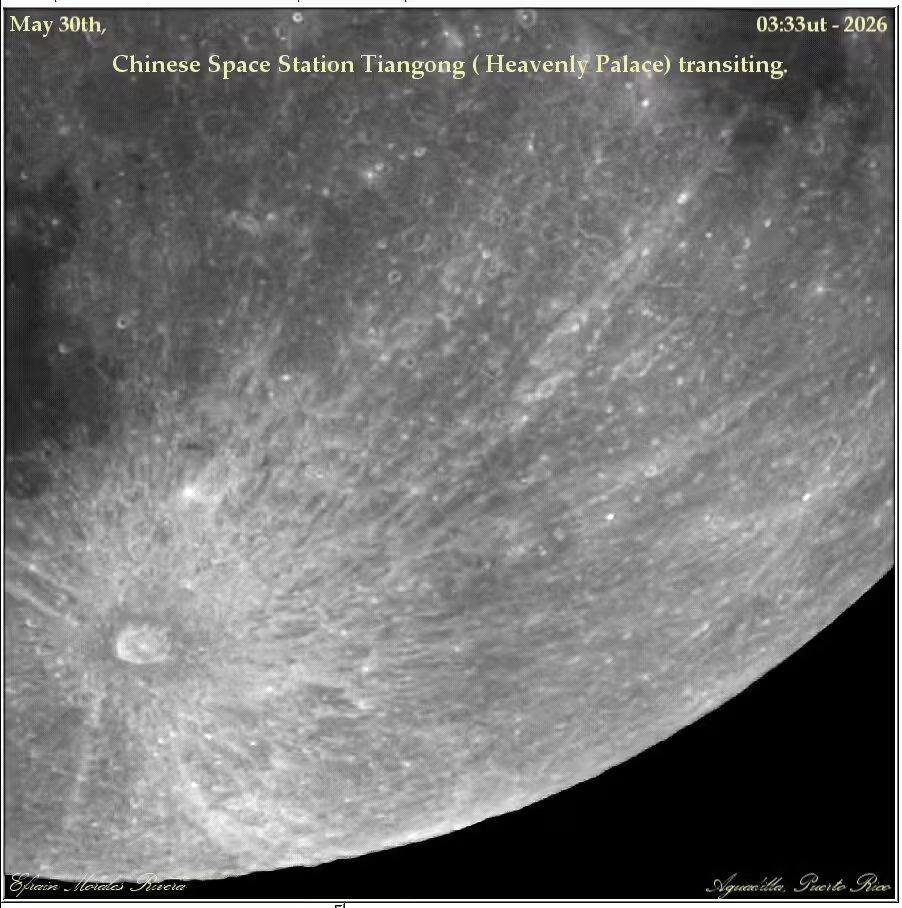
A Floating Laboratory in Low Earth Orbit
The Tiangong space station, whose name translates to “Heavenly Palace,” represents the culmination of China’s long-term orbital research ambitions. First established in 2021, the station is comprised of three primary modules—Tianhe, Wentian, and Mengtian—which were fully assembled by late 2022. While it carries a mass of approximately 100 tons, it remains smaller than its ISS counterpart, yet it functions as a fully operational, permanently inhabited laboratory.
Currently, the station is home to the Shenzhou-23 mission crew, which includes astronauts Zhu Yangzhu, Zhang Zhiyuan, and Li Jiaying (also known as Lai Ka-ying). The trio lives and works roughly 242 miles above the planet, circling the globe every 90 minutes. This proximity to the ISS, which orbits at an average of 254 miles, highlights the increasingly busy nature of low Earth orbit.
Tips for Successful Skywatching
To maximize the experience, observers are encouraged to consult satellite tracking tools that provide real-time updates for their specific coordinates. These services offer the most accurate elevation and direction data, which is essential for capturing a glimpse of the station before it disappears.
For those interested in capturing the event, astrophotography is a viable pursuit. A standard camera mounted on a stable tripod with a long exposure setting can reveal the station’s path as a streak across the constellations. Whether observing with the naked eye or a lens, spotting the station serves as a distinct reminder of the human presence currently occupying the silent, cold expanse just above our atmosphere.
This article has been fact checked for accuracy, with information verified against reputable sources. Learn more about us and our editorial process.
Last reviewed on .
Article history
- Latest version
Reference(s)
- Carter, Jamie. “A bright space station will soar over the US this week — and it's not the ISS. Here's how to see it.”, September 2, 2026 Space <https://www.space.com/stargazing/a-bright-space-station-will-soar-over-the-us-this-week-and-its-not-the-iss-heres-how-to-see-it>.
Cite this page:
- Posted by Aisha Ahmed