Why A Moon Anchored Space Elevator Might Be Possible With Materials We Already Have
New space elevator concepts could make a lunar connection possible sooner than expected by rethinking the physics of materials required for construction.
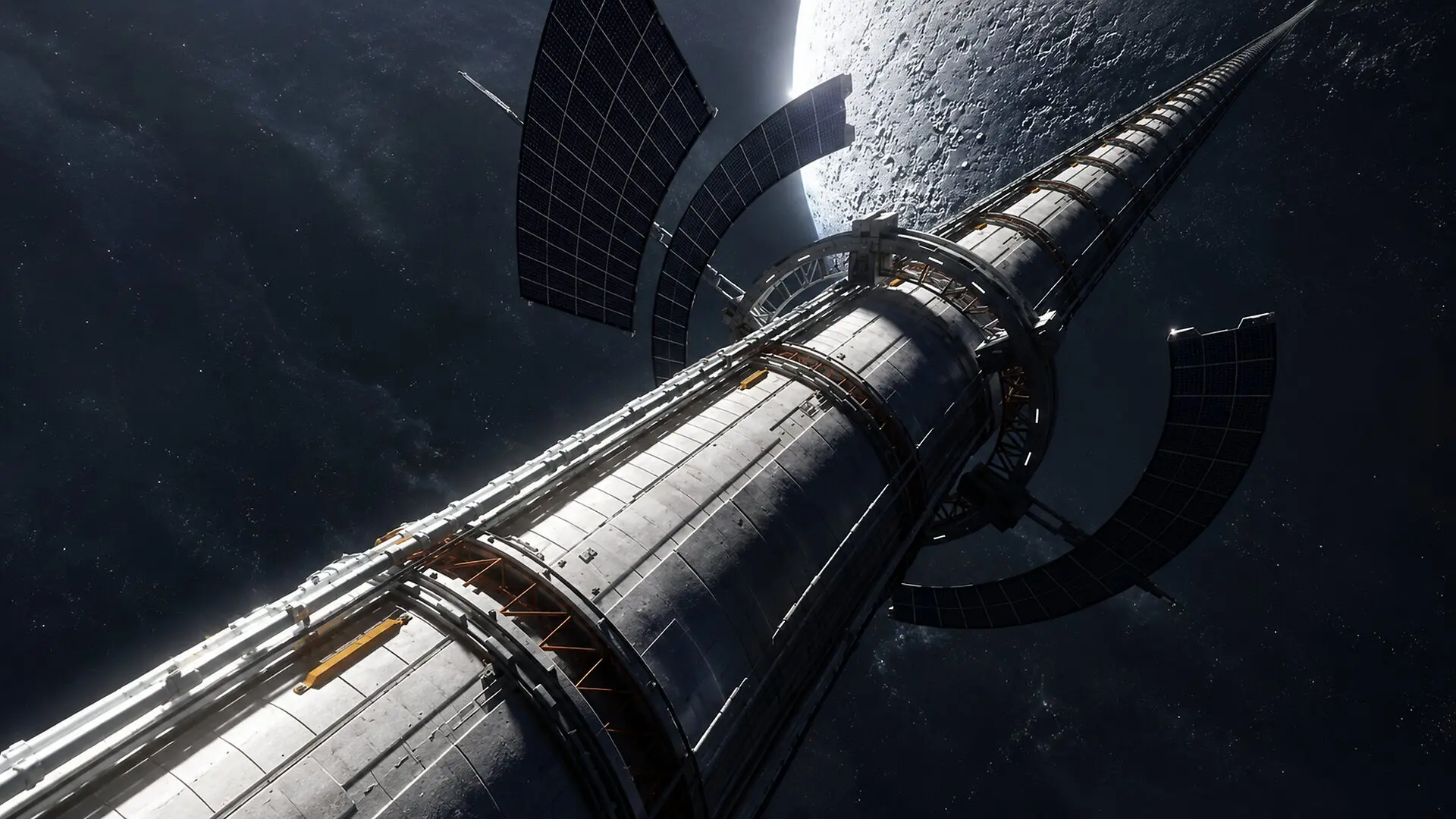
Breaking free from Earth’s gravity remains one of the most resource-intensive challenges in space exploration. Because current launch vehicles must carry massive amounts of propellant just to accelerate their own fuel, engineers have long dreamed of a permanent infrastructure—a space elevator—that could bypass this “tyranny of the rocket equation.” Two distinct approaches are now emerging, suggesting that the path to such a system might involve either breakthrough materials science or a radical rethink of celestial mechanics.
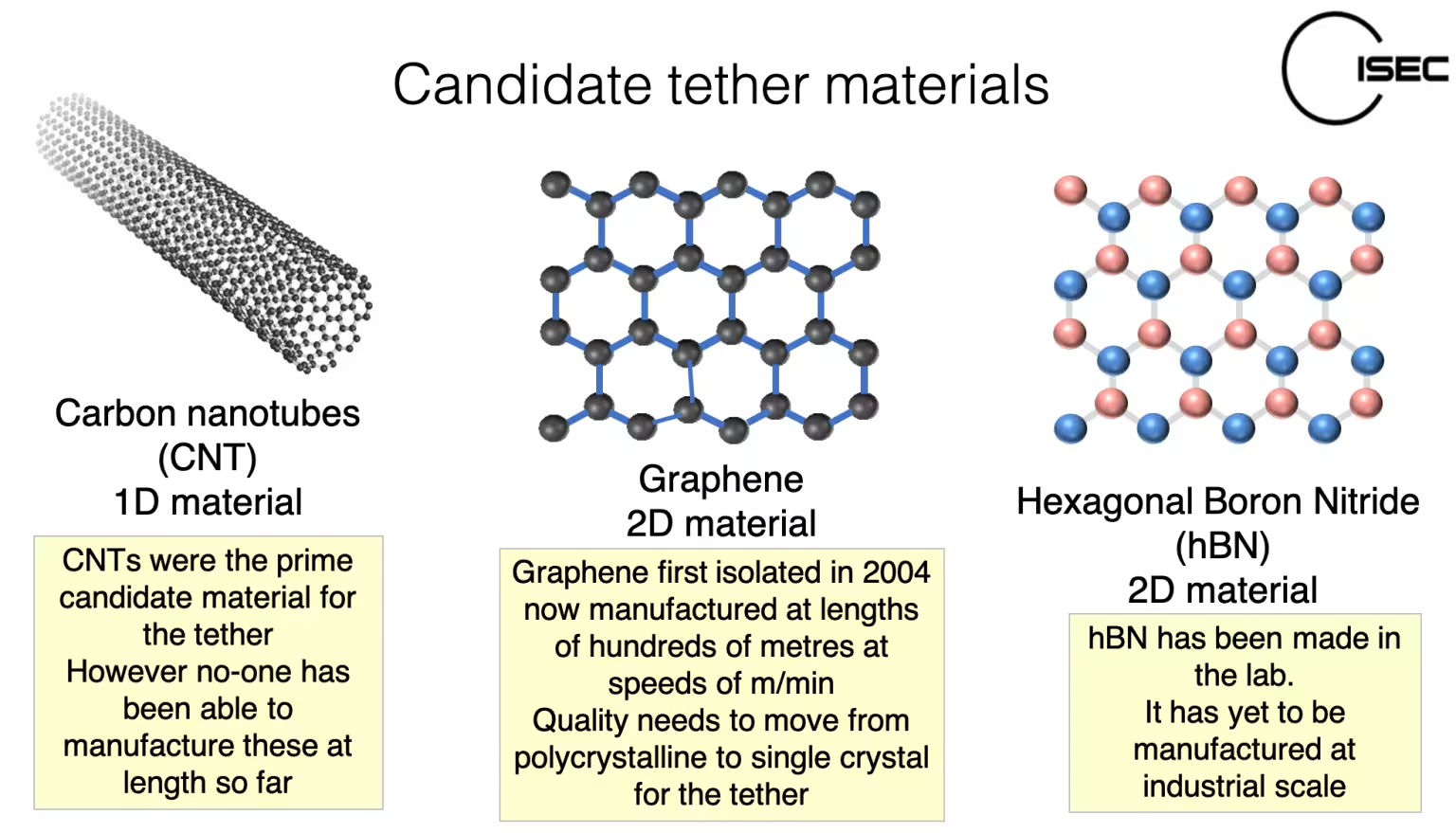
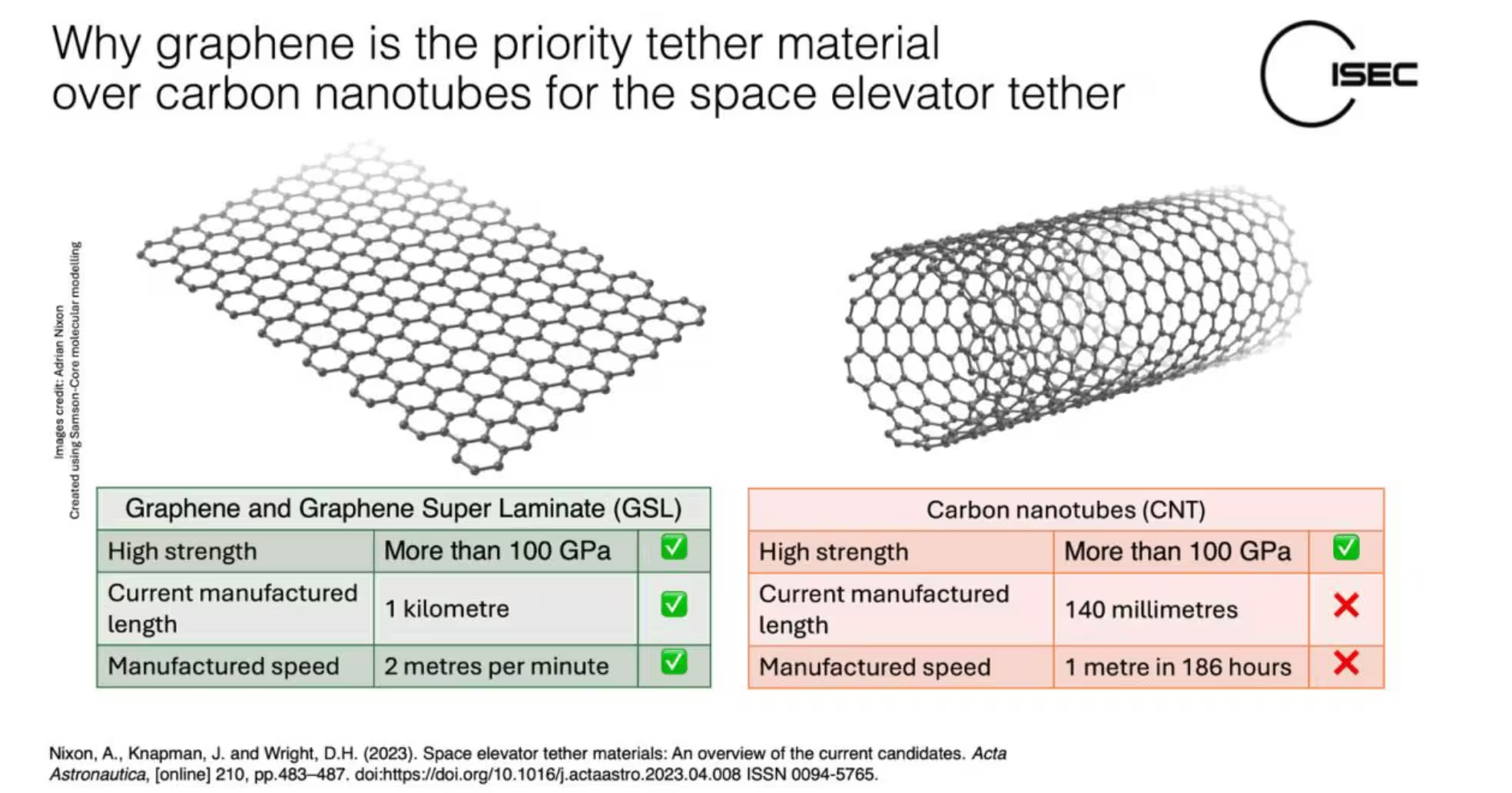
The International Space Elevator Consortium (ISEC) is currently focusing on a traditional Earth-anchored elevator, a concept that relies on ultra-strong tethers extending tens of thousands of kilometers from our planet’s surface. A key hurdle has always been the material requirements, but advancements in graphene manufacturing have provided a glimmer of hope. While researchers are not yet producing the defect-free, long-span cables needed for such a feat, the industry has made notable progress in generating kilometer-scale polycrystalline graphene. However, ISEC remains cautious, noting that scaling this to a structural tether capable of surviving decades in orbit against radiation, debris, and extreme tension is a massive, unsolved engineering puzzle.
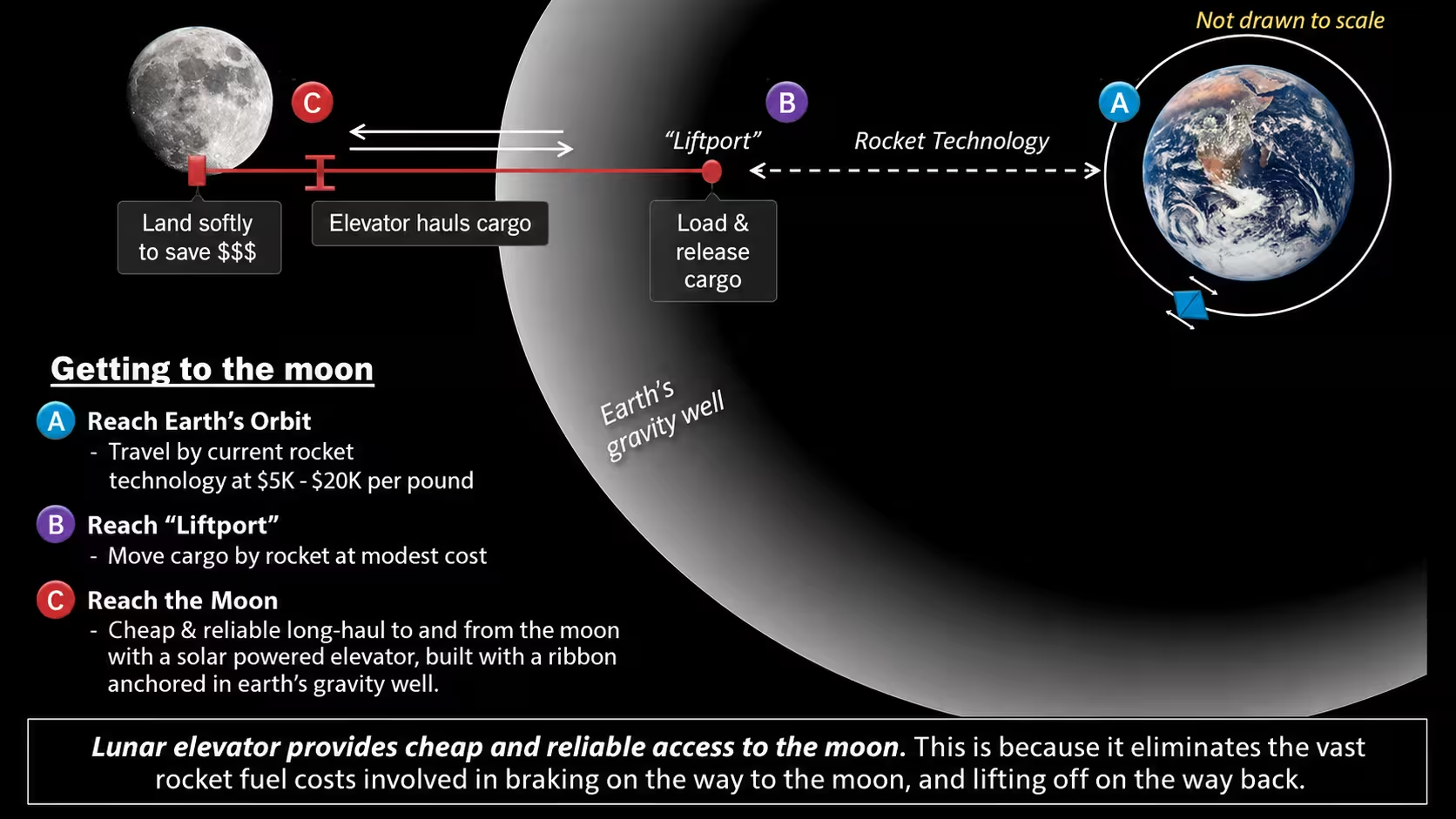
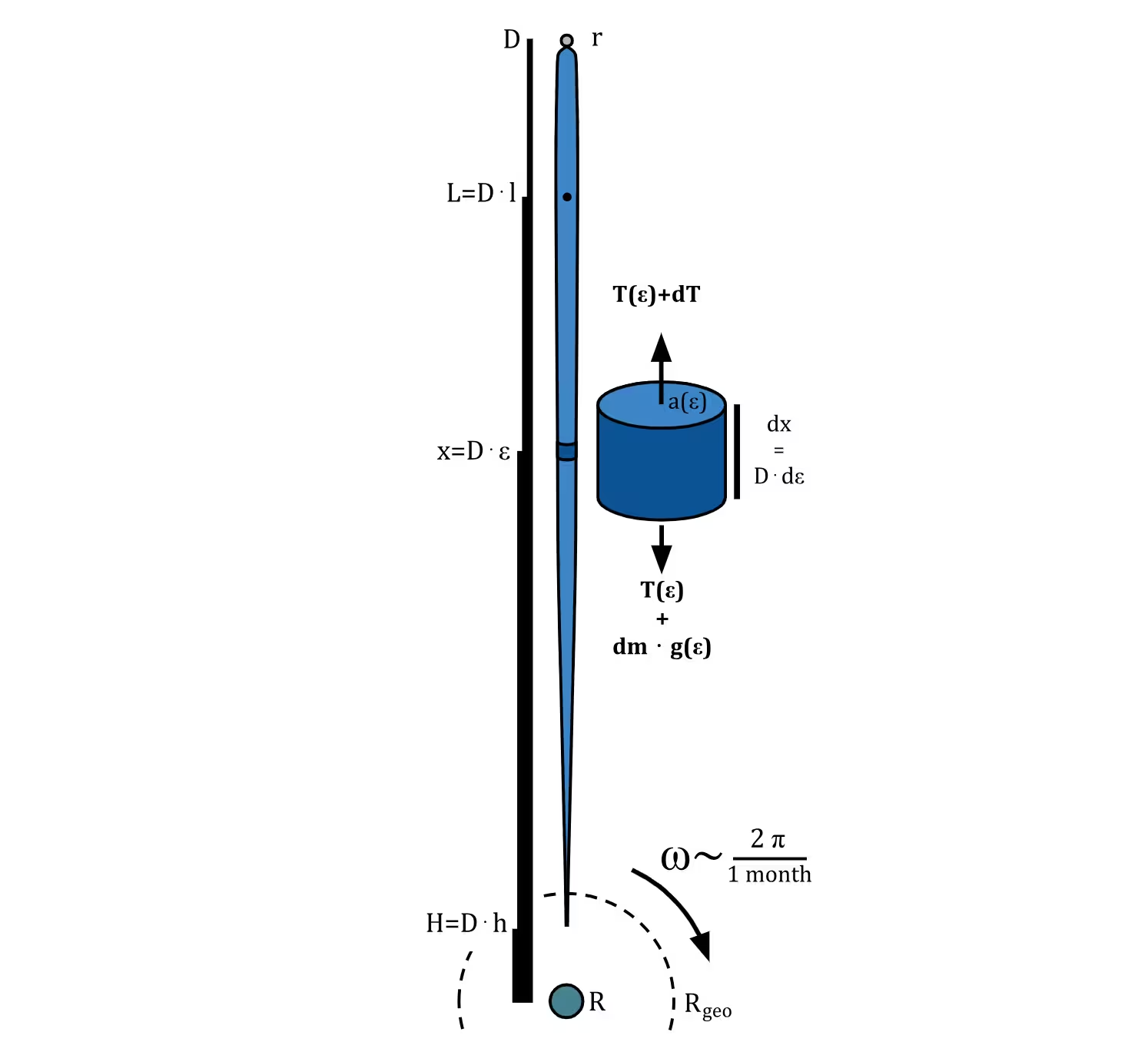
A more unconventional proposal, developed by researchers Zephyr Penoyre and Emily Sandford, flips the script by anchoring the cable to the Moon instead of Earth. By hanging a “Spaceline” toward Earth, the system leverages a completely different gravitational and orbital environment. Because the cable would move with the Moon’s monthly orbit rather than Earth’s rapid daily rotation, the stress on the tether is significantly reduced.
This design could theoretically bypass the need for future, unproven materials. According to the team’s analysis, existing high-performance synthetic fibers such as Zylon, Dyneema, or Kevlar may possess the required specific strength to hold such a line together. While an Earth-anchored elevator would demand materials with a performance factor of 50 or higher, the lunar-anchored variant could potentially function with materials currently available at a factor of roughly 3.
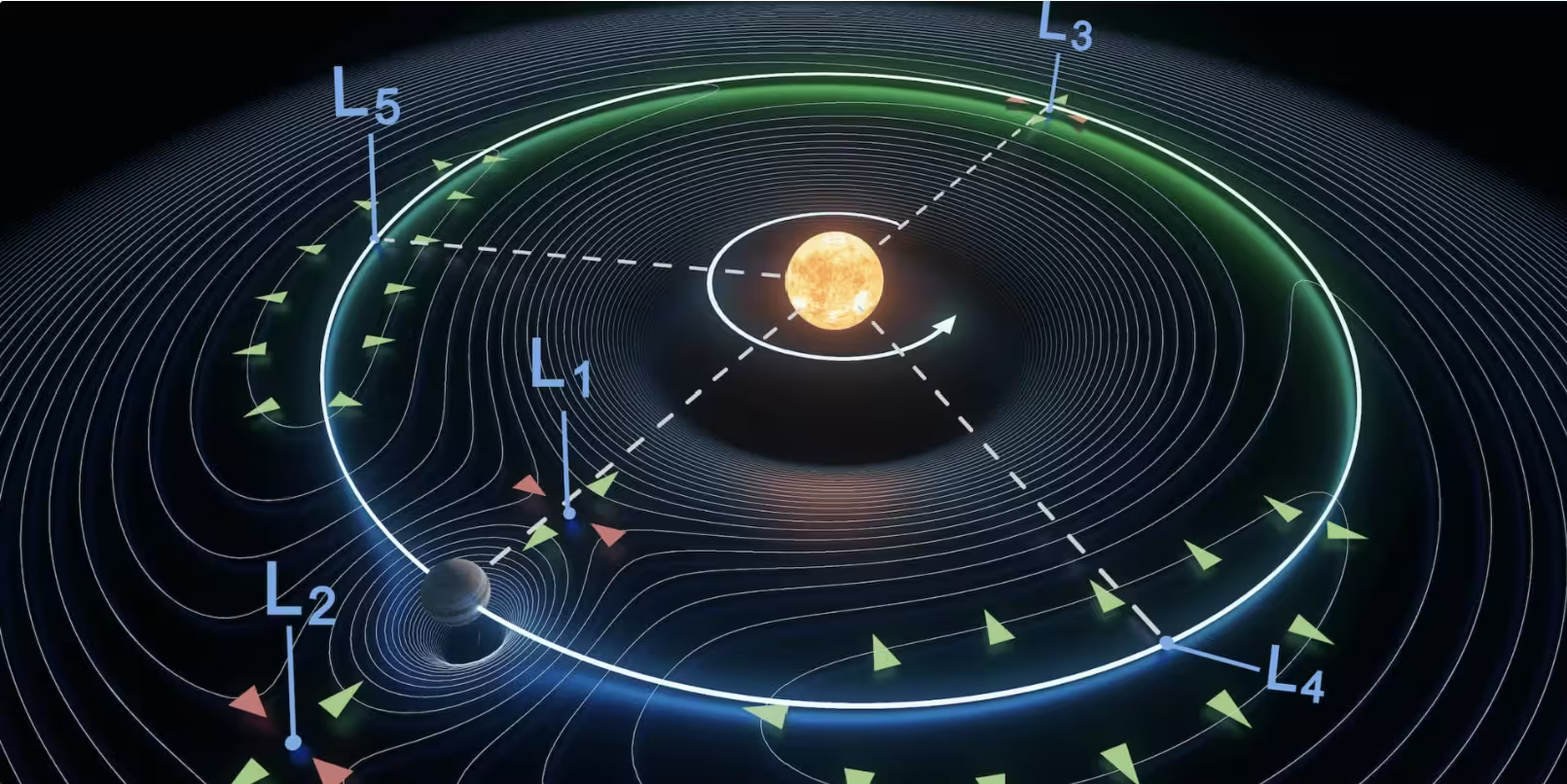
The Spaceline would not reach the ground, but rather terminate well above Earth’s surface. Rockets would still be necessary to reach the tip of this tether, but once docked, cargo could be hauled into deep space using externally supplied electrical energy. This approach would slash the fuel requirements for lunar missions to about one-third of current levels, potentially transforming the region near the Earth-Moon L1 Lagrange point into a bustling transit hub for telescopes, power stations, and deep-space staging.
Despite the promise, neither design is ready for deployment. Beyond the obvious manufacturing and safety concerns, there is the daunting task of deploying hundreds of thousands of kilometers of fiber into space without causing catastrophic tangles. Whether it is through the refinement of advanced nanomaterials or the clever use of existing lunar-anchored lines, the ultimate objective remains clear: creating a transit system that renders the era of discarding mountains of rocket fuel a thing of the past.
Exploring the future of orbital infrastructure
- Space Elevator Tether Materials: A detailed overview of current candidates, including graphene and boron nitride, published by the International Space Elevator Consortium.
- Powering the Space Elevator: An ISEC analysis of how we might supply energy to future space-bound climbers.
- The Space Elevator: NIAC Phase II Final Report: NASA’s foundational study on the architecture and logistics of ground-anchored systems.
- Strength of graphene and its grain boundaries: A deep dive into the material limitations of graphene, published in Science.
- Large-area synthesis of high-quality and uniform graphene films on copper foils: Research detailing the early stages of industrial-scale graphene synthesis.
This article has been fact checked for accuracy, with information verified against reputable sources. Learn more about us and our editorial process.
Last reviewed on .
Article history
- Latest version
Reference(s)
- “Tether Materials — International Space Elevator Consortium.” International Space Elevator Consortium <https://www.isec.org/space-elevator-tether-materials>.
- “ISEC 2026 Study — International Space Elevator Consortium.” International Space Elevator Consortium <https://www.isec.org/2026-study>.
- “20030014956.” <https://ntrs.nasa.gov/citations/20030014956>.
- Warner, Jamie H.., et al. “Dislocation-Driven Deformations in Graphene.” Science, vol. 337, no. 6091, July 13, 2012, pp. 209-212. American Association for the Advancement of Science (AAAS), doi: 10.1126/science.1217529. <https://doi.org/10.1126/science.1217529>.
- Li, Xuesong., et al. “Large-Area Synthesis of High-Quality and Uniform Graphene Films on Copper Foils.” Science, vol. 324, no. 5932, June 5, 2009, pp. 1312-1314. American Association for the Advancement of Science (AAAS), doi: 10.1126/science.1171245. <https://doi.org/10.1126/science.1171245>.
Cite this page:
- Posted by Aisha Ahmed