Comet 220P/McNaught Suddenly Brightened 20,000 Times: How to Spot It in the Night Sky
The final demolition phase has begun for a historic Oklahoma shopping center that first opened its doors in 1978, marking the end of a local landmark.
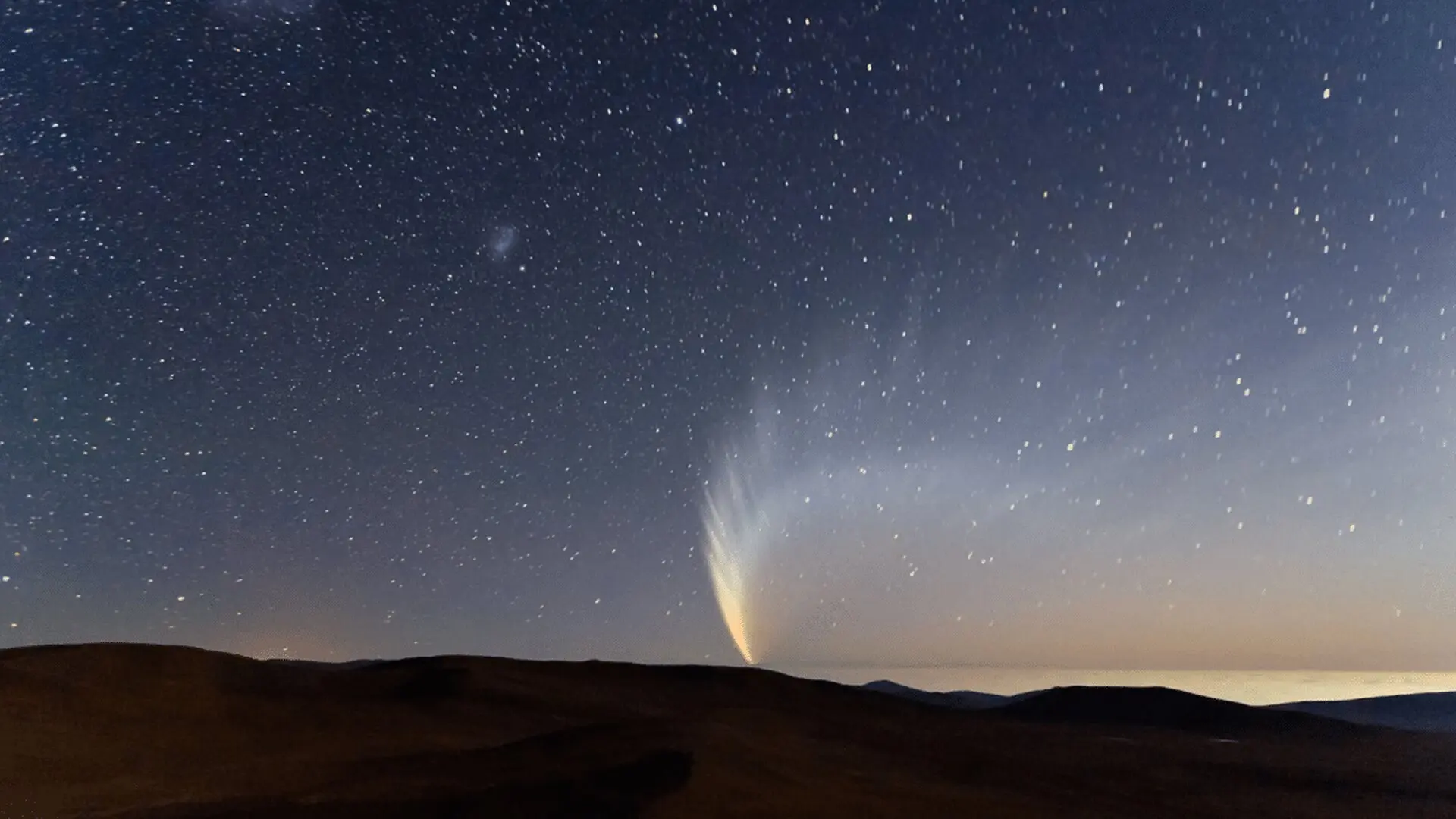
Unexpected Outbursts Transform Comet 220P/McNaught Into a Target for Amateur Observers
Comet 220P/McNaught has staged a dramatic appearance during its latest journey through the inner solar system, treating stargazers to an unexpected display of brilliance. The icy wanderer, typically far too dim for casual observation, experienced a pair of powerful outbursts near its perihelion that spiked its brightness by a factor of 20,000. This sudden surge transformed the otherwise obscure object into a primary target for amateur astronomers and astrophotographers alike.
The comet reached its closest point to the Sun on June 14, marking the highlight of its 5.5-year orbital cycle. As intense solar radiation interacted with the comet’s volatile-rich surface, it triggered the release of trapped gases and dust, significantly expanding the object’s coma and enhancing its ability to reflect sunlight. This period of heightened activity made 220P/McNaught accessible to those equipped with binoculars and small telescopes, offering a rare glimpse into the volatile nature of these icy remnants of the early solar system.
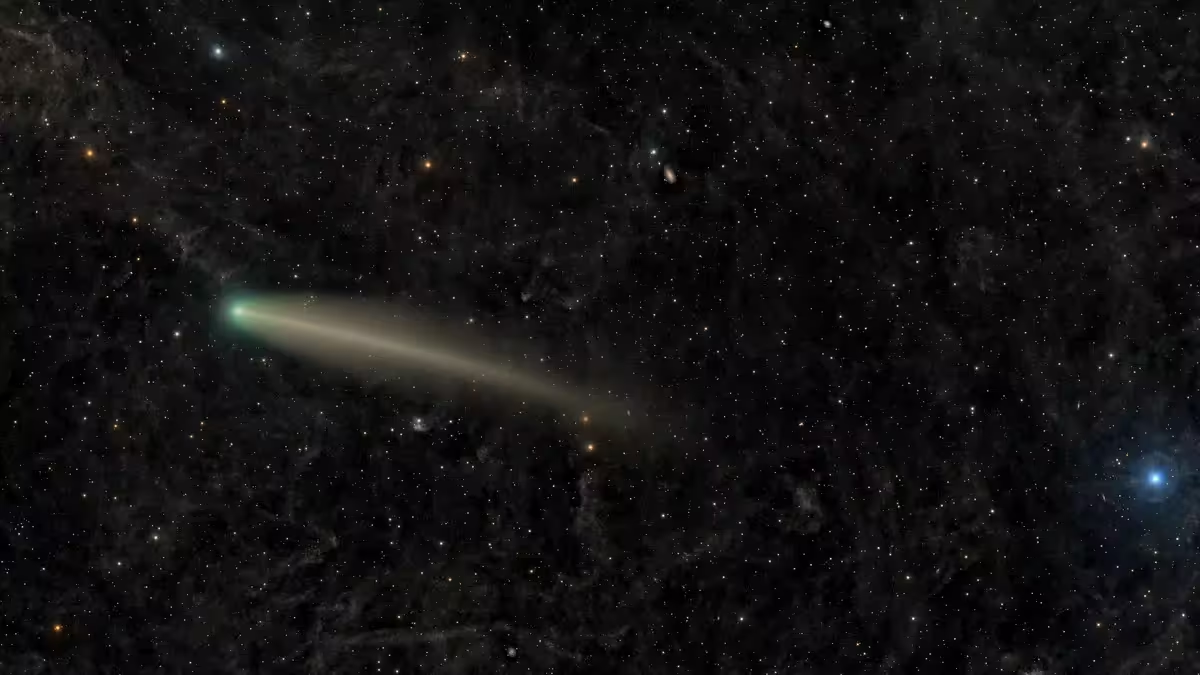
Tracking the Comet Across the Night Sky
As the comet recedes from the Sun, its activity is beginning to wane. Current data from the Comet Observation Database at the Crni Vern Observatory places the object at a magnitude of +9.2. While this makes it a challenging sight for the naked eye, the comet remains visible through small telescopes under dark, clear conditions.
Observers aiming to spot the object throughout early September should focus their search on the eastern sky around midnight. The comet is currently positioned near the constellation Taurus. A useful strategy for navigation involves locating the Hyades star cluster, which presents a distinct “V” shape in the sky. The comet is situated in the vicinity of Omicron Tauri, a binary star system with a magnitude of 3.59. With the new moon phase occurring on September 10-11, the reduction in background lunar interference provides an ideal window for those attempting to image the comet’s fading coma.
A Rare Cosmic Coincidence
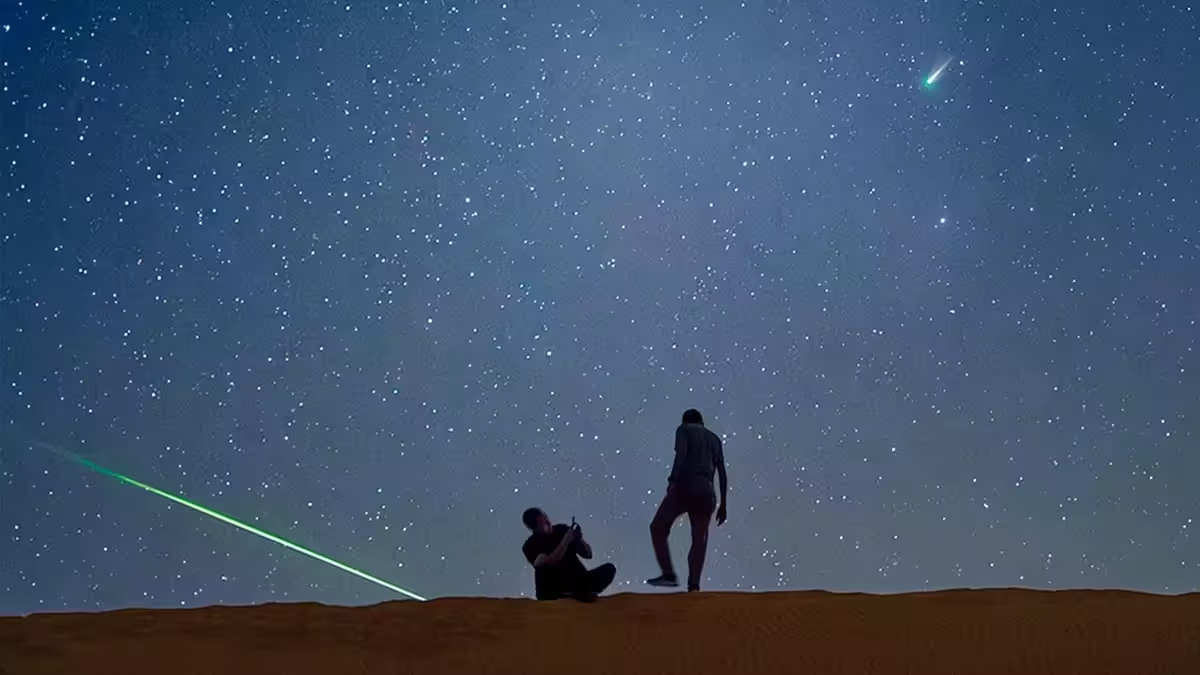
The recent observation period has yielded striking imagery, most notably a fortuitous shot captured by astrophotographer Osama Fathi. While documenting the comet from Egypt, Fathi inadvertently captured a Perseid meteor streaking across the same frame, creating a rare juxtaposition of a deep-space object and an atmospheric phenomenon.
“I spent nearly two hours imaging the comet and the real surprise came when a meteor crossed very close to it in one frame — a wonderful and unexpected moment,” Fathi noted in an interview with Space.com. “Comets are exciting because of their unpredictability and I hope 220P continues to surprise observers with changes in its brightness and activity in the coming weeks.”
Other observers have been equally diligent, with astrophotographer Dan Bartlett producing a comprehensive mosaic of the comet’s trajectory as it moved through the constellation Cetus between August 6 and August 26. As the comet continues its outbound journey, its path across the constellations serves as a reminder of the dynamic, ever-changing nature of the objects that populate our solar system.
This article has been fact checked for accuracy, with information verified against reputable sources. Learn more about us and our editorial process.
Last reviewed on .
Article history
- Latest version
Reference(s)
- Wood, Anthony. “Comet McNaught put on a surprise show this summer: Here's how to spot it before it fades.”, September 3, 2026 Space <https://www.space.com/astronomy/comets/comet-mcnaught-put-on-a-surprise-show-this-summer-heres-how-to-spot-it-before-it-fades>.
Cite this page:
- Posted by Aisha Ahmed