JWST Spots Mysterious Cosmic Pairs That Could Solve a Major Black Hole Mystery
JWST has discovered mysterious red object pairs in the early universe, suggesting galaxy interactions may drive the rapid growth of supermassive black holes.
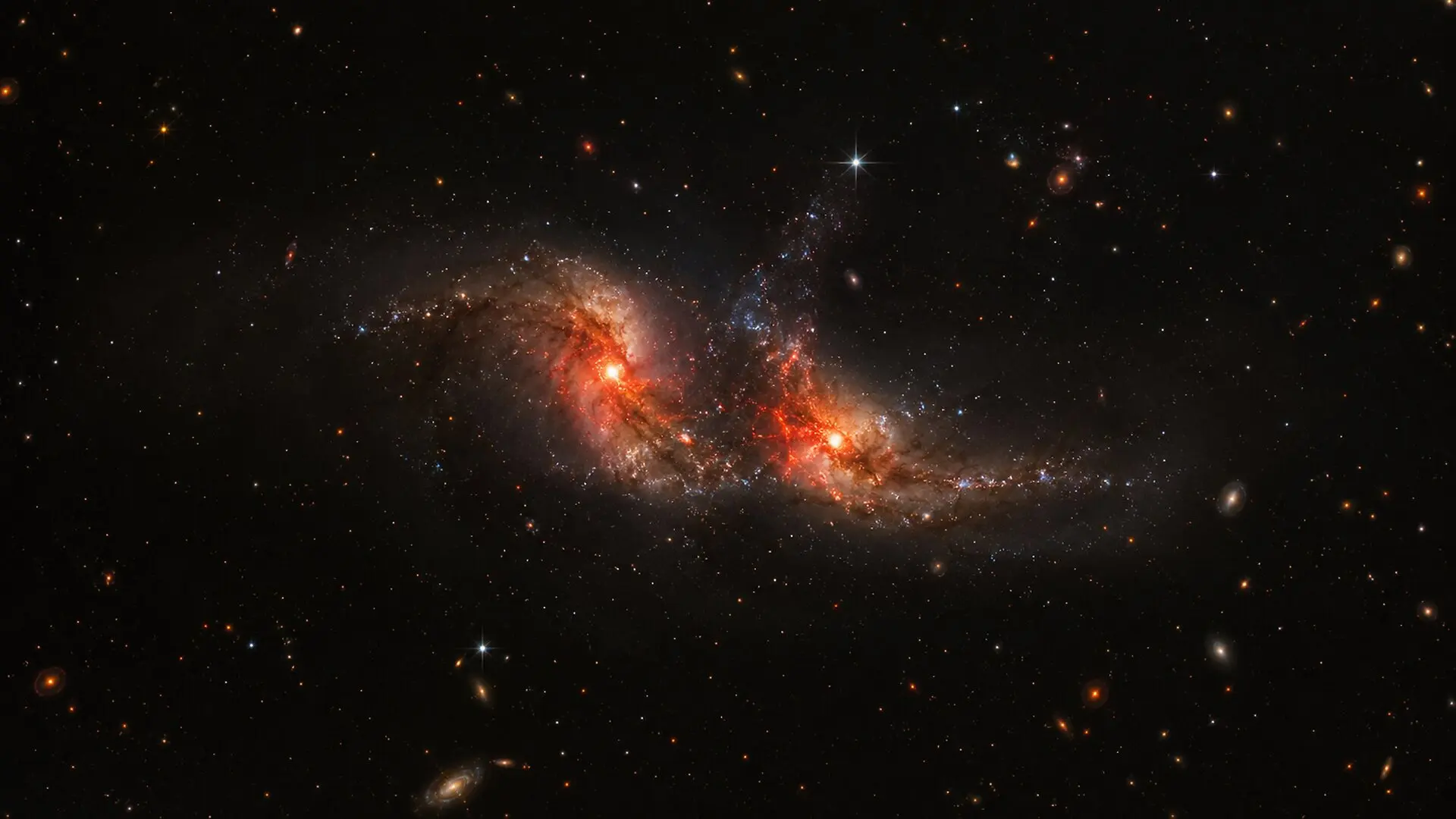
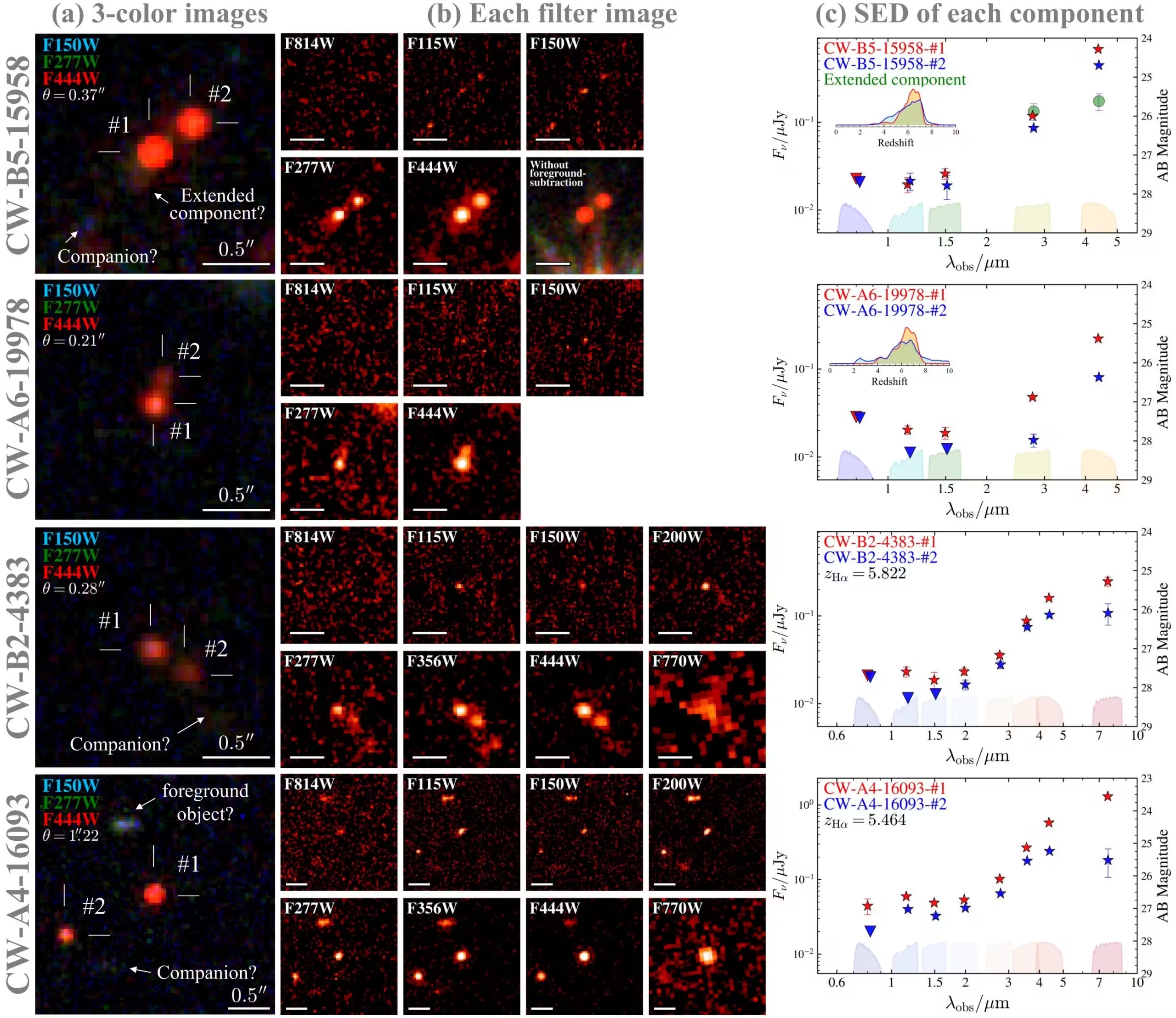
New analysis from the James Webb Space Telescope (JWST) has identified four candidate pairs of “little red dots” (LRDs) in the early universe, suggesting that some of these mysterious, compact objects may be drifting in close proximity to one another. Existing just a billion years after the Big Bang, these dual systems offer a potential glimpse into the chaotic environment where supermassive black holes may have first begun to grow and merge.
The research, led by Takumi S. Tanaka of the Kavli Institute for the Physics and Mathematics of the Universe at the University of Tokyo, was recently published in the Publications of the Astronomical Society of Japan. The study challenges previous assumptions about these isolated-looking light sources by revealing that some may be part of tightly bound systems, separated by only a few thousand to tens of thousands of light-years.
Refining the Search for Early Cosmic Structures
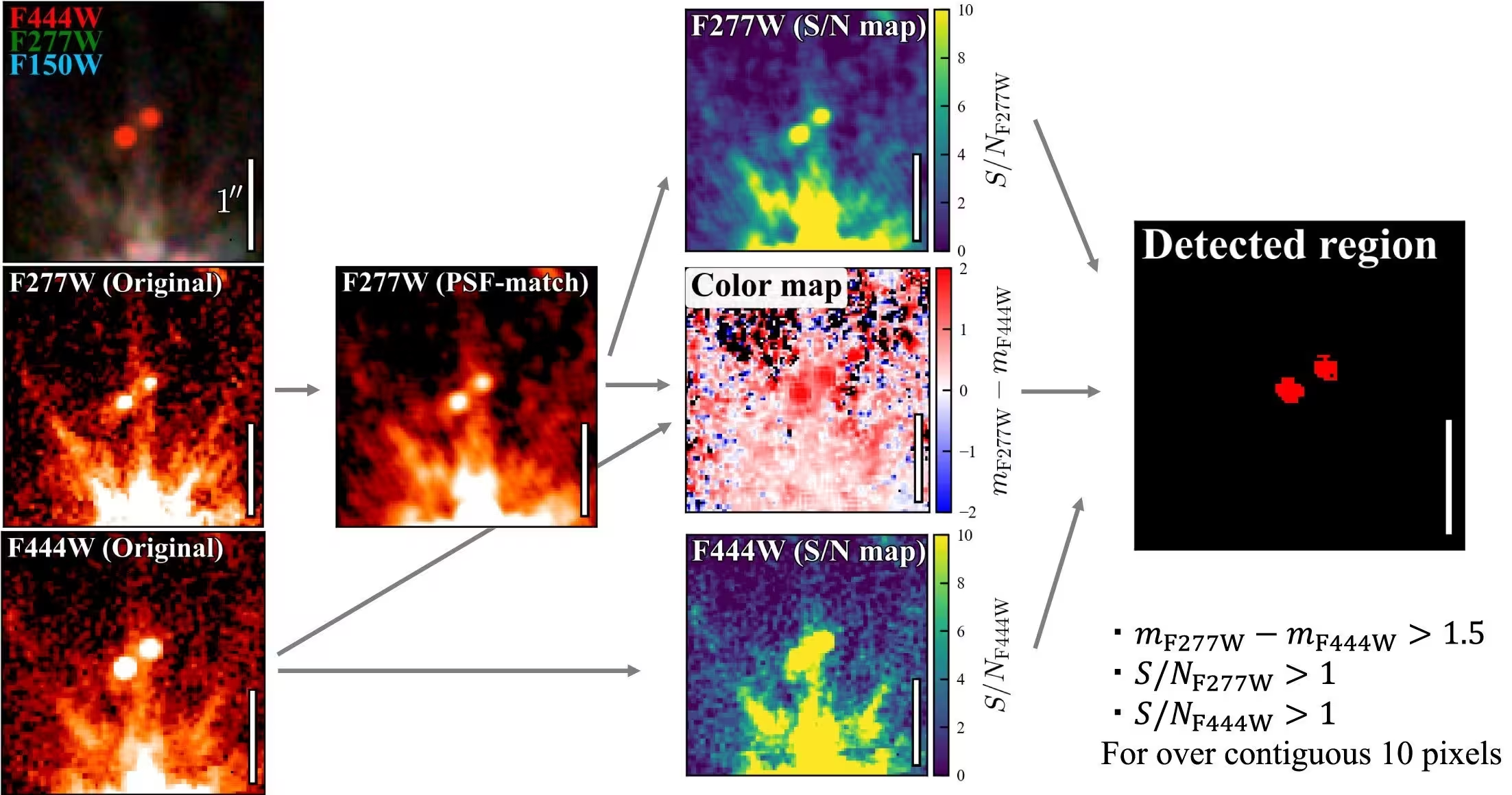
LRDs are defined by their compact size and a distinct V-shaped light profile, characterized by blue ultraviolet emissions coupled with a sharp, reddened optical spectrum. While many astronomers believe these objects host active, rapidly growing black holes shrouded in dense gas, they have historically been analyzed as singular entities. Traditional detection methods often struggle to distinguish between two closely positioned objects, as their combined light can be misinterpreted or rejected by automated surveys that favor isolated, compact point sources.
To address this, the team utilized a pixel-by-pixel analytical technique on data from the COSMOS-Web survey. By examining individual pixels for LRD-like signatures rather than analyzing sources as whole units, the researchers were able to identify neighboring regions that independently displayed the characteristics of these early black hole candidates.
Evidence of Physical Association
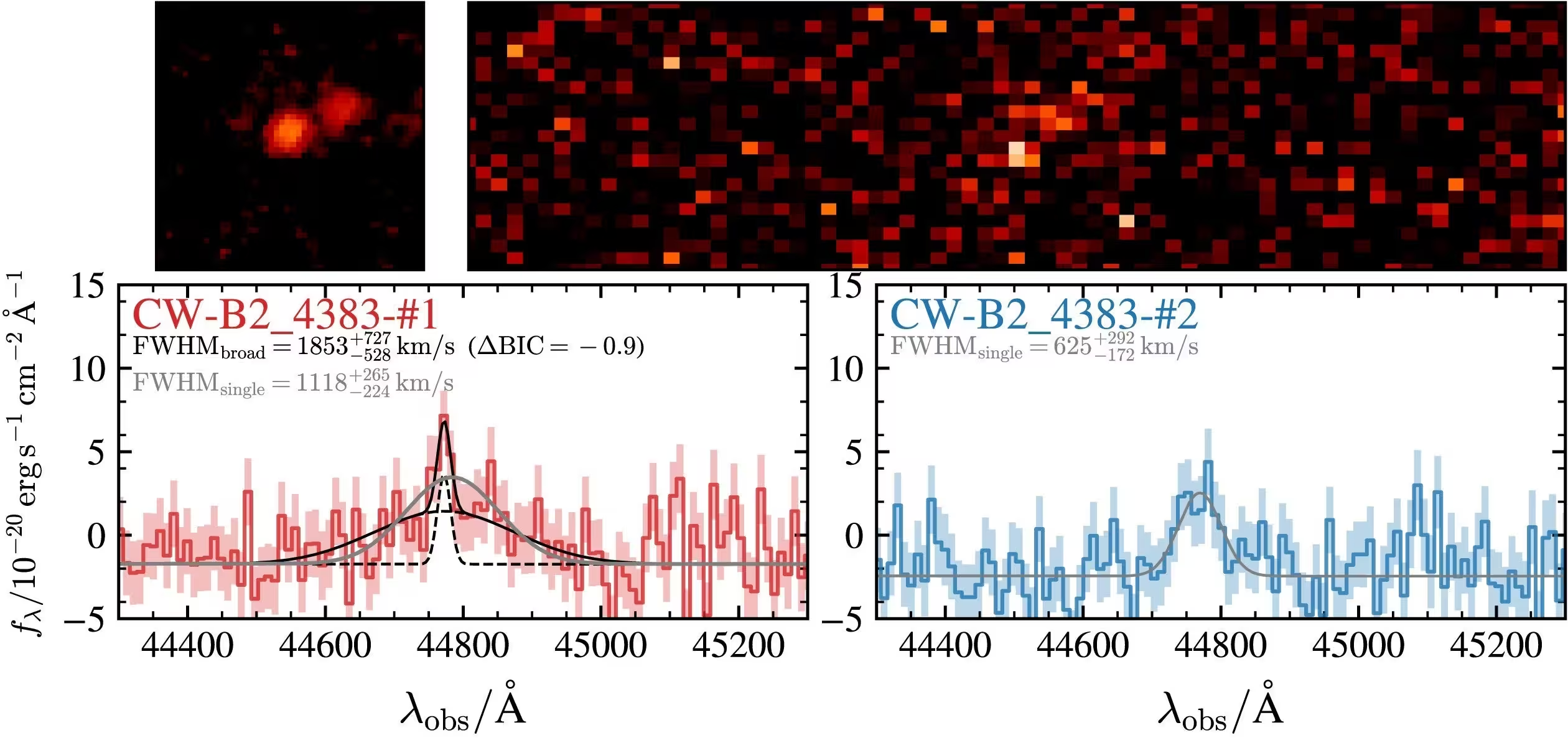
While visual proximity can sometimes be an illusion caused by chance alignment, the study provides stronger evidence for two of the four systems. Using JWST slitless spectroscopy, researchers confirmed that both components in these two pairs share the same redshift, indicating they are physically located at the same distance from Earth. Statistical modeling further suggests that such close alignments are unlikely to occur by pure chance, implying a degree of physical clustering that exceeds current expectations for the early universe.
A Path Toward Black Hole Mergers
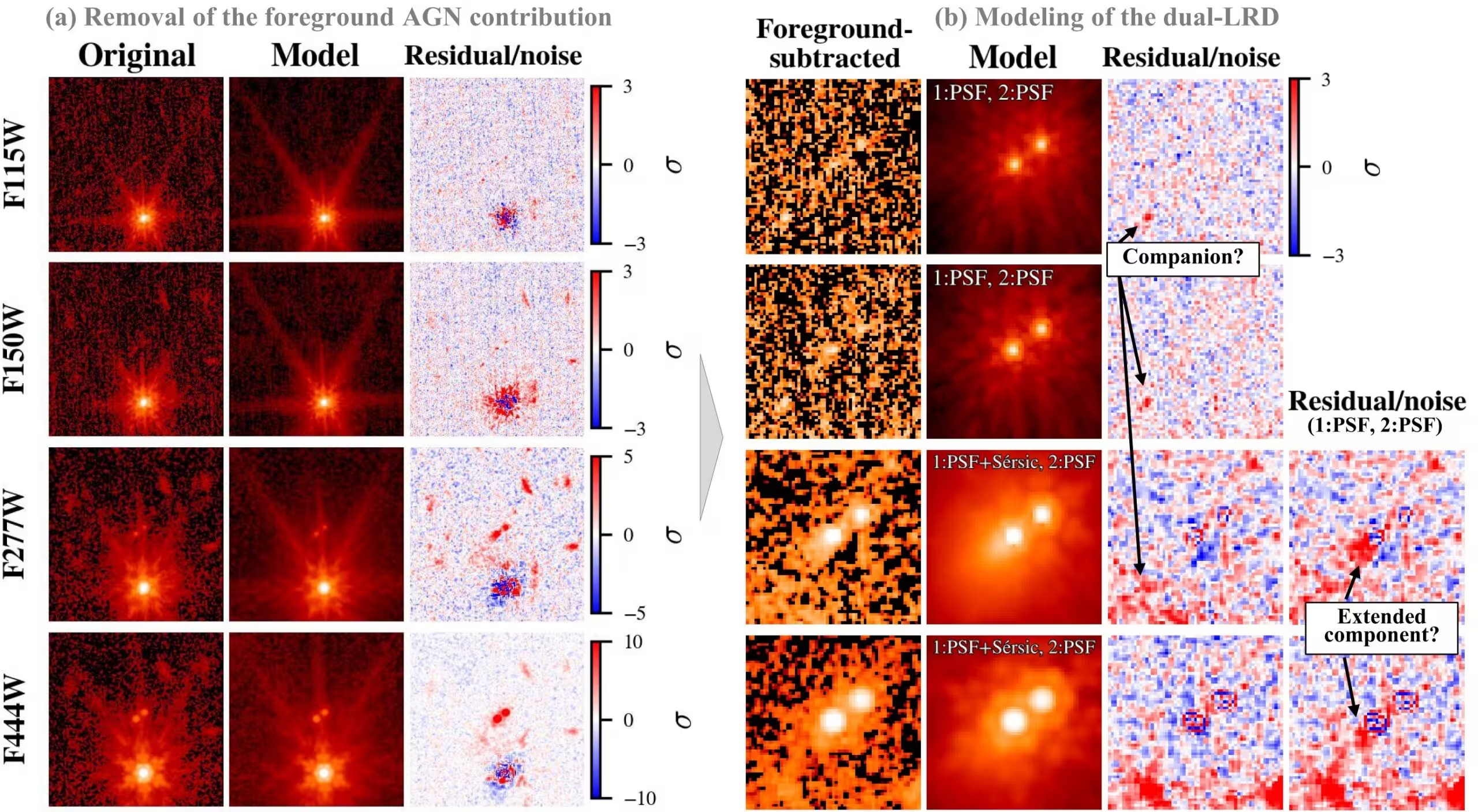
The existence of these dual LRD systems supports the theory that galaxy interactions were a critical driver of early supermassive black hole growth. As galaxies collide, their gravitational interactions pull gas toward their central regions, fueling the black holes while simultaneously drawing the black holes themselves toward a collision point.
If these dual candidates indeed represent precursor stages to black hole mergers, they may eventually be detectable by future gravitational-wave observatories, such as the Laser Interferometer Space Antenna (LISA). While further spectroscopic confirmation is required for the remaining candidates, the findings provide a new framework for understanding how the universe’s most massive objects may have scaled up so rapidly in its first billion years.
This article has been fact checked for accuracy, with information verified against reputable sources. Learn more about us and our editorial process.
Last reviewed on .
Article history
- Latest version
Reference(s)
- “The University of Tokyo.” The University of Tokyo <https://www.u-tokyo.ac.jp/en/>.
- , doi: 10.1093/pasj/psag092/8770858. <https://academic.oup.com/pasj/advance-article/doi/10.1093/pasj/psag092/8770858>.
- “LISA: Laser Interferometer Space Antenna.” <https://lisa.nasa.gov/>.
Cite this page:
- Posted by Aisha Ahmed