Solar Orbiter Uncovers Mysterious Chemical Fingerprints Hidden Within the Sun’s Solar Wind
ESA’s Solar Orbiter has discovered a unique chemical fingerprint in the Sun’s corona, revealing how its magnetic boundary transforms into solar wind.
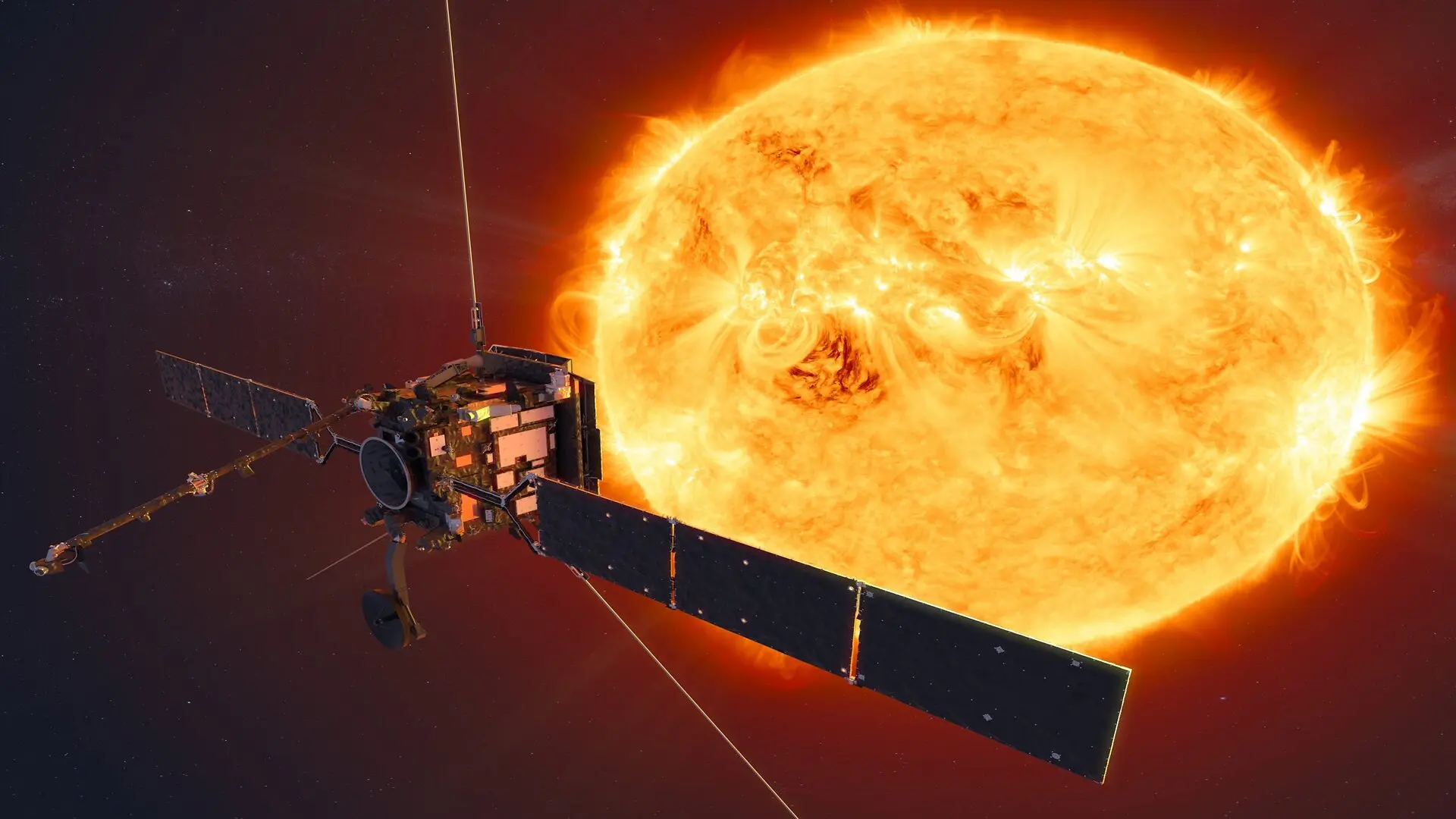
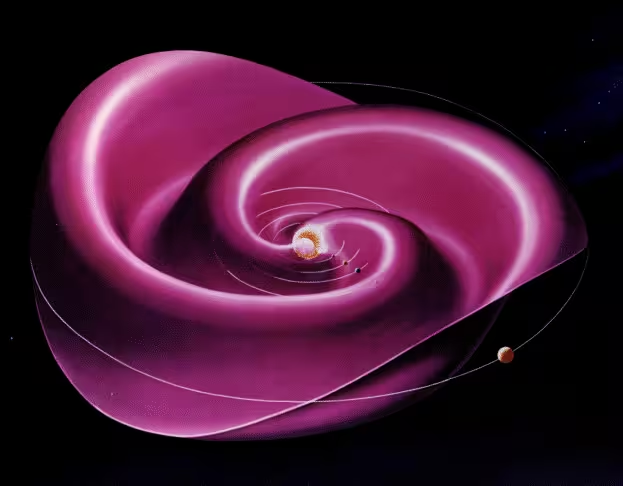
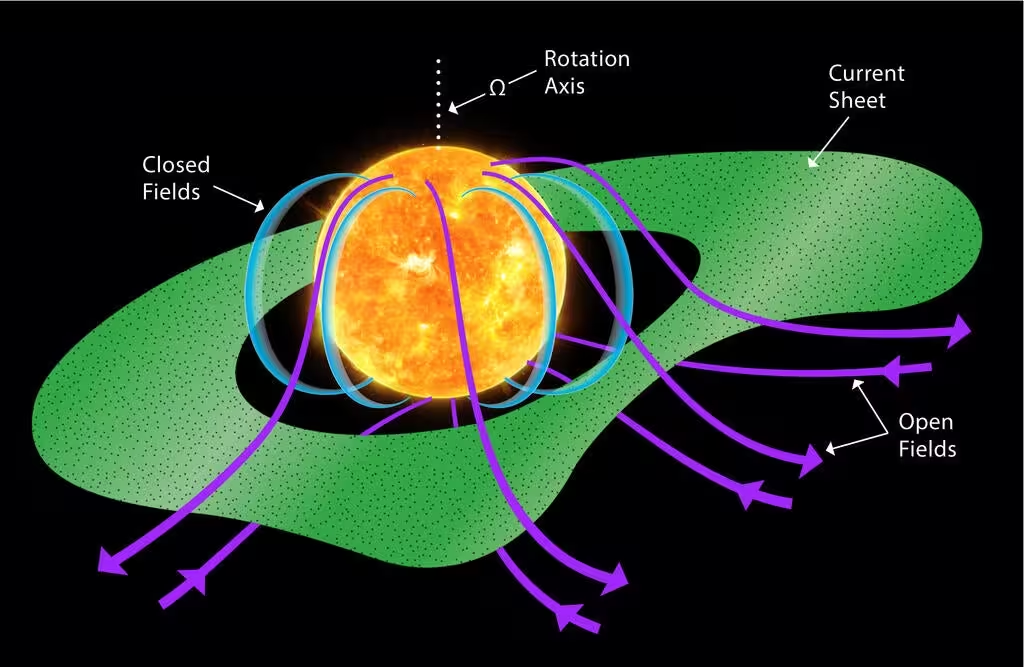
The heliospheric current sheet (HCS), a vast magnetic structure rippling through our solar system, is far more complex than a simple barrier between opposing magnetic fields. New data from the European Space Agency’s Solar Orbiter suggests this boundary acts as a sophisticated, chemically distinct corridor that holds vital clues to the origins of the solar wind.
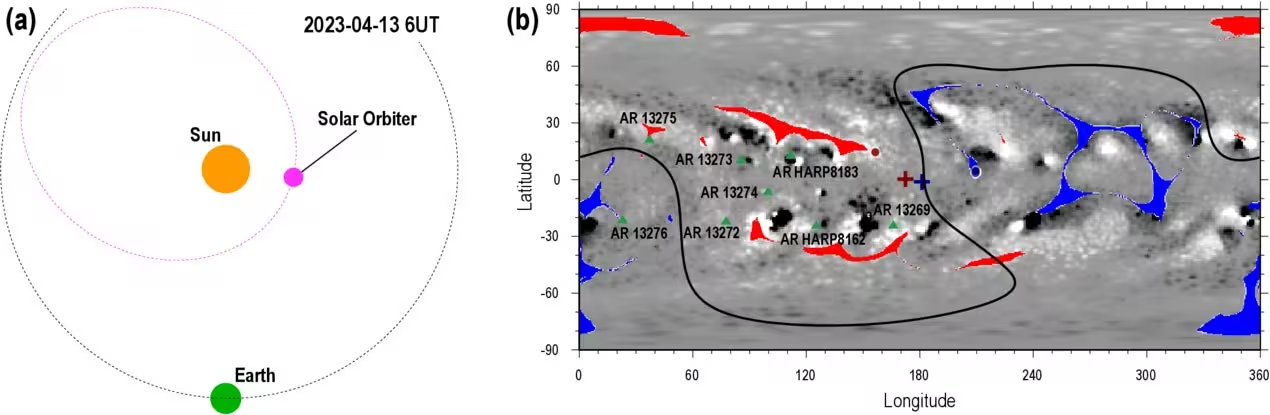
By observing the HCS from a distance of only 0.3 astronomical units—roughly 45 million kilometers from the Sun—researchers were able to analyze solar wind in its “pristine” state before the turbulence of deep space could obscure its original signatures. The findings, published in The Astrophysical Journal, reveal that the current sheet carries a unique chemical and thermal imprint.
Unmasking the solar wind’s source
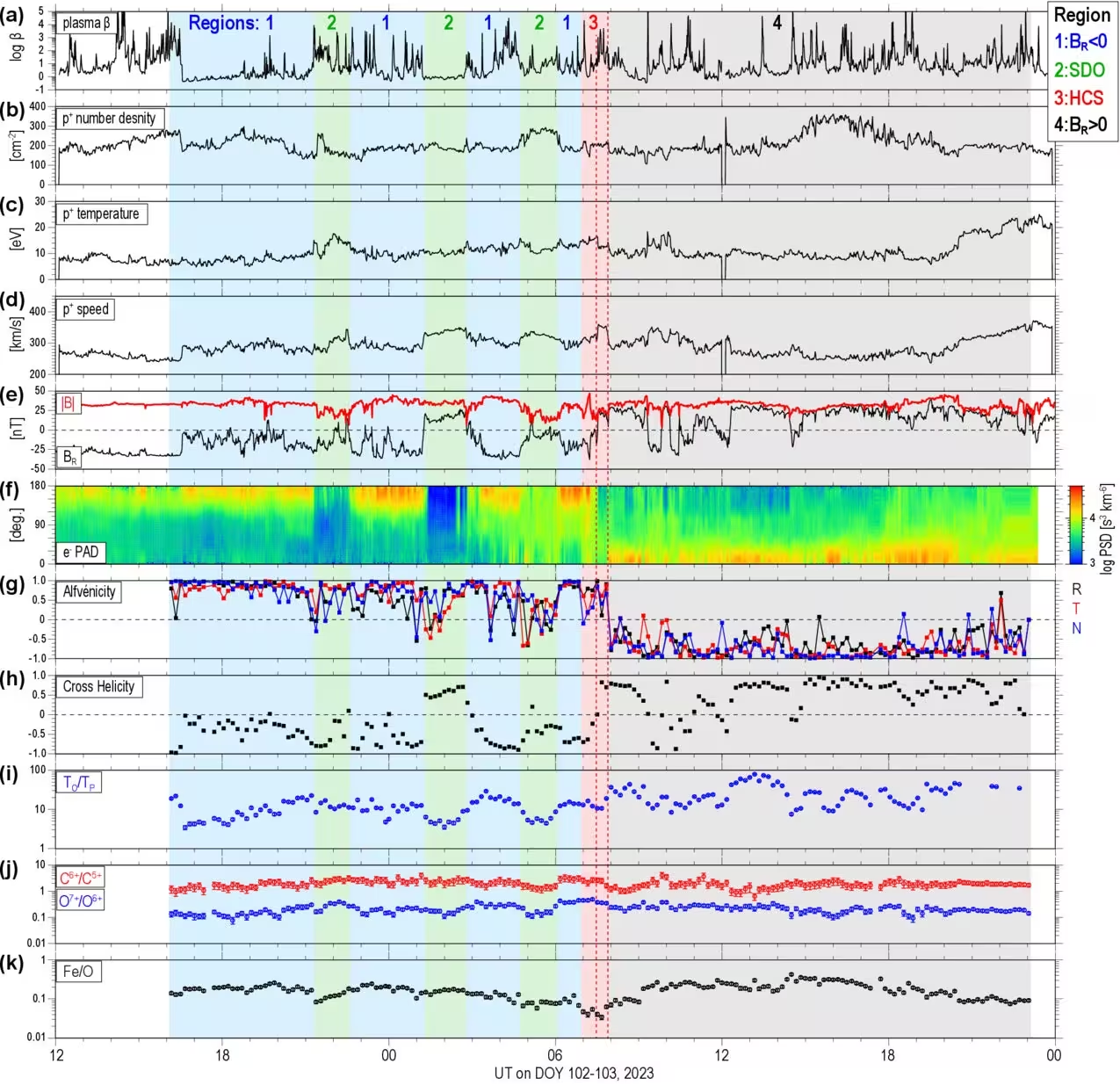
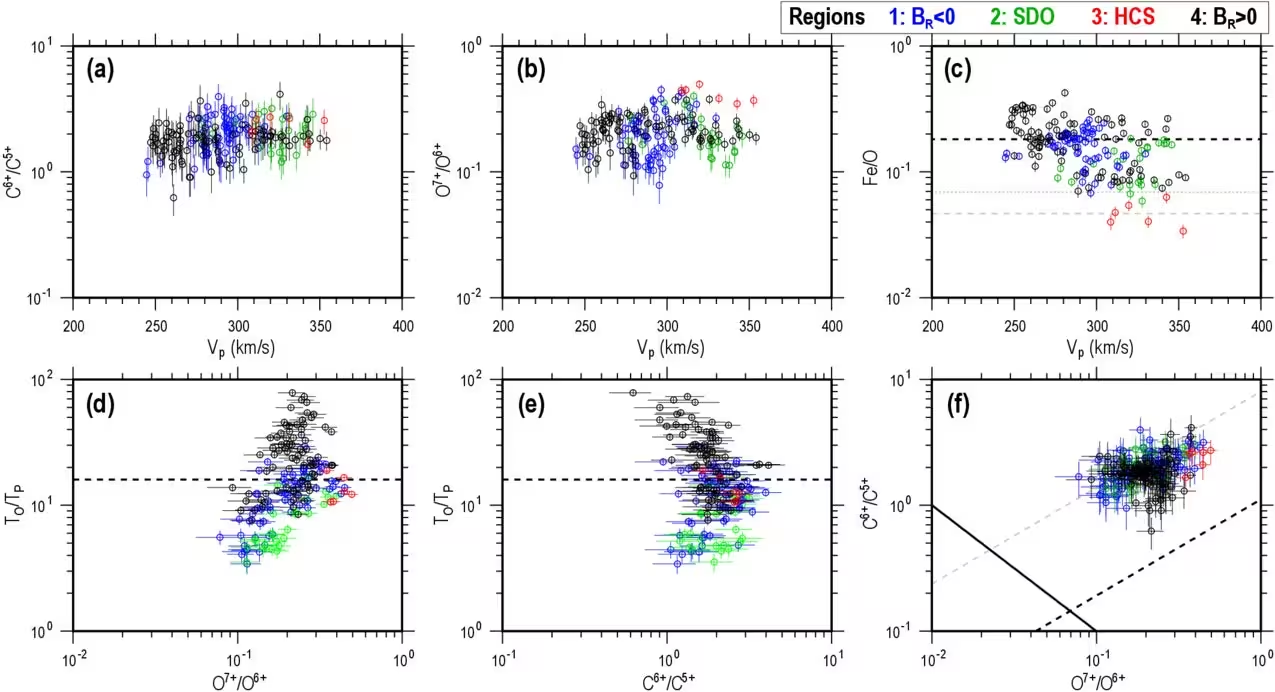
Lead researcher Keiichi Ogasawara of the Southwest Research Institute and his team found that the HCS is not just a point of magnetic reversal. During an April 2023 crossing, the spacecraft identified a sharp decline in the iron-to-oxygen (Fe/O) ratio, which hit its nadir precisely as the magnetic polarity shifted. This chemical signature provides a clear marker that distinguishes the current sheet from the surrounding solar plasma.
The proximity of the observation was crucial. As solar wind travels outward, collisions and magnetic distortions erase the subtle evidence of its birth in the Sun’s corona. Near the Sun, however, the plasma retains a “memory” of the conditions—such as temperature and ionization state—that governed its release. The researchers noted that while broader plasma characteristics remained stable, the Fe/O ratio fluctuated dramatically, hinting at complex processes like gravitational settling within closed magnetic loops.
A layered, structured boundary
The mission data indicates that the HCS is not a monolithic structure but rather a dynamic environment containing magnetic islands and smaller current sheets. The team observed that oxygen ions were preferentially heated to temperatures exceeding 16 times that of protons in certain regions, suggesting that the boundary is actively involved in energy transformation. This is consistent with an emerging model where the HCS is shaped by ongoing magnetic reconnection and complex connectivity to the solar surface.
While the study stops short of definitively identifying the precise mechanism behind these signatures, it provides a rigorous dataset for future solar modeling. Scientists now have a specific, measurable set of chemical and thermal benchmarks that any successful theory of the heliospheric current sheet must replicate.
Understanding these processes is more than a theoretical exercise. The solar wind is the primary driver of space weather, which directly impacts satellite operations, communications, and power grids on Earth. By tracing these particles back to their source, researchers hope to better predict the behavior of the Sun and the volatile environment it creates in the inner solar system.
Additional Reading
- Multi-source connectivity as the driver of solar wind variability in the heliosphere(Nature Astronomy)
- Direct observations of a complex coronal web driving highly structured slow solar wind(Nature Astronomy)
- Slow Solar Wind Connection Science during Solar Orbiter’s First Close Perihelion Passage(The Astrophysical Journal Supplement Series)
- Observational Evidence of S-web Source of the Slow Solar Wind(The Astrophysical Journal)
- Parker Solar Probe Observations of Solar Wind Energetic Proton Beams Produced by Magnetic Reconnection in the Near-Sun Heliospheric Current Sheet(Geophysical Research Letters)
This article has been fact checked for accuracy, with information verified against reputable sources. Learn more about us and our editorial process.
Last reviewed on .
Article history
- Latest version
Reference(s)
- <https://www.esa.int/Science_Exploration/Space_Science/Solar_Orbiter>.
- Ogasawara 小, Keiichi 笠原桂一., et al. “Resolving Compositional Features of Solar Wind Source Regions near the Heliospheric Current Sheet at 0.3 au.” The Astrophysical Journal, vol. 1008, no. 1, August 31, 2026, pp. 90 American Astronomical Society, doi: 10.3847/1538-4357/ae9153. <https://iopscience.iop.org/article/10.3847/1538-4357/ae9153>.
- “Southwest Research Institute | R&D From Deep Sea to Deep Space.” <https://www.swri.org/>.
- Yardley, Stephanie. “Multi-source connectivity as the driver of solar wind variability in the heliosphere - Nature Astronomy.”, vol. 8, no. 8, pp. 953-963. Nature, doi: 10.1038/s41550-024-02278-9. <https://www.nature.com/articles/s41550-024-02278-9>.
- Chitta, L.. “Direct observations of a complex coronal web driving highly structured slow solar wind - Nature Astronomy.”, vol. 7, no. 2, pp. 133-141. Nature, doi: 10.1038/s41550-022-01834-5. <https://www.nature.com/articles/s41550-022-01834-5>.
- Yardley, Stephanie L.., et al. “Slow Solar Wind Connection Science during Solar Orbiter’s First Close Perihelion Passage.” The Astrophysical Journal Supplement Series, vol. 267, no. 1, July 5, 2023, pp. 11 American Astronomical Society, doi: 10.3847/1538-4365/acd24b. <https://doi.org/10.3847/1538-4365/acd24b?nosfx=y>.
- <https://discovery.ucl.ac.uk/id/eprint/10172544/>.
- Phan, T. D.., et al. “Parker Solar Probe Observations of Solar Wind Energetic Proton Beams Produced by Magnetic Reconnection in the Near‐Sun Heliospheric Current Sheet.” Geophysical Research Letters, vol. 49, no. 9, May 4, 2022 American Geophysical Union (AGU), doi: 10.1029/2021GL096986. <https://agupubs.onlinelibrary.wiley.com/doi/abs/10.1029/2021GL096986>.
Cite this page:
- Posted by Aisha Ahmed