Astronomers May Have Just Spotted Icy Comets Delivering Water to a Forming Solar System
Astronomers have discovered fast-moving sodium clouds in the young PDS 70 system, suggesting comets are actively transporting water to new planets.
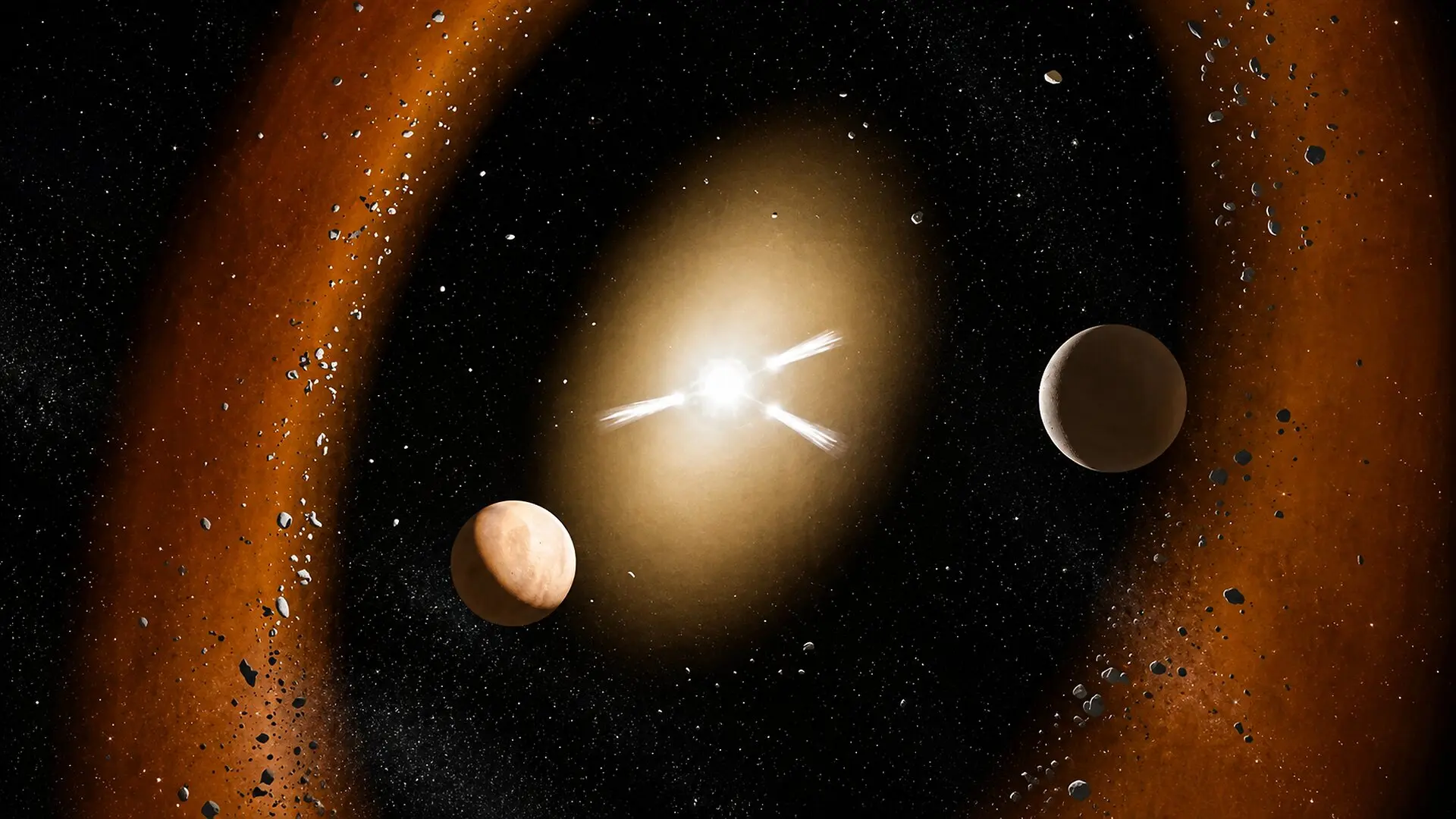
A distant stellar system, located 370 light-years away, appears to be mirroring the early history of our own solar neighborhood by shuffling icy material toward its inner, planet-forming region. Researchers at Lund University have identified fluctuating sodium gas signatures around PDS 70, a 5.4-million-year-old star. These atmospheric disturbances suggest that frozen planetesimals may be diving toward the host star, potentially acting as celestial delivery vehicles for water.
The findings, detailed in Nature Communications, provide a compelling, though not yet definitive, explanation for the presence of water vapor previously observed in the star’s inner disk. While researchers caution that further investigation is required to confirm the presence of these icy visitors, the discovery highlights a mechanism that could be fundamental to the development of life-supporting environments.
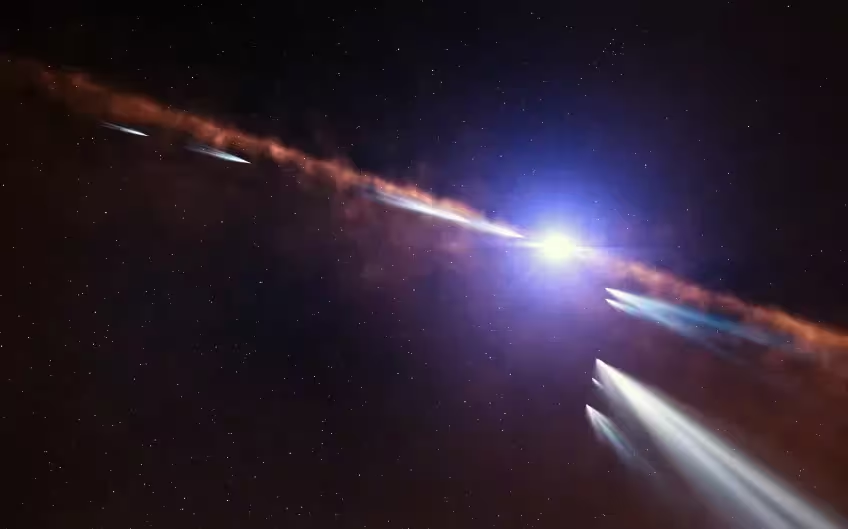
Flickering Gas Signals Hint at Passing Comets
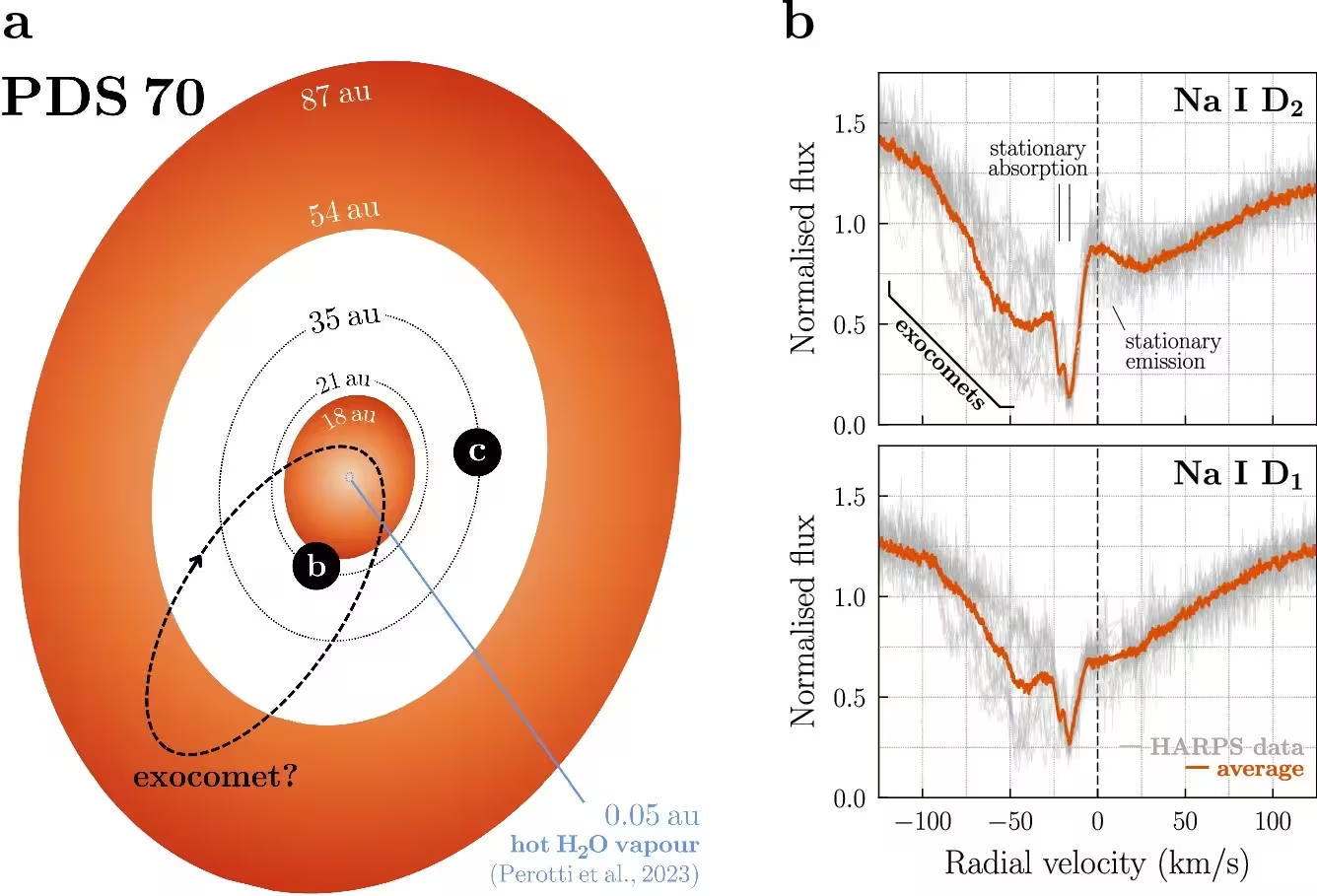
PDS 70 is a K7 T Tauri star, significantly younger and cooler than our Sun. It is already known for a substantial gap in its protoplanetary disk, where two giant gas planets, PDS 70 b and PDS 70 c, are currently carving out orbits at approximately 20.6 and 34.5 astronomical units (AU) from the star.
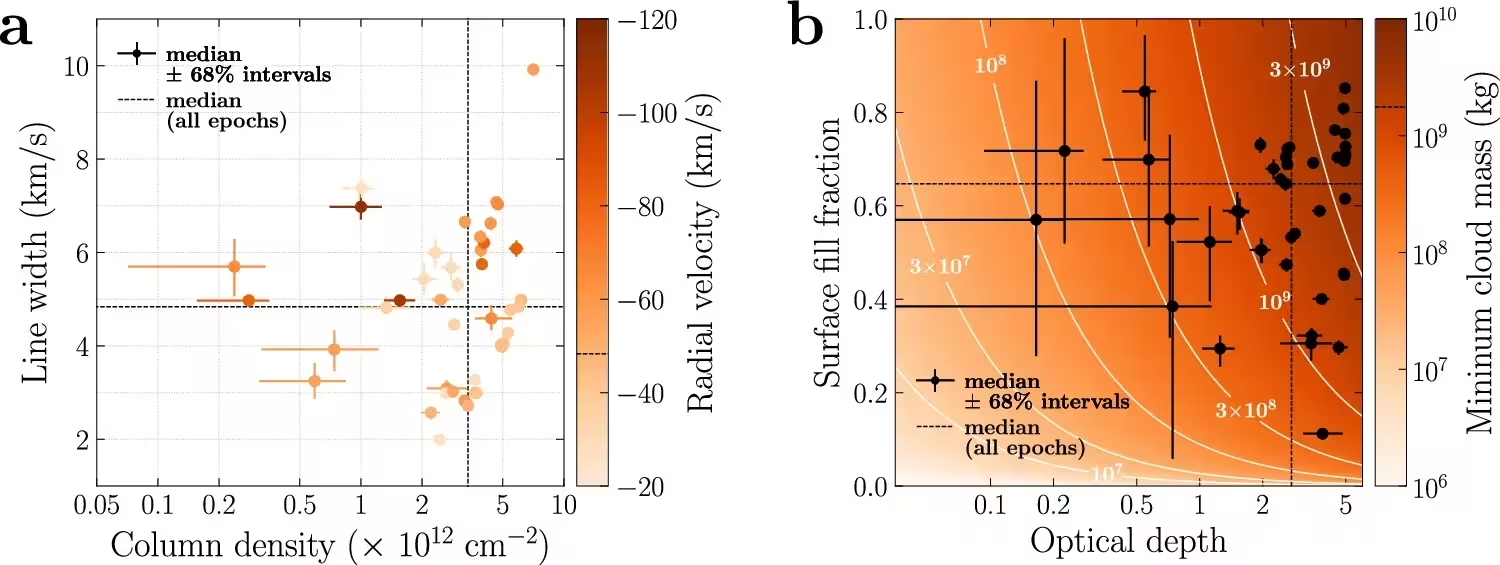
To investigate the composition of the system’s inner environment, researchers analyzed 52 spectra captured by the HARPS spectrograph at the European Southern Observatory over a three-year period. Data from 2018 proved particularly revealing, showing narrow, shifting lines of neutral sodium that would appear and vanish on a nightly basis. These observations indicate the presence of compact, dense clumps of gas traveling at velocities between 25 and 115 kilometers per second, a pattern highly characteristic of volatile material sublimating from comets as they approach a star.
A New Window into Planetary Evolution
While researchers often rely on indirect methods to study exocomets, the PDS 70 system stands out due to its extreme youth. According to Aline Novais, a researcher at Lund University, this represents the first observed evidence of such activity around a star with a temperature profile similar to the Sun. Although the team evaluated the possibility that stellar winds were responsible for the gas signatures, the density and velocity of the observed clouds point more strongly toward infalling icy bodies.
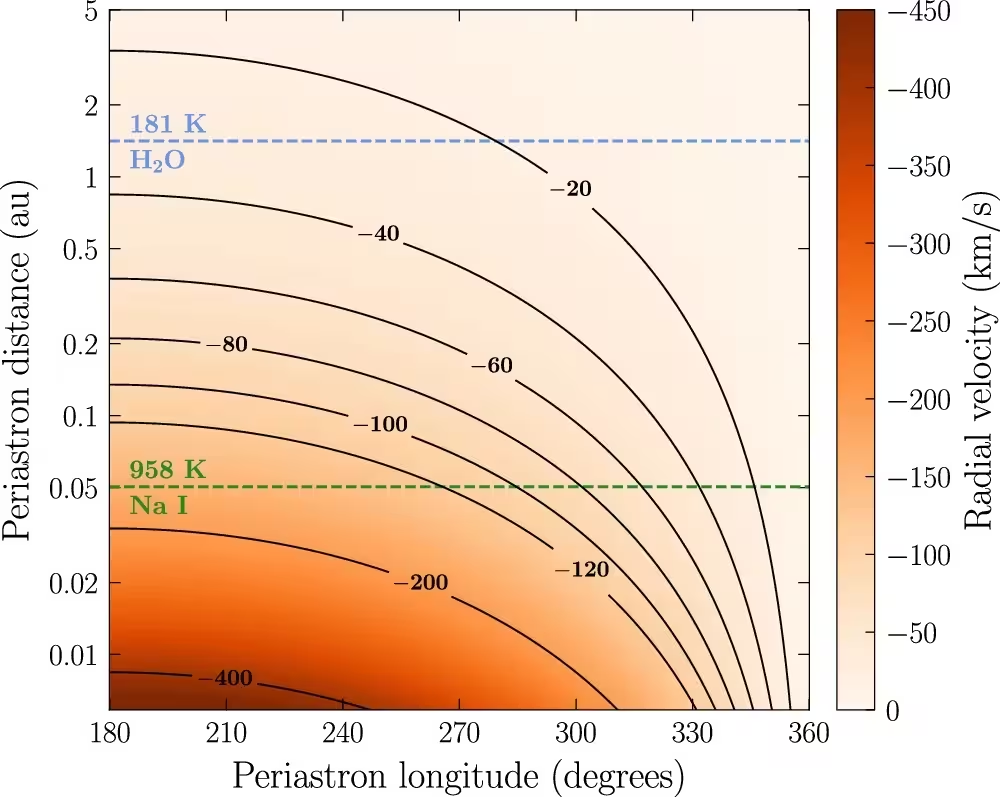
To determine if these objects could realistically navigate the distance from the outer disk to the inner reaches, the team utilized N-body simulations. The models confirmed that gravitational interactions with the system’s giant planets—particularly PDS 70 c—frequently scatter planetesimals into highly eccentric orbits that plunge toward the star. These results suggest that a significant fraction of icy debris is successfully redirected into the inner system, where rocky worlds are born.
Connecting Water Delivery to Planetary Growth
The implications of this movement are significant, especially following the 2023 discovery of hot water vapor near PDS 70 by the James Webb Space Telescope. While water could theoretically form in situ, the influx of cometary ice offers a compelling external source. “It is reminiscent of a possible process in the early Solar System, in which comets may have helped to deliver water to the young Earth,” notes Alexandra Stockwell Murphy of Lund University.
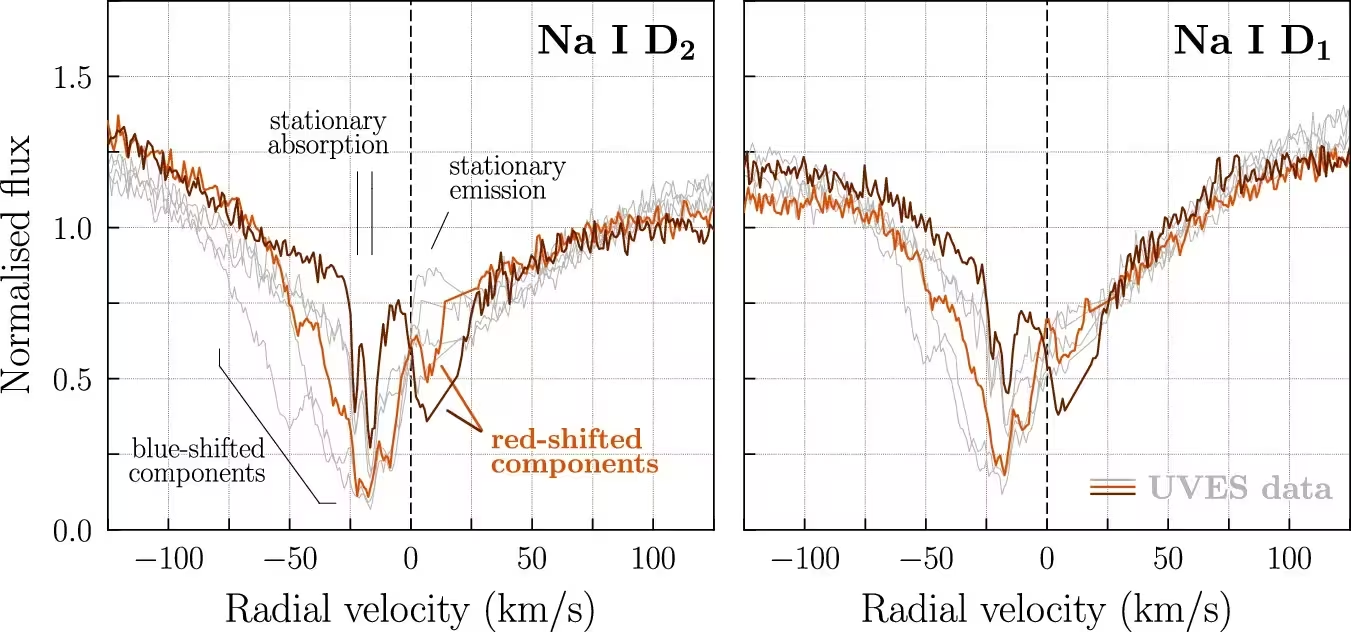
The team plans to refine their hypothesis by looking for additional markers, such as specific chemical signatures and the detection of dust trails. Recent 2026 data from the UVES spectrograph has already provided further instances of shifting absorption lines, which remain under active analysis. As next-generation instruments like the Extremely Large Telescope come online, astronomers hope to gain an even clearer view of the dynamic transport of water and building blocks in this rapidly evolving system.
Further Reading
- Water in the terrestrial planet-forming zone of the PDS 70 disk (Nature, 2023)
- An Overview of Exocomets (Space Science Reviews, 2025)
- The Origins & Reservoirs of Exocomets (Space Science Reviews, 2025)
- Two families of exocomets in the β Pictoris system (Nature, 2014)
- Two accreting protoplanets around the young star PDS 70 (Nature Astronomy, 2019)
This article has been fact checked for accuracy, with information verified against reputable sources. Learn more about us and our editorial process.
Last reviewed on .
Article history
- Latest version
Reference(s)
- “Home.”, September 4, 2026 <https://www.lunduniversity.lu.se/home>.
- Novais, Aline. “Potential sublimating exocomets around the young star PDS 70 - Nature Communications.”, vol. 17, no. 1, August 24, 2026, pp. 8894 Nature, doi: 10.1038/s41467-026-76880-y. <https://www.nature.com/articles/s41467-026-76880-y>.
- “ESO 3.6-metre telescope.” <https://www.eso.org/public/teles-instr/lasilla/36/>.
- Perotti, G.. “Water in the terrestrial planet-forming zone of the PDS 70 disk - Nature.”, vol. 620, no. 7974, pp. 516-520. Nature, doi: 10.1038/s41586-023-06317-9. <https://www.nature.com/articles/s41586-023-06317-9>.
- Iglesias, Daniela., et al. “An Overview of Exocomets.” Space Science Reviews, vol. 221, no. 8, December 2, 2025 Springer Science and Business Media LLC, doi: 10.1007/s11214-025-01247-6. <https://link.springer.com/article/10.1007/s11214-025-01247-6>.
- Bannister, Michele., et al. “The Origins & Reservoirs of Exocomets.” Space Science Reviews, vol. 221, no. 7, September 29, 2025 Springer Science and Business Media LLC, doi: 10.1007/s11214-025-01219-w. <https://link.springer.com/article/10.1007/s11214-025-01219-w>.
- Kiefer, F.. “Two families of exocomets in the β Pictoris system - Nature.”, vol. 514, no. 7523, pp. 462-464. Nature, doi: 10.1038/nature13849. <https://www.nature.com/articles/nature13849>.
- Haffert, S.. “Two accreting protoplanets around the young star PDS 70 - Nature Astronomy.”, vol. 3, no. 8, pp. 749-754. Nature, doi: 10.1038/s41550-019-0780-5. <https://www.nature.com/articles/s41550-019-0780-5>.
Cite this page:
- Posted by Aisha Ahmed