NASA’s Roman Telescope Carries 1.35 Million Names on 1 Million Mile Voyage to Deep Space
NASA’s Roman Space Telescope will launch with cutting‑edge science and over 1.35 million names hitching a ride to deep space.
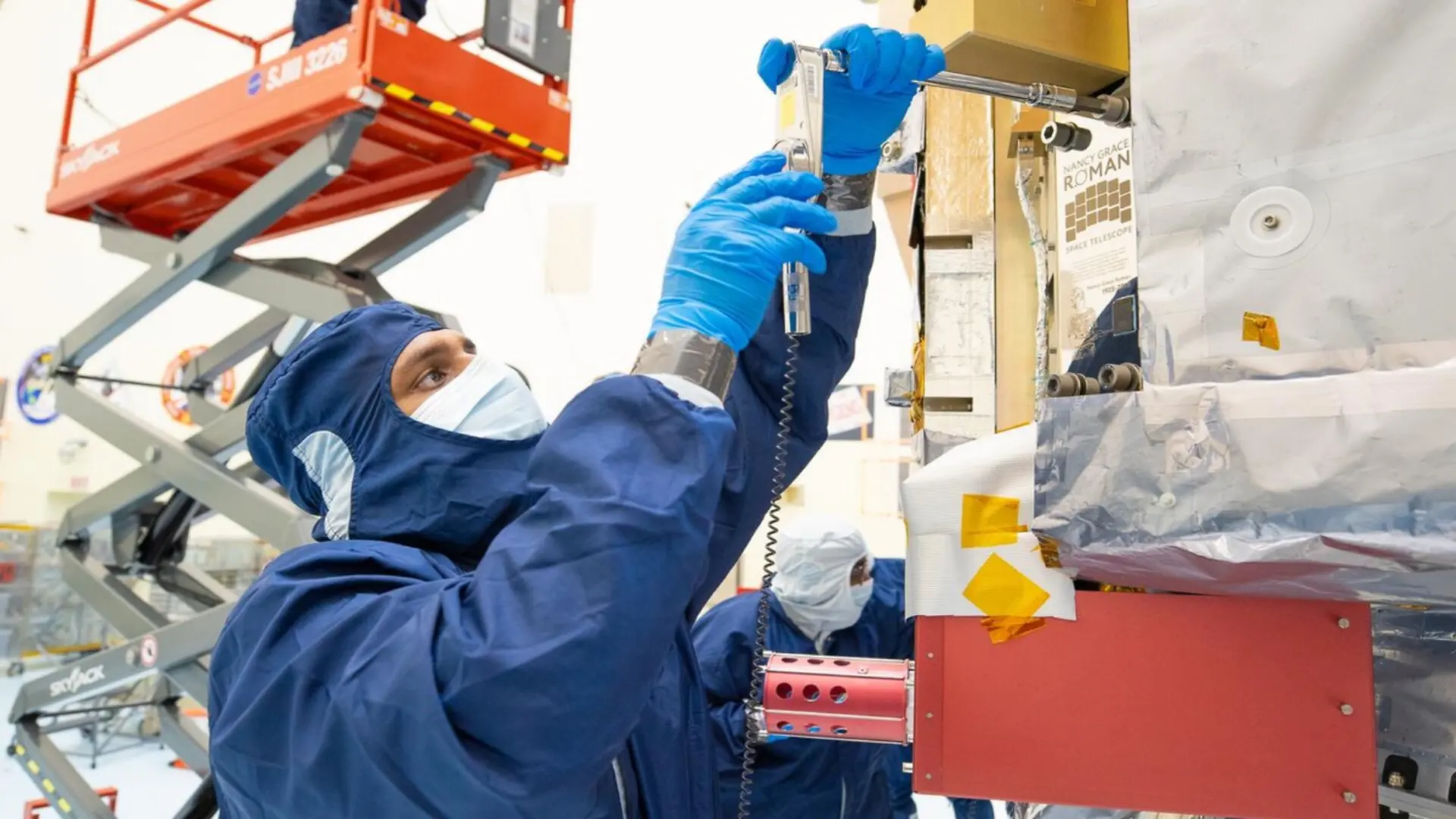
NASA’s upcoming launch of the Nancy Grace Roman Space Telescope will carry not only cutting‑edge instruments but also a digital ledger bearing more than 1,350,144 names from people worldwide, turning the mission into a collective human milestone.
Tiny Data Capsule Embarks on a Cosmic Voyage
On July 27, technicians inside the high bay at NASA’s Kennedy Space Center in Florida secured a compact memory card to a commemorative plaque that will travel with the observatory. The card, though minuscule compared with the telescope’s hardware, holds the record of a global public‑submission campaign that invited anyone to submit their name for inclusion.
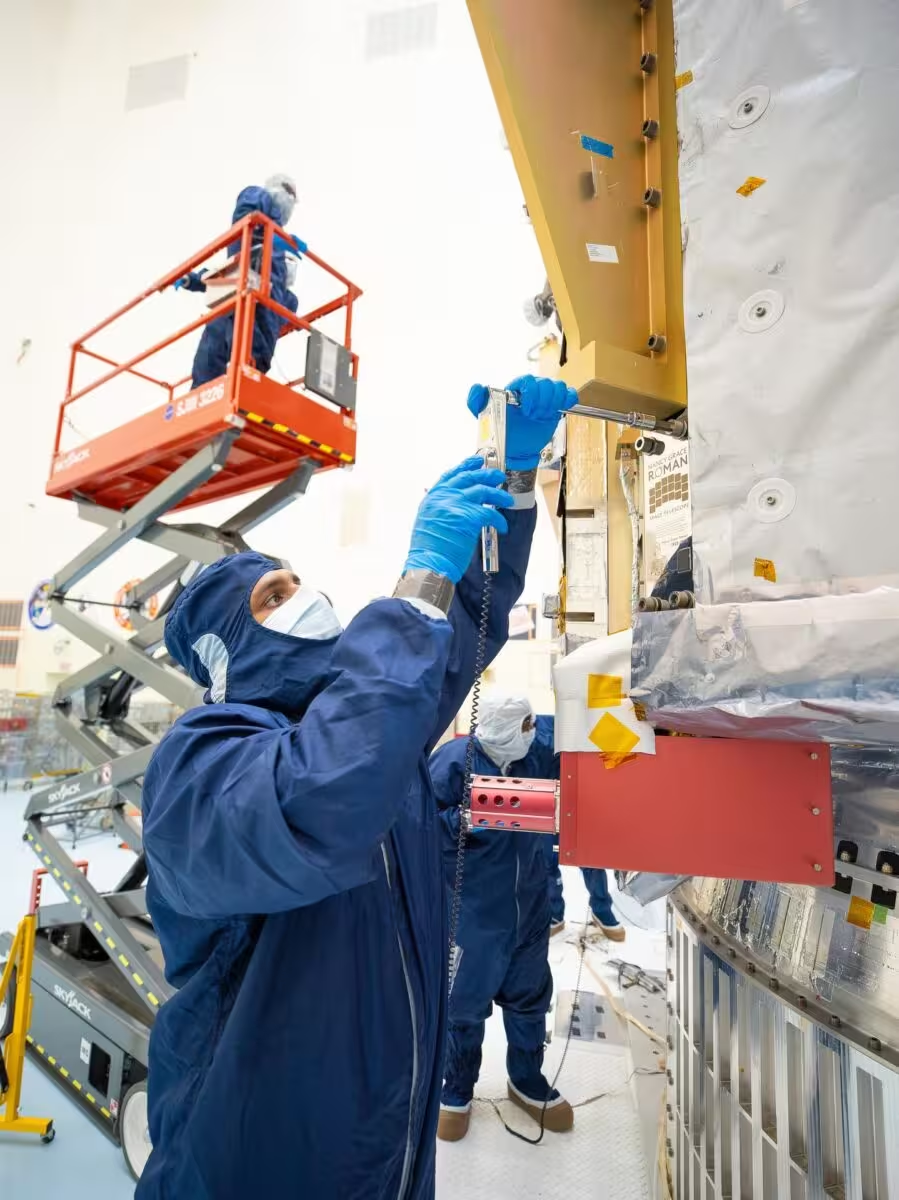
The final roster includes participants from dozens of nations and even astronauts slated for the Artemis II and Artemis III missions, linking the telescope’s future observations with the agency’s next steps toward a sustained lunar presence.
The Roman Telescope: A New Era for Cosmic Exploration
The Nancy Grace Roman Space Telescope, highlighted in a recent feature article, is poised to become one of NASA’s flagship science platforms for the coming decade. Its wide‑field camera and ultra‑sensitive detectors will scan vast swaths of sky, probing the elusive nature of dark energy, mapping dark‑matter structures, cataloguing thousands of distant exoplanets, and chronicling galaxy evolution across billions of years.
Unlike narrow‑field observatories, Roman’s panoramic capability will complement the James Webb Space Telescope by delivering high‑resolution surveys over large sky areas, creating a synergistic dataset for astronomers worldwide.
Every component of the telescope has been engineered for long‑term operation in the harsh vacuum of space, ensuring the precision required for decades of scientific measurements that could reshape our understanding of the post‑Big‑Bang universe.
Honoring Dr. Nancy Grace Roman’s Visionary Impact
The observatory bears the name of Dr. Nancy Grace Roman, NASA’s first chief astronomer, whose advocacy for placing major telescopes above Earth’s atmosphere laid the groundwork for modern space‑based astronomy. Roman also championed open data policies, a principle that continues to drive collaborative research across the global scientific community.
According to NASA, naming the mission after Roman honors both her scientific contributions and her belief that space exploration should benefit all of humanity. The plaque carrying over a million names embodies that inclusive spirit.
Journey to the Sun‑Earth Lagrange Point L2
After lift‑off, the telescope will travel to the Sun‑Earth Lagrange Point 2 (L2), a gravitationally stable zone situated roughly one million miles from Earth. This location offers a thermally stable environment with minimal Earth‑induced interference, making it ideal for the delicate observations the mission requires.
Other flagship observatories, including the James Webb Space Telescope, already operate at L2, taking advantage of its continuous line‑of‑sight to deep space. Once Roman reaches L2, it will undergo a commissioning phase before commencing its primary surveys, promising years of data that could unveil new planetary systems, map billions of galaxies, and address fundamental physics questions.
Throughout its operational life, the memory card installed at Kennedy Space Center will travel alongside the telescope, silently bearing the names of more than 1.35 million individuals as the observatory peers into the farthest reaches of the cosmos.
Launch Timeline and the Human Connection
NASA and SpaceX are targeting a launch no earlier than 7:26 a.m. EDT on Sunday, August 30, using a Falcon Heavy rocket from Launch Complex 39A at Kennedy Space Center. The mission will not only kick off one of the agency’s most ambitious scientific programs but also serve as a reminder that space exploration extends beyond engineers and scientists. Each name etched onto the commemorative card represents a personal contribution to a historic journey, linking humanity directly to a telescope poised to answer some of the universe’s most profound questions.
This article has been fact checked for accuracy, with information verified against reputable sources. Learn more about us and our editorial process.
Last reviewed on .
Article history
- Latest version
Reference(s)
- “NASA’s Roman Telescope to Carry 1.35 Million Names to Deep Space.” NASA <https://www.nasa.gov/image-article/nasas-roman-telescope-to-carry-1-35-million-names-to-deep-space/>.
Cite this page:
- Posted by Farah Siddiqui