Solar Wind Sparks Giant Plasma Waves That Strip Mars’ Atmosphere, Dual Spacecraft Reveal
Solar wind‑driven giant plasma waves are eroding Mars’ atmosphere, shedding new clues on the planet’s dramatic loss.
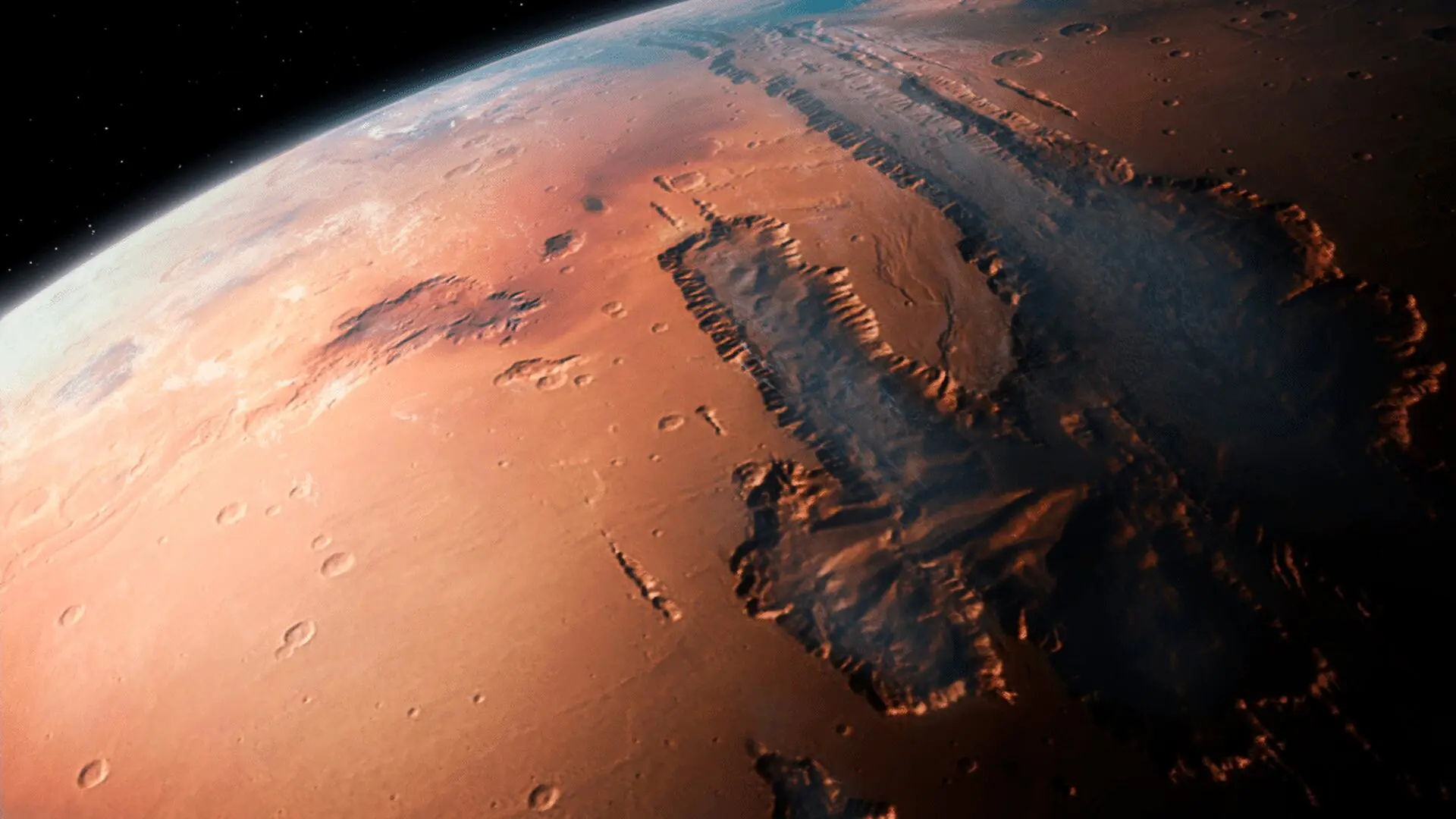
New research published in Science Advances shows that the solar wind does far more than skim past Mars. The study identifies gigantic plasma disturbances—known as Kelvin‑Helmholtz waves—forming at the planet’s upper atmospheric boundary, dramatically boosting the loss of atmospheric ions into space. This mechanism offers a compelling explanation for how Mars transitioned from a once‑wet world with a thick atmosphere to the cold, arid planet observed today.
Solar Wind Generates Colossal Plasma Ripples at the Top of Mars’ Atmosphere
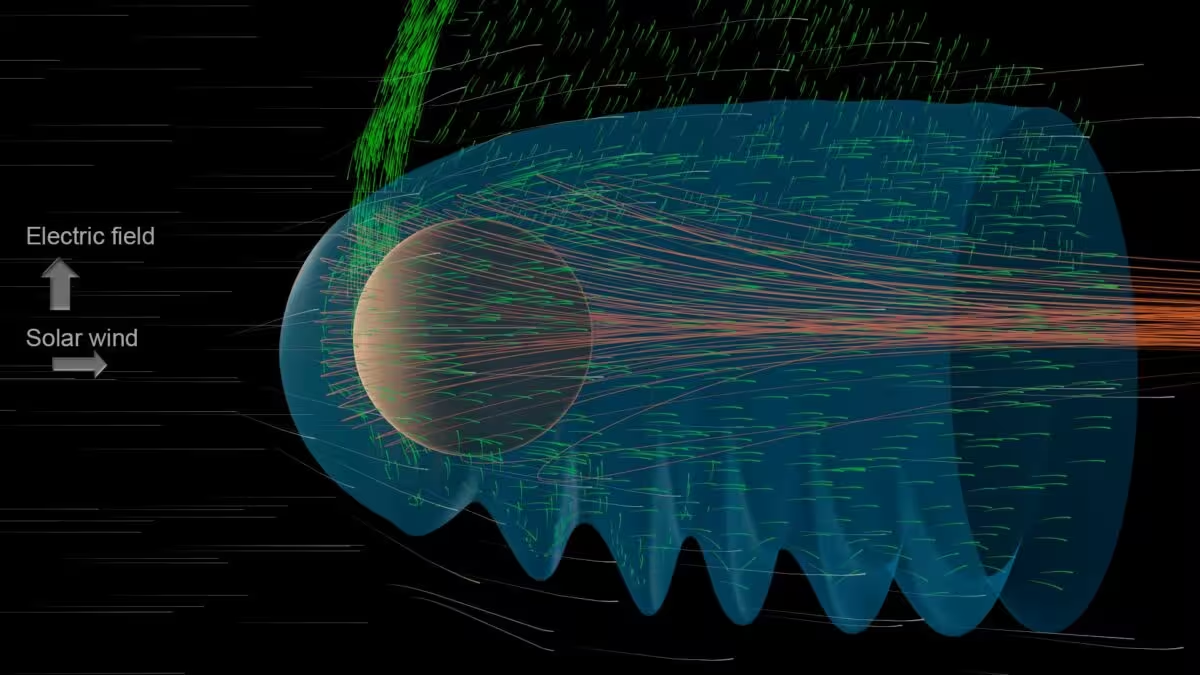
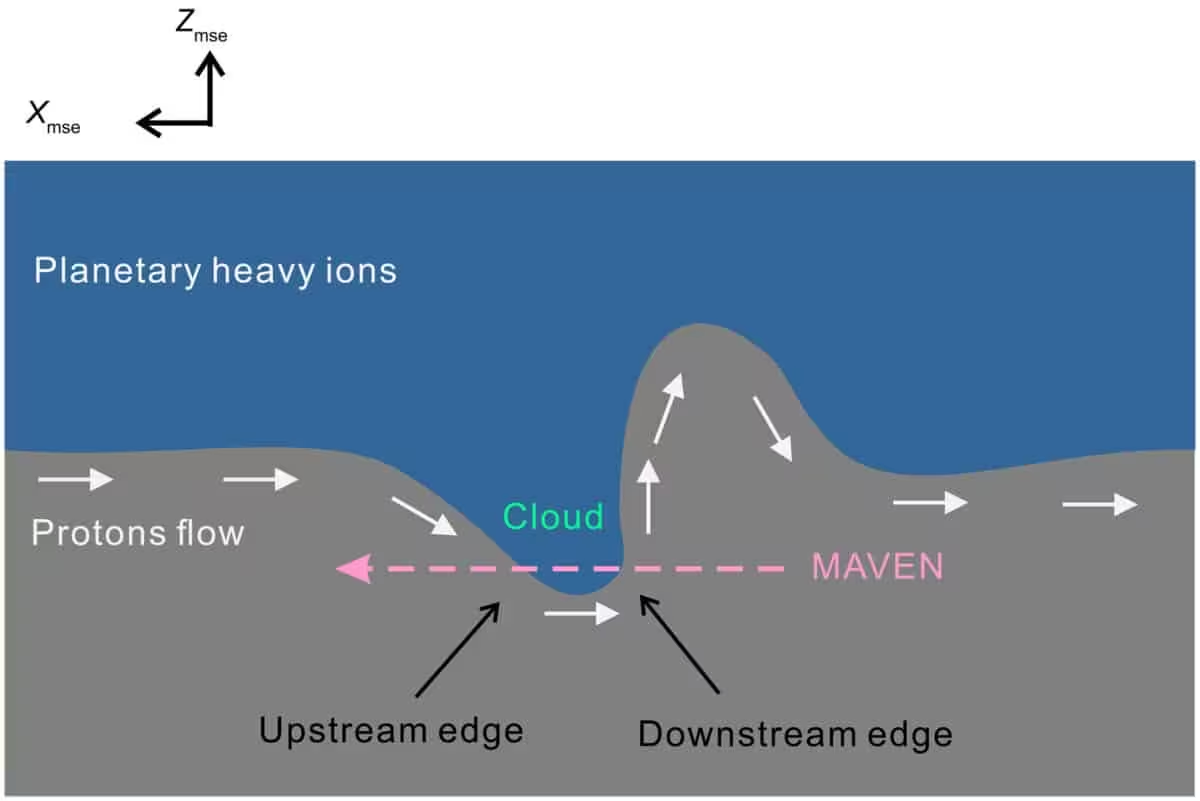
Because Mars lacks a global magnetic shield, its upper atmosphere is directly exposed to the continuous flow of charged particles streaming from the Sun. The interaction behaves like wind blowing over an ocean surface, except the “water” is ionized plasma. The resulting Kelvin‑Helmholtz waves create extensive clouds of ionized gas that lower the barrier for atmospheric particles to escape the planet’s gravity.
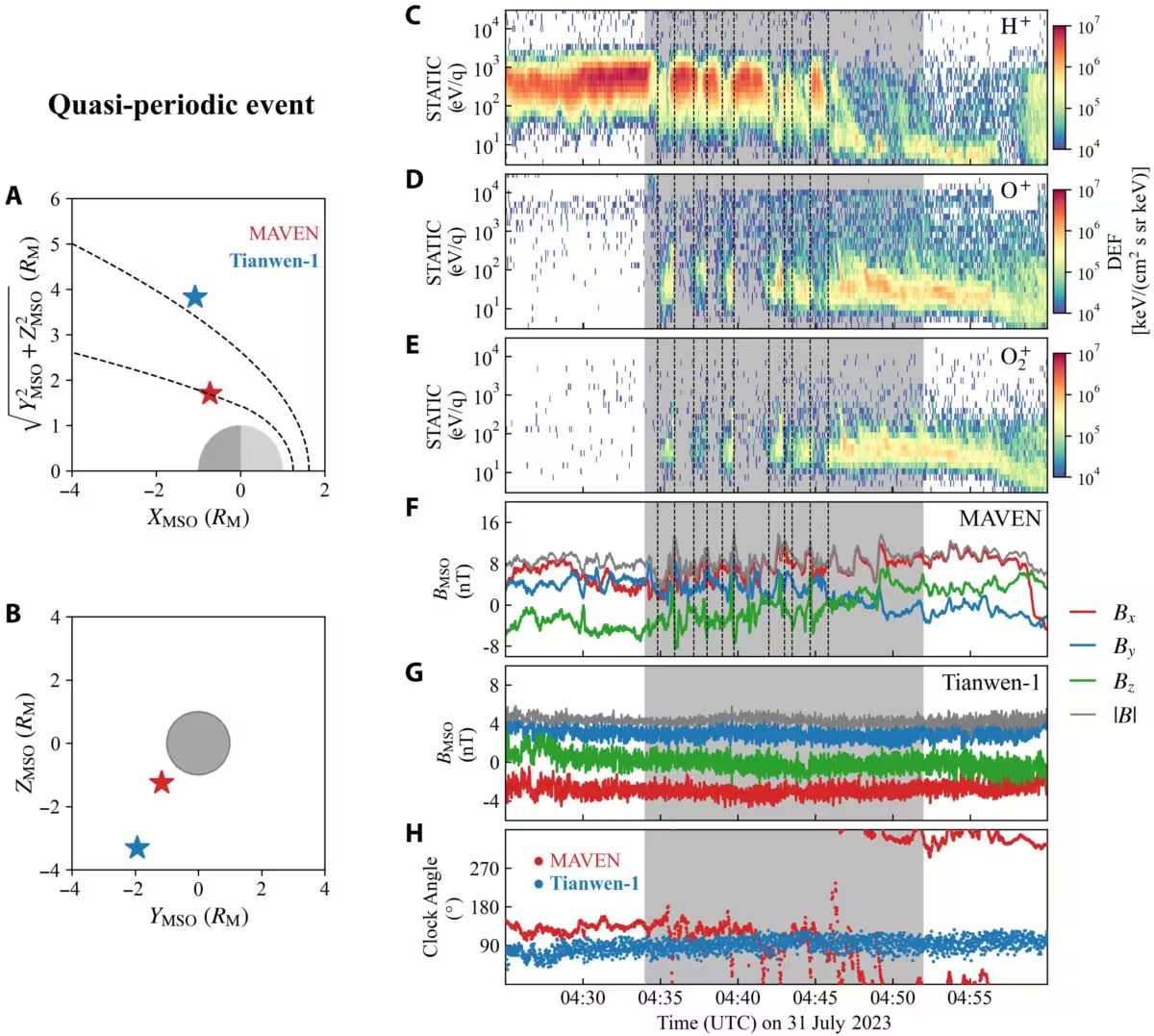
Coordinated MAVEN and Tianwen‑1 Measurements Pinpoint the Escape Trigger
Previous missions could only capture either the incoming solar wind or the escaping ions, leaving a crucial gap in the causal chain. By simultaneously tracking solar‑wind conditions with China’s Tianwen‑1 and ion outflow with NASA’s MAVEN, researchers observed a direct correlation: bursts of Kelvin‑Helmholtz activity coincided with spikes in atmospheric ion loss. The study, available at Science Advances, notes that the waves appear preferentially on the side of the planet where the solar‑wind electric field points, creating a pronounced asymmetry.
“Instead, it is mainly observed on one side of the planet, depending on the direction of the solar wind electric field,” explained first author Chi Zhang. This finding confirms that the geometry of the solar wind directly governs where atmospheric escape is most efficient.
Next‑Generation Missions Aim to Quantify Wave‑Driven Loss
While the discovery clarifies a major piece of Mars’ atmospheric evolution, many details remain uncertain. Researchers plan to pinpoint the exact solar‑wind conditions that spark wave formation, measure how quickly the ripples grow, and assess their contribution to the planet’s long‑term atmospheric depletion. Achieving these goals will require additional spacecraft observations and high‑resolution plasma simulations.
“Future research will focus on identifying the conditions that favor the formation and growth of Kelvin–Helmholtz waves and determining how much they contribute to atmospheric escape from Mars,” Zhang said. With MAVEN approaching the end of its operational life, NASA’s newly launched ESCAPADE mission will take over the mantle, offering fresh perspectives on solar‑wind‑driven loss processes.
Implications for Other Worlds and Exoplanet Habitability
The process uncovered at Mars may operate wherever an atmosphere is exposed to the solar wind without magnetic protection. This includes several solar‑system bodies and countless rocky exoplanets orbiting other stars. Understanding how Kelvin‑Helmholtz waves drive atmospheric loss could become a vital tool for assessing the long‑term habitability of distant worlds.
“We want to know when these waves are most likely to form, how they evolve and how strongly they can drive atmospheric escape. This process could also occur on other planets that lack a strong magnetic field, including some exoplanets,” said Chuanfei Dong of Boston University’s Center for Space Physics. Zhang added that unraveling Mars’ transition from a potentially habitable environment to the present‑day desert is essential for broader theories of planetary evolution.
This article has been fact checked for accuracy, with information verified against reputable sources. Learn more about us and our editorial process.
Last reviewed on .
Article history
- Latest version
Reference(s)
- Zhang, Chi., et al. “Simultaneous Mars-orbit observations reveal Kelvin-Helmholtz instability–driven bulk atmospheric ion escape.” Science Advances, vol. 12, no. 31, July 31, 2026 American Association for the Advancement of Science (AAAS), doi: 10.1126/sciadv.aed9072. <https://www.science.org/doi/10.1126/sciadv.aed9072>.
Cite this page:
- Posted by Farah Siddiqui