New Swiss Satellite Mission Aims To Solve The Mystery Of Dangerous Solar Storms
The ETHOS satellite mission will monitor the Sun and Earth’s atmosphere to improve space weather forecasting and preserve vital solar radiation records.
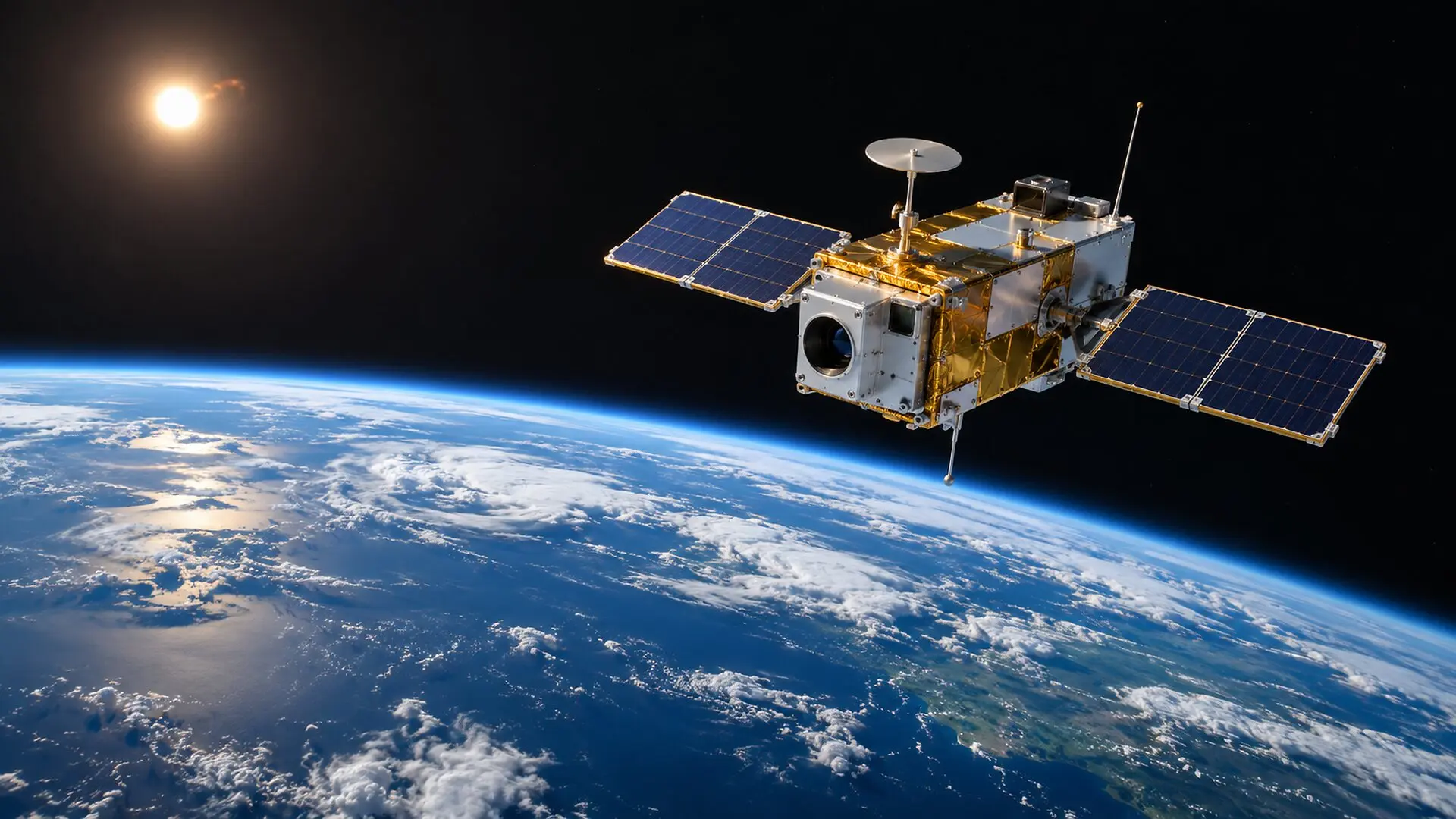
Switzerland is preparing to launch a specialized spacecraft, the Earth Thermosphere & Heliophysics Observing Satellite (ETHOS), designed to bridge a critical gap in our understanding of how solar activity influences the near-Earth environment. By measuring solar radiation, atmospheric shifts, and its own orbital trajectory from a single platform, the 25- to 30-kilogram satellite aims to refine how researchers calculate atmospheric drag, a force that can knock satellites off course during solar storms.
The mission is a collaborative effort led by ETH Zurich, involving the Physical Meteorological Observatory Davos, the University of Bern, and EPFL. Once it reaches its target altitude of 550 kilometers in 2030, ETHOS will operate directly within the environment it is tasked with monitoring.
The Physics of Orbital Decay
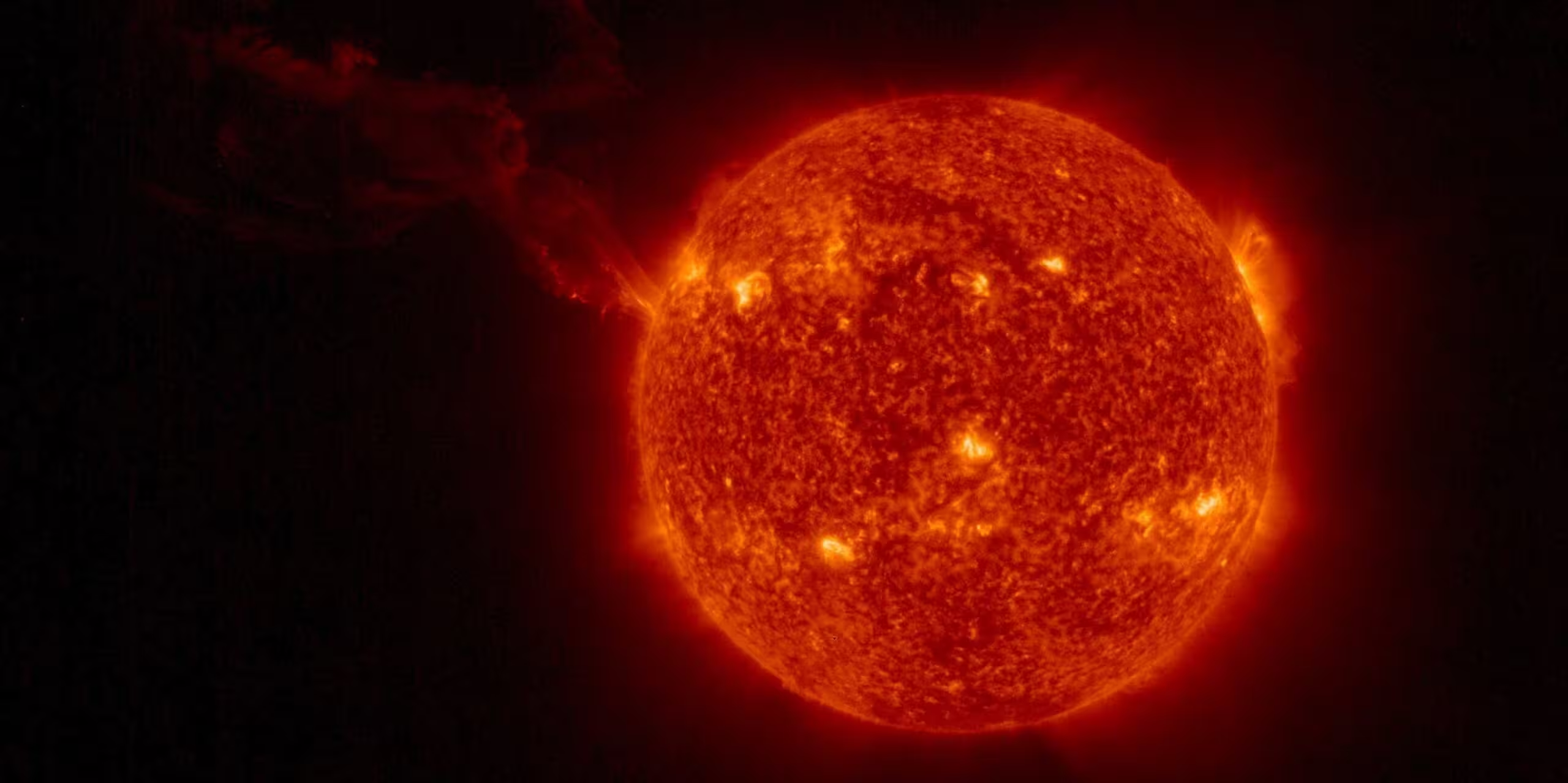
Although space is often perceived as an empty vacuum, low Earth orbit is filled with an extremely thin, yet consequential, atmosphere. When solar events like flares or coronal mass ejections strike the Earth, the energy deposited into the upper atmosphere causes gas to heat and expand. This increase in density creates significant drag on satellites, stripping them of orbital energy and causing them to drop in altitude.
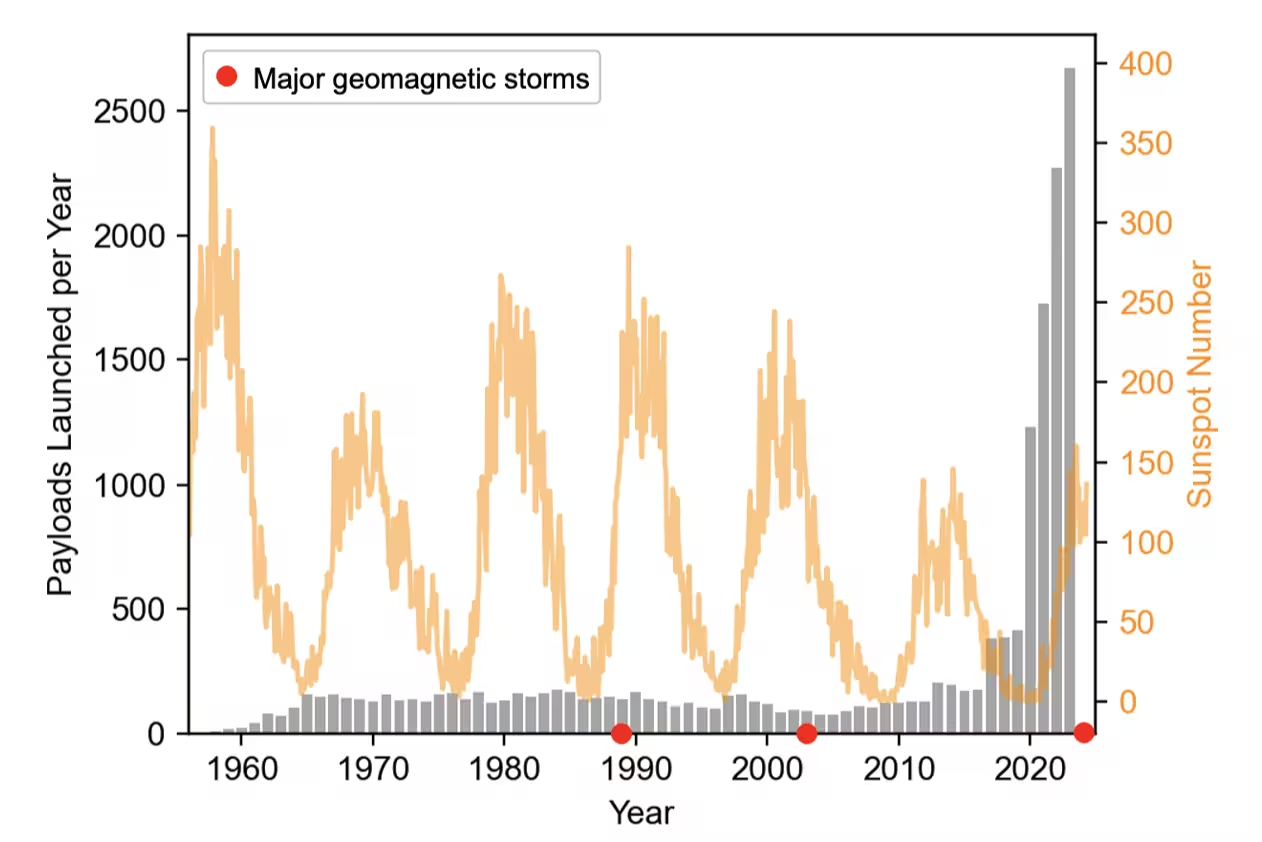
The practical consequences of this phenomenon were starkly illustrated during the May 2024 Gannon geomagnetic storm. As detailed in the Journal of Spacecraft and Rockets, thousands of operational satellites were forced to perform evasive maneuvers to counter rapid altitude loss. Such events complicate space traffic management, as operators must constantly adjust trajectory predictions to prevent collisions.
“The upper atmosphere is among the least-understood areas of near-Earth space,” says Louise Harra, the mission’s scientific lead and director of the World Radiation Centre. By integrating simultaneous solar and atmospheric observations, ETHOS hopes to move beyond general forecasting to create a more granular understanding of how specific solar energy inputs trigger orbital changes.
A Holistic Approach to Space Weather
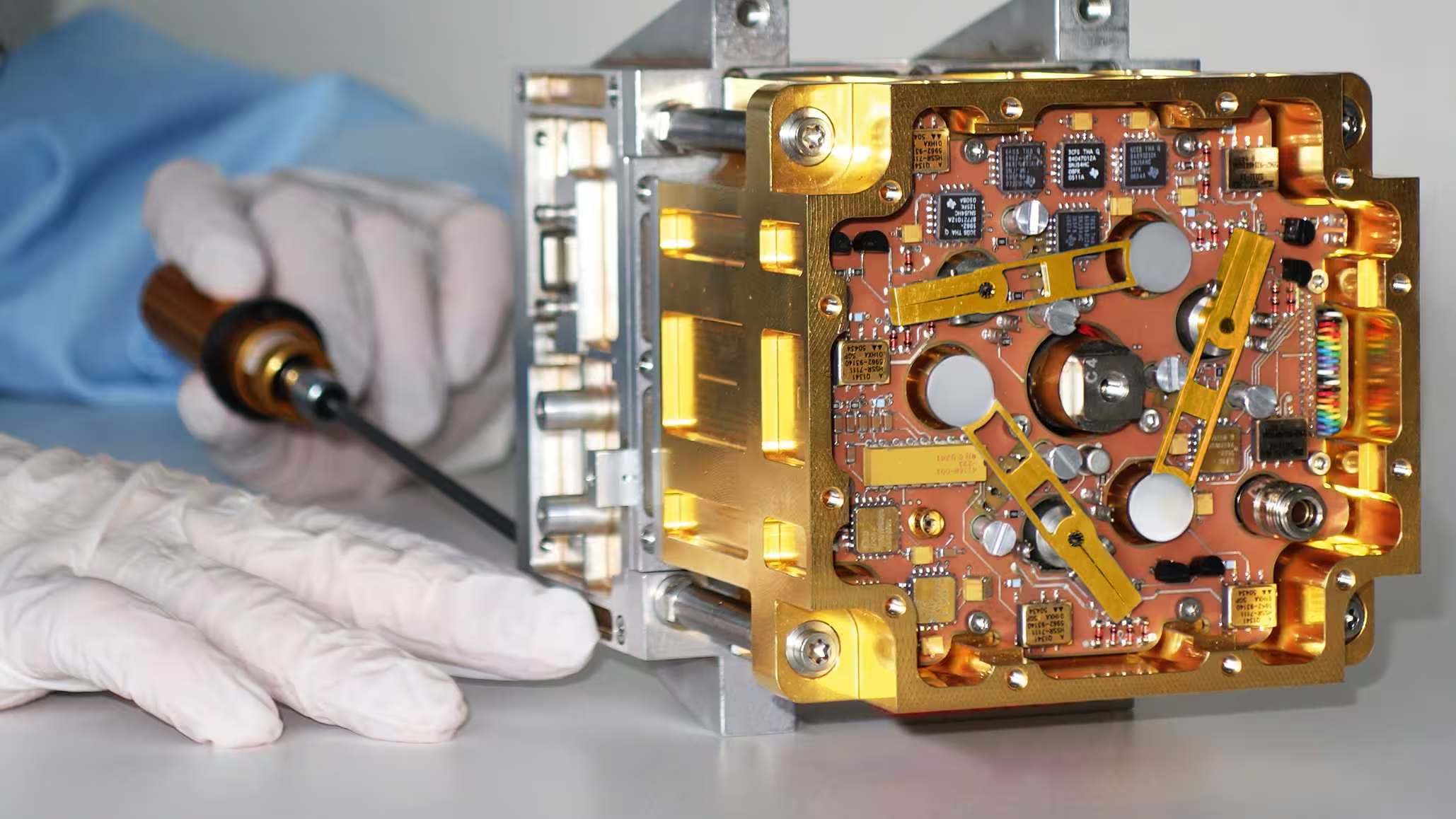
ETHOS will carry a suite of four instruments designed to capture a complete picture of the Sun-Earth connection. While some sensors monitor solar output, X-rays, and extreme ultraviolet radiation, others will analyze the state of the ionosphere and thermosphere. A compact GPS receiver, developed by the team of ETH Zurich professor Benedikt Soja, will provide high-precision tracking, allowing researchers to map exactly how changes in atmospheric density manifest as changes in the satellite’s path.
Beyond its immediate research goals, the mission serves a vital function in climate science. Many existing missions dedicated to measuring solar radiation are nearing the end of their operational lifespans by 2030. ETHOS is positioned to provide the continuity required to maintain long-term climate records, ensuring that researchers can track the Sun’s energy input across multiple solar cycles.
Expanding Swiss Capabilities
For ETH Zurich, ETHOS marks a shift from being a provider of specific space hardware to a mission architect. While the institution has previously contributed to high-profile projects like the James Webb Space Telescope and the InSight Mars mission, leading an entire mission lifecycle is a significant institutional milestone. According to Florian Kehl, who oversees space research initiatives at the university, this project is designed to build the necessary expertise to spearhead future, more complex space missions.
The project also emphasizes practical training. Students are integrated into the mission team, taking on responsibilities in systems engineering, assembly, and testing. With the hardware currently under development and testing, the team is focused on the central challenge of the mission: transforming simultaneous data streams into a predictive model that could make spaceflight significantly safer in an increasingly crowded orbital environment.
Key Research and Documentation
- Data-Driven Satellite Drag Modeling Without Dynamic Knowledge of the Atmosphere (Space Weather, 2026)
- TSIS-1 Mission Overview (NASA)
- NASA Lessons from the May 2024 Geomagnetic Storm
- NOAA Resource: Understanding Satellite Drag
This article has been fact checked for accuracy, with information verified against reputable sources. Learn more about us and our editorial process.
Last reviewed on .
Article history
- Latest version
Reference(s)
- “ETH Zurich - Homepage.”, November 3, 2026 ETH Zurich <https://ethz.ch/en.html>.
- “PMOD/WRC - PMOD/WRC.”, October 25, 2017 PMOD/WRC <https://www.pmodwrc.ch/en/institute/pmod-wrc/>.
- “Portal.” Portal <https://www.unibe.ch/index_eng.html>.
- “Home.”, October 30, 2026 EPFL <https://www.epfl.ch/en/>.
- Parker, William. “Satellite Drag Analysis During the May 2024 Gannon Geomagnetic Storm.” arXiv.org, doi: 10.2514/1.a36164. <https://arxiv.org/abs/2406.08617>.
- Parker, William E.., et al. “Data‐Driven Satellite Drag Modeling Without Dynamic Knowledge of the Atmosphere.” Space Weather, vol. 24, no. 2, February 9, 2026 American Geophysical Union (AGU), doi: 10.1029/2025SW004729. <https://agupubs.onlinelibrary.wiley.com/doi/full/10.1029/2025SW004729>.
- Cermak, Alicia. “TSIS-1 - NASA Science.”, May 24, 2023 NASA <https://science.nasa.gov/mission/tsis-1/>.
- Hatfield, Miles. “What NASA Is Learning from the Biggest Geomagnetic Storm in 20 Years - NASA Science.”, May 9, 2025 NASA <https://science.nasa.gov/science-research/heliophysics/what-nasa-is-learning-from-the-biggest-geomagnetic-storm-in-20-years/>.
- “Satellite Drag | NOAA / NWS Space Weather Prediction Center.” <https://www.spaceweather.gov/impacts/satellite-drag>.
Cite this page:
- Posted by Aisha Ahmed