Scientists Just Extracted Human DNA From Cave Dirt With No Bones Required
Scientists have recovered 22,000-year-old genetic material from sediment in a Spanish cave, offering a rare look into Europe’s mysterious Ice Age history.

In a major leap for paleogenetics, researchers have successfully extracted nuclear DNA from cave sediment, offering a detailed look at the lives of humans who inhabited northern Spain roughly 22,000 years ago. This breakthrough, published in Science Advances, allows scientists to reconstruct the ancestry of Ice Age populations even in the complete absence of teeth or skeletal remains.
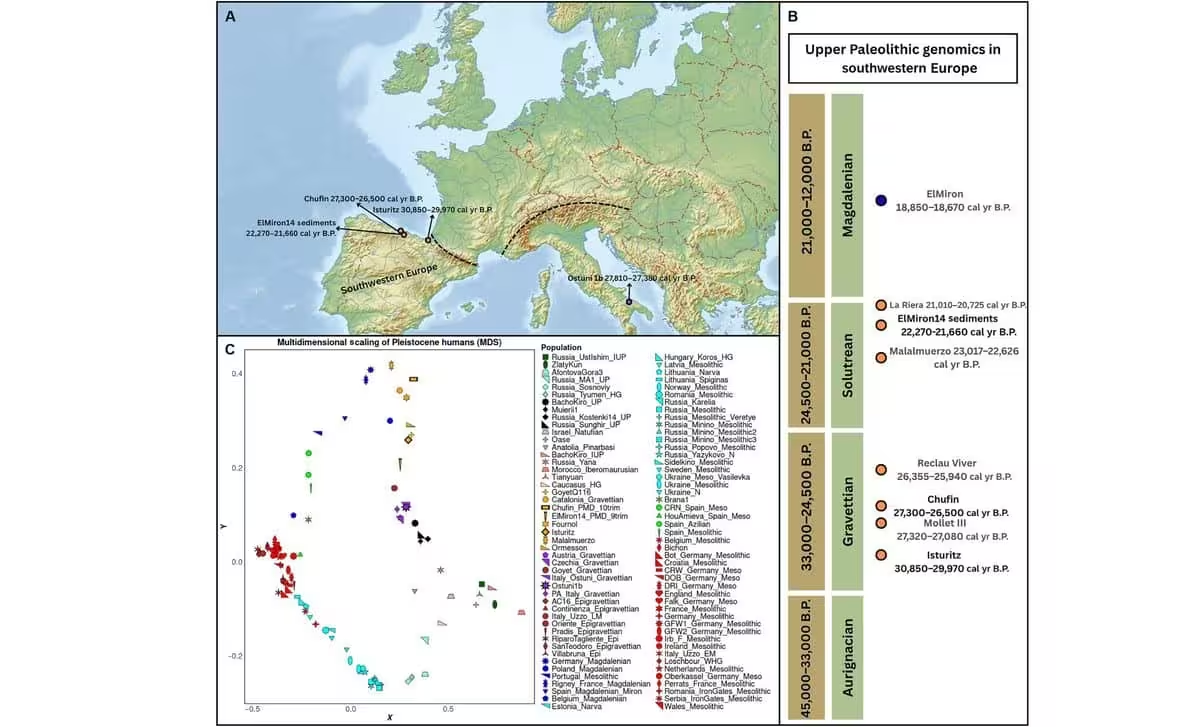
The study, led by Pere Gelabert at the University of Vienna, focused on the El Mirón Cave in Cantabria. By analyzing soil samples deposited during the Solutrean period—a time defined by the harsh conditions of the last Ice Age—the team bypassed the traditional reliance on rare, well-preserved bones. To isolate this elusive genetic material, researchers processed two 50-milligram samples, conducting 101 sequencing runs that yielded over a billion total sequences.
New Insights into Ice Age Ancestry
While previous sediment studies often relied on mitochondrial DNA, which only reveals maternal lineages, this analysis secured nuclear DNA. This provides a more comprehensive genetic profile, showing that the material likely originated from multiple individuals. The data indicates physical traits typical of the era, including dark skin, dark hair, and brown eyes. Despite the complexities of working with degraded environmental DNA, the team successfully identified 14,737 high-quality genetic markers after extensive filtering.
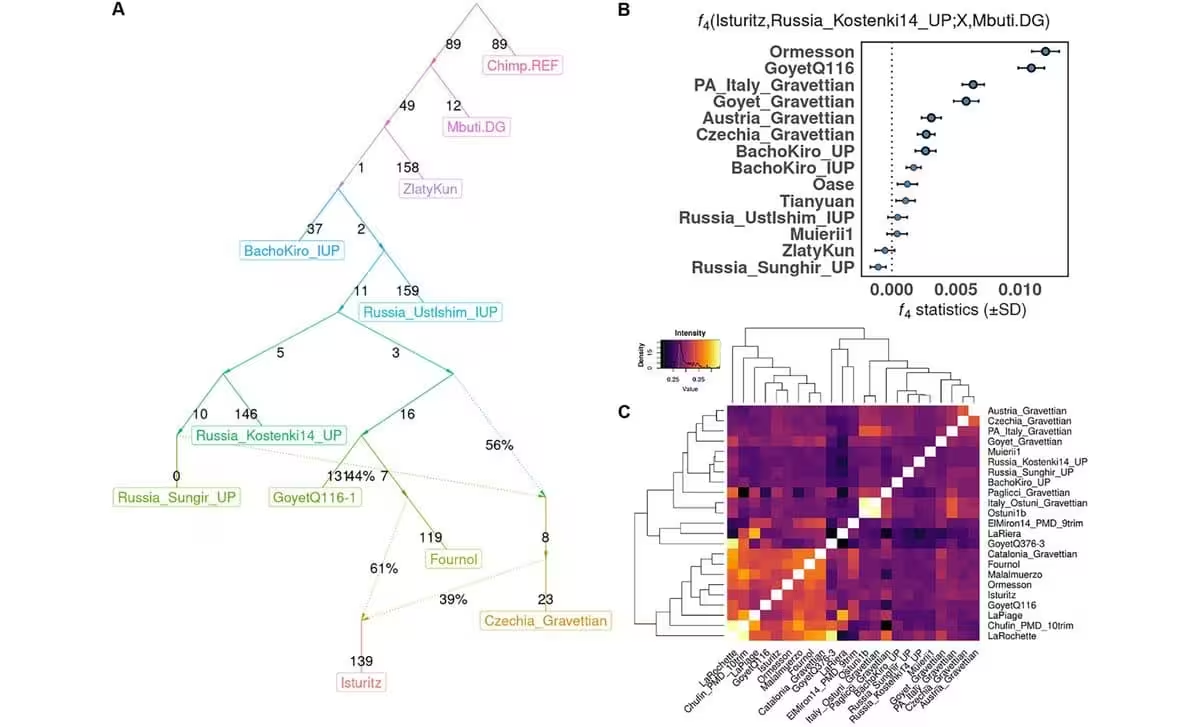
The research sheds light on a period of human movement across Europe between 34,000 and 25,000 years ago. By comparing the El Mirón samples with ancient remains from France and Italy, the team found that southwestern European populations maintained a distinct ancestral line—linked to the Fournol group—that persisted through the Last Glacial Maximum.
Challenging Historical Narratives
This study challenges the long-held assumption that Gravettian populations in eastern and western Europe remained isolated from one another. The genetic records suggest there was significant interaction, including a potential period of population mixing between 32,500 and 31,500 years ago. Evidence from sites like Isturitz in France and Ostuni in Italy further supports a narrative of connectivity rather than strict regional separation.
While the study provides a clearer picture of human history, the researchers emphasize that they found no evidence of a total population replacement in southwestern Europe during this window. Instead, the findings suggest a high level of regional continuity. As scientists refine techniques for recovering sedimentary DNA, these invisible genetic traces will likely become an essential tool for mapping the complex migration patterns of our ancestors.
This article has been fact checked for accuracy, with information verified against reputable sources. Learn more about us and our editorial process.
Last reviewed on .
Article history
- Latest version
Reference(s)
- Gelabert, Pere., et al. “Early Gravettian genomic data from Western Europe reveal population movements before the LGM.” Science Advances, vol. 12, no. 43, October 23, 2026 American Association for the Advancement of Science (AAAS), doi: 10.1126/sciadv.aeh6128. <https://www.science.org/doi/10.1126/sciadv.aeh6128?referrer=https%3A%2F%2Fwww.sciencealert.com%2F>.
Cite this page:
- Posted by Elizabeth Taylor