Scientists Dug Into A Strange Patch Of Arctic Seafloor And Found A Massive Underwater Grave
Researchers surveying the Arctic seafloor have discovered a mysterious object buried in the sediment, leaving scientists with more questions than answers.
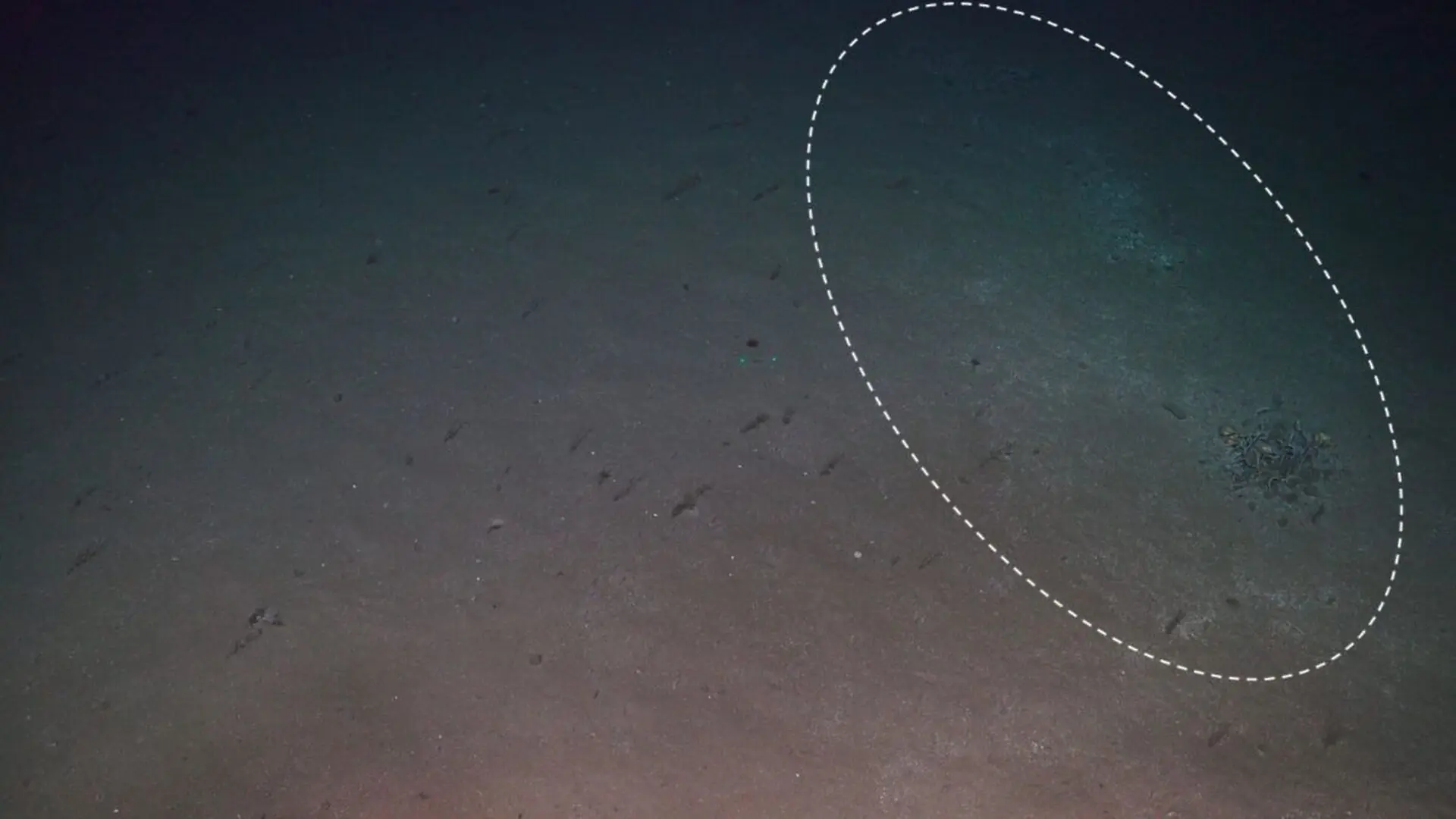
Marine researchers mapping the Arctic seafloor have stumbled upon a biological treasure trove hidden beneath the sediment. What initially appeared to be a routine survey by Norway’s MAREANO program transformed into an accidental archaeological expedition when an unusual patch of tube worms led scientists to the submerged remains of a whale.
An Unlikely Signal in the Deep
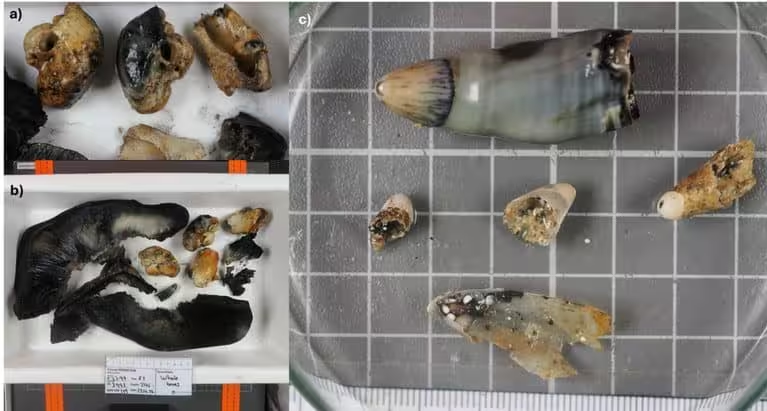
The discovery occurred while a remotely operated vehicle (ROV) scanned a seemingly uniform stretch of the ocean floor. The researchers noticed a distinct cluster of worms standing upright in the silt—a biological anomaly in an otherwise barren landscape. Intrigued, the team deployed the ROV’s mechanical arm to sample the sediment, expecting little more than mineral deposits. Instead, the scoop triggered a dark plume of organic material, revealing a cache of whale teeth and skeletal fragments buried just below the surface.
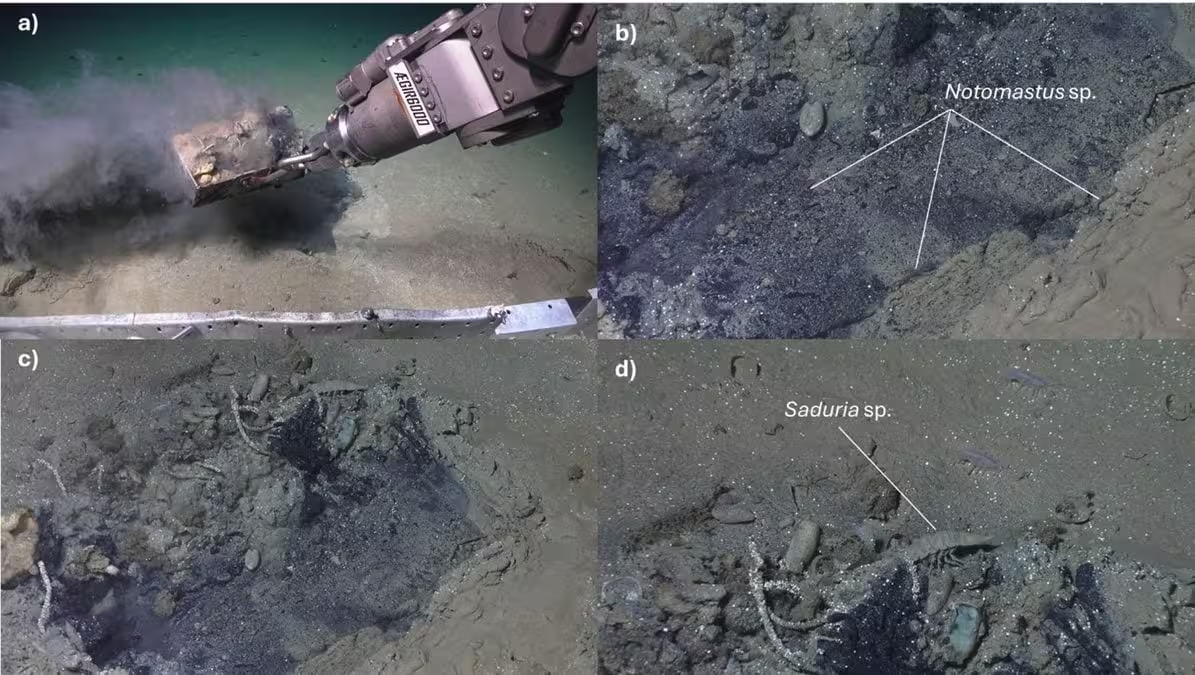
The find, documented in a MAREANO expedition diary, offered a rare glimpse into a “whale fall”—a localized ecosystem fueled by the decay of a massive carcass. While the researchers joked about their newfound status as “Indiana Jones of the deep sea,” the discovery held significant scientific weight, providing evidence of how nutrients are cycled in the extreme environment of the Arctic basin.
Ecosystems Built on Decay
Whale falls act as critical hotspots for life in the deep ocean. As the carcass decomposes, it releases a bounty of carbon, sulfur, nitrogen, and phosphorus into the sediment. This chemical influx supports specialized communities, including Notomastus worms and Saduria crustaceans observed at the Norwegian site. These biological hubs serve as essential stepping stones, allowing organisms to colonize disparate regions of the ocean floor.
The difficulty in locating such sites is precisely why this discovery is so valuable. Because whale remains are often rapidly buried by sediment, they are effectively invisible to standard mapping technology. This concealment leaves them vulnerable; without identification, these unique habitats risk being damaged by industrial activities like deep-sea trawling, as seen in a 2017 incident off the coast of Australia.
The Fragility of Hidden Habitats
The MAREANO team emphasizes that these transient communities remain largely unexplored. Scientists are still working to understand the dispersal patterns and connectivity of the life forms that rely on these episodic pulses of organic matter. By studying these hidden graves, researchers hope to better protect the delicate, often overlooked ecosystems that reside in the deepest parts of our planet.
“These rare inputs of organic matter sustain highly specialized and often transient communities, whose dispersal, distribution, ecological roles, and connectivity across the deep ocean remain largely unexplored,” the MAREANO team noted.
As ocean exploration technology advances, the discovery of such sites serves as a poignant reminder of how much remains unknown about the seafloor. Every “unremarkable” stretch of mud could, in fact, be a thriving, temporary oasis for deep-sea organisms that are only just beginning to be documented.
This article has been fact checked for accuracy, with information verified against reputable sources. Learn more about us and our editorial process.
Last reviewed on .
Article history
- Latest version
Reference(s)
- “A Surprise on the Seafloor: When a “Boring” Dive Turned Extraordinary.”, May 20, 2026 Mareano - The Sea in Maps and Pictures <https://www.mareano.no/en/news/news-2026/a-surprise-on-the-seafloor-when-a-boring-dive-turned-extraordinary>.
Cite this page:
- Posted by Vikram Desai