Lost for 67 Years Italy’s Mysterious Ghost Shipwreck Has Finally Been Found
First identified in 1959 and missing for decades, a mysterious Roman cargo has finally been rediscovered off the coast of Italy.
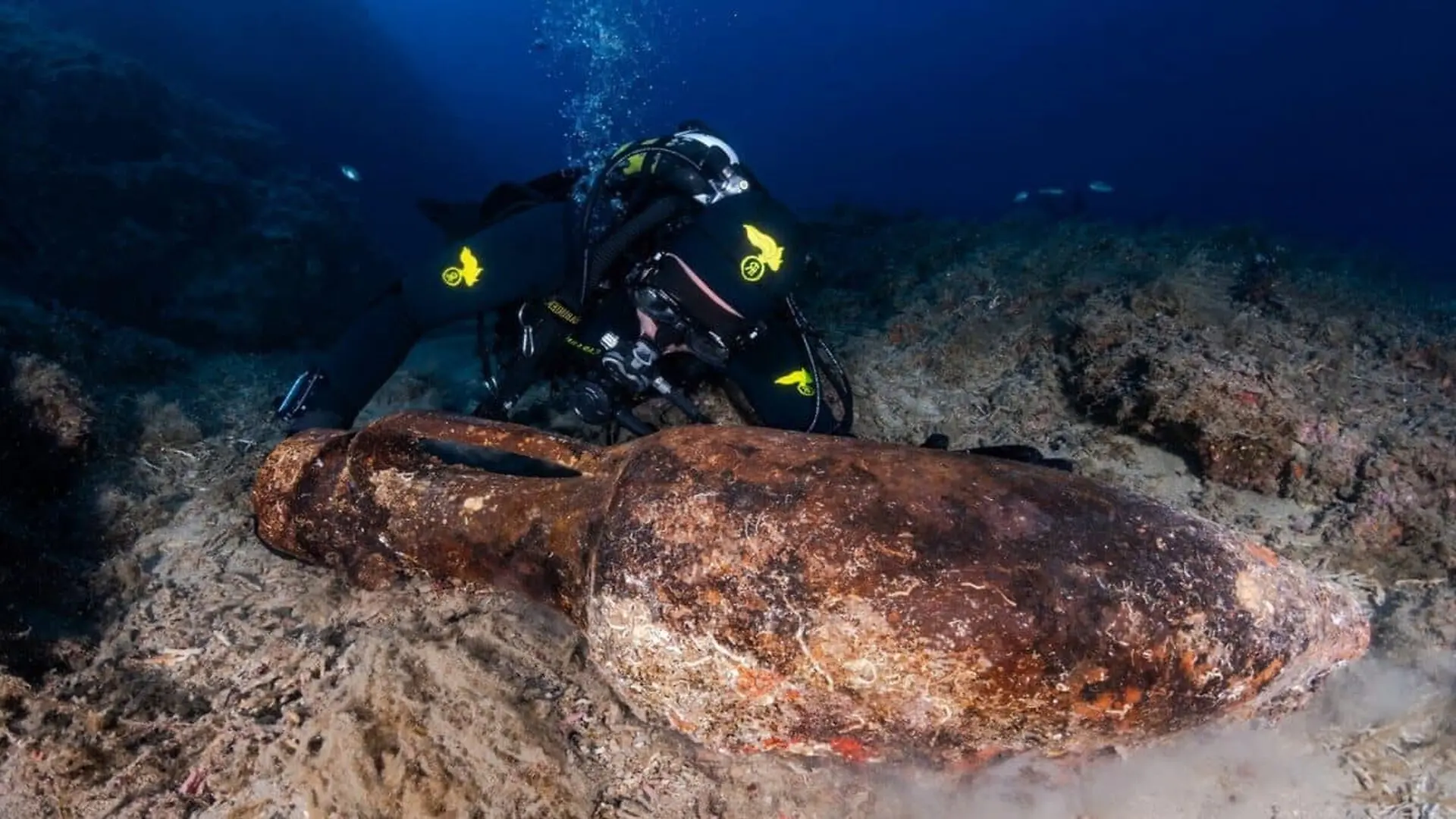
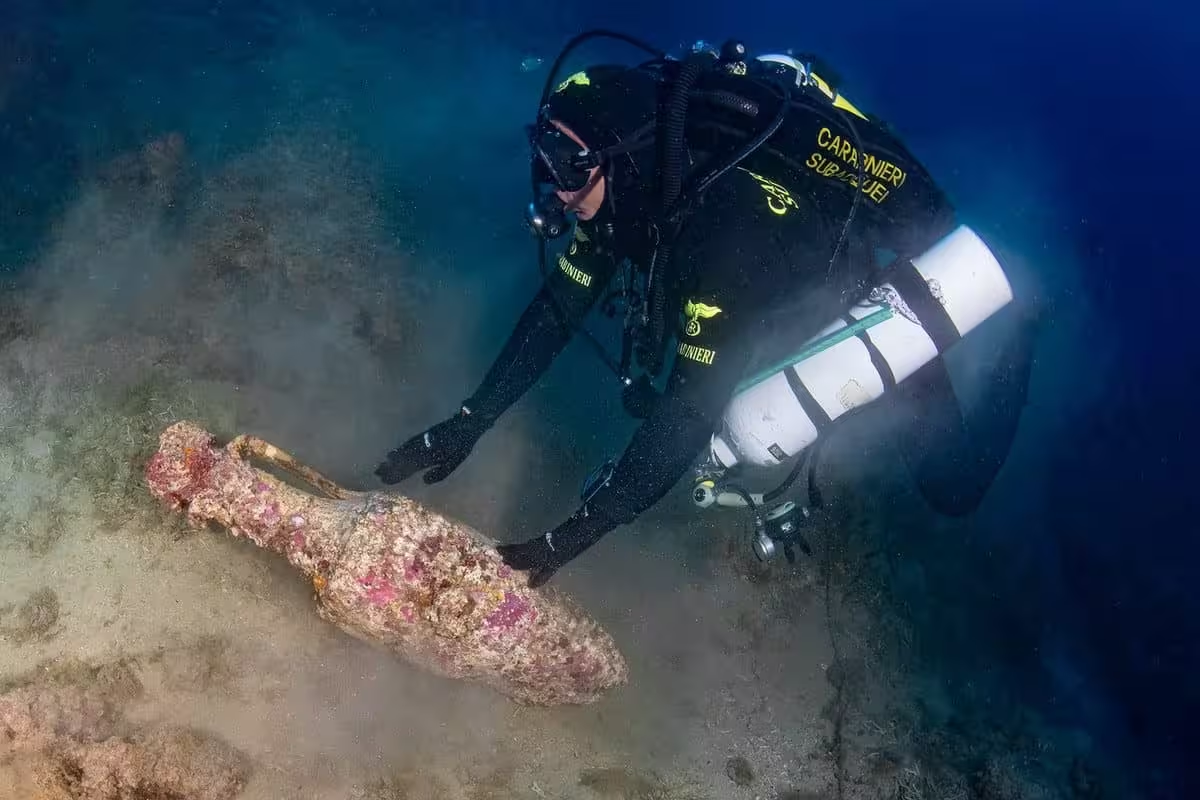
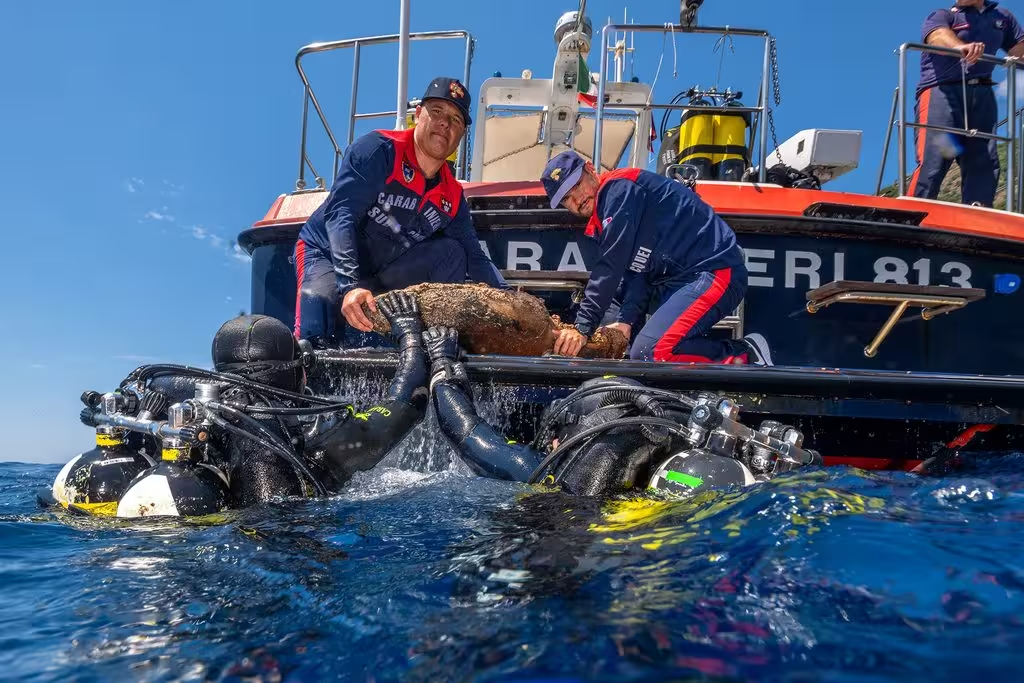
Deep beneath the surface of the Italian Riviera, a routine training exercise for the Carabinieri diving unit has led to the rediscovery of a long-lost archaeological site. More than 40 meters (130 feet) below the waves off Punta Chiappa, near the village of Camogli, divers encountered an intact Roman amphora wedged against a steep underwater cliff, marking the end of a six-decade-long mystery.
The site, located within the Portofino Marine Protected Area, contains at least nine ancient clay vessels. Many are heavily encrusted with marine growth, effectively anchoring them to the rocky seabed. Liguria’s heritage authority officially confirmed the discovery on October 22, 2026, noting that the location matches a site first documented by pioneering Italian diver Duilio Marcante in 1959.
A Forgotten Chapter of Underwater Archaeology
The site, often referred to by locals as the “ghost shipwreck,” was first brought to light by Marcante, who spotted the collection of amphorae while diving in the area on November 7, 1959. Recognizing the historical significance of the find, his team recovered two intact jars to prevent looting and formally alerted the Superintendency of Liguria and the Experimental Centre for Underwater Archaeology in Albenga, led by renowned archaeologist Nino Lamboglia.
However, when a follow-up expedition led by Gianni Roghi visited the site in May 1960, they found the location significantly altered. While they discovered an amphora prepared for removal with a rope, they could not locate the larger cargo pile Marcante had previously identified. Concerns about clandestine looting persisted, and as the decades passed, the exact coordinates of the site were lost to record-keeping gaps.
Cargo from the Roman Expansion
Under the guidance of Simon Luca Trigona, head of the Technical Service for Underwater Archaeology (STAS) of Liguria, recent investigations have confirmed the site’s identity. The jars have been identified as Dressel 1A wine amphorae, produced along the Tyrrhenian coast between the end of the 2nd century BC and the beginning of the 1st century BC. This timeframe aligns with Rome’s expansion into southern Gaul, a period when Ligurian ports served as vital nodes for trade routes transporting wine to western Mediterranean markets.
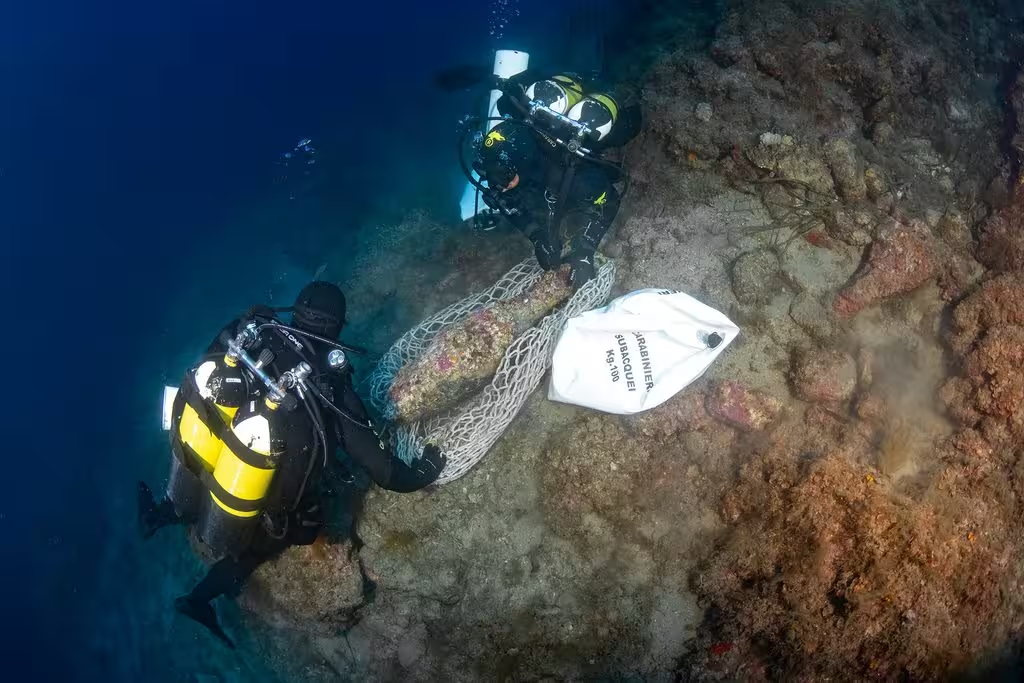
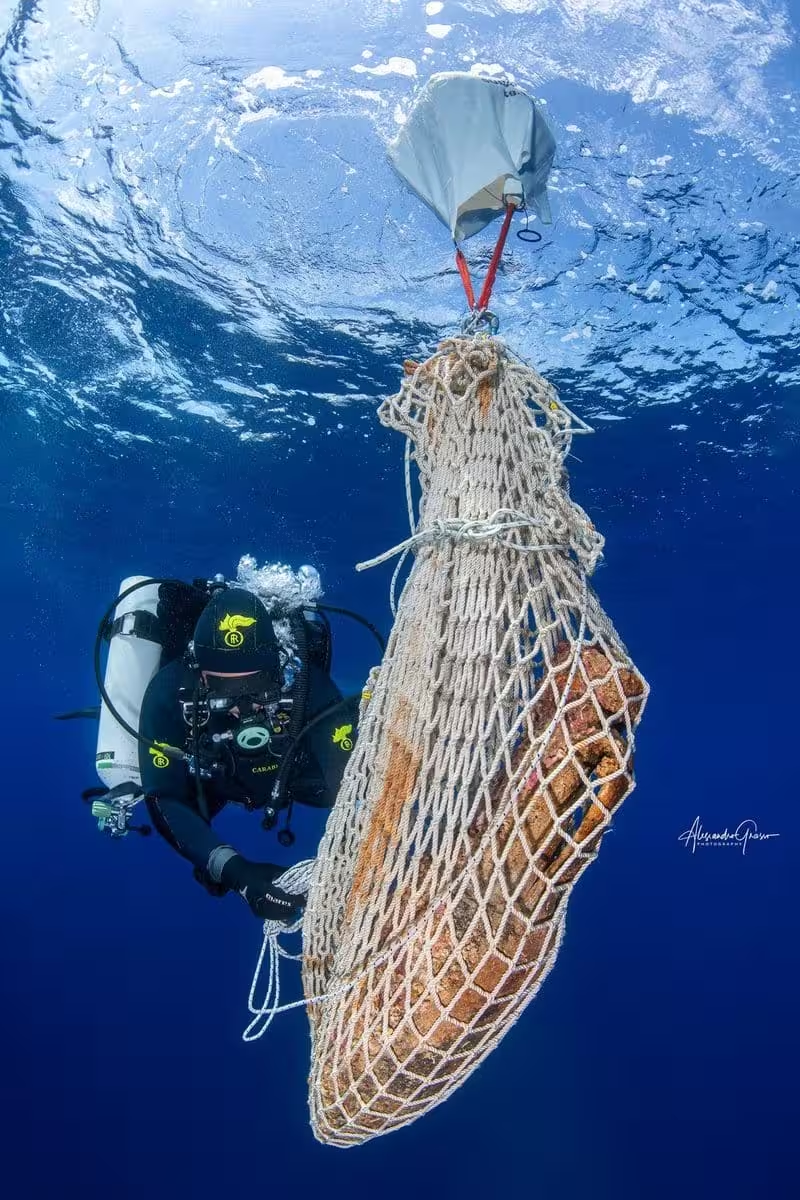
While no remnants of the ship’s hull have been located to date, the distribution of the artifacts suggests they were part of a single merchant vessel’s cargo that settled along the cliffside. To protect the site from recreational divers and potential interference, officials have recovered the two most exposed vessels for study and conservation.
Ensuring Future Protection
Vincenzo Tiné, the superintendent for Liguria’s archaeology, fine arts, and landscape, emphasized that this discovery highlights the potential for new findings even in heavily trafficked coastal waters. Given the site’s vulnerability, authorities have implemented strict monitoring protocols. The Carabinieri’s specialized underwater units remain active in the area, committed to both scientific research and the prevention of cultural heritage crimes.
The Portofino headland is a known hotspot for maritime history, having previously yielded findings such as a 1st-century Roman wreck carrying Gallic wine and the remains of the 16th-century ship Santo Spirito. As for the newly mapped site, future efforts will focus on searching the surrounding seafloor for further debris.
While the Punta Chiappa site has been restored to the archaeological record, other mysteries remain. Trigona pointed to the Roman wreck of Pegli, discovered in the early 1950s and also dating to the late Republic era, which remains missing despite extensive interest. For now, the successful identification of the Camogli vessels serves as a reminder of the enduring secrets hidden beneath the Mediterranean floor.
This article has been fact checked for accuracy, with information verified against reputable sources. Learn more about us and our editorial process.
Last reviewed on .
Article history
- Latest version
Reference(s)
- “IL RELITTO PERDUTO – UNA STORIA CHE RINASCE – Soprintendenza Archeologia, Belle Arti e Paesaggio per la Liguria.” <https://soprintendenzaliguria.cultura.gov.it/il-relitto-perduto-una-storia-che-rinasce/>.
Cite this page:
- Posted by Vikram Desai