Geologists Discover Massive 83 Billion Dollar Gold Deposit Hidden Deep Beneath China
A peaceful rural community is thrust into chaos after the sudden discovery of a massive, hidden fortune beneath its soil.
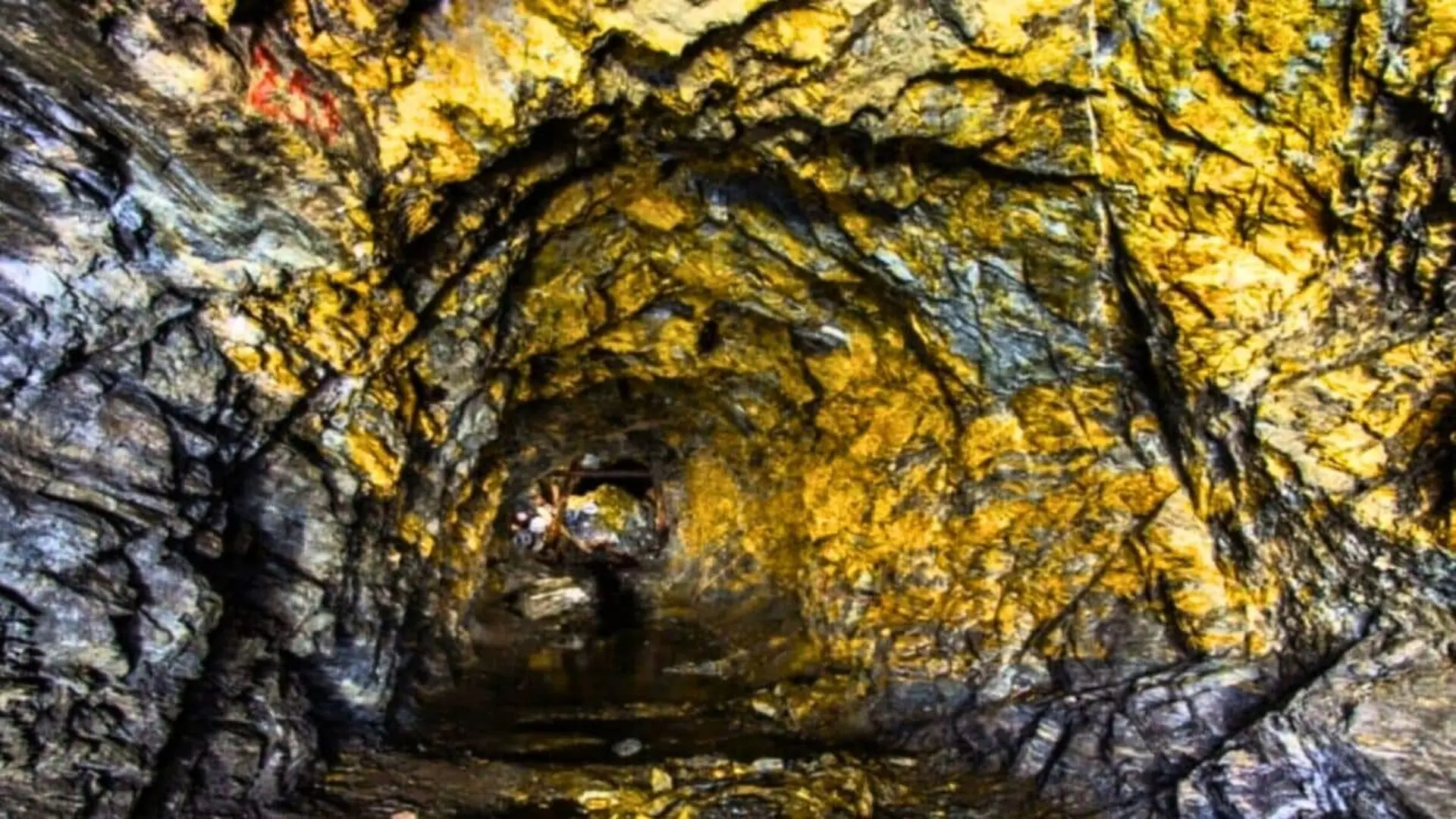
Geologists in China’s Pingjiang County have announced the discovery of a massive gold deposit that, if verified, could rank among the most significant mineral findings in history. Officials from the Geological Bureau of Hunan Province claim the Wangu gold field sits atop more than 1,000 metric tons of gold, with early sampling indicating exceptionally high-grade ore.
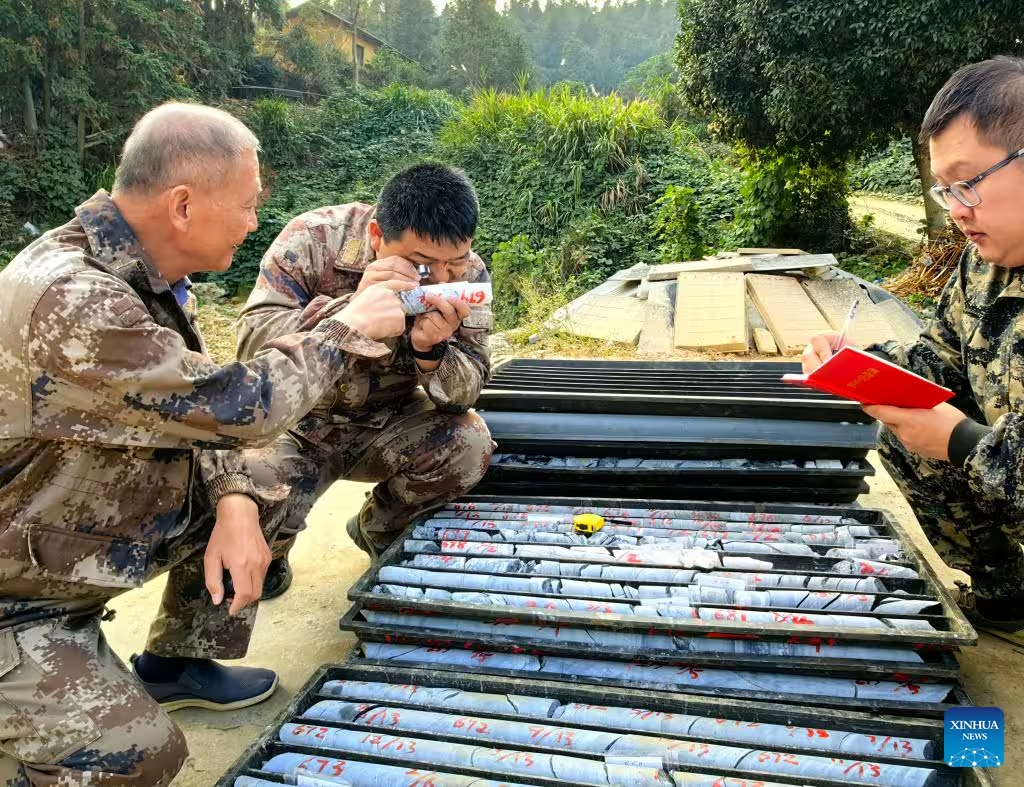
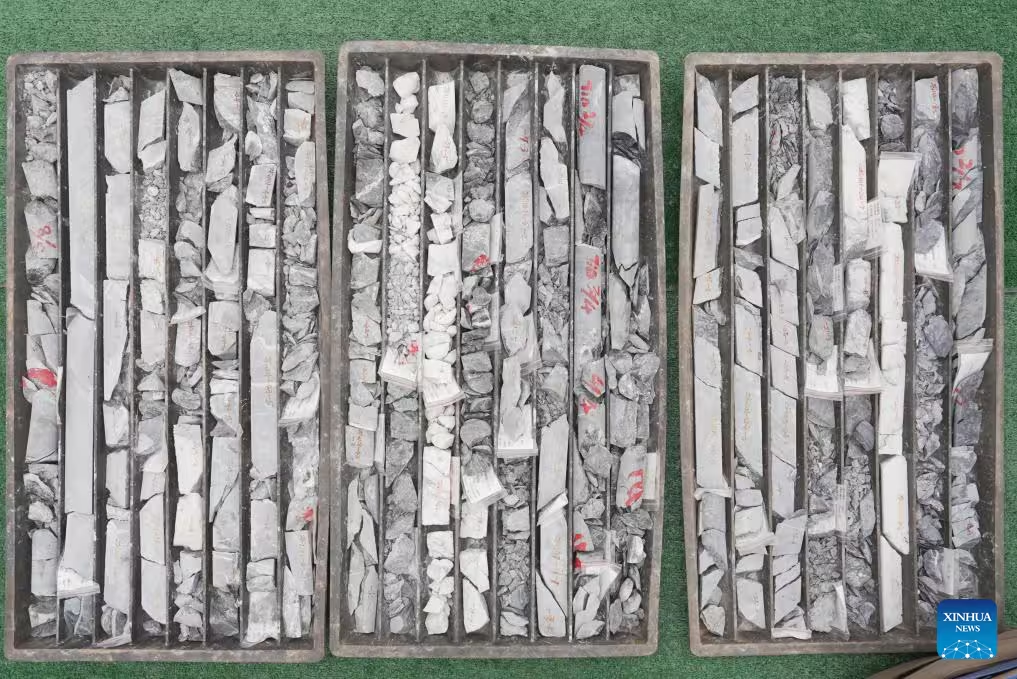
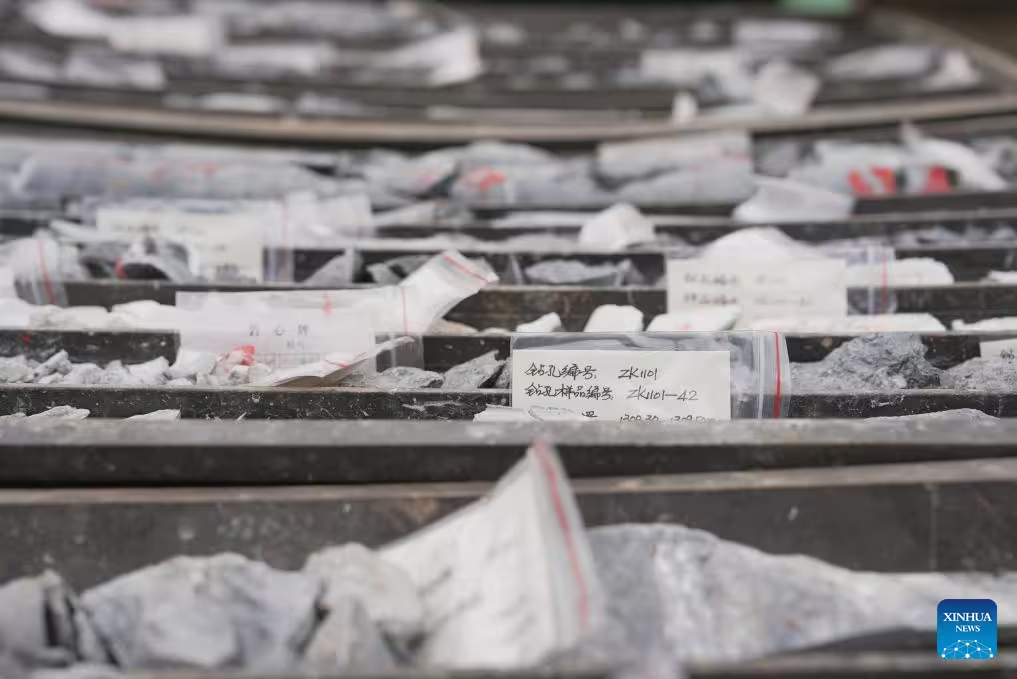
The discovery follows months of intensive drilling, during which crews extracted core samples from depths reaching 3,000 meters. Analysis of these samples revealed concentrations as high as 138 grams per tonne of gold. To put this in context, standard industrial gold mines typically operate with ore grades between one and three grams per tonne, with anything exceeding 10 grams considered a premier deposit.
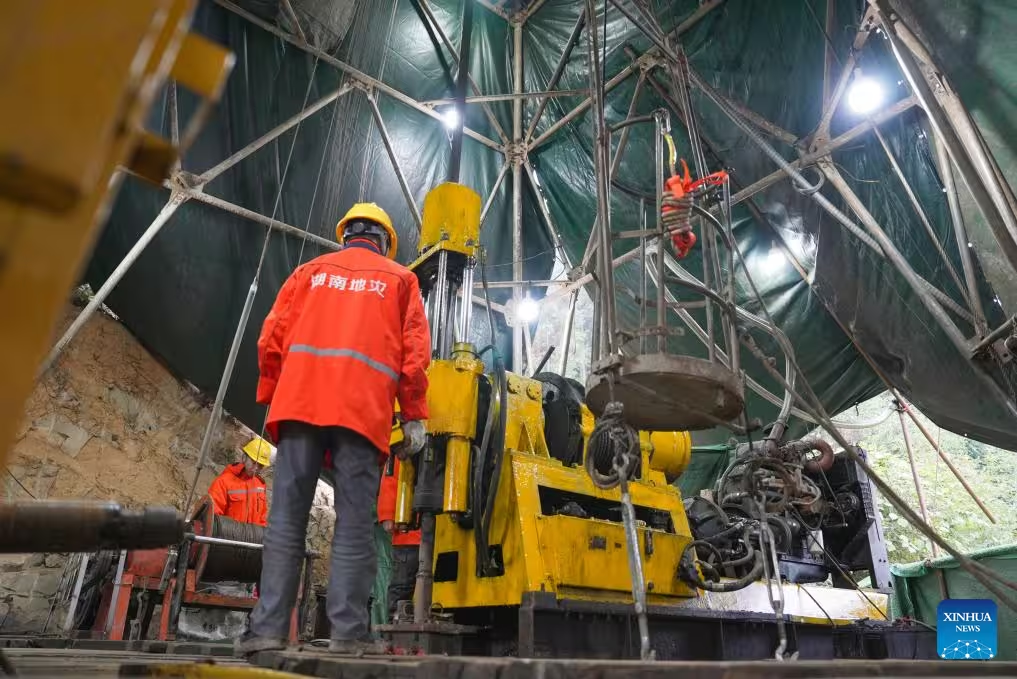
According to the bureau, scientists have successfully mapped 40 distinct veins within the field, with confirmed reserves estimated at 300 metric tons. At current market valuations, this portion of the discovery alone is worth approximately $83 billion. Prospecting expert Chen Rulin noted that drills reaching 2,000 meters have uncovered visible gold, a rarity compared to the microscopic concentrations typically found during exploration. The survey efforts, which utilized advanced three-dimensional geological modeling, have already encompassed over 65 kilometers of exploratory drilling.
While the scale of the find is unprecedented, experts emphasize that the data currently lacks independent, third-party verification. The announcement has not yet been subjected to international mining audits, nor have there been public environmental impact assessments. Historically, initial industry reports have occasionally required significant downward adjustments following formal, independent reviews.
The geological mechanism behind such high concentrations might be explained by recent research. A study published by Monash University in September 2024 suggests that the piezoelectric properties of quartz play a critical role in gold accumulation. In tectonically active regions, the mechanical stress placed on quartz crystals generates electrical charges, which can electrochemically draw dissolved gold out of fluids and deposit it into concentrated veins. The geological conditions at Wangu align with the parameters described in this theory, offering a potential explanation for the site’s unusually high purity.
For China, confirming and developing the Wangu field could provide a strategic advantage in the global commodities market. By securing a massive, domestic source of gold, the country could potentially reduce reliance on foreign suppliers and bolster its national reserves. Economically, the high ore grade is a major asset; higher concentrations of gold require less energy, fewer chemical inputs, and less physical processing to extract, resulting in significantly lower break-even costs per ounce compared to traditional deep-earth mining.
The discovery also highlights the evolving utility of gold beyond traditional investment and jewelry. Research into materials like “goldene”—an ultra-thin, one-atom-thick sheet of gold developed by Linköping University—suggests that the metal is increasingly vital for high-tech applications in quantum computing, photonic sensors, and advanced catalysis.
Operations at the site are overseen by the Hunan Mineral Resources Group, with mapping and survey work scheduled to continue through 2026. While the potential for the Wangu field is significant, the path to production remains long. Extensive infrastructure development will be required to support mining in the remote region, and future drilling results will be crucial in determining whether the deposit truly lives up to its initial projections.
This article has been fact checked for accuracy, with information verified against reputable sources. Learn more about us and our editorial process.
Last reviewed on .
Article history
- Latest version
Reference(s)
- Voisey, Christopher. “Gold nugget formation from earthquake-induced piezoelectricity in quartz - Nature Geoscience.”, vol. 17, no. 9, pp. 920-925. Nature, doi: 10.1038/s41561-024-01514-1. <https://www.nature.com/articles/s41561-024-01514-1>.
- “Meet ‘goldene’: this gilded cousin of graphene is also one atom thick.”, April 18, 2024 <https://www.nature.com/articles/d41586-024-01118-0>.
Cite this page:
- Posted by Vikram Desai