Hidden Remains of a Lost Continent Discovered Deep Beneath the Indian Ocean
Ancient crystals discovered on a beach are providing surprising new evidence of a massive, long-buried continent hidden deep beneath the Earth’s surface.
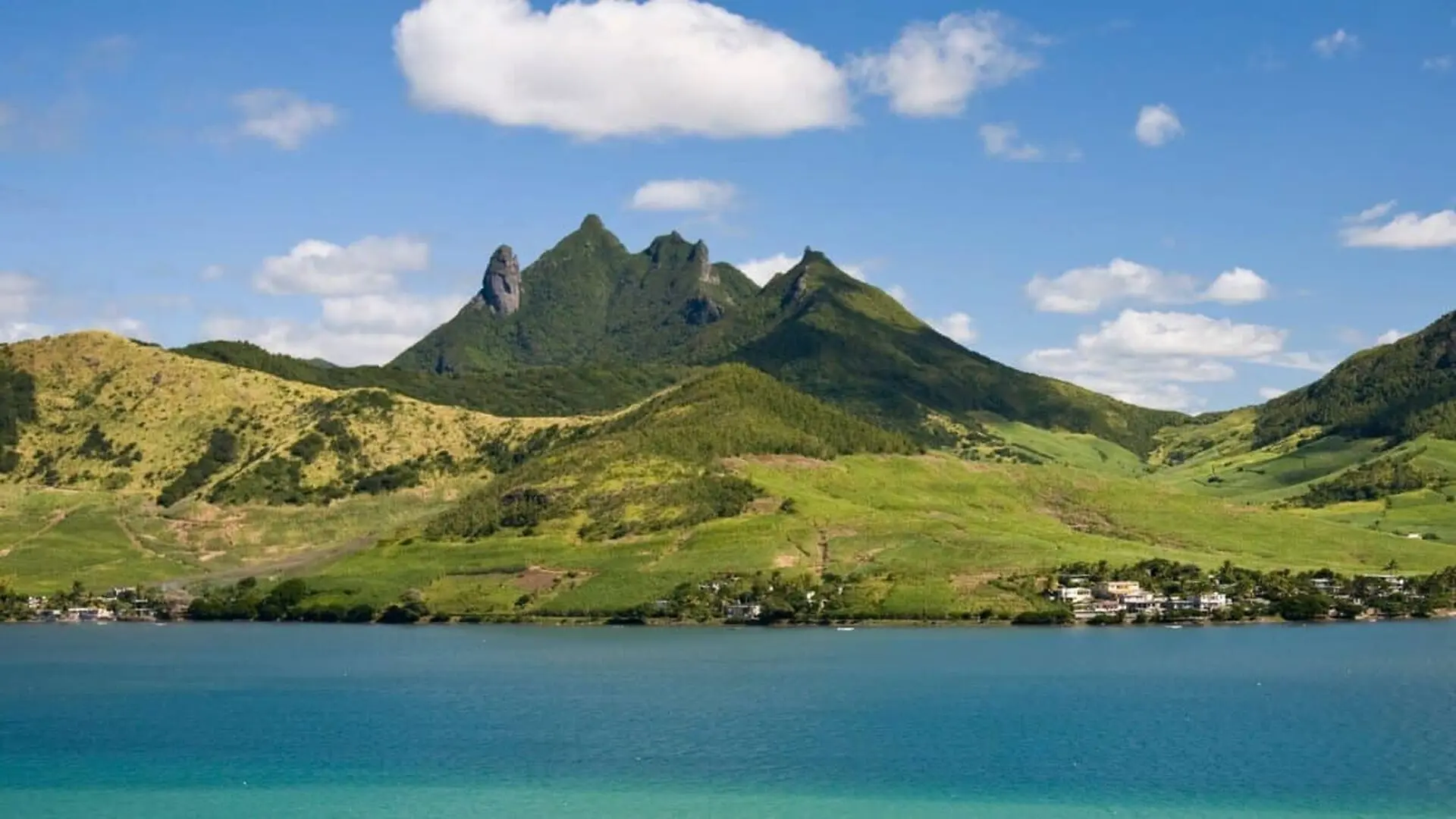
Mauritius is a geologically youthful island, rising from the depths of the Indian Ocean as a product of volcanic activity only about 9 million years ago. Its landscape is defined by rugged black rock, lush mountains, and pristine sands. Yet, hidden within these familiar beaches lies a geological contradiction: microscopic zircon crystals that predate the island by hundreds of millions, sometimes even billions, of years.
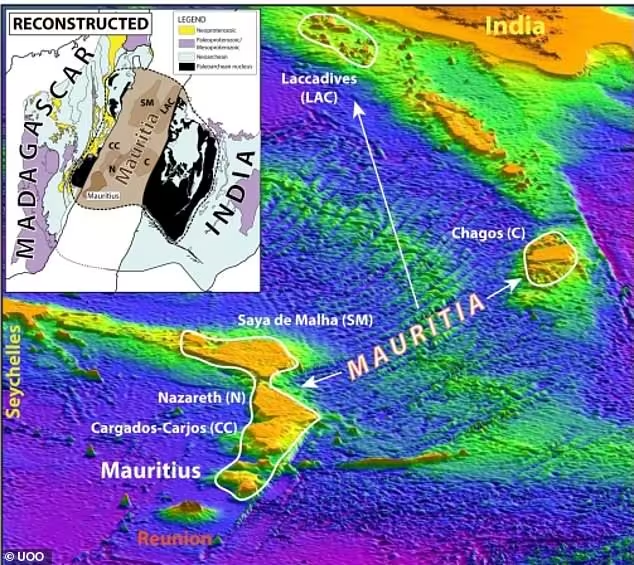
These ancient mineral grains provide evidence of a long-lost continental fragment, now known to researchers as Mauritia. Buried beneath the ocean floor and masked by thick layers of volcanic material, this submerged landmass is a relic of the ancient supercontinent break-up that saw India and Madagascar drift apart tens of millions of years ago.
Decoding the Secrets of Ancient Zircon
Zircon is an invaluable tool for geologists due to its incredible durability and its ability to act as a time capsule. By measuring the radioactive decay of uranium into lead, researchers can determine the age of these crystals with high precision. When scientists discovered zircons dating back to 2 billion years ago within the sand of an island that is only 9 million years old, they were forced to rethink the region’s geological history.
A landmark 2013 study published in Nature Geoscience proposed that as magma surged upward to form Mauritius, it passed through ancient, buried continental lithosphere. During this ascent, the molten rock acted as a conveyor, trapping these primeval zircon grains and depositing them on the surface.
Submerged Evidence and Tectonic History
Beyond mineral analysis, gravity data has revealed that the Earth’s crust beneath Mauritius and the surrounding Mascarene Plateau is unexpectedly thick. Standard oceanic crust does not typically exhibit such dimensions, suggesting that a significant mass of continental material remains trapped beneath the seafloor. Plate reconstructions indicate that Mauritia was once a Precambrian microcontinent, stretched and deformed into a ribbon-like shape during the seafloor spreading events that occurred between 83.5 and 61 million years ago.
Moving Beyond the Myths
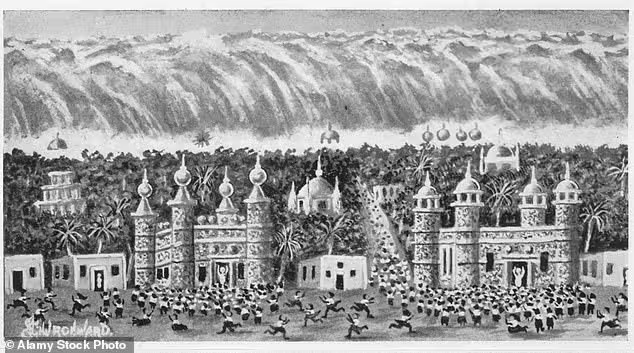
The discovery of a sunken landmass inevitably invites comparisons to the mythical “Lost Continent” of Lemuria, a 19th-century legend popularized by spiritualists like Madame Helena Petrovna Blavatsky. However, scientists emphasize that Mauritia is a purely geological phenomenon. There is no evidence connecting this submerged fragment to ancient civilizations or the fantastical tales of lost cities.
Skeptics initially questioned whether the zircon grains found on Mauritius were merely contaminants introduced by human activity, such as ship ballast. This theory was effectively put to rest by a 2017 study in Nature Communications, which successfully extracted zircon grains from within solidified 5.7-million-year-old trachyte, a type of volcanic rock. These crystals confirmed that the ancient crust was indeed embedded in the island’s geological foundation.
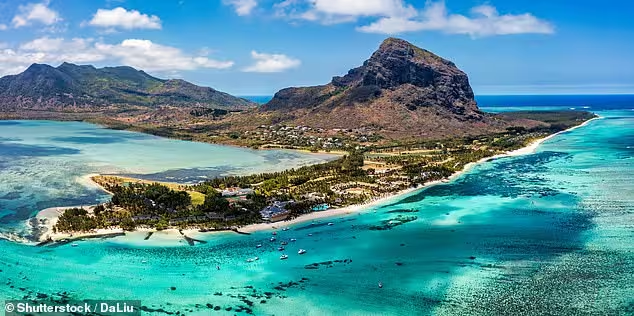
While researchers have identified the existence of Mauritia, its precise boundaries and total extent remain a subject of active inquiry. The story of this hidden continent remains a testament to the dynamic nature of Earth’s crust, where remnants of the deep past are periodically unearthed by the fiery processes of modern volcanism.

This article has been fact checked for accuracy, with information verified against reputable sources. Learn more about us and our editorial process.
Last reviewed on .
Article history
- Latest version
Reference(s)
- Torsvik, Trond. “A Precambrian microcontinent in the Indian Ocean - Nature Geoscience.”, vol. 6, no. 3, pp. 223-227. Nature, doi: 10.1038/ngeo1736. <https://www.nature.com/articles/ngeo1736?utm_source=chatgpt.com>.
- Ashwal, Lewis. “Archaean zircons in Miocene oceanic hotspot rocks establish ancient continental crust beneath Mauritius - Nature Communications.”, vol. 8, no. 1, January 31, 2017, pp. 14086 Nature, doi: 10.1038/ncomms14086. <https://www.nature.com/articles/ncomms14086?utm_source=chatgpt.com>.
Cite this page:
- Posted by Vikram Desai