Engineers Drained a Lake to Reveal Caligula’s Giant Roman Ships Only for Them to Burn in WWII
Two millennia underwater preserved these Roman emperor ships, but now the ongoing war in Ukraine threatens to destroy these priceless historical treasures.
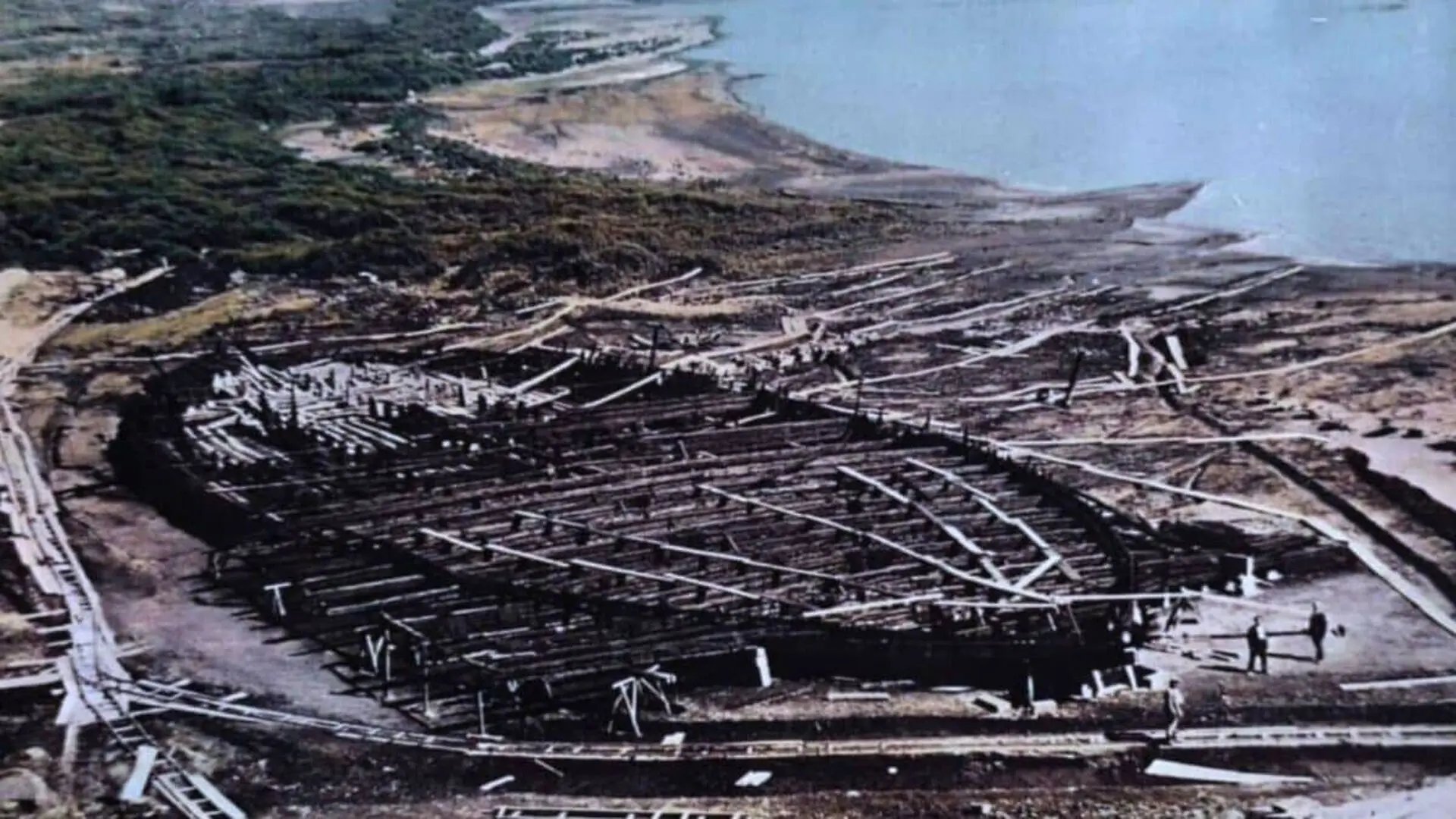
For nearly two millennia, the volcanic depths of Lake Nemi, located 30 kilometers south of Rome, guarded a pair of extraordinary secrets. These two massive vessels, widely attributed to the reign of Emperor Caligula (AD 37–41), remained submerged in the lake’s silt until an ambitious engineering project in the late 1920s finally brought them back to the surface. Their recovery remains one of the most remarkable feats in the history of archaeology, revealing a level of sophistication in Roman shipbuilding that few had previously imagined.
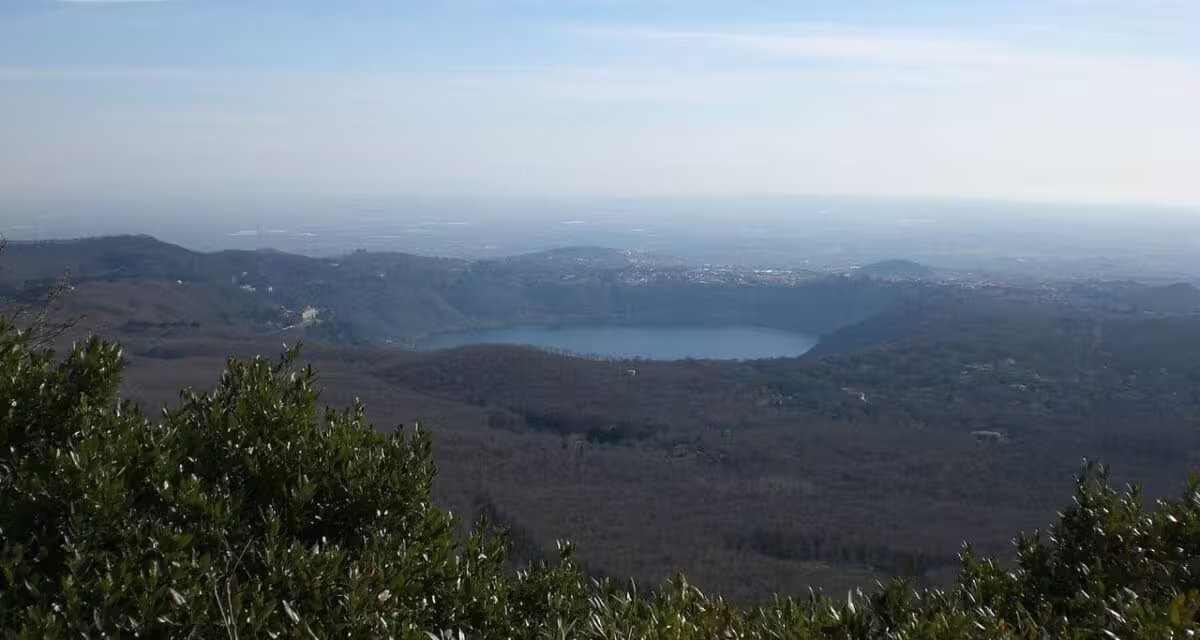
A Radical Engineering Feat
Early attempts to salvage the Roman ships date back as far as the Renaissance, with the architect Leon Battista Alberti making a notable effort in 1446. However, it was not until 1928 that engineers devised a plan to bypass the challenges of deep-water recovery. Instead of attempting to raise the heavy, waterlogged vessels, they systematically drained the lake. By utilizing an ancient Roman drainage tunnel in combination with modern pumps, the team lowered the water level, allowing the massive 70-meter hulls to emerge from the mud and into the light of day.
The scale of the vessels was staggering. Both ships, measuring roughly 70 meters long and 20 meters wide, featured structural designs far more complex than standard cargo vessels. These were not built for oceanic traversal but were custom-crafted for the calm waters of the crater lake, serving as elaborate floating platforms.
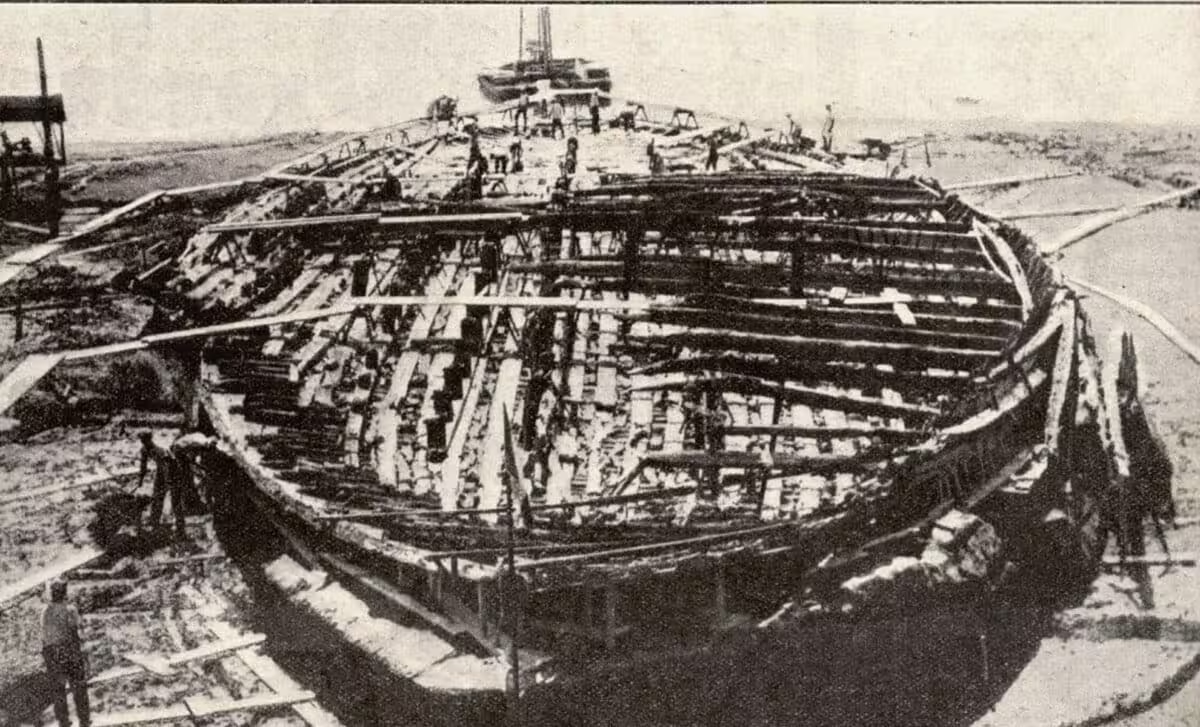
Engineering Marvels of the Ancient World
The investigation of the hulls provided unprecedented insight into Roman maritime engineering. Researchers discovered evidence of advanced pump systems, sophisticated anchors, and complex plumbing fixtures. Among the most revealing artifacts were lead pipes stamped with the name of Caligula, which definitively linked the ships to the emperor. The discovery of mechanical ball bearings designed to rotate platforms further showcased the technical ingenuity of the era.
Given the inclusion of luxury amenities—such as heated living spaces and running water systems—historians have long classified these vessels as floating palaces. However, the proximity of the lake to the Temple of Diana Nemorensis has fueled ongoing debate regarding their true purpose. Many scholars believe the ships may have functioned as venues for sacred rites or ceremonial processions dedicated to the goddess, though the definitive intent behind their construction remains a subject of academic speculation.
A Tragic End in the Path of War
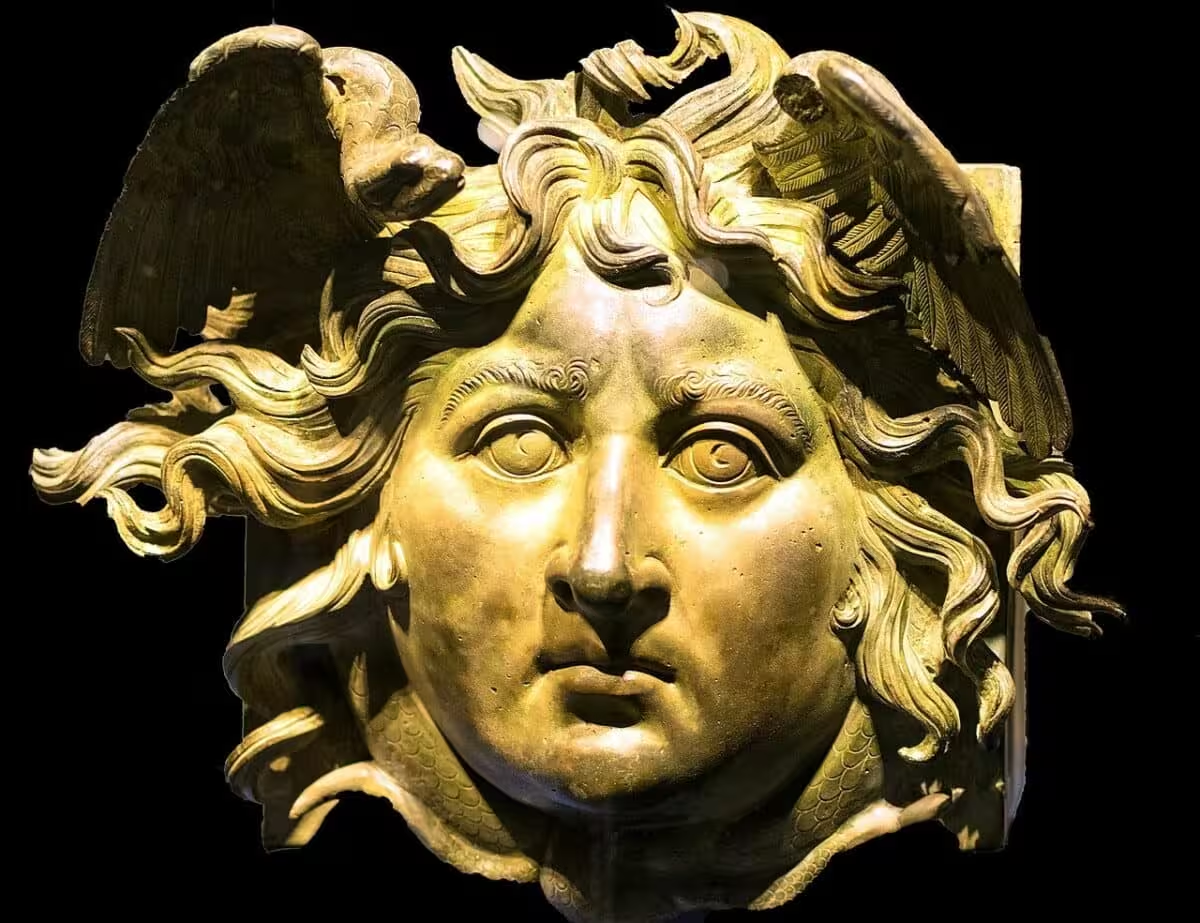
To preserve these delicate finds, the Italian government constructed the Museo delle Navi Romane directly adjacent to the lake. The museum was specifically designed to house the wooden hulls, which were mounted on supports and surrounded by thousands of recovered artifacts.
This state of preservation was tragically short-lived. During the final months of World War II, as Allied forces advanced toward Rome, a fire broke out in the museum on the night of May 31, 1944. By the following morning, the ancient wooden structures were reduced to ash, effectively undoing the recovery effort just a decade after the ships had first been revealed. While popular consensus long attributed the destruction to retreating German forces, some modern researchers, including recent academic investigations, have suggested that Allied artillery strikes in the vicinity may have inadvertently triggered or exacerbated the blaze.
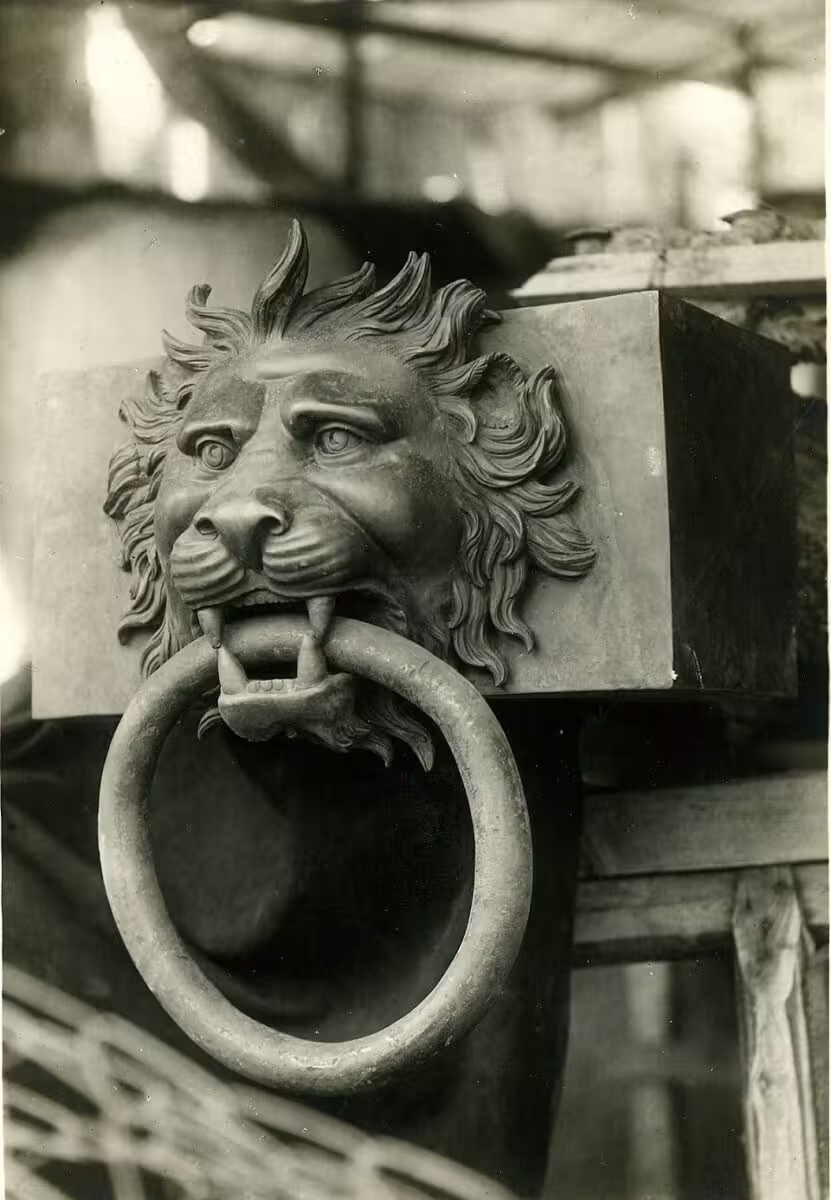
Despite the physical loss of the hulls, the legacy of the Nemi ships survives through extensive documentation. Archaeologists had meticulously photographed, measured, and drafted technical plans of the vessels before their destruction, ensuring that the remarkable design of Caligula’s floating palaces remains a cornerstone of Roman archaeological study.
This article has been fact checked for accuracy, with information verified against reputable sources. Learn more about us and our editorial process.
Last reviewed on .
Article history
- Latest version
Reference(s)
- “Voices from the Lake: the Roman Ships and Nemi Museum | European Heritage Days.” <https://www.europeanheritagedays.com/Story/Voices-from-the-Lake-the-Roman-Ships-and-Nemi-Museum>.
- “Ball Bearings from Roman Imperial Ships of Nemilake.”, vol. 08, doi: 10.4236/ahs.2019.83009. <https://file.scirp.org/Html/1-2810292_92941.htm>.
- “The Nemi Ships.” <https://penelope.uchicago.edu/encyclopaedia_romana/miscellanea/nemi/nemi.html>.
- “Regional Directorate National Museums Lazio.” Regional Directorate National Museums Lazio <https://direzioneregionalemuseilazio.cultura.gov.it/en/luoghi/museo-delle-navi-romane/>.
- Altamura, Flavio. “engramma n. 203.” La Rivista di Engramma, vol. 2023, no. 203, June 22, 2023, doi: 10.25432/1826-901X/2023.203.0003. <https://doi.org/10.25432/1826-901X/2023.203.0003>.
Cite this page:
- Posted by Vikram Desai