Scientists Discover Evidence of a 3.5-Billion-Year-Old Asteroid Impact on the Moon
3,5 milliards d’années : un meteorite lunaire révèle l’impact d’astéroïde liant Lune Terre et ceinture d’astéroïdes
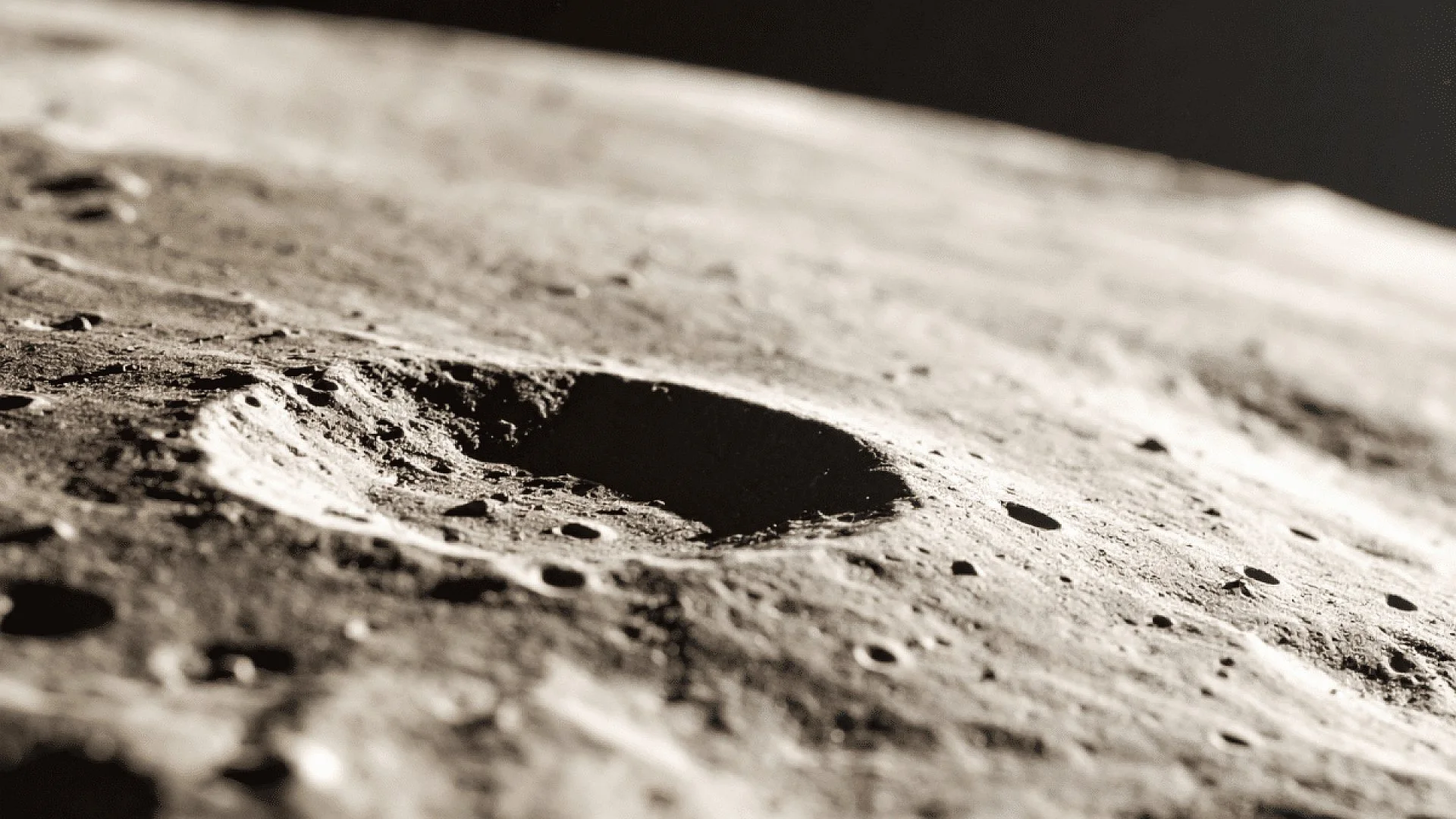
Planetary researchers have identified a huge crater‑forming event on the moon dated to roughly 3.5 billion years ago, shedding light on the tumultuous infancy of the inner solar system. The study, appearing in Geology, ties this lunar collision to parallel impacts on Earth and objects in the asteroid belt, offering clues about the environment in which life first arose.
Why the Moon Serves as a Time Capsule for Earth’s Lost Past
Because Earth’s earliest crust has been recycled by erosion, subduction and tectonic reshaping, scientists turn to the lunar surface, which retains a comparatively undisturbed record of ancient asteroid strikes. Rocks that fell to Earth from the moon, such as the meteorite NWA 12593 recovered in northwest Africa, act as natural archives of those early impacts.
The meteorite’s significance was highlighted by planetary scientist Carolyn Crow of the University of Colorado Boulder, who explained that these impact histories are essential for piecing together the conditions under which primitive life persisted:
“On Earth, the first fossil evidence of life shows up around 3.5 billion years ago, meaning that life is emerging and evolving before then. The question that we often have, even going back further, is what was the impact record when life was emerging?” She adds, “It is important for understanding how life is taking hold, how life is emerging. The cadence of these catastrophic events is an important part of the equation.”
Credit: Geology (2026).
A 3.5 Billion‑Year‑Old Blast Melted the Lunar Crust
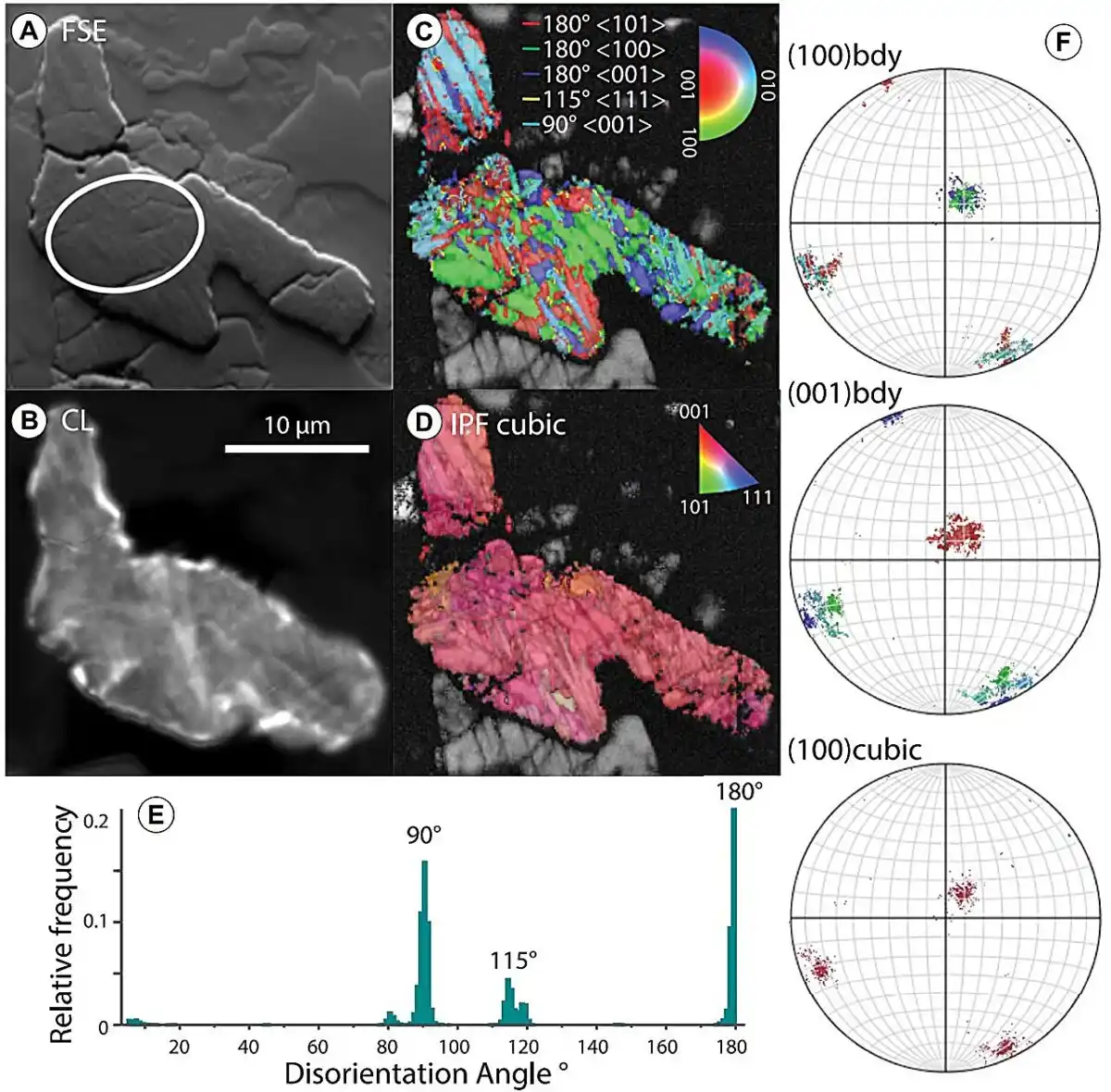
Radiometric dating of NWA 12593 points to a cataclysmic impact that vaporized a swath of the moon’s surface, creating a molten sheet that later crystallized into rare minerals such as cubic zirconia. These natural cubic zirconia crystals differ from their synthetic jewelry counterparts, persisting only fleetingly under ordinary lunar conditions and leaving a subtle “cubic zirconia phase heritage” as evidence of the extreme temperatures.
The event stands as one of the oldest known high‑energy collisions on the moon, reshaping local geology and leaving a traceable imprint that researchers can still examine billions of years later, underscoring the intensity of early solar‑system dynamics.
Fragmented Rock Layers Reveal a Second Shock
A later, less massive strike fragmented the initial melt sheet, producing breccia—a rock composed of broken pieces cemented together by the impact’s energy. Crow illustrated the process with a familiar analogy:
“Breccias are similar to what you would see if you went and chipped out a chunk of concrete. You would see all these little rocks, and then they’re fused together by the cement. But the meteorite is fused together by the impact process. You get all these chunks of different kinds of rocks that the impact hit into. These all get mixed up, and then it gets fused together like your concrete sidewalk.”
These breccias preserve a layered narrative of successive impacts, offering insight not only into the collisions themselves but also into the timing and magnitude of ancient cosmic events.
The Final Kick‑Off That Delivered the Rock to Earth
A third impact, occurring much later, ejected the meteorite from the lunar surface and set it on a trajectory toward Earth. This transfer provides scientists with a rare opportunity to examine lunar material without a crewed mission.
Crow noted the uniqueness of the find: “It’s not very common, which is why we’re very excited about it. It’s pretty rare to have all three records line up like this.” By correlating the moon’s impact history with events recorded on Earth and on asteroid 4 Vesta, the research paints a detailed picture of the early solar system’s shift from relentless bombardment to more spaced‑out collisions after planetary bodies coalesced.
This article has been fact checked for accuracy, with information verified against reputable sources. Learn more about us and our editorial process.
Last reviewed on .
Article history
- Latest version
Cite this page:
- Posted by Vikram Desai