A Forgotten Notebook Helped Scientists Finally Identify a 55-Million-Year-Old Fossil Unlike Any Previously Found in New Zealand
Massive fossil’s long-lost story revealed after forgotten notebook resurfaces
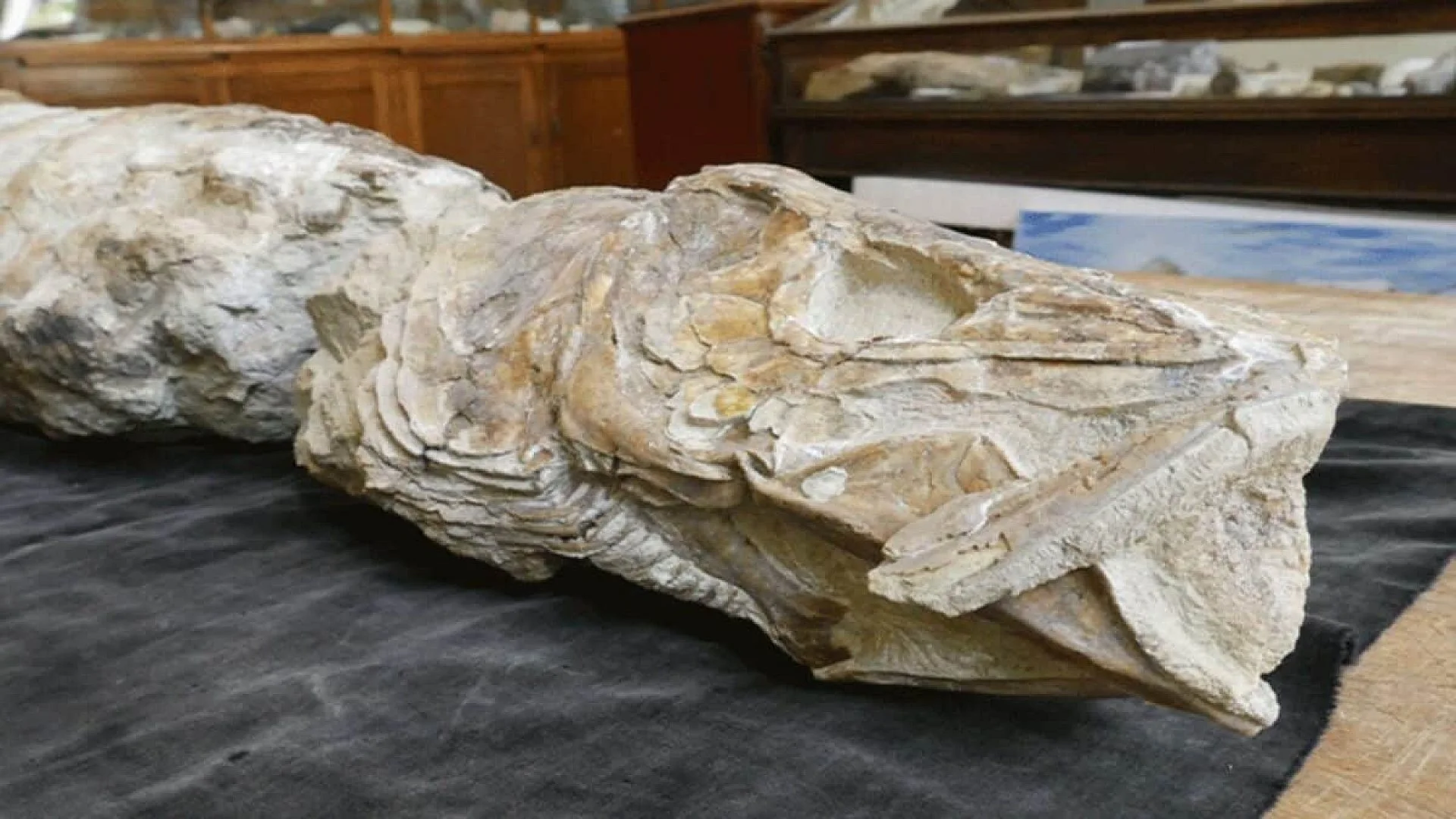
A fossil fish recovered from Pitt Island almost three decades ago has finally been assigned to a new species, thanks to the meticulous field notes of the late paleontologist Richard Köhler. The notebooks supplied the missing geological context, enabling scientists to complete a description of what is now regarded as one of New Zealand’s most extraordinary fossil fishes.
The specimen was uncovered in 1999 during a survey of the Chatham Islands and immediately stood out for its exceptional three‑dimensional preservation, a rarity among fish fossils.
Climbing a Cliff to Retrieve a 55‑Million‑Year‑Old Predator
Richard Köhler first sighted the fossil embedded in a cliff face above Waihere Bay on Pitt Island’s western shore. After locating the fragment, he walked roughly three kilometres to Flowerpot Bay, borrowed a ladder, and then returned to the site to extract the fossil in several massive blocks before shipping them to Dunedin.
The find quickly captured the interest of local experts. Daphne Lee, Emeritus Professor at the University of Otago, recalled that she and the late Ewan Fordyce were struck by the quality of the material Köhler delivered.
“It was quite unlike any other fish fossil known from Aotearoa New Zealand,” Lee said.
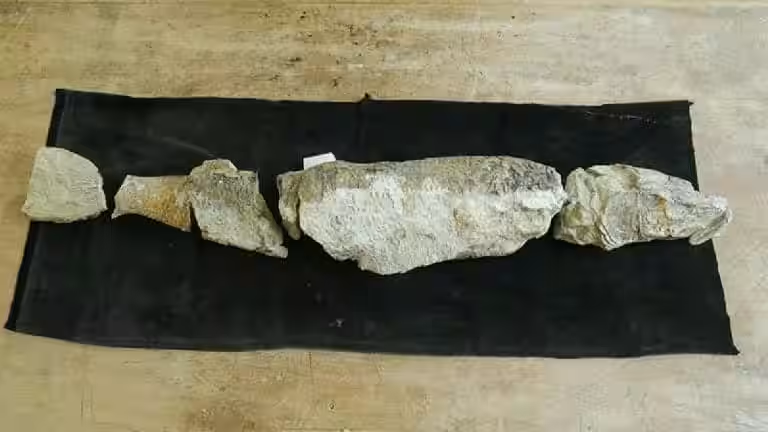
The late Andrew Grebneff later prepared the rock matrix, preserving delicate anatomical features that would prove crucial for later analysis.
A 1.2‑Metre Tarpon‑Like Predator from the Paleogene
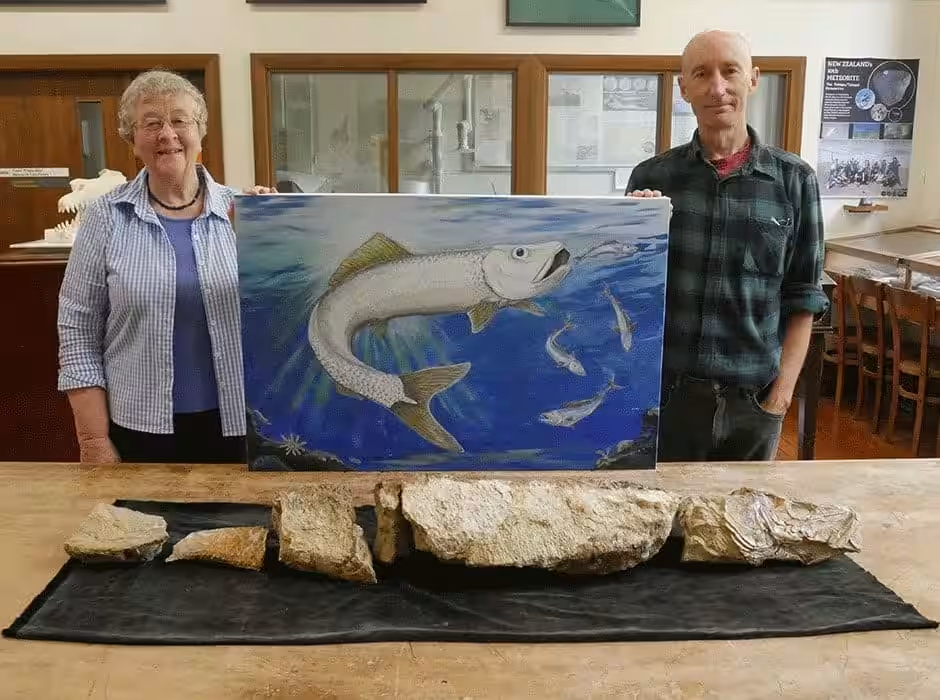
Mike Gottfried of Michigan State University examined the material and helped determine its identity. Published in the New Zealand Journal of Geology and Geophysics, the study describes a tarpon‑resembling fish about 1.2 metres long. Modern tarpons are absent from New Zealand waters, but they are known as large, predatory swimmers.
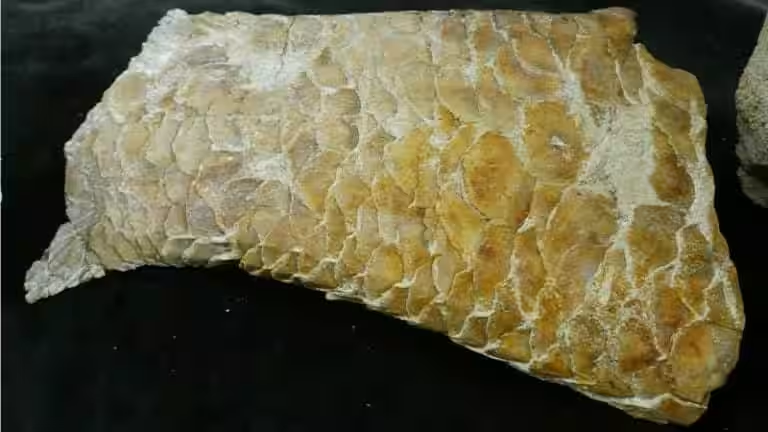
Features such as an elongated body, powerful caudal fin, thick rhomboidal scales and an upward‑pointing mouth suggest a fast‑moving hunter that pursued smaller fish. Radiometric dating places the specimen at roughly 55 million years old, making it the earliest known Paleogene bony fish from Aotearoa. The authors assigned it the name Ikawaihere koehleri, honoring both Richard Köhler and the Waihere Bay locality.
Family Archives Unlock Critical Site Details
Even after years of study, the research team could not finalize the description because precise information about the fossil’s stratigraphic position was missing.
“However, some key geological information about where the fossil was found was lacking, since Richard had sadly passed away some years earlier,” the authors noted.
The missing data emerged in early 2025 when one of Köhler’s children, then a student at the University of Otago, entered the geology department seeking photographs of his father. A conversation with Lee led to the donation of Köhler’s field notebooks.
Those notebooks contained detailed observations from the Pitt Island expedition. Lee explained that the entries provided enough locality information to complete a Fossil Record Form and formally register the specimen. The full paper appeared on 17 January 2026. In addition to honoring Köhler, the species name acknowledges the role of the Hokotehi Moriori Trust and Heidi Lanauze in approving the nomenclature.
“It is a fitting tribute to Richard, Ewan and Andrew. We’re extremely grateful to Richard’s family for donating his notebooks – we could not have done this without them,” Lee said.
Gottfried described the find as a “remarkable fossil,” noting that it broadens knowledge of tarpon evolution and preserves anatomical details rarely seen in the fossil record.
This article has been fact checked for accuracy, with information verified against reputable sources. Learn more about us and our editorial process.
Last reviewed on .
Article history
- Latest version
Reference(s)
- <https://www.otago.ac.nz/geology/staff/daphne-lee>.
- “Directory | College of Natural Science | Michigan State University.” <https://directory.natsci.msu.edu/Directory/Profiles/Person/101178>.
- Gottfried, Michael D.., et al. “A New Tarpon‐Like Fish (Elopomorpha, Megalopidae) With Exceptional Preservation and Unusual Features From the Paleogene of Pitt Island, Chatham Islands, New Zealand.” New Zealand Journal of Geology and Geophysics, vol. 69, no. 1, January 17, 2026 Wiley, doi: 10.1002/jgo2.70022. <https://rsnz.onlinelibrary.wiley.com/doi/10.1002/jgo2.70022>.
Cite this page:
- Posted by Vikram Desai