Myanmar Just Unearthed a Giant 11,000-Carat Ruby That Could Become One of History’s Greatest Gemstones
A four-pound ruby, unearthed from a conflict-torn mine, has been hailed as Myanmar’s most exceptional gemstone.
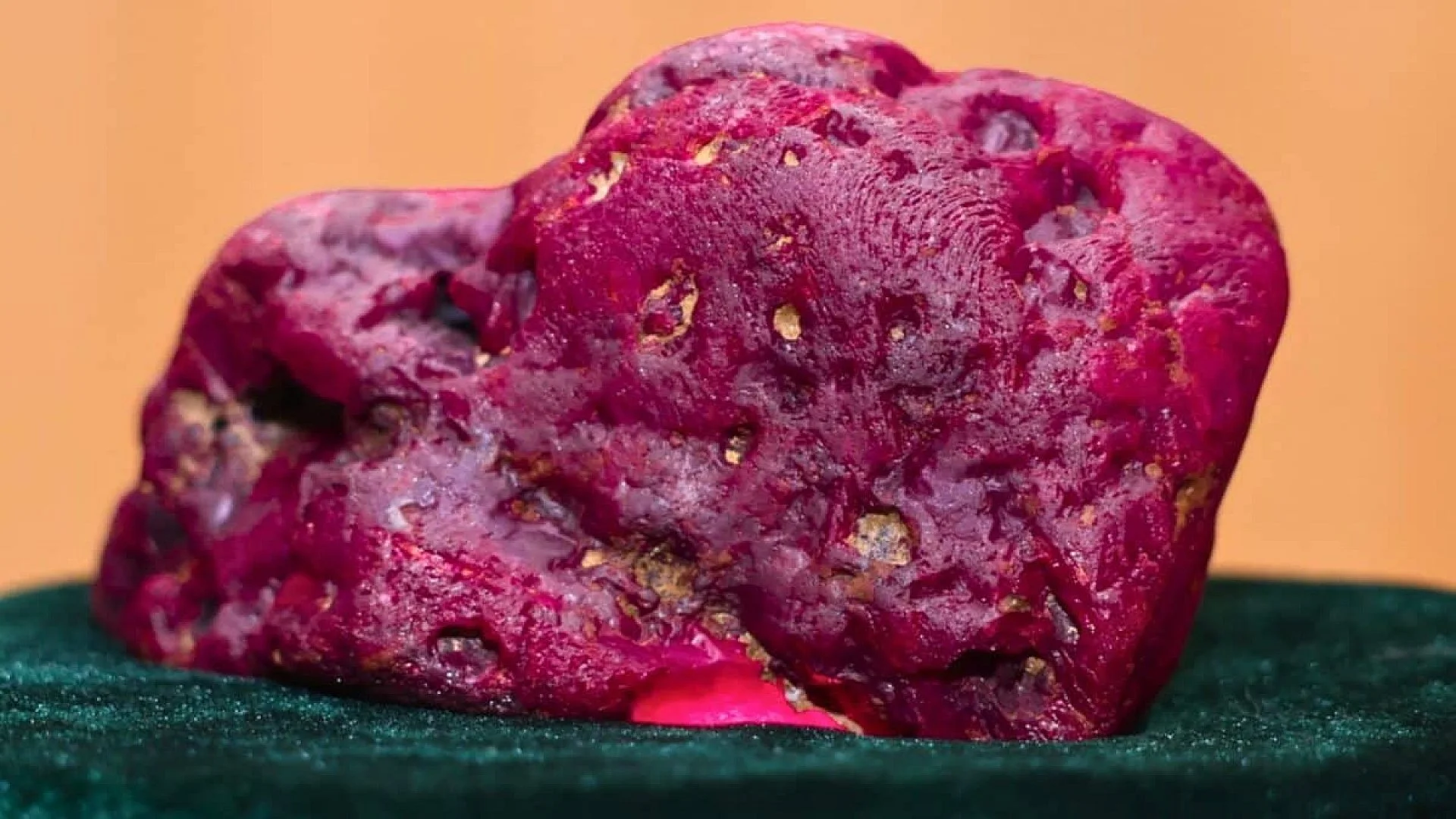
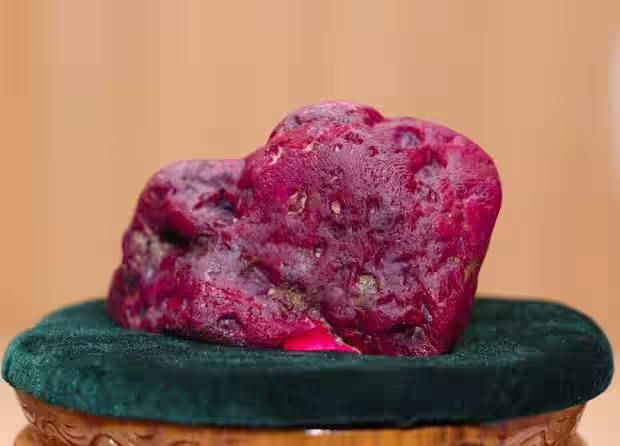
A colossal ruby weighing more than four pounds has been unearthed in Myanmar’s Mogok region, a site renowned for its rich gemstone deposits. According to state officials, the newly discovered gemstone is the most valuable giant ruby the country has ever produced. The rough stone, measuring 11,000 carats or 2,200 grams, boasts a distinctive purplish-red color with yellow undertones and a glassy surface that gemologists describe as having a vitreous luster.
The gemstone’s exceptional quality, including its moderate transparency and untreated state, has led officials to value it above the 21,450-carat stone found in 1996, despite the latter being nearly twice as heavy. The new ruby’s untreated state is particularly significant, as buyers often pay a premium for gemstones that have not been altered through heat or chemicals.
Myanmar is the world’s primary source of rubies, accounting for approximately 90% of global production. The Mogok tract, located in upper Mandalay Region, has been the source of every giant ruby recorded in the country, including the 99.25-gram stone in 1990, the 4,290-gram record-holder in 1996, and the 557.85-gram find in 2022. State gemologists now rank the newest entry above all three.
A Treasure Inspected, a Conflict Fueled
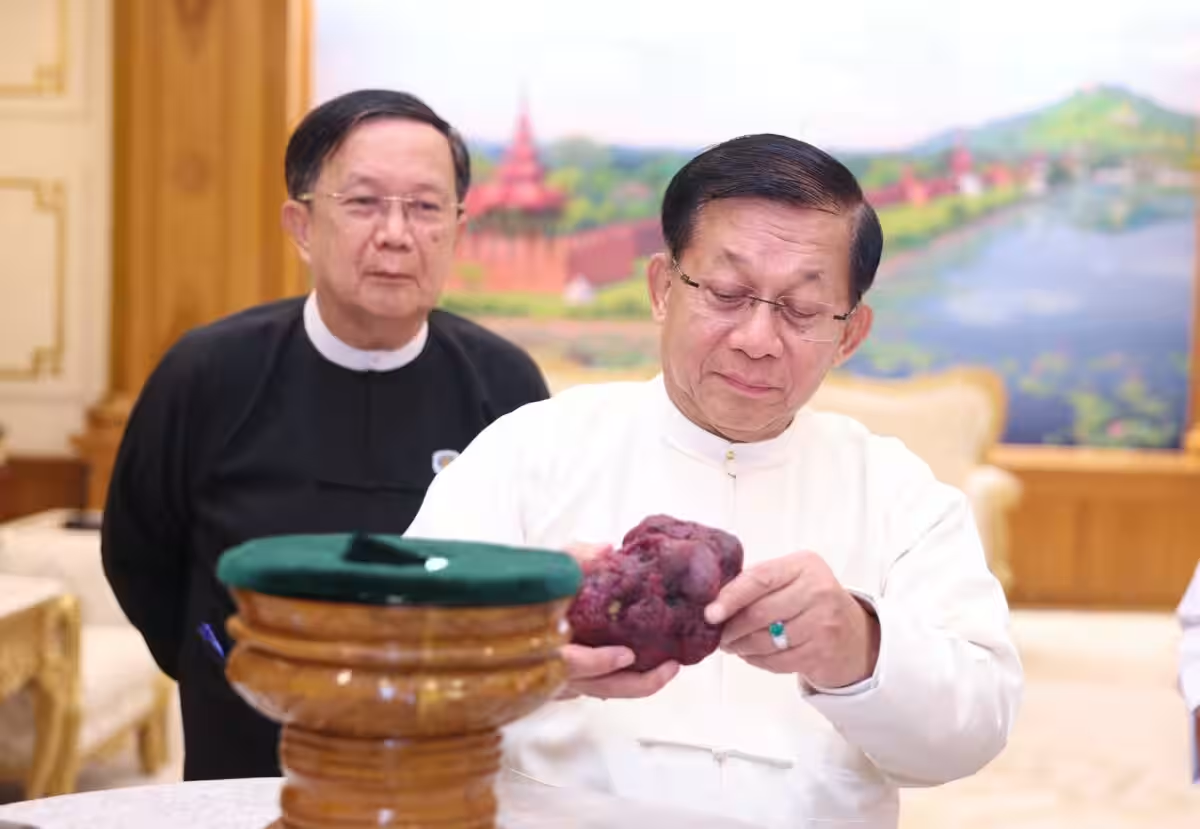
The ruby’s discovery has sparked a mix of excitement and controversy, as it has traveled to Naypyitaw for inspection by President Min Aung Hlaing and other high-ranking officials. The public display of the gemstone carries significant political weight, given the country’s current government took power this year after elections that human rights groups and opposition movements have criticized as a sham.
The inspection of the ruby has also highlighted the complex relationship between Myanmar’s government and its ethnic armed groups, which have been fighting for control of the country’s resource-rich territory. The Ta’ang National Liberation Army, an ethnic armed group, seized the town of Mogok in July 2024 and operated its gem mines for over a year before a ceasefire brokered by China in late 2025 restored control to the military.
The ruby’s discovery has also reignited concerns about the role of gemstones in fueling Myanmar’s civil war. Global Witness, a Britain-based watchdog, has documented the cycle of violence and exploitation surrounding the country’s gem trade for years, warning that every transaction helps prolong the conflict.
Why Quality Trumps Carat Weight
While carat weight often grabs headlines, the price of a ruby ultimately depends on its color, clarity, and whether it has been treated. The finest rubies display a deep crimson color with a faint blue undertone, known as pigeon’s blood red. The new find’s purplish-red hue is distinct, yet its clarity and natural state have led officials to value it above the much heavier 1996 stone.
The Mogok region’s unique geology helps explain why its Burmese rubies stand apart. The region’s deposits formed inside marble that metamorphosed under extreme heat and pressure, resulting in rubies with a distinctive red fluorescence under ultraviolet light.
The fate of the 11,000-carat rough stone remains uncertain, with officials yet to decide whether it will be cut, kept whole as a specimen, or offered at auction. Myanmar’s Gem Emporium in Naypyitaw has traditionally been the government’s main sales channel for major finds, but sanctions imposed after the 2021 coup have made those sales far more difficult, and many Western luxury brands now avoid Burmese stones entirely.
Smuggling adds another layer of opacity to the gem trade, with high-value rubies often being smuggled into Thailand and China through informal routes before re-entering the legitimate market with their origins laundered. The 2022 NaSaKa ruby, documented, displayed, and eventually absorbed into state holdings, offers a recent template for the new find.
Whether this stone ever reaches an international buyer will test how much the scrutiny of Myanmar’s gem trade has reshaped the market, or whether a remarkable gem still finds someone willing to look past what its discovery represents.
This article has been fact checked for accuracy, with information verified against reputable sources. Learn more about us and our editorial process.
Last reviewed on .
Article history
- Latest version
Cite this page:
- Posted by Vikram Desai