Scientists Have Found Fossil in Wisconsin’s Mudstones of a Creature Whose Legs Were Built for Walking on Land, But It Never Left the Ocean
Paleontologists have unraveled the 437-million-year-old fossil enigma surrounding the evolution of centipedes’ numerous legs, uncovering how their aquatic forebears facilitated their transition to terrestrial life.
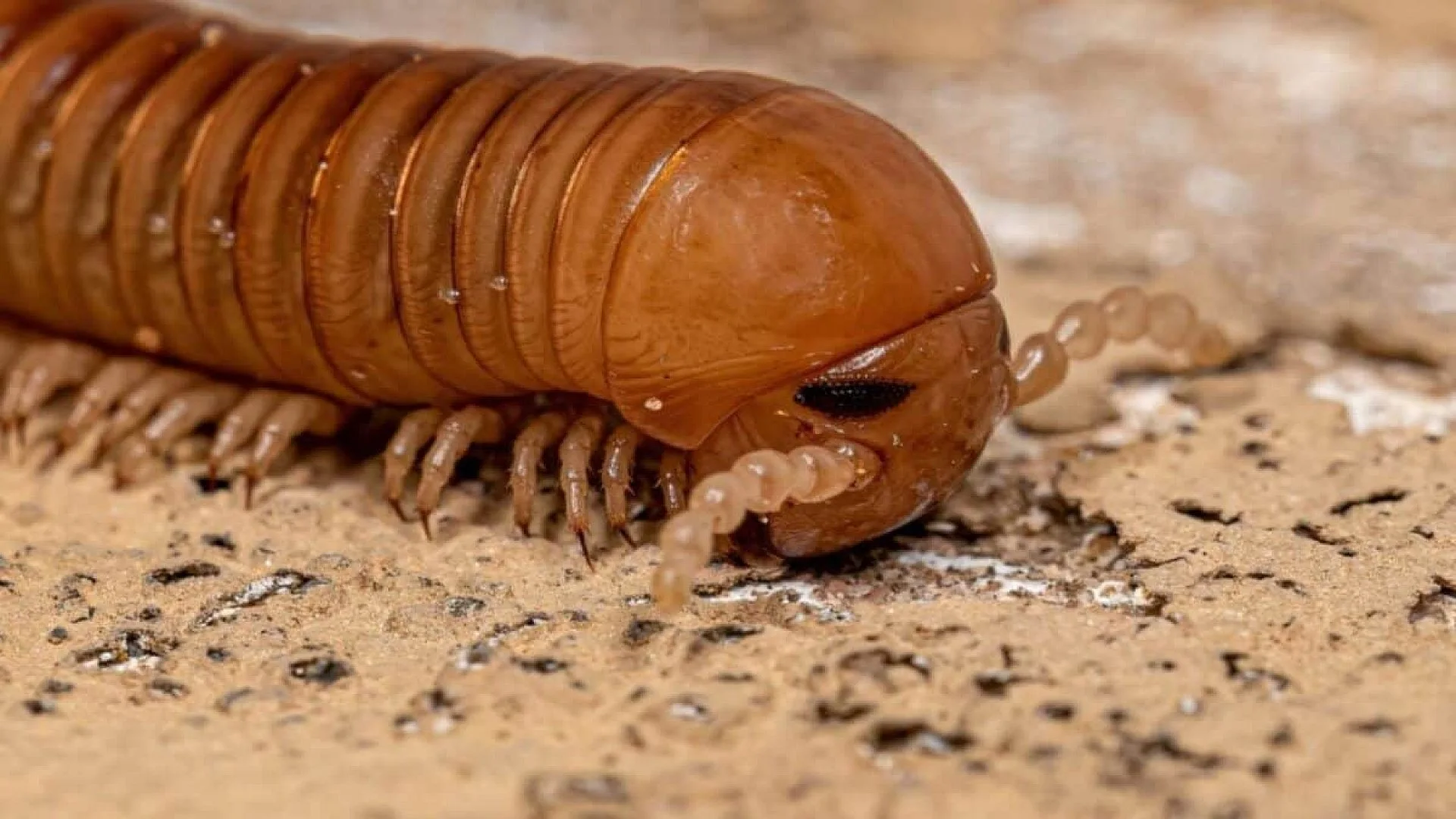
Paleontologists have unearthed ancient fossils of a previously unknown aquatic arthropod that suggests the ancestors of modern myriapods, creatures like centipedes and millipedes, developed their characteristic many legs while still living underwater, millions of years before they ever set foot on land. Published in the Proceedings of the Royal Society B: Biological Sciences, this groundbreaking discovery upends the traditional view that these creatures’ legs were an adaptation for life on solid ground.
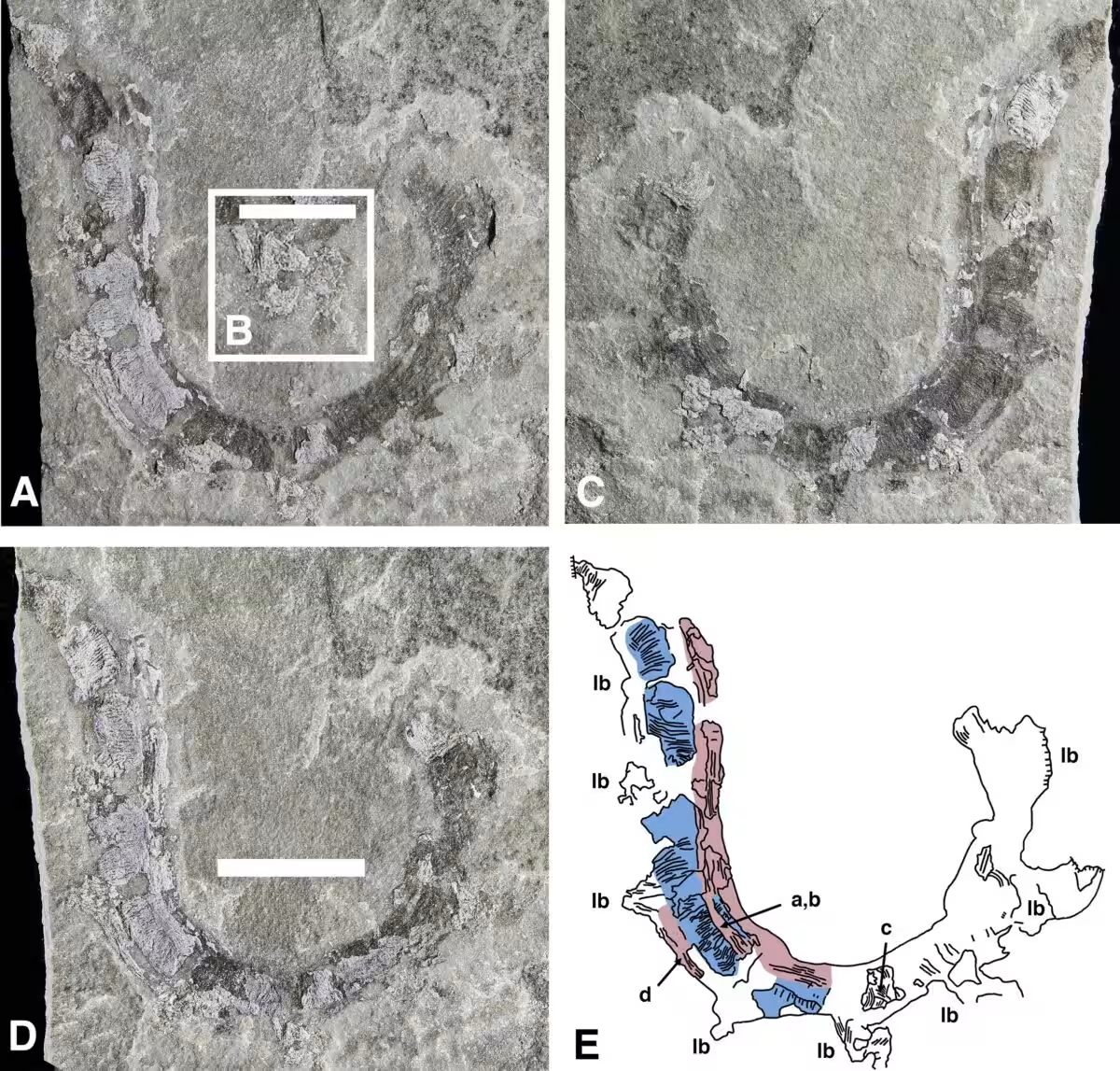
The remarkable fossils, discovered in the Silurian Brandon Bridge Formation near Waukesha, Wisconsin, date back an astonishing 437 million years and offer an extraordinary glimpse into an ancient world. The discovery of 35 exceptionally preserved specimens has given scientists a rare opportunity to examine muscle tissue and other soft-body details that are typically lost in the fossilization process.
As scientists carefully analyze these ancient remnants, the fossilized remains of Waukartus muscularischallenge what we thought we knew about the evolutionary path of these many-legged creatures.
A Fully Formed Creature Emerges from Ancient Stone
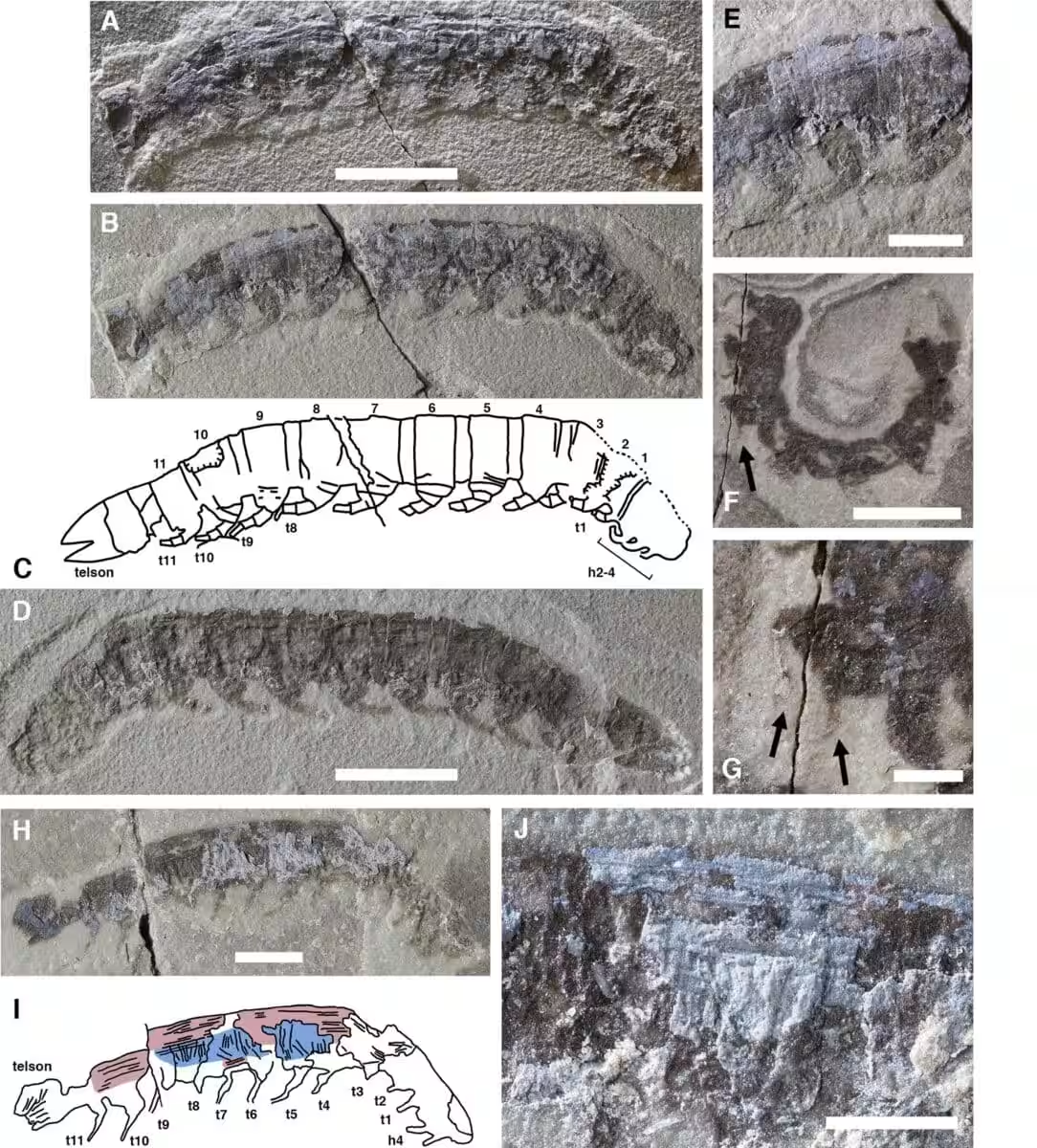
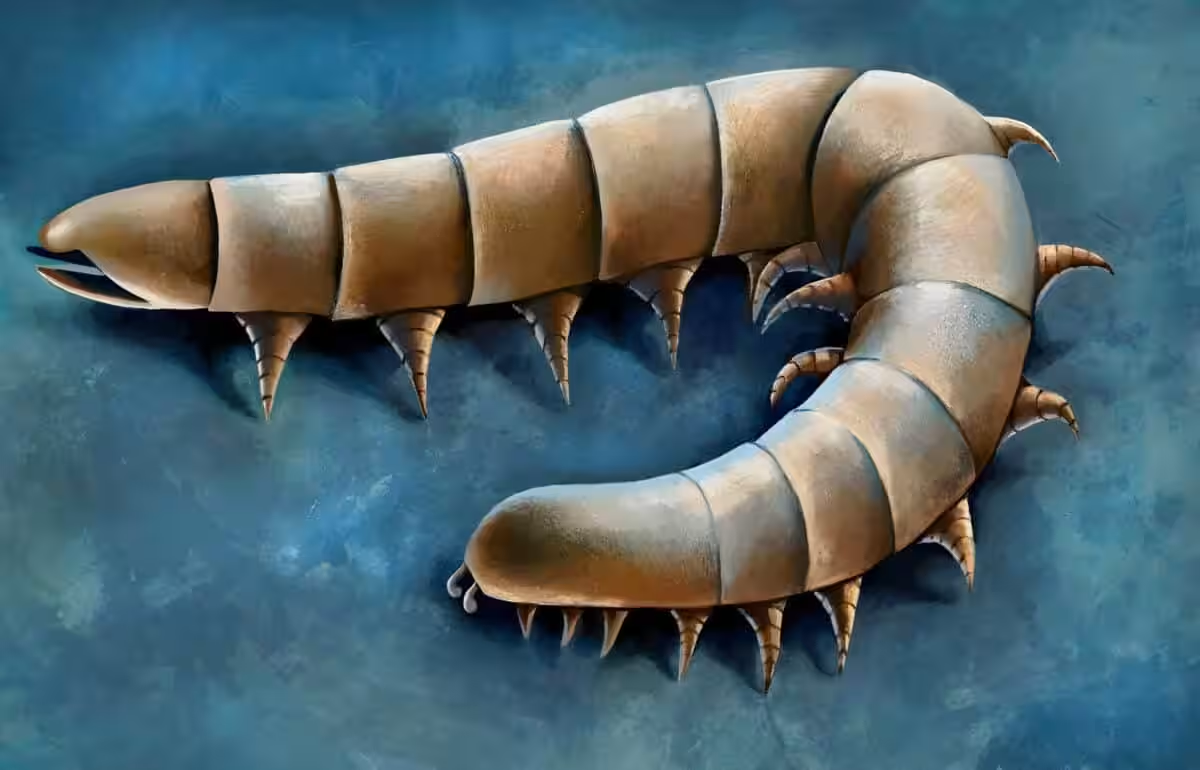
The Waukesha Lagerstätte, where the fossils were found, is a remarkable site for paleontologists. Known for its finely preserved soft-bodied organisms, the fossils of Waukartus muscularis are strikingly similar to modern centipedes and millipedes, with a long, segmented body and at least 11 sets of legs. The creature’s head was followed by a long trunk, and several head appendages varied in size.
“Their shorter length may indicate that they were not involved in walking but specialized for sensory or feeding functions, but the mode of feeding is unknown. The trunk of Waukartus was flexible as evidenced by curved specimens and variation in the nature of the overlap between successive segments,” the authors wrote.
One of the most striking aspects of this discovery is the preservation of uniramous limbs, legs that are unbranched, which is a feature seen in land-dwelling arthropods. Unlike other ancient aquatic arthropods that had branched limbs (exopods), the limbs of Waukartus were single-branched.
This seemingly odd anatomical feature raises a crucial question: why would a marine creature have limbs so similar to those of modern land animals? According to the study, this suggests that the limbs were already adapted for land locomotion, even before the creature ventured onto solid ground.
Legs That Evolved for Water, Yet Prepared for Land
The discovery of uniramous limbs in Waukartus is pivotal for understanding how myriapods evolved their unique leg structure. As the research team points out, most aquatic arthropods of the time had branched limbs that helped them swim.
However, Waukartus possessed simpler, unbranched limbs, which are typical of terrestrial arthropods. This raises an intriguing possibility: these aquatic ancestors had already lost their branched limbs before transitioning to land.
“The uniramous limbs of Waukartus comprise an endopod alone, an anatomical trait interpreted as a terrestrial adaptation in myriapods that is convergently shared with terrestrial insects and arachnids. The inferred marine life habit of Waukartus indicates that the loss of the exopod occurred before terrestrialization and is not an adaptive change,” outlined the research team’s analysis.
The concept of exaptation, when a trait originally evolves for one function but is later adapted for another, is key to understanding this discovery. According to the study, the limbs of Waukartus were likely not developed for land movement initially but may have served a different function in its underwater environment.
Myriapod Evolution Unplugged
For decades, scientists struggled to understand when and how creatures like centipedes and millipedes evolved the characteristics that made them suited to life on land. The discovery in Wisconsin offers the clearest window yet into this process, providing evidence that many of the traits we associate with terrestrial life were already in place while these creatures were still underwater.
While the exact reasons for the loss of exopods in Waukartus remain unclear, the fossils, preserved in the finely laminated mudstones of the Brandon Bridge Formation, offer a glimpse into a diverse shallow marine community from around 437 million years ago.
This article has been fact checked for accuracy, with information verified against reputable sources. Learn more about us and our editorial process.
Last reviewed on .
Article history
- Latest version
Reference(s)
- “Waukesha Quarry.” <http://www.jsjgeology.net/Waukesha-Quarry.htm>.
- <https://royalsocietypublishing.org/rspb/article/293/2070/20260131/481605/A-marine-stem-myriapod-from-the-Silurian-Waukesha>.
Cite this page:
- Posted by Vikram Desai