NASA Shares Rare Photo of a Rainbow That Appears to Defy the Laws of Physics
A rare, stunning rainbow over Italy reveals how sunlight and atmospheric conditions can create an optical illusion that seems to defy the laws of physics.
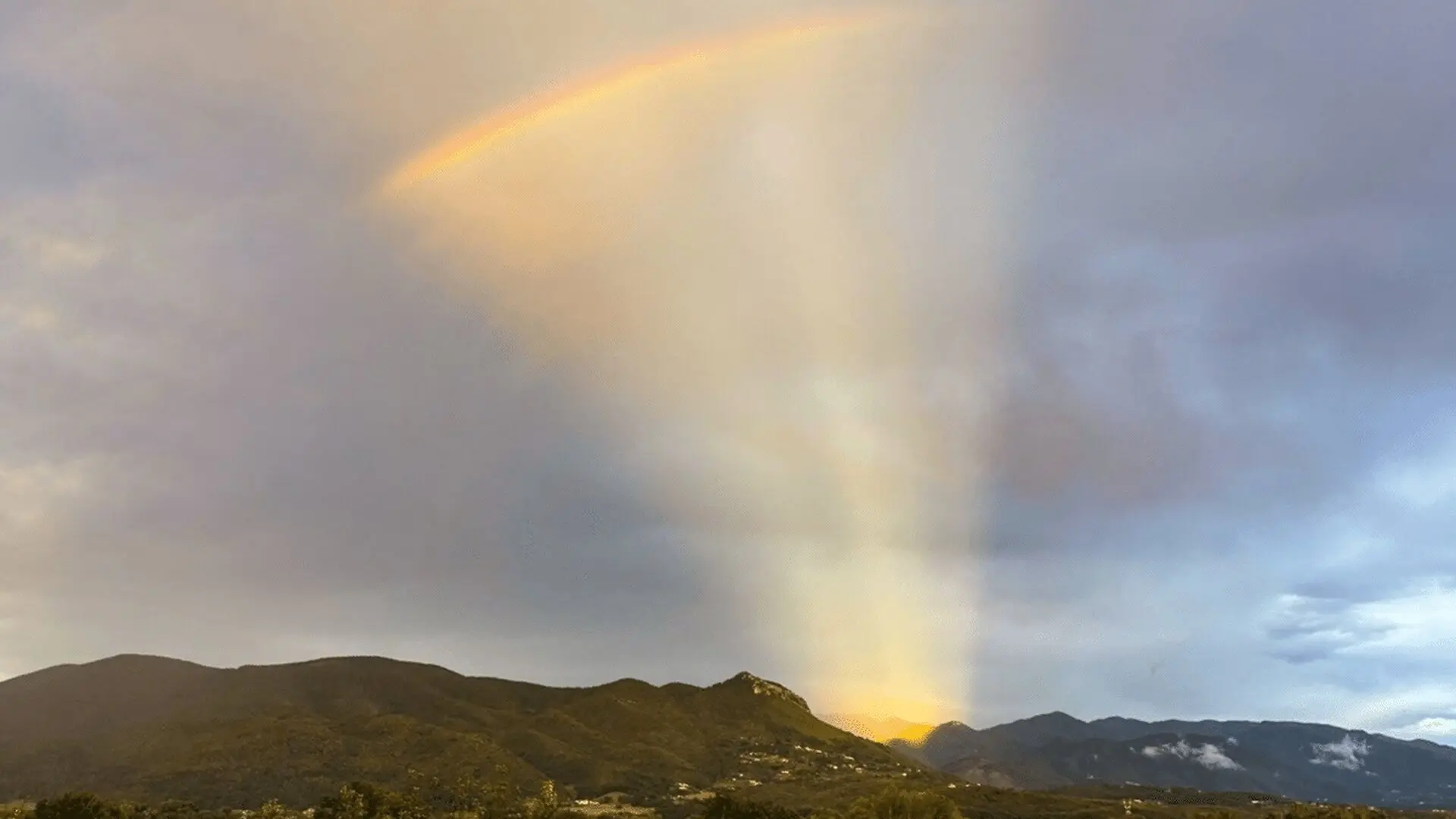
Optical Illusion Over Italy Challenges Our Understanding of How Rainbows Form
A striking atmospheric display captured in Presenzano, Italy, has offered a masterclass in how light, moisture, and perspective can deceive the human eye. The phenomenon, which was highlighted as NASA’s Astronomy Picture of the Day on October 20, 2026, features a partial rainbow seemingly illuminated by sunlight originating from the wrong direction.
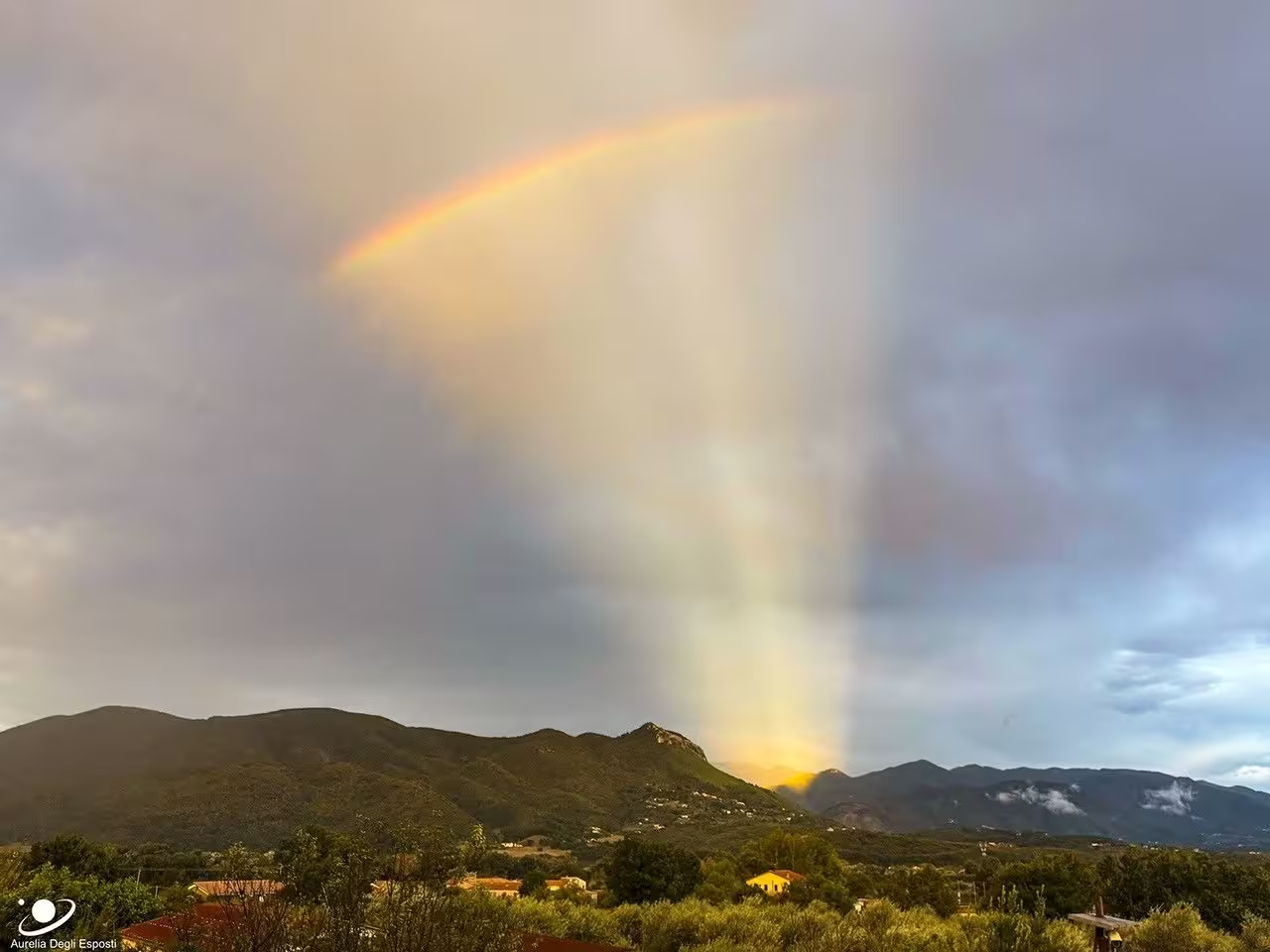
The image, taken by Aurelia Degli Esposti, shows a distinct, fan-shaped patch of color suspended in the sky. To the casual observer, the scene suggests the Sun is positioned in front of the viewer, near the horizon. This contradicts the fundamental physics of rainbow formation, which requires the Sun to be positioned behind the observer so that light can enter, reflect, and refract within water droplets.
The Role of Anticrepuscular Rays
The confusion stems from a phenomenon known as anticrepuscular rays. While typical crepuscular rays are the familiar, fan-like beams of light that pierce through gaps in clouds, anticrepuscular rays occur on the opposite side of the sky from the Sun. As sunlight travels through openings in cloud cover, it creates long, nearly parallel bands of light and shadow that stretch across the atmosphere.
Through the lens of human perspective, these parallel beams appear to converge at a single point on the horizon opposite the Sun, much like how straight train tracks seem to meet in the distance. In the Italian display, these rays created the illusion that the light source was emerging from the landscape in front of the photographer, even though the actual Sun remained behind them.
Why the Rainbow Appeared in Fragments
The unusual, isolated nature of the rainbow can be attributed to the specific way light interacted with the surrounding environment. Rainbows are typically visible when sunlight strikes water droplets at an angle of roughly 42 degrees relative to the antisolar point. Because the cloud cover was patchy, only specific sections of the sky received direct sunlight.
Consequently, the conditions necessary to produce the full-spectrum arc were only met within the bright, fan-shaped window illuminated by the sunbeams. The rest of the sky remained in shadow, leaving the rainbow to appear as a fragmented, partial display rather than the expected continuous curve.
By overlapping the geometric constraints of a standard rainbow with the visual trickery of anticrepuscular rays, the atmosphere effectively staged a scene that defied conventional intuition, demonstrating how complex the interplay of light and water can truly be.
This article has been fact checked for accuracy, with information verified against reputable sources. Learn more about us and our editorial process.
Last reviewed on .
Article history
- Latest version
Reference(s)
- Bonnell, Jerry. “APOD: 2026 October 20 - An Anticrepuscular Rainbow Fan - NASA Science.”, October 20, 2026 NASA <https://science.nasa.gov/image-article/apod-2026-october-20-an-anticrepuscular-rainbow-fan/>.
- “Aurelia Degli Esposti APOD Gallery | ScopeTrader.”, October 20, 2026 ScopeTrader <https://scopetrader.com/apod/?credit=Aurelia+Degli+Esposti>.
- Posted by Karan Das