Already Home to a Dam That Slows Earth’s Rotation, China Is Now Building an Even Larger $165 Billion Power Giant
This initiative holds immense potential for clean energy, yet its placement along a fragile Himalayan waterway has magnified its significance.
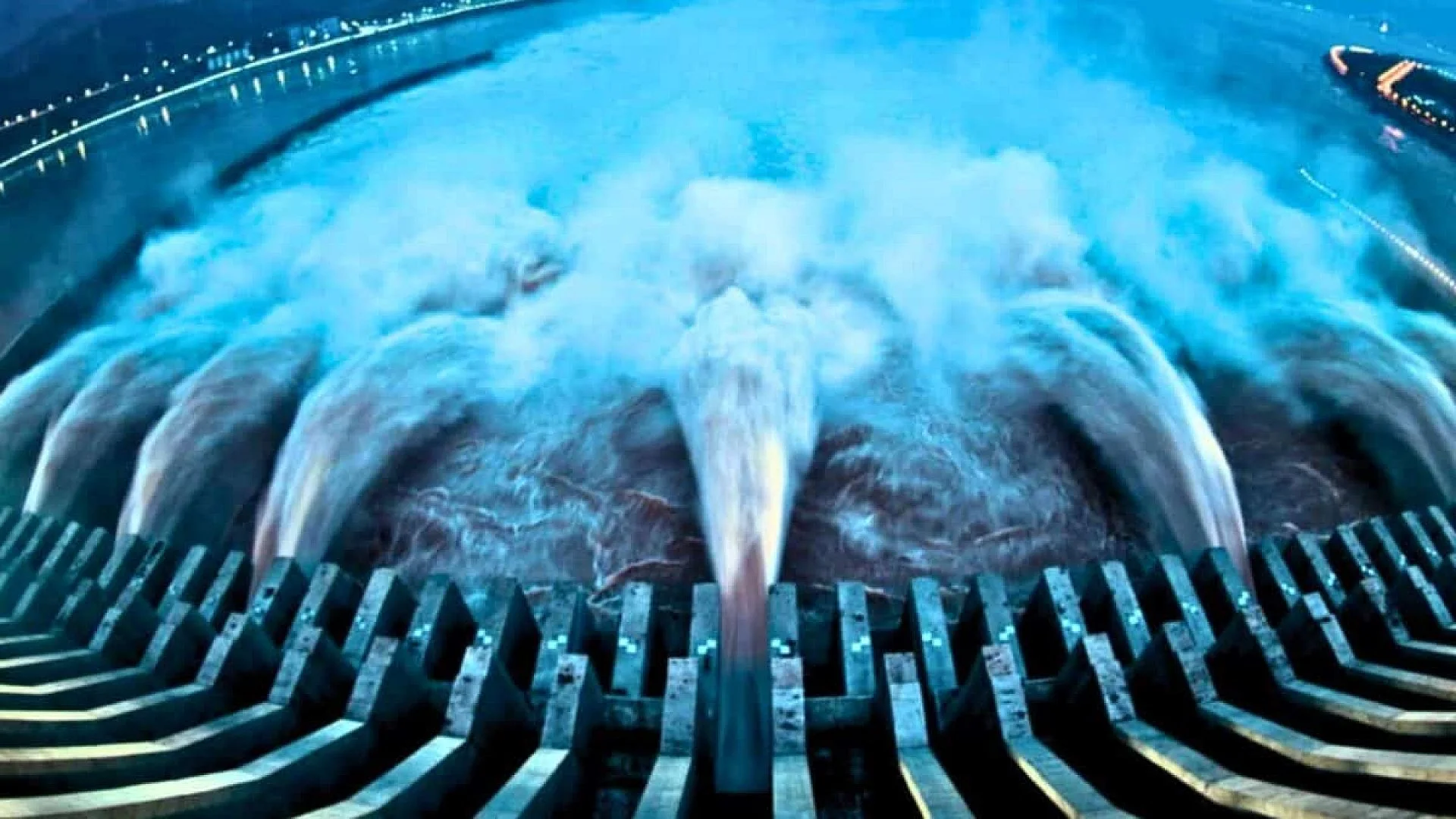
Construction has commenced in Tibet on a hydropower project that aims to surpass the Three Gorges Dam as the world’s largest electricity producer. According to Chinese state media, the project is underway along the Yarlung Tsangpo River, where a substantial 1.2 trillion yuan investment is expected to generate roughly 300 billion kilowatt hours of electricity each year, exceeding the output of any single hydropower installation currently in operation.
The site is situated along a steep bend before the river enters India and becomes the Brahmaputra, making this China hydropower dam a significant undertaking that extends beyond domestic energy planning. The river supports millions of people downstream, and any major work upstream is expected to be a topic of discussion between Beijing and New Delhi. Chinese officials have stated that the project primarily focuses on power generation rather than large-scale water diversion, and that downstream supply will not experience a significant drop.
The project aligns with China’s efforts to increase renewable energy and reduce coal use. Hydropower offers a steady baseload generation that wind and solar cannot always deliver, making it a crucial component of the country’s energy strategy. The development will add capacity to the national grid at a time when Beijing is investing heavily in non-fossil fuel generation to meet energy security goals and climate pledges. When the BBC first reported on the project’s approval, the announcement sparked concerns in India, where the Brahmaputra is a lifeline for millions and any upstream interference has long been a diplomatic flashpoint.
A Cascading System Utilizes the River’s Natural Drop
Unlike the Three Gorges Dam, which features a single massive wall, this Tibet hydropower project will employ a cascade of power stations along a sharp vertical drop in the river’s path through the Himalayas. The natural gradient concentrates the river’s force over a compact stretch, allowing engineers to capture substantial energy with a smaller structural footprint.
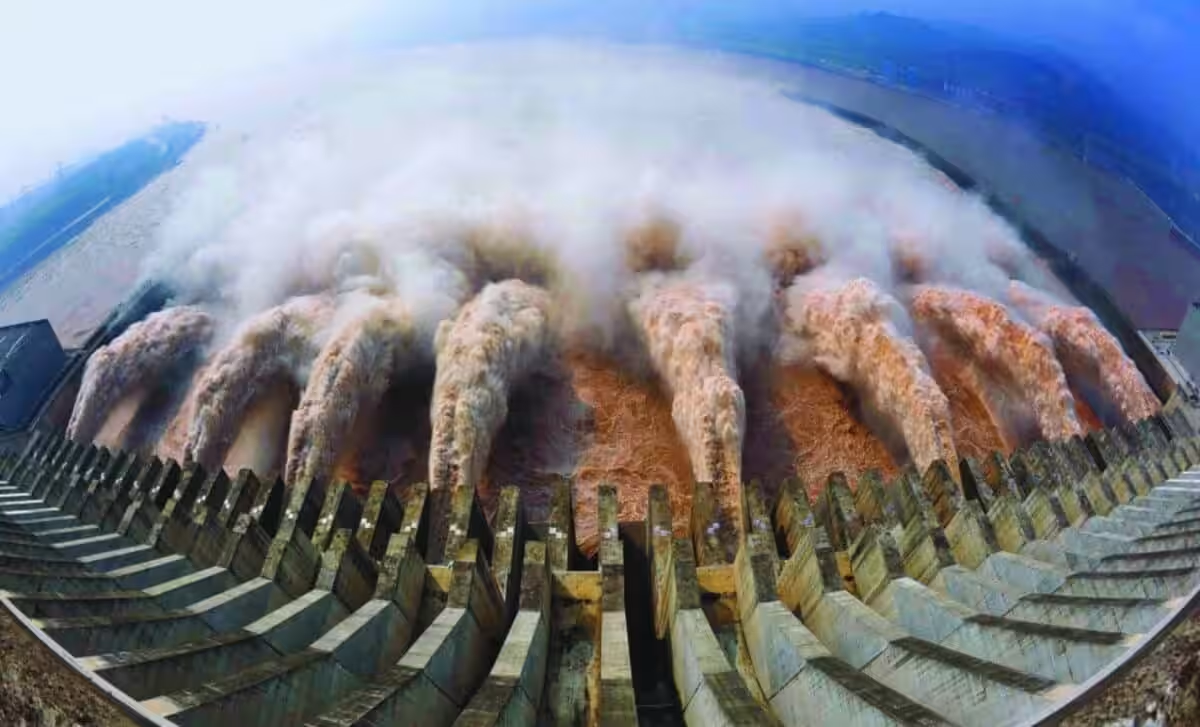
China already operates the Three Gorges Dam, long the benchmark for large hydropower installations. The new project is engineered to produce more electricity than any other single hydropower installation. Officials have described the project as central to the country’s carbon reduction goals. Construction will proceed in phases, although specific timelines remain unannounced. Once completed, the facility is expected to hold the top global spot for output from a single hydropower installation.
China already leads the world in hydropower production, and this project extends that lead while pushing the boundaries of engineering capabilities. Few nations possess both the terrain and the capital for infrastructure on this scale.
Why the Brahmaputra’s Flow Matters Now
The Yarlung Tsangpo feeds the Brahmaputra, a river system that sustains agriculture, drinking water, and ecosystems across India and Bangladesh. India has raised concerns before about upstream water management affecting downstream flow. Confirmation of construction brings those concerns back into focus as water security remains a pressing issue on the regional agenda.
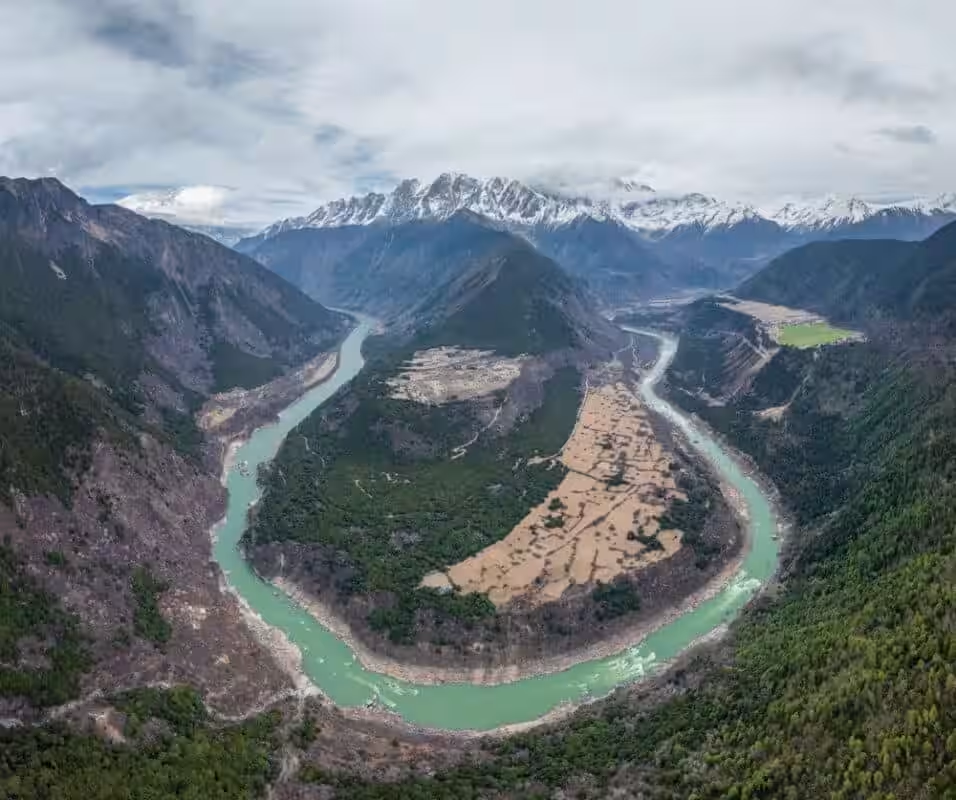
Chinese authorities have stated that the project is designed for generation, not storage or diversion. Even so, any shift in flow patterns on a transboundary river draws attention. The development is expected to remain a topic in China-India diplomatic channels. Advocacy groups and neighboring countries have pointed out that the river crosses borders, making its management a shared question even when construction is unilateral.
As large infrastructure projects multiply across South Asia, water governance is under renewed pressure. With the river flowing beyond China’s borders, the project puts upstream-downstream cooperation squarely in view.
Fragile Terrain and Seismic Risks
The Tibetan Plateau ranks among Asia’s most delicate ecological zones and sits close to major fault lines. This raises questions about engineering demands and long-term safety. Environmental groups have cautioned that large dams can interrupt sediment movement, alter ecosystems, and shrink biodiversity.
The International Campaign for Tibet has argued that hydropower expansion in the region has previously involved community displacement and limited public information, as documented on Save Tibet.
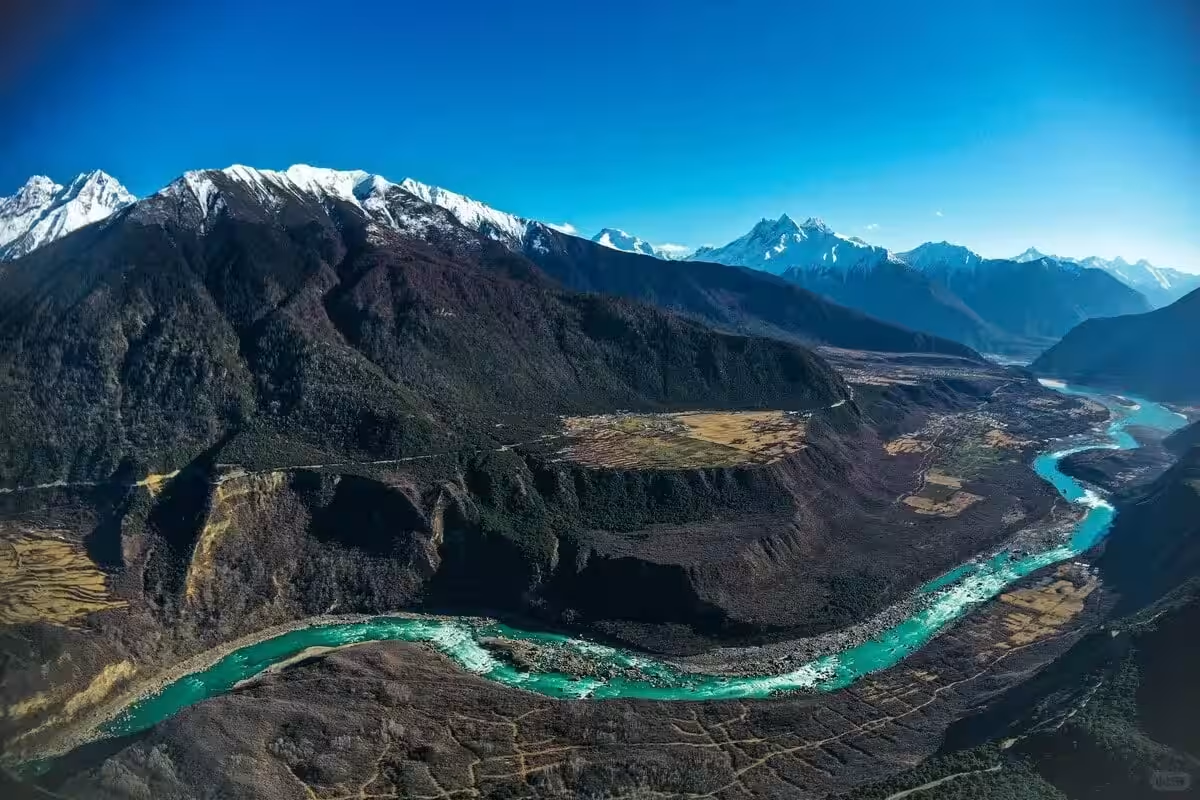
Chinese authorities have yet to release detailed environmental assessments with their initial announcements. They have emphasized technical planning and economic returns. Outside groups continue to press for fuller disclosure on ecological effects and community consultation. The plateau’s tectonic activity adds another variable, given what is required to keep a large structure sound in such conditions.
Energy Strategy Anchored in Hydropower
Hydropower is at the core of China’s renewable strategy because it supplies steady baseload power that complements variable sources like wind and solar. The Yarlung Tsangpo development fits a long-term plan to expand non-fossil fuel generation. Chinese officials have presented the project as both an energy security measure and a tool for cutting carbon.
The estimated 1.2 trillion yuan investment signals the financial and engineering weight of the undertaking. State media confirmed the output target and described the project as the most ambitious hydropower development currently in progress anywhere. Construction has officially started.
Phased deadlines remain unclear, but the project’s confirmation already marks a significant moment in large renewable infrastructure.
This article has been fact checked for accuracy, with information verified against reputable sources. Learn more about us and our editorial process.
Last reviewed on .
Article history
- Latest version
Reference(s)
- “China starts building world's largest dam, fuelling fears in India.”, July 21, 2025 <https://www.bbc.com/news/articles/c4gk1251w14o>.
Cite this page:
- Posted by Vikram Desai