NASA’s Curiosity Gets Unprecedented View of Mars Rock After Unexpected Drill Mishap on the Red Planet
NASA’s Curiosity rover encountered an unexpected obstacle when a substantial Martian stone adhered to its drill, prompting engineers to execute a meticulous repair procedure from millions of miles away.
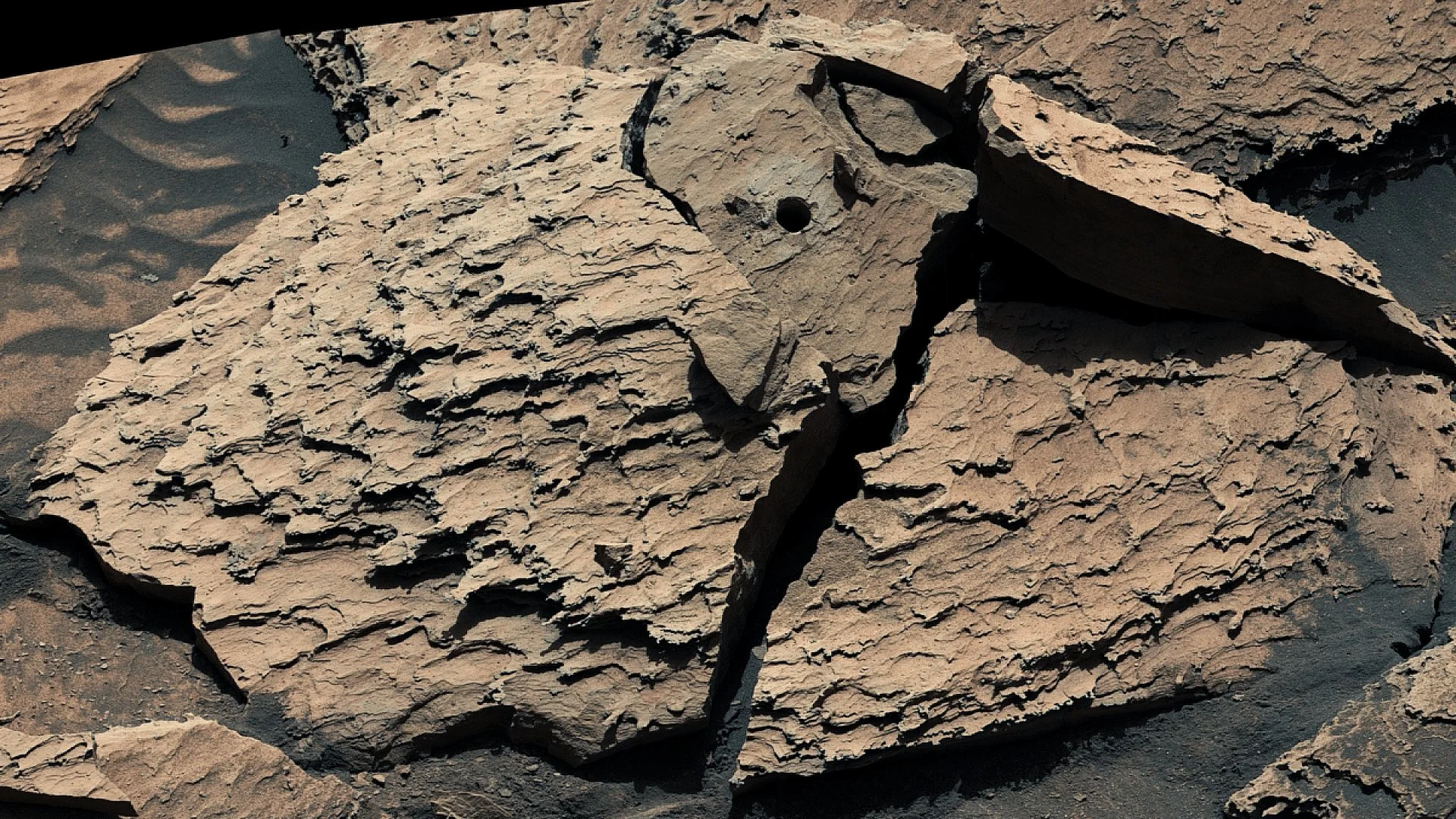
NASA’s Curiosity rover has faced an unexpected mechanical challenge during its mission, where a large Martian rock became stuck on the rover’s drill system for several days. The incident, confirmed by NASA, took place on the slopes of Mount Sharp inside Gale Crater, offering a rare glimpse into the complexities of operating complex machinery on another planet. The rock, nicknamed “Atacama,” clung to the end of Curiosity’s robotic arm after a drilling operation, forcing engineers on Earth to carefully maneuver and vibrate the system until the object finally detached. The episode produced striking new imagery and highlighted the resilience of a rover that has now spent over a decade exploring Mars.
The Unpredictable Martian Terrain
The incident began on April 25, when Curiosity completed a drilling operation on a target later named Atacama. Instead of falling away after the drill completed its work, the rock unexpectedly remained attached to the drill mechanism mounted at the end of the rover’s robotic arm. Engineers quickly realized they were dealing with an unusual situation that could interfere with future scientific operations if not resolved carefully.
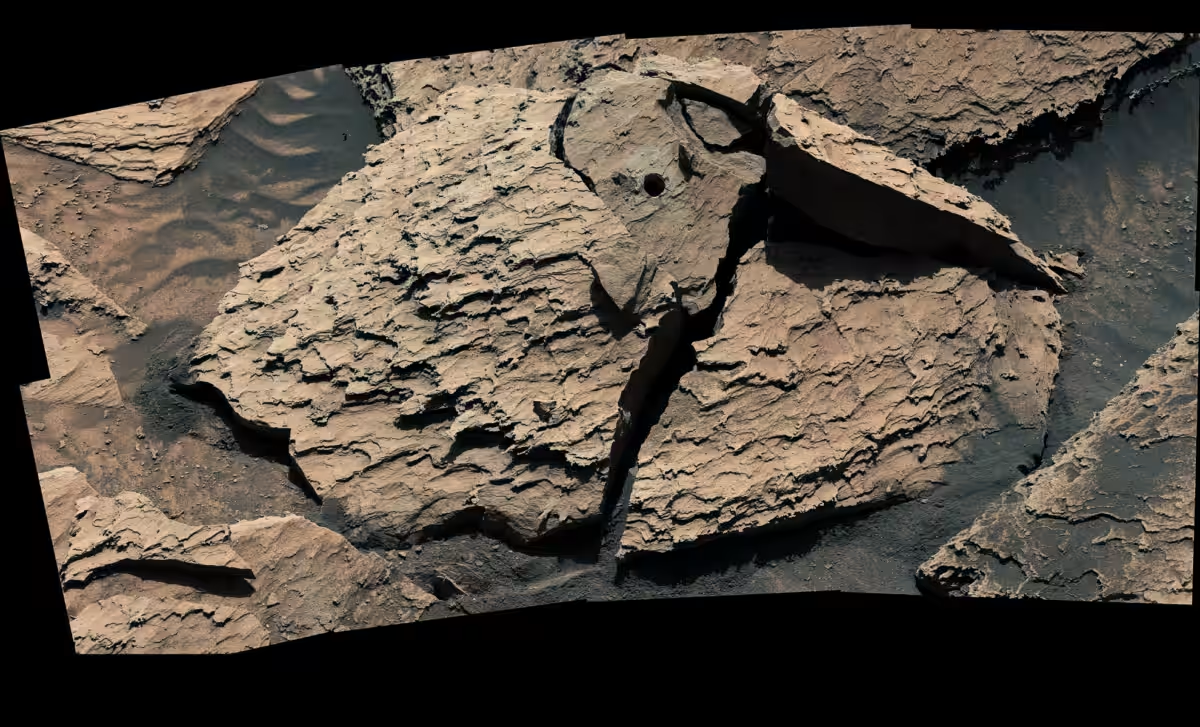
According to NASA, the rock measured roughly 1.5 feet across at its base and about 6 inches thick. On Earth, it would weigh close to 28.6 pounds, though Mars’ weaker gravity reduced its effective weight significantly. Images later released by the mission team showed the circular drill hole carved directly into the center of the detached slab. The visuals immediately stood out because they revealed both the precision of Curiosity’s drilling hardware and the rugged nature of Martian geology.
A Team Effort From Millions of Miles Away
For several days, teams at NASA’s Jet Propulsion Laboratory in California worked through a sequence of carefully planned recovery maneuvers. Unlike repairs on Earth, every action performed on Mars requires exact timing, extensive simulation, and delayed communication due to the distance between the two planets. Engineers repositioned Curiosity’s arm multiple times while activating vibrations inside the drill system in an effort to loosen the rock without damaging the rover.
The operation finally succeeded on May 1, when Atacama detached safely from the drill. NASA later confirmed the rover remained healthy and fully operational after the incident. The event demonstrated the extraordinary adaptability built into Curiosity’s engineering systems. A rover operating for more than a decade in freezing temperatures, dust-filled conditions, and rugged terrain still managed to recover from a rare mechanical complication with no direct human intervention on-site.
Unveiling the Martian Landscape
After the rock detached, Curiosity used its Mastcam imaging system to capture detailed views of Atacama resting on the Martian surface. The mosaic released by NASA combines eight separate images stitched together after transmission back to Earth. Scientists adjusted the color balance to approximate how the landscape would appear under daylight conditions on Earth, producing a clearer and more natural-looking scene.
The photographs also underscore the scientific value of these drilling missions. Each rock sample allows researchers to investigate Mars’ mineral composition, climate history, and potential habitability billions of years ago. Curiosity’s ability to extract and analyze powdered rock from beneath the weathered surface remains one of the mission’s most valuable scientific tools. The Atacama incident added an unexpected layer of drama to what would otherwise have been a routine drilling campaign, transforming a technical issue into one of the mission’s most memorable recent moments.
This article has been fact checked for accuracy, with information verified against reputable sources. Learn more about us and our editorial process.
Last reviewed on .
Article history
- Latest version
Reference(s)
- Alanis, Rafael. “NASA's Curiosity Takes Close Look at Rock That Got Stuck on Drill - NASA Science.”, May 12, 2026 NASA <https://science.nasa.gov/photojournal/nasas-curiosity-takes-close-look-at-rock-that-got-stuck-on-drill/>.
Cite this page:
- Posted by Vikram Desai